
TL;DR:
- Reiki is a Japanese energy healing practice aimed at restoring overall body and mind harmony.
- Scientific evidence suggests Reiki can promote relaxation and reduce pain and anxiety as a supportive therapy.
- It is non-invasive, safe, and best used as a complement to conventional medical care.
Reiki gets a mixed reception. Some people swear by it for stress relief and pain management, while others dismiss it as little more than wishful thinking. What's surprising is that reputable hospitals and cancer centers across the United States have quietly added Reiki to their care programs, not as a cure, but as a supportive tool. So what's actually going on? This guide cuts through the noise. We'll walk you through what Reiki is, how a session works, what the research really says, and how to decide if it's worth trying for your own wellness journey.
Table of Contents
- What is Reiki? Origins and basic principles
- How does a Reiki session work?
- The science and debate: What does the research say?
- Is Reiki right for you? Practical tips and application
- A holistic perspective: What most guides miss about Reiki
- Explore holistic health options near you
- Frequently asked questions
Key Takeaways
| Point | Details |
|---|---|
| Energy-based relaxation | Reiki focuses on channeling energy for deep relaxation and stress relief. |
| Complementary not alternative | Use Reiki alongside—not instead of—conventional health care. |
| Evidence mixed | Research shows relaxation benefits but skepticism remains about unique effects. |
| Choose practitioners wisely | Vet Reiki practitioners to ensure safety and quality of experience. |
| Personal experience matters | Many people find Reiki helpful as a calming practice regardless of beliefs about energy. |
What is Reiki? Origins and basic principles
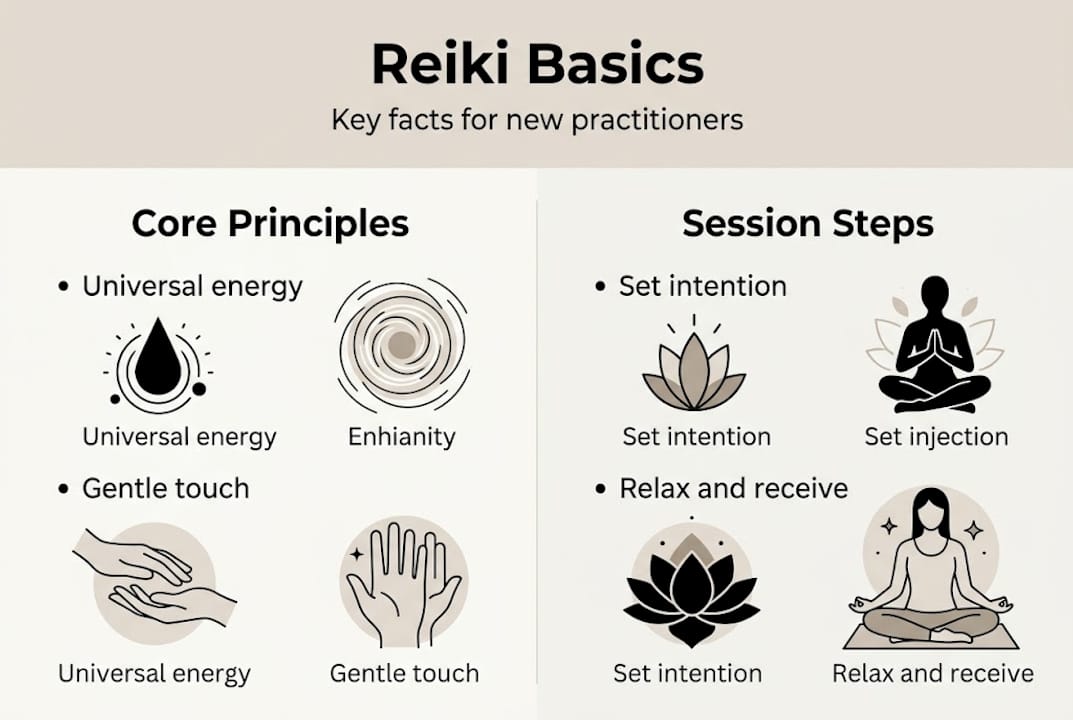
The word "Reiki" comes from two Japanese words: rei (universal) and ki (life force energy). Together, they describe the core belief behind this practice: that a subtle energy flows through all living things, and that when this energy is balanced, the body and mind can heal more naturally.
Reiki is a Japanese energy healing technique developed by Mikao Usui in the early 1920s, involving a practitioner channeling "universal life force energy" (ki) to the recipient. Usui's system spread from Japan to the West through a series of teachers and students, eventually becoming one of the most widely practiced alternative therapies in wellness today.
Here are the foundational principles that guide Reiki practice:
- Energy flows through living things. Reiki practitioners believe that disruptions or blockages in this energy contribute to physical and emotional imbalance.
- Practitioners act as channels. The practitioner does not generate energy themselves. They facilitate its flow toward the recipient.
- Balance is the goal. Rather than targeting a specific symptom, Reiki aims to restore overall harmony in the body's energy system.
- It is not a religion. This is one of the most common misunderstandings. Reiki is a practice, not a belief system. People of any faith or no faith at all can use it.
- It complements integrative health approaches. Most practitioners and medical professionals position Reiki alongside, not instead of, conventional care.
"Reiki is best understood as a relaxation and stress-reduction technique that may support overall well-being, rather than a treatment for specific diseases."
This framing matters. When you strip away the more mystical language, Reiki becomes easier to evaluate on its own merits. It's a structured, hands-on relaxation practice with roots in Japanese tradition and a growing body of modern research behind it.
How does a Reiki session work?
Now that you know what Reiki is, let's walk through the experience of an actual session. Many people feel nervous before their first appointment simply because they don't know what to expect. The good news is that Reiki is one of the gentlest practices you'll encounter.
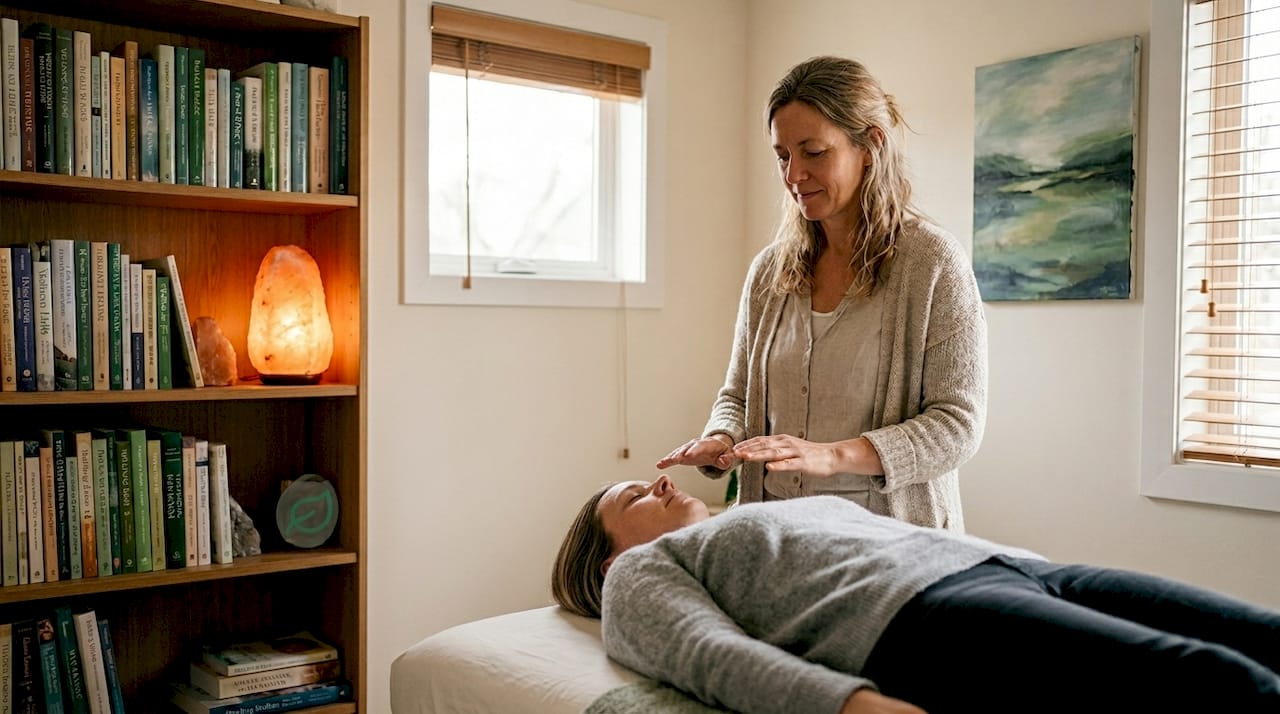
A typical Reiki session lasts 45 to 90 minutes. You remain fully clothed and lie on a comfortable table. There is no massage, no pressure, and no physical manipulation of any kind. The practitioner places their hands lightly on or just above specific areas of your body, moving from your head down to your feet.
Here's what a session generally looks like, step by step:
- Intake conversation. Your practitioner will ask about your goals, any health concerns, and what you hope to get from the session. This helps them tailor the experience.
- Setting up. You lie down fully clothed in a calm, quiet space. Soft music or silence is common. Some practitioners use light aromatherapy.
- Hand positions. The practitioner works through a series of positions over your head, neck, chest, abdomen, legs, and feet. Each position is held for several minutes.
- Sensations. Many people report feeling warmth, gentle tingling, or a wave of deep relaxation. Some fall asleep entirely, which practitioners consider a positive sign.
- Closing. The session ends gently. Your practitioner may share observations and suggest how often to return based on your goals.
People exploring evidence-based natural health practices often find Reiki appealing because of its non-invasive nature. It pairs well with other best holistic therapies like acupuncture or mindfulness meditation.
Pro Tip: Wear loose, comfortable clothing to your first session. Avoid heavy meals beforehand, and give yourself 15 to 20 minutes of quiet time afterward to let the relaxation settle in.
The science and debate: What does the research say?
Understanding the Reiki experience is important, but does science support its claims? The answer is nuanced, and it's worth looking at both sides honestly.
On the supportive side, Reiki reduces pain, anxiety, stress, and fatigue in cancer patients, with a meta-analysis showing a standardized mean difference of 0.28 for quality of life improvement. That's a modest but measurable effect. Several hospitals now offer Reiki as a complementary therapy during cancer infusions and post-surgical recovery.
Here's a quick look at what the research shows:
| Outcome | Evidence level | Notes |
|---|---|---|
| Reduced anxiety | Moderate | Observed in multiple RCTs |
| Pain reduction | Moderate | Particularly in cancer care |
| Stress and fatigue | Moderate | Linked to relaxation response |
| Depression | Weak | Cochrane review found no clear evidence |
| Specific energy transfer | None | No measurable mechanism identified |
On the skeptical side, critics raise valid points. Sham Reiki is often equally effective as real Reiki in controlled trials, which suggests the benefits may come from relaxation and human touch rather than any specific energy work. The Reiki relaxation response is well documented, but attributing it to "life force energy" remains scientifically unsupported.
"The most honest reading of the evidence is that Reiki reliably produces relaxation. Whether that relaxation comes from energy transfer or simply from lying quietly with a caring practitioner is still an open question."
For evidence-based holistic wellness seekers, this distinction matters. You don't need to accept the metaphysical framework to benefit from the practice itself.
Pro Tip: If you're considering Reiki for a serious health condition, always discuss it with your doctor first. Use it as a supportive layer, not a primary treatment.
Is Reiki right for you? Practical tips and application
The evidence reveals both benefits and limits, so how do you decide if Reiki is worth trying? The answer depends on what you're looking for and how you plan to use it.
Reiki tends to work best for people who:
- Are managing chronic stress or anxiety and want a structured way to slow down
- Are going through cancer treatment and need gentle symptom support
- Want to complement their existing wellness routine with a non-invasive practice
- Are curious about energy-based approaches and open to exploring them mindfully
- Prefer a calm, hands-off experience over more physically demanding therapies
Research on optimal Reiki protocols suggests that eight or more sessions, each lasting at least 60 minutes, tend to produce the most meaningful quality-of-life improvements. For acute symptom relief, shorter sessions of 20 minutes or less during medical procedures have also shown benefit.
Here's a quick comparison to help you think through your options:
| Goal | Reiki suitable? | Better alternative if not |
|---|---|---|
| Stress and relaxation | Yes | Mindfulness, yoga |
| Chronic pain support | Possibly (as complement) | Acupuncture, physical therapy |
| Anxiety management | Possibly | CBT, meditation |
| Replacing medical care | No | Always consult a doctor |
| Spiritual exploration | Personal choice | Meditation, breathwork |
Finding a qualified practitioner is key. Look for someone certified through a recognized Reiki organization, and don't hesitate to ask about their training level. Reiki has three main levels, with Level 3 (or Reiki Master) indicating the most advanced training. Resources for finding safe holistic providers can help you vet practitioners before booking.
Pro Tip: Use these wellness tips to build Reiki into a broader self-care plan. Pairing it with regular sleep, movement, and mindful nutrition amplifies its calming effects.
A holistic perspective: What most guides miss about Reiki
Here's something most Reiki articles won't tell you: the debate between believers and skeptics often misses the most practical point entirely.
Whether or not "universal life force energy" exists, the act of intentionally lying still, breathing slowly, and receiving focused, caring attention for 60 to 90 minutes is genuinely rare in modern life. Most of us never do it. That alone has value.
For many people, Reiki works best not as a mysterious healing force, but as a framework for personalized wellness that gives you permission to stop, rest, and reset. The ritual of booking a session, showing up, and being present creates a habit of intentional calm that most wellness routines lack.
Skeptics focus on the mechanism. Believers focus on the energy. Both groups sometimes overlook the simple truth: consistent, mindful rest is healing. Reiki provides a structured container for exactly that. You don't have to resolve the metaphysical debate to benefit from the practice.
Explore holistic health options near you
If this guide has sparked your curiosity about Reiki or other supportive therapies, the next step is finding the right practitioner for your needs.
At Go Holistic, we make it easy to find holistic practitioners who are verified, certified, and ready to support your wellness journey. Whether you want to try Reiki, explore acupuncture, or discover something new, you can browse holistic treatments across more than 200 therapy types, all in one place. Our AI-powered platform helps match you with the right provider based on your health goals, so you can make confident, informed choices. Get started today and take the next step toward feeling your best.
Frequently asked questions
Can Reiki cure illness or replace medical care?
No, Reiki is not a replacement for medical care and should be used as a complementary practice alongside professional health treatment. Always keep your primary care provider informed if you choose to add Reiki to your routine.
How many Reiki sessions are needed for results?
Some studies suggest benefits after eight or more sessions, each lasting at least 60 minutes, but individual responses vary and some people notice a shift after just one or two appointments.
Is Reiki safe for everyone?
Reiki is generally considered safe because it is non-invasive and involves no manipulation, but it should never be used to delay or replace conventional medical care for serious health conditions.
Does science support the effectiveness of Reiki?
Some studies show that Reiki reduces stress and anxiety with measurable quality-of-life improvements, though sham Reiki is often equally effective in controlled trials, suggesting more rigorous research is still needed to separate specific effects from general relaxation benefits.