

Most people assume all wellness programs deliver the same results. Generic treatments often overlook your unique health needs, lifestyle, and biology. Personalized wellness flips this script by tailoring every aspect of your health plan to you specifically. This approach improves chronic condition management, enhances treatment effectiveness, and supports long-term wellbeing. Throughout this article, you'll discover why a customized wellness strategy is essential for achieving optimal health outcomes and how modern technology makes personalization accessible to everyone seeking natural, evidence-based care.
Table of Contents
- Key Takeaways
- Understanding personalized wellness and its benefits
- Key components and technologies enabling personalized wellness
- Comparing personalized wellness with traditional wellness approaches
- Applying personalized wellness for your health goals
- Explore personalized wellness programs with Go Holistic
- FAQ
Key Takeaways
| Point | Details |
|---|---|
| Tailored health plans | Personalized wellness customizes strategies based on your unique biology, lifestyle, and goals to improve outcomes. |
| Improved chronic outcomes | Customization targets your specific health challenges to enhance treatment effectiveness and long term management. |
| Increased patient engagement | Understanding why each recommendation matters motivates adherence and sustained wellness. |
| Accessible digital personalization | Technology and digital health tools scale customized assessments, feedback, and monitoring for a wider audience. |
Understanding personalized wellness and its benefits
Personalized wellness means customizing health approaches based on your unique biological makeup, lifestyle habits, medical history, and wellness goals. Unlike standard wellness programs that apply identical protocols to everyone, personalized wellness involves tailoring treatments to individual needs for better health results. This distinction matters because your body responds differently to treatments than someone else's body does.
Generic wellness programs use a one-size-fits-all model. They prescribe the same diet plans, exercise routines, and supplement regimens regardless of your specific health conditions or preferences. This approach often fails because it ignores critical variables like your genetic predispositions, stress levels, sleep patterns, and environmental factors. When treatments don't account for these differences, results plateau or disappoint.
Personalized wellness delivers several core benefits:
- Improved treatment outcomes through targeted interventions that address your specific health challenges
- Enhanced patient engagement because you understand why each recommendation matters for your situation
- Prevention focus that identifies risks before they become serious health problems
- Flexibility to adjust protocols as your needs change over time
- Integration of multiple holistic health treatments that work synergistically for your body
"Personalized approaches in healthcare consistently demonstrate superior effectiveness compared to standardized protocols. When treatments align with individual patient characteristics, compliance improves and health outcomes accelerate."
This customization applies across all wellness dimensions. Nutrition plans consider your food sensitivities and metabolic type. Exercise programs match your fitness level and physical limitations. Mind-body therapies address your specific stress triggers and emotional patterns. Supplement protocols fill your unique nutritional gaps rather than following generic formulas.
The holistic health field embraces personalization naturally. Practices like acupuncture, Ayurveda, and functional medicine have always emphasized individual assessment before treatment. Modern technology now makes this level of customization scalable and accessible to more people seeking natural health solutions.
Key components and technologies enabling personalized wellness
Several critical elements work together to create truly personalized wellness experiences. Individualized assessments form the foundation. Practitioners evaluate your health history, current symptoms, lifestyle factors, and wellness objectives through detailed questionnaires and consultations. Some approaches incorporate genetic testing to identify hereditary health risks and optimal treatment responses. Lifestyle analysis examines your daily routines, stress levels, sleep quality, and environmental exposures that influence your wellbeing.

Continuous feedback mechanisms ensure your plan evolves with you. Regular check-ins track progress, identify obstacles, and refine protocols based on real-world results. This iterative process prevents stagnation and maintains momentum toward your health goals.
Technology revolutionizes how personalized wellness gets delivered and monitored. Digital health tools enable tailored wellness recommendations and continuous monitoring that was impossible just a few years ago. Mobile apps track your symptoms, habits, and progress in real time. Wearable devices measure biometric data like heart rate variability, sleep cycles, and activity levels. AI algorithms analyze this information to identify patterns and suggest adjustments.
Key technology-enabled features include:
- Automated health tracking that captures data without manual logging effort
- Predictive analytics that forecast potential health issues before symptoms appear
- Remote consultations with holistic health providers regardless of geographic location
- Personalized content delivery that educates you about relevant wellness topics
- Integration across multiple health platforms for comprehensive data analysis
| Feature | Traditional wellness | Personalized wellness |
|---|---|---|
| Assessment method | Standard questionnaire | Comprehensive multi-factor evaluation |
| Treatment protocol | Fixed program | Customized and adaptive |
| Progress tracking | Periodic check-ins | Continuous digital monitoring |
| Provider interaction | Scheduled appointments only | On-demand access plus regular sessions |
| Outcome measurement | Generic benchmarks | Individual goal achievement |
| Technology use | Minimal or absent | Integrated throughout experience |
Pro Tip: Choose wellness technology that integrates with your certified provider's systems. This ensures your practitioner can review your data and make informed recommendations during consultations, creating a seamless personalized experience.
The combination of human expertise and technological capability creates powerful synergy. Practitioners bring clinical knowledge and intuitive understanding while technology provides data-driven insights and scalability. Together, they deliver personalization that neither could achieve alone.
Comparing personalized wellness with traditional wellness approaches
Understanding the differences between personalized and traditional wellness helps you make informed decisions about your health strategy. The comparison reveals why customization often produces superior results for people managing chronic conditions or pursuing optimal wellbeing.
| Factor | Traditional wellness | Personalized wellness |
|---|---|---|
| Effectiveness | Moderate success rates | Higher success rates through targeting |
| Patient engagement | Often low due to generic advice | High due to relevant recommendations |
| Flexibility | Rigid protocols | Adapts to changing needs |
| Initial cost | Lower upfront investment | Higher initial assessment costs |
| Long-term value | May require multiple program changes | Better outcomes reduce overall expenses |
| Time to results | Variable and unpredictable | Faster due to targeted interventions |
Traditional wellness approaches offer certain advantages:
- Lower barriers to entry with accessible group programs
- Established protocols with proven track records for average populations
- Community support through group settings
- Simpler implementation without complex assessments
However, they also carry significant limitations:
- Generic recommendations that may not suit your specific needs
- Higher dropout rates when people don't see relevant results
- Missed opportunities to address underlying health factors
- Potential for wasted time and money on ineffective interventions
Personalized wellness provides distinct benefits:
- Targeted interventions that address your actual health challenges
- Evidence-based customization that improves treatment effectiveness
- Proactive prevention through early identification of risk factors
- Greater satisfaction due to visible progress toward your goals
The drawbacks include:
- Higher upfront costs for comprehensive assessments
- More time investment in initial evaluation phase
- Requires finding qualified practitioners skilled in personalization
- May feel overwhelming if you prefer simple, straightforward guidance
Pro Tip: Avoid one-size-fits-all treatments when managing chronic conditions. Generic protocols often miss the underlying triggers and individual factors that drive your symptoms, leading to frustration and poor outcomes.
Research consistently demonstrates that customized wellness programs improve patient recovery and prevention compared to standard care. Studies show higher adherence rates when people receive recommendations tailored to their circumstances. Personalized approaches also identify health risks earlier, enabling preventive interventions before conditions worsen.
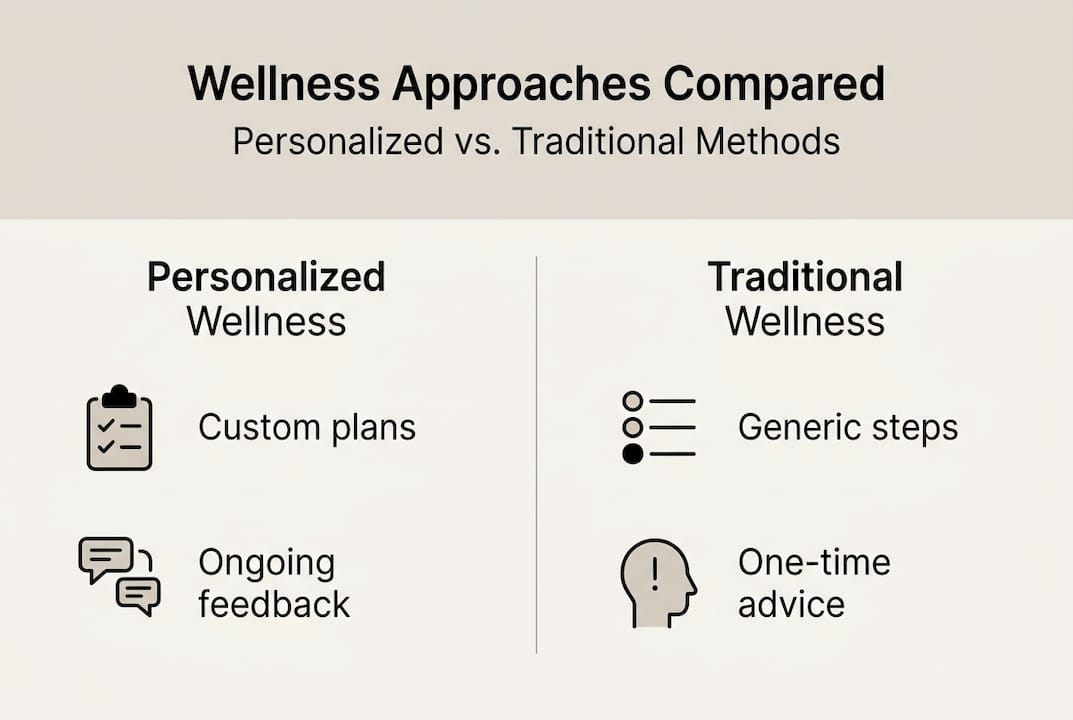
The choice between traditional and personalized wellness depends on your situation. If you have complex health issues, multiple chronic conditions, or have struggled with generic programs, personalization offers clear advantages. If you're generally healthy and seeking basic wellness support, traditional approaches might suffice initially. However, most people pursuing serious health improvements benefit from the targeted precision that wellness personalization insights provide.
Critically evaluate your wellness choices. Ask whether recommendations account for your unique biology and lifestyle. Question whether protocols adapt based on your progress. Demand evidence that approaches work for people with your specific health profile. This discernment helps you invest resources in strategies that actually deliver results.
Applying personalized wellness for your health goals
Starting your personalized wellness journey requires thoughtful assessment and strategic action. Begin by evaluating your current health status, identifying priority concerns, and clarifying what optimal wellbeing looks like for you. Consider your chronic symptoms, energy levels, mental clarity, sleep quality, stress management, and overall life satisfaction. Document patterns you notice in how your body responds to different foods, activities, and environmental factors.
Finding and collaborating with qualified practitioners ensures your personalized plan rests on solid expertise. Follow these steps:
- Research practitioners specializing in your primary health concerns through verified directories
- Verify credentials, certifications, and experience with personalized wellness approaches
- Schedule initial consultations with multiple providers to assess compatibility
- Ask about their assessment methods, treatment philosophies, and success rates
- Evaluate communication style and whether you feel heard and understood
- Review their use of evidence-based practices and ongoing education
- Confirm they collaborate with other healthcare providers when appropriate
Common personalized wellness methods include:
- Customized nutrition plans based on food sensitivity testing and metabolic assessment
- Mind-body therapies tailored to your stress patterns and emotional needs
- Fitness programs designed for your current ability level and specific goals
- Supplement protocols addressing your unique nutritional deficiencies
- Sleep optimization strategies matching your circadian rhythm and lifestyle
- Stress management techniques suited to your personality and triggers
- Detoxification protocols appropriate for your toxic burden and elimination capacity
Pro Tip: Schedule quarterly reviews of your personalized wellness plan. Your health needs evolve as you progress, and regular evaluation ensures your protocols stay aligned with your current situation and goals.
Working with specialized providers helps tailor wellness plans effectively for individuals' needs. Experienced practitioners recognize subtle patterns in your health presentation and adjust recommendations accordingly. They also prevent common mistakes that people make when trying to personalize wellness on their own without adequate knowledge.
Set realistic expectations for your personalized wellness journey. Most people notice initial improvements within four to six weeks as interventions begin addressing underlying imbalances. Significant transformation typically requires three to six months of consistent implementation. Chronic conditions that developed over years need patience and persistence to resolve.
Benefits you can anticipate include improved energy and vitality, better sleep quality, enhanced mental clarity, reduced inflammation and pain, stronger immune function, and greater emotional resilience. Many people also experience unexpected improvements in areas they didn't initially target, as the body's systems interconnect and influence each other.
Track your progress through objective measures like symptom logs, energy ratings, sleep duration, and functional capacity. Subjective improvements in how you feel matter equally. Notice changes in your mood, motivation, relationships, and overall quality of life. These holistic markers often reveal wellness gains that standard medical tests miss.
Stay engaged with your personalized plan by maintaining open communication with your holistic health practitioners. Report what's working, what feels challenging, and where you need additional support. Successful personalization requires partnership between you and your providers, with both parties contributing insights and adjusting course as needed.
Explore personalized wellness programs with Go Holistic
Ready to experience the benefits of truly customized health care? Go Holistic connects you with certified practitioners who specialize in personalized wellness approaches tailored to your unique needs. Our platform makes finding the right provider simple, whether you're managing chronic conditions or optimizing overall wellbeing.
Explore our comprehensive directory of holistic health treatments backed by evidence-based research. Browse verified holistic health providers in your area or available for remote consultations. Our AI-powered recommendation system analyzes your health concerns and suggests practitioners whose expertise matches your specific situation. Take the next step toward optimal wellness through personalized care that actually works for your body and lifestyle.
FAQ
What is personalized wellness and how does it work?
Personalized wellness tailors health plans to your unique biology, lifestyle, and goals rather than applying generic protocols. It uses comprehensive assessments, diagnostic testing, and expert analysis to customize treatments effectively. Practitioners evaluate your health history, current symptoms, genetic factors, and environmental influences to design interventions that address your specific needs. This approach ensures recommendations align with how your body actually functions.
How can personalized wellness help with chronic health conditions?
Personalized plans focus on your specific symptoms and triggers to improve treatment outcomes significantly. Customized lifestyle modifications and therapies reduce flare-ups and support long-term health by addressing root causes rather than just managing symptoms. This targeted approach identifies the unique factors driving your condition, whether inflammatory triggers, nutritional deficiencies, stress patterns, or environmental exposures. By treating your individual presentation rather than a textbook diagnosis, personalized wellness often achieves results where standard protocols fail.
What should I look for in a holistic health provider for personalized care?
Seek practitioners with extensive experience in integrative and personalized health approaches across multiple modalities. Look for providers who use evidence-based assessments like comprehensive lab testing, detailed health histories, and validated diagnostic tools. The best practitioners tailor plans collaboratively, incorporating your preferences and lifestyle realities into recommendations. Verify their credentials, ask about continuing education, and ensure they communicate clearly about why specific interventions suit your situation.
Are personalized wellness programs more expensive than traditional ones?
Personalized wellness can have higher upfront costs due to comprehensive assessments and individualized protocol development. However, this investment often reduces costly complications, failed treatments, and ongoing symptom management expenses over time. Better outcomes mean fewer doctor visits, less medication, and reduced need for emergency interventions. When you factor in the value of improved quality of life and faster results, personalized approaches frequently provide superior return on investment compared to cycling through multiple generic programs that don't work.