

Struggling with chronic pain can make you feel like you are chasing relief through endless appointments and treatments. The rise of integrative health offers a fresh perspective by combining conventional medicine with evidence-based complementary therapies for holistic, personalized care. Supported by organizations like the WHO, integrative health focuses on restoring balance between your mind, body, and environment, helping you access safe and effective approaches tailored to your unique needs.
Table of Contents
- Integrative Health Defined and Common Misconceptions
- Types of Therapies in Integrative Health
- How Integrative Health Approaches Work
- Evidence, Safety, and Practitioner Standards
- Comparing Integrative, Complementary, and Alternative Medicine
Key Takeaways
| Point | Details |
|---|---|
| Integrative Health Combines Approaches | It merges conventional medicine with complementary therapies for comprehensive care that addresses both symptoms and root causes. |
| Personalized Treatment is Essential | Each treatment plan is tailored to the individual's unique health needs, history, and preferences, ensuring effective healing. |
| Evidence-Based Practices are Fundamental | All therapies must be supported by clinical research, ensuring safety and effectiveness in treatment options. |
| Collaboration Among Practitioners is Key | A multidisciplinary team approach enhances care coordination, improving outcomes through shared insights and strategies. |
Integrative Health Defined and Common Misconceptions
Integrative health combines conventional medical science with complementary and traditional healing approaches, all grounded in research and safety evidence. It's not about replacing your doctor—it's about expanding your toolkit for healing.
Think of it this way: conventional medicine excels at diagnosing acute conditions and emergencies, while complementary therapies often address root causes and support your body's natural healing processes. Together, they work better.
What Integrative Health Actually Is
Integrative health takes an evidence-based, holistic approach to your wellbeing. This means:
- Treating you as a whole person, not just symptoms
- Respecting your cultural background and personal values
- Using therapies proven safe and effective through research
- Addressing physical, mental, and emotional health together
- Personalizing treatment to your unique needs
If you're dealing with chronic pain, integrative health recognizes that pain isn't isolated. It considers stress levels, sleep quality, nutrition, movement patterns, and emotional state—all factors that influence how your body heals.
Integrative health restores balance between mind, body, and environment rather than simply treating disease symptoms.
Common Misconceptions That Hold People Back
Misunderstandings about integrative health often prevent people from exploring treatments that could genuinely help. Here are the biggest myths:
Myth 1: It's the same as alternative medicine. Alternative medicine replaces conventional care. Integrative health combines both approaches based on evidence. You're not choosing one or the other.
Myth 2: It lacks scientific backing. The opposite is true. Integrative practitioners rely on clinical research, peer-reviewed studies, and safety data. The WHO and major medical institutions now support evidence-based integration of traditional and biomedical approaches.
Myth 3: Your doctor won't approve. Many physicians now recognize integrative therapies. Be transparent with your healthcare team about what you're using—communication matters.
Myth 4: It's all about herbs and supplements. Integrative health includes acupuncture, massage therapy, mindfulness, dietary approaches, Ayurveda, and dozens of other modalities—not just supplements.
Myth 5: One size fits everyone. Actually, personalization is core to integrative health. Your treatment plan reflects your specific condition, health history, preferences, and lifestyle.
Pro tip: When exploring integrative treatments, ask practitioners about their certifications and the research supporting their recommendations—this ensures you're working with qualified professionals using evidence-based methods.
Types of Therapies in Integrative Health
Integrative health offers a diverse toolkit of therapies, each addressing different aspects of your health. The key is choosing approaches backed by research and suited to your specific needs.
Think of these therapies as complementary pieces working together. Where one approach might ease physical tension, another addresses emotional stress or nutritional imbalances. Combined, they create comprehensive healing.
Traditional and Nature-Based Therapies
Herbal medicine uses plant-derived compounds to support healing and prevent disease. Unlike supplements bought randomly, clinical herbalism involves practitioners who understand dosage, interactions, and which plants work for your specific condition.
Acupuncture stimulates specific points on your body to restore energy flow and reduce pain. It's particularly effective for chronic pain, migraine prevention, and conditions like arthritis where conventional pain management alone falls short.
Ayurveda represents a complete medical system from India, balancing three body constitutions (doshas) through diet, herbs, massage, and lifestyle practices. For chronic pain sufferers, Ayurveda often identifies root imbalances others miss.
Mind-Body Therapies
Mind-body practices like meditation, yoga, and tai chi directly influence how your nervous system responds to pain and stress. These therapies work neurologically—they're not just relaxation.
Key mind-body approaches include:
- Meditation reduces inflammation markers and rewires pain perception in the brain
- Yoga combines movement, breathing, and mindfulness to improve flexibility and reduce tension
- Tai chi builds strength while calming the nervous system
- Breathwork activates your parasympathetic nervous system, countering chronic stress
Physical and Manual Therapies
Massage therapy addresses muscular tension, improves circulation, and releases trigger points that amplify chronic pain. Different styles serve different purposes—deep tissue for muscle tension, lymphatic drainage for swelling, therapeutic massage for rehabilitation.
Chiropractic and osteopathic care focus on alignment and structural issues affecting nervous system function. For people with chronic pain stemming from spinal misalignment or postural problems, these can provide significant relief.
The most effective integrative approach combines multiple therapies targeting different aspects of your health simultaneously.
Biomedical Therapies Within Integration
Integrative health isn't alternative—it includes conventional medicine. Physical therapy, targeted medication, and diagnostic imaging remain essential foundations. Integrative practitioners coordinate with your conventional healthcare team to ensure safe, synergistic treatment.
When exploring therapies, verify that practitioners hold certifications and that their recommendations rest on clinical evidence. Your approach should feel personalized to you, not one-size-fits-all.
Pro tip: Start with one or two therapies you feel drawn to, give them 6-8 weeks to show results, then add complementary approaches—this helps you understand what actually works for your body rather than overwhelming your system with too many changes at once.
How Integrative Health Approaches Work
Integrative health works by treating you as a complete person, not a collection of isolated symptoms. It addresses the biological, psychological, social, and environmental factors that influence your health simultaneously.

This approach recognizes that chronic pain, for example, isn't purely physical. Stress, sleep quality, emotional trauma, social isolation, and lifestyle choices all amplify or reduce your pain. Addressing only the physical component leaves the root causes untouched.
The Personalized Care Model
Unlike conventional medicine's standardized protocols, integrative health tailors every treatment to your unique situation. Your practitioner considers your health history, lifestyle, values, and specific health goals before recommending anything.
This personalization means:
- Different people with the same diagnosis receive different treatment plans
- Your treatment evolves as your condition changes
- Recommendations align with what you're actually willing to do long-term
- Cultural and personal preferences are respected
A chronic pain patient with depression needs a different approach than someone with the same pain but no mental health concerns. Integrative practitioners recognize these differences.
Multidisciplinary Team Collaboration
Interprofessional collaboration is central to integrative health. Your care team might include your primary care doctor, acupuncturist, massage therapist, nutritionist, and mental health counselor working together.
This collaboration means:
- Your practitioners communicate about your progress
- Treatment plans coordinate rather than conflict
- Someone monitors how different therapies interact
- You receive comprehensive care without contradictory advice
When your acupuncturist discusses findings with your physical therapist, they create a more complete picture of your condition than either could alone.
Evidence-Based Decision Making
Integrative health doesn't accept therapies based on tradition alone. Every recommended treatment must have research supporting its safety and effectiveness for your specific condition.
Your practitioner should explain:
- What clinical evidence supports their recommendation
- How long results typically take to appear
- What side effects or risks exist
- Why they chose this approach for you specifically
Integrative health combines the best of biomedicine with complementary therapies, all grounded in research and personalized to your needs.
Addressing Root Causes, Not Just Symptoms
Conventional medicine excels at managing acute symptoms. Integrative health goes deeper, investigating why those symptoms developed in the first place. If your chronic pain stems from postural problems, stress, and nutritional deficiency, addressing only one factor won't produce lasting results.
This root-cause approach takes longer initially but often produces more sustainable healing. You're not just suppressing pain—you're changing the conditions that created it.
Pro tip: When meeting a potential integrative practitioner, ask how they would coordinate with your other healthcare providers and what specific evidence supports their recommendations for your condition.
Evidence, Safety, and Practitioner Standards
Not all integrative health practitioners are created equal. The difference between someone with proper training and credentials versus someone without can directly impact your safety and results.
Integrative health's credibility depends on practitioners who follow rigorous standards, use evidence-based methods, and maintain ethical practices. This section shows you what to look for.
The Evidence Requirement
Evidence-based integrative medicine combines scientifically supported treatments with traditional methods that demonstrate proven efficacy and safety. This means every therapy recommended should have clinical research backing it.
When evaluating a treatment, ask yourself:
- Has this been studied in clinical trials?
- Do the results apply to my specific condition?
- What does the research actually show about effectiveness?
- Are there known side effects or contraindications?
A legitimate practitioner can answer these questions with specifics, not vague claims. They reference actual studies, not just testimonials.
Practitioner Qualifications Matter
Certification shows a practitioner completed accredited training and passed rigorous examinations. Different modalities have different standards, so verify what credentials actually mean.
Key credentials to verify:
- Licensed acupuncturists have completed 3,000+ training hours and pass licensure exams
- Registered massage therapists typically complete 750-1,000 hours of education
- Naturopathic doctors vary widely—some states require licensure, others don't
- Herbalists may hold certifications from recognized programs
- Yoga instructors with 200-hour minimum training can call themselves certified
Always check if credentials are state-licensed versus self-certified. Licensed practitioners answer to regulatory boards; self-certified ones don't.
Use this table to understand typical credentials for integrative health practitioners:
| Practitioner Type | Standard Credential or License | Typical Training Duration |
|---|---|---|
| Licensed Acupuncturist | State-accredited licensure | 3,000+ hours |
| Registered Massage Therapist | State registration, national exam | 750–1,000 hours |
| Naturopathic Doctor | State licensure (varies widely) | 4 years doctoral program (some states) |
| Yoga Instructor | RYT 200+ hours certification | Minimum 200 hours |
Safety Monitoring and Quality Standards
Safety in integrative health means more than "it's natural." Herbal products can contain contaminants, interact with medications, or cause adverse effects. Quality standards separate safe products from unreliable ones.
Look for:
- Third-party testing on supplements and herbal products
- Clear ingredient lists with standardized potencies
- Practitioners who screen for drug interactions
- Open communication about potential side effects
- Informed consent before beginning treatment
The NCCIH promotes standards for training, certification, and ethical practice to ensure practitioners meet rigorous requirements.
Red Flags That Signal Problems
Some practitioners make claims that should concern you immediately. Avoid anyone who:
- Promises to "cure" disease
- Tells you to stop prescribed medications without doctor coordination
- Uses high-pressure sales tactics for supplements
- Cannot explain their recommendations with evidence
- Won't communicate with your other healthcare providers
Safe integrative care means working with certified practitioners who follow evidence-based standards and maintain clear communication with your entire healthcare team.
Finding Qualified Practitioners
Verifying credentials takes effort but protects your health. Check practitioner websites for specific credentials, licensing information, and evidence they coordinate with conventional care.
Legitimate directories list practitioners who meet verification standards. Go Holistic's provider directory features certified and verified practitioners across multiple disciplines, making it easier to find qualified professionals near you.
Pro tip: Before booking your first appointment, call the practitioner's office and ask about their credentials, training, insurance acceptance, and how they coordinate with your primary care doctor—their answers reveal their professionalism.
Comparing Integrative, Complementary, and Alternative Medicine
These three terms get mixed up constantly, but they describe fundamentally different approaches to health. Understanding the distinctions matters because they affect how you use these services and what results you should expect.
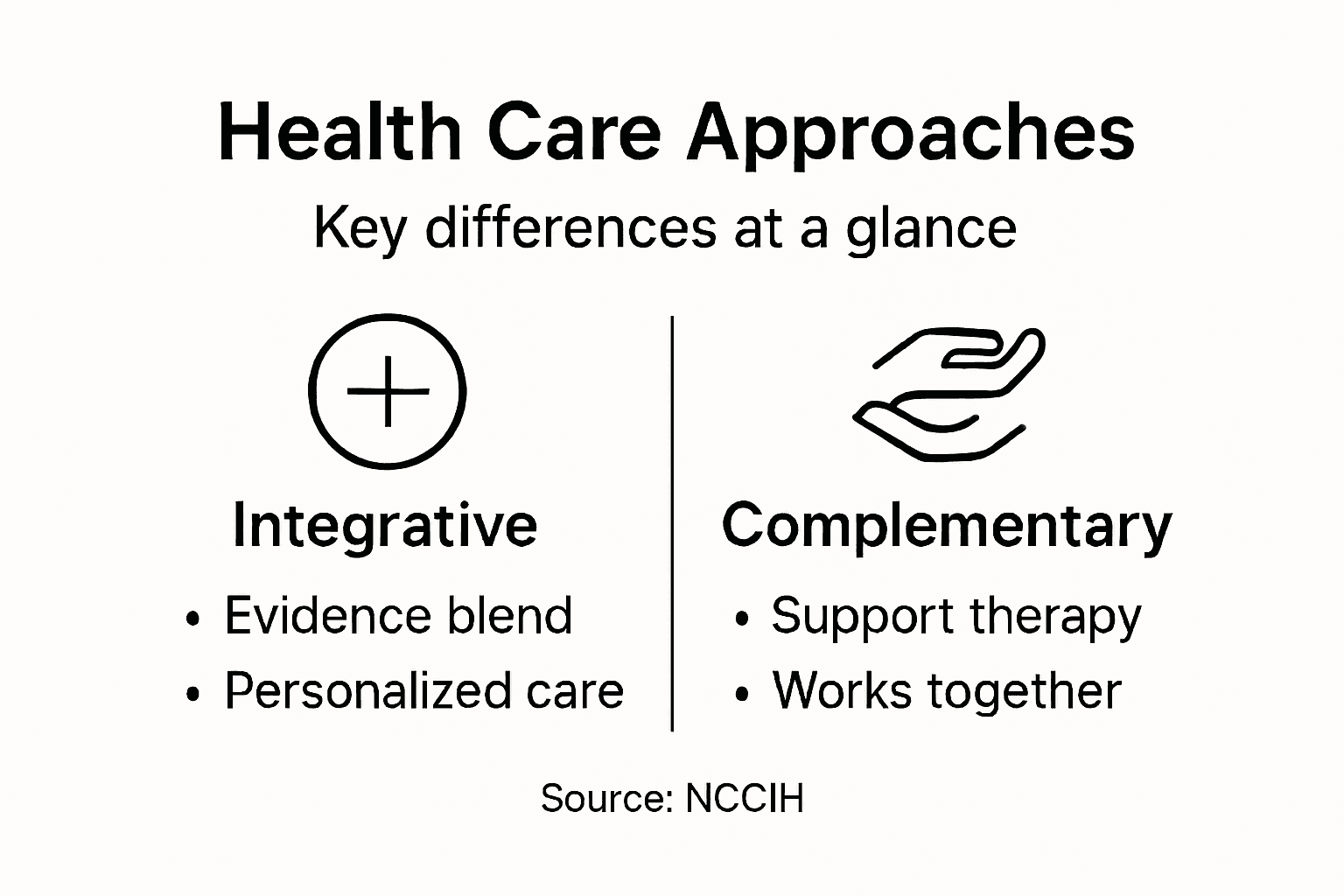
The confusion is understandable—they all involve non-mainstream therapies. But their key differences lie in how they're used alongside or instead of conventional medicine.
Complementary Medicine: Working Together
Complementary medicine uses non-mainstream therapies alongside your conventional medical care. You're not replacing anything—you're adding.
Examples include:
- Getting acupuncture while continuing your prescribed medications
- Using massage therapy during physical therapy for rehabilitation
- Taking herbal supplements recommended by your doctor alongside pharmaceuticals
- Practicing yoga while undergoing conventional pain management
Complementary approaches support your conventional treatment rather than replace it. Your doctor knows what you're doing, and everything coordinates.
Alternative Medicine: Replacing Conventional Care
Alternative medicine uses non-mainstream therapies instead of conventional medical treatment. You're choosing one or the other, not both.
This is riskier. Someone choosing herbal treatment alone for diabetes instead of insulin therapy faces serious health consequences. Alternative medicine abandons the benefits of conventional medicine's proven effectiveness for acute and serious conditions.
Most medical professionals discourage pure alternative approaches because evidence-based conventional medicine saves lives in emergencies and handles serious conditions better.
Integrative Health: The Evidence-Based Blend
Integrative health combines conventional and complementary approaches in a coordinated, evidence-based framework. You're not choosing between them—you're strategically using both where each works best.
Integrative medicine means:
- Your practitioners communicate and coordinate care
- Every therapy is evidence-based, not just traditional
- Your conventional doctor is involved in your overall plan
- Treatment addresses your whole person, not isolated symptoms
- You maintain emergency access to conventional care
If you have chronic pain, integrative health might combine your pain medication with acupuncture, physical therapy, stress management, and nutritional support—all coordinated by practitioners working together.
Why These Distinctions Matter
Think about your expectations and safety. Complementary medicine adds options. Alternative medicine replaces them. Integrative medicine strategically combines both.
Choosing complementary care means conventional medicine remains your foundation. Choosing alternative care means you're betting everything on non-mainstream approaches. Integrative care means you get the best of both worlds when used properly.
Here's a quick comparison of integrative, complementary, and alternative medicine approaches:
| Approach | Relationship to Conventional Care | Practitioner Coordination | Patient Safety Impact |
|---|---|---|---|
| Integrative Medicine | Blends both mainstream and non-mainstream care | Practitioners actively communicate | High: maximizes safety through collaboration |
| Complementary Medicine | Adds non-mainstream therapies, no replacement | Some communication, varies | Moderate: depends on honesty with healthcare team |
| Alternative Medicine | Replaces conventional with non-mainstream care | Typically not coordinated | Low: higher risk without medical oversight |
Integrative health emphasizes patient-centered, coordinated care where evidence determines which therapies work best for your condition.
Making Your Choice
Most health-conscious individuals benefit from integrative approaches. You maintain conventional medicine's safety net while gaining access to therapies that address root causes and support your body's healing.
Avoid labeling yourself strictly as one category. Instead, ask: "What does my condition need? Where does conventional medicine excel? Where can complementary therapies help?" That flexibility is integrative health at its core.
Pro tip: When discussing treatment options with any practitioner, clarify whether they're recommending complementary (alongside conventional care), alternative (instead of), or integrative (coordinated combination) approaches—this prevents dangerous miscommunications.
Discover Personalized Integrative Health Solutions with Go Holistic
If you are ready to move beyond common misconceptions and explore a truly personalized, evidence-based approach to your wellness Go Holistic provides the ideal platform to support your integrative health journey. Chronic pain, stress, or complex health challenges require coordinated care that respects your uniqueness and safely blends conventional and complementary therapies.
Experience the power of working with certified and verified practitioners across acupuncture massage therapy Ayurveda and more all accessible through a single trusted destination. Visit Go Holistic today to browse our comprehensive provider directory and find experts who prioritize your safety and long-term healing. Take control of your health with personalized recommendations that are backed by research and designed to fit your lifestyle needs. Start your journey toward whole-person wellness now by exploring Go Holistic and unlock integrative care that works for you.
Frequently Asked Questions
What is integrative health?
Integrative health combines conventional medical practices with complementary and traditional healing approaches. It focuses on treating the whole person, using evidence-based methods to enhance overall well-being.
How does integrative health differ from alternative medicine?
Integrative health combines both conventional and complementary therapies, while alternative medicine exclusively uses non-mainstream therapies instead of conventional care. Integrative health is about a coordinated approach that utilizes the best of both worlds.
What types of therapies are included in integrative health?
Integrative health encompasses a wide range of therapies, including acupuncture, massage therapy, herbal medicine, mind-body practices (like yoga and meditation), and conventional medical treatments. The goal is to create a comprehensive healing plan tailored to individual needs.
Why is personalization important in integrative health?
Personalization is crucial because it ensures that treatment plans are tailored to a person's unique health history, lifestyle, and preferences. This approach recognizes that different individuals with the same condition may require different strategies for effective healing.