

Finding the right holistic healthcare provider can transform your wellness journey, but not all practitioners operate with the same credentials or standards. The holistic medicine field spans licensed medical doctors practicing homeopathy to uncertified wellness coaches using vague titles. Without proper verification, you risk receiving ineffective treatments, wasting money, or even harming your health. This guide walks you through practical steps to confirm licenses, spot warning signs, and choose providers who integrate evidence-based methods with conventional care for the safest, most effective holistic treatment.
Table of Contents
- Understand types of holistic providers and licensing requirements
- Use official registries and directories to verify credentials and practice status
- Identify red flags and questionable practices to avoid
- Confirm evidence-based practices and integration with conventional care
- Explore verified holistic providers and treatments with Go Holistic
- How do I verify if a holistic provider is licensed in my state?
- What are common red flags indicating a holistic provider may not be legitimate?
- How can I confirm a holistic provider uses evidence-based treatments?
- Where can I find a directory of qualified holistic health practitioners?
Key takeaways
| Point | Details |
|---|---|
| License verification varies by state | Only 22 states license naturopathic doctors, and just 3 regulate homeopaths, so check your state's specific requirements |
| Use public registries for confirmation | National databases like NCCAOM and AANP let you verify active licenses and view disciplinary histories |
| Watch for red flags | Avoid providers who refuse to share credentials, promise miracle cures, or discourage conventional medical care |
| Distinguish licensed from uncertified | Titles like "naturopath" often lack legal standing, while NDs and MDs hold verifiable credentials |
| Prioritize evidence-based integration | Choose practitioners who use peer-reviewed methods and collaborate with your conventional healthcare team |
Understand types of holistic providers and licensing requirements
Holistic healthcare encompasses a wide range of practitioners, each with distinct training, credentials, and legal standing. Licensed medical doctors (MDs) and doctors of osteopathy (DOs) who practice homeopathy hold full medical licenses from state medical boards, giving them the broadest scope of practice. These physicians completed conventional medical school plus additional homeopathic training.
Naturopathic doctors (NDs) attend four-year accredited naturopathic medical schools and can prescribe medications in states where they're licensed. However, only 22 states currently license naturopathic doctors, creating significant geographic variation in regulation. In unlicensed states, anyone can potentially use the title "naturopath" without formal education or oversight.
Homeopaths face even more limited regulation, with just three states maintaining homeopathic licensing boards. Most homeopaths practice without state licensure, though some hold certification from private organizations. Acupuncturists represent another major category, with most states requiring national certification through the NCCAOM (National Certification Commission for Acupuncture and Oriental Medicine) before granting state licenses.
The distinction between "naturopathic doctor" and "naturopath" matters enormously. NDs complete rigorous academic programs and clinical training at institutions accredited by the NABNE (North American Board of Naturopathic Examiners). In contrast, "naturopaths" may have taken only correspondence courses or weekend workshops. This unregulated title often signals practitioners operating outside legitimate healthcare frameworks.
When exploring options for finding licensed holistic practitioners, understanding these credential differences protects you from unqualified providers. Licensed practitioners face accountability through state boards, continuing education requirements, and professional standards. Unlicensed practitioners operate in a regulatory gray zone with minimal oversight.
Key credential categories to recognize:
- Licensed MDs/DOs practicing homeopathy or integrative medicine
- State-licensed naturopathic doctors (NDs) in the 22 regulating states
- NCCAOM-certified acupuncturists with state licenses
- Certified homeopaths through NCH or similar private boards (in states without licensure)
- Massage therapists, chiropractors, and other allied health professionals with state licenses
- Unlicensed practitioners using titles like "health coach," "wellness consultant," or "naturopath"
Verifying which category your potential provider falls into forms the foundation for safe holistic care decisions.
Use official registries and directories to verify credentials and practice status
Once you understand credential types, the next step involves confirming your provider's actual license status through official channels. State licensing boards maintain public databases where you can search by provider name or license number. For MDs and DOs, visit your state medical board website and use their license verification tool to confirm active status, expiration dates, and any disciplinary actions.

Naturopathic doctors in licensed states appear in state naturopathic board databases. The American Association of Naturopathic Physicians (AANP) offers a national directory tool to locate licensed NDs across all regulating states. This registry shows education, license status, and practice locations, making it easy to verify credentials before booking appointments.
For homeopaths, the North American Society of Homeopaths (NCH) maintains a registry of certified practitioners who've met specific training and examination standards. The Council for Homeopathic Certification (CHC) provides another public registry with similar verification functions. While these certifications don't replace state licenses where available, they indicate practitioners have completed recognized educational programs.
Acupuncturists can be verified through the NCCAOM directory, which lists all nationally certified practitioners. Most states require this certification before issuing state licenses, making it a reliable verification starting point. Cross-reference NCCAOM certification with your state acupuncture board to confirm current licensure.
Pro Tip: Bookmark your state's medical board, naturopathic board (if applicable), and relevant national registries in a browser folder labeled "Provider Verification" so you can quickly check credentials whenever you research new practitioners.
When using these registries, look beyond simple "active" status. Check license expiration dates to ensure they're current. Review any disciplinary actions, complaints, or restrictions listed on the provider's record. Even minor disciplinary notes warrant questions during your consultation about what happened and how the provider addressed the issue.
| Registry | Focus Area | Access Method | | --- | --- | | State Medical Boards | MDs, DOs practicing holistic medicine | Search state medical board websites by provider name | | AANP Directory | Licensed naturopathic doctors | Use online tool at AANP website | | NCCAOM Registry | Certified acupuncturists | Search national database by name or location | | NCH/CHC Registries | Certified homeopaths | Check practitioner listings on organization websites |
Platforms like Go Holistic pre-verify certified holistic providers in their directories, saving you verification time. However, independently confirming credentials through official registries adds an extra safety layer, especially for significant health decisions or ongoing treatment relationships.
Always verify credentials before your first appointment, not after. Once you've invested time and money in a provider relationship, you're less likely to walk away even if credential concerns surface later.
Identify red flags and questionable practices to avoid
Even with proper credentials, some holistic providers engage in practices that should raise immediate concerns. The most obvious red flag involves reluctance to share license numbers or credentials. Legitimate practitioners proudly display their licenses and certifications, often posting them in waiting areas or on websites. If a provider hesitates, makes excuses, or becomes defensive when asked for verification details, end the relationship immediately.
Claims to cure serious diseases like cancer, diabetes, or autoimmune conditions with single treatments or supplements represent another critical warning sign. Holistic medicine can support conventional treatment and improve quality of life, but providers who promise miracle cures or discourage you from continuing evidence-based conventional care put your health at serious risk. Responsible holistic practitioners acknowledge their methods' limitations and encourage integrated care approaches.
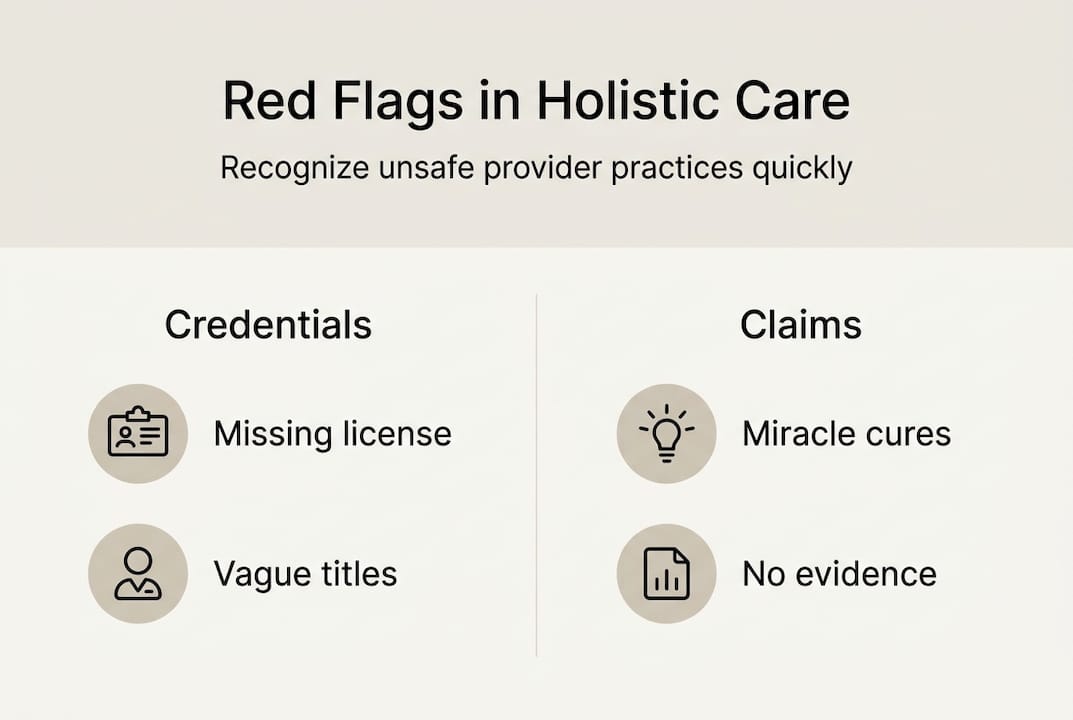
Vague or unregulated titles like "naturopath" (without the ND credential), "holistic health practitioner," or "wellness expert" often indicate practitioners operating outside legitimate healthcare frameworks. While some unlicensed practitioners offer valuable services like health coaching or nutritional guidance, they shouldn't diagnose conditions, prescribe treatments, or position themselves as medical providers.
High-pressure sales tactics for expensive supplement packages, treatment bundles, or membership programs signal prioritization of profit over patient care. Ethical practitioners present treatment options, discuss costs transparently, and respect your decision timeline. Pressure to commit immediately or purchase large quantities upfront warrants serious skepticism.
Lack of malpractice insurance represents a final critical red flag. Licensed healthcare providers in most states must carry malpractice coverage. Practitioners who can't or won't provide proof of insurance may be uninsurable due to past claims or operating outside regulated practice standards.
While holistic approaches show promise, studies indicate adverse events occur in approximately 3% of holistic medicine cases compared to 17% in conventional allopathic medicine, demonstrating relative safety but underscoring the continued need for qualified, accountable practitioners.
Pro Tip: During your initial consultation, directly ask providers about their credentials, licensing status, malpractice insurance, and treatment philosophy regarding conventional medicine integration. Their responses and comfort level with these questions reveal much about their professionalism and legitimacy.
Additional warning signs to monitor:
- Guarantees of specific outcomes or timelines
- Discouragement from seeking second opinions
- Insistence on stopping prescribed medications without consulting your primary doctor
- Exclusive reliance on unproven diagnostic methods like live blood analysis or applied kinesiology
- Refusal to communicate with your other healthcare providers
- Treatment plans that never seem to end or constantly require expensive add-ons
When you encounter these holistic health provider warning signs, trust your instincts. The holistic healthcare field includes many dedicated, qualified practitioners, but it also attracts individuals who exploit people's desire for natural solutions. Protecting yourself requires vigilance and willingness to walk away from providers who don't meet professional standards. Resources like pseudo-medicine warning analysis can help you recognize questionable practices across various alternative medicine modalities.
Confirm evidence-based practices and integration with conventional care
Beyond credentials and red flags, evaluating whether your holistic provider uses evidence-based methods ensures you receive treatments with demonstrated safety and efficacy. Start by asking providers about the scientific support for their recommended treatments. Legitimate practitioners can cite peer-reviewed studies, clinical trials, or established medical literature supporting their approaches.
Look for providers who use FDA-cleared devices or methods when applicable. For example, certain acupuncture needles, biofeedback equipment, and therapeutic devices require FDA clearance. Practitioners using approved tools demonstrate commitment to regulatory compliance and patient safety. Ask to see FDA documentation or approval numbers for any devices used in your treatment.
Integration with conventional care represents perhaps the most important evidence-based practice indicator. Research shows TCIM users often have higher disease burden and lower baseline quality of life, making coordinated care across all providers essential. Holistic practitioners who encourage communication with your primary care physician, specialists, and other healthcare team members prioritize your overall wellbeing over territorial professional boundaries.
Use this checklist to evaluate evidence-based practices:
- Ask the provider to explain the scientific rationale behind recommended treatments and request references to peer-reviewed research.
- Inquire whether they use FDA-cleared equipment or follow established clinical guidelines for their specialty.
- Confirm they're willing to communicate directly with your conventional healthcare providers about treatment plans and progress.
- Request information about potential treatment risks, side effects, and contraindications rather than only hearing benefits.
- Verify they conduct thorough health histories and consider your complete medical picture, including medications and existing conditions.
- Ensure they establish clear treatment goals with measurable outcomes and realistic timelines.
Providers who bristle at questions about evidence or dismiss conventional medicine entirely lack the collaborative mindset necessary for safe integrative care. The best holistic practitioners view themselves as part of your broader healthcare team, not as replacements for conventional doctors.
Maintaining open communication across all your healthcare providers creates the safest treatment environment. Inform your primary care physician about holistic treatments you're pursuing. Share supplement lists, treatment schedules, and any changes you notice. Similarly, keep your holistic practitioners updated about conventional treatments, new diagnoses, or medication changes. This transparency prevents dangerous interactions and ensures everyone works toward your health goals.
Platforms specializing in evidence-based holistic treatments often vet their listed therapies for scientific support, peer-reviewed backing, and safety profiles. Using these curated resources helps you identify treatments with established efficacy rather than experimenting with unproven methods.
When providers demonstrate openness to questions, provide scientific references, encourage conventional care integration, and maintain transparent communication, you've found practitioners worthy of your trust and health investment.
Explore verified holistic providers and treatments with Go Holistic
Now that you understand how to verify credentials, spot red flags, and evaluate evidence-based practices, finding qualified holistic providers becomes much simpler. Go Holistic streamlines this process by offering a curated directory of licensed and credentialed practitioners across acupuncture, naturopathic medicine, massage therapy, Ayurveda, and dozens of other modalities. Every provider in the verified holistic providers directory undergoes credential verification, ensuring you connect with legitimate, qualified practitioners.
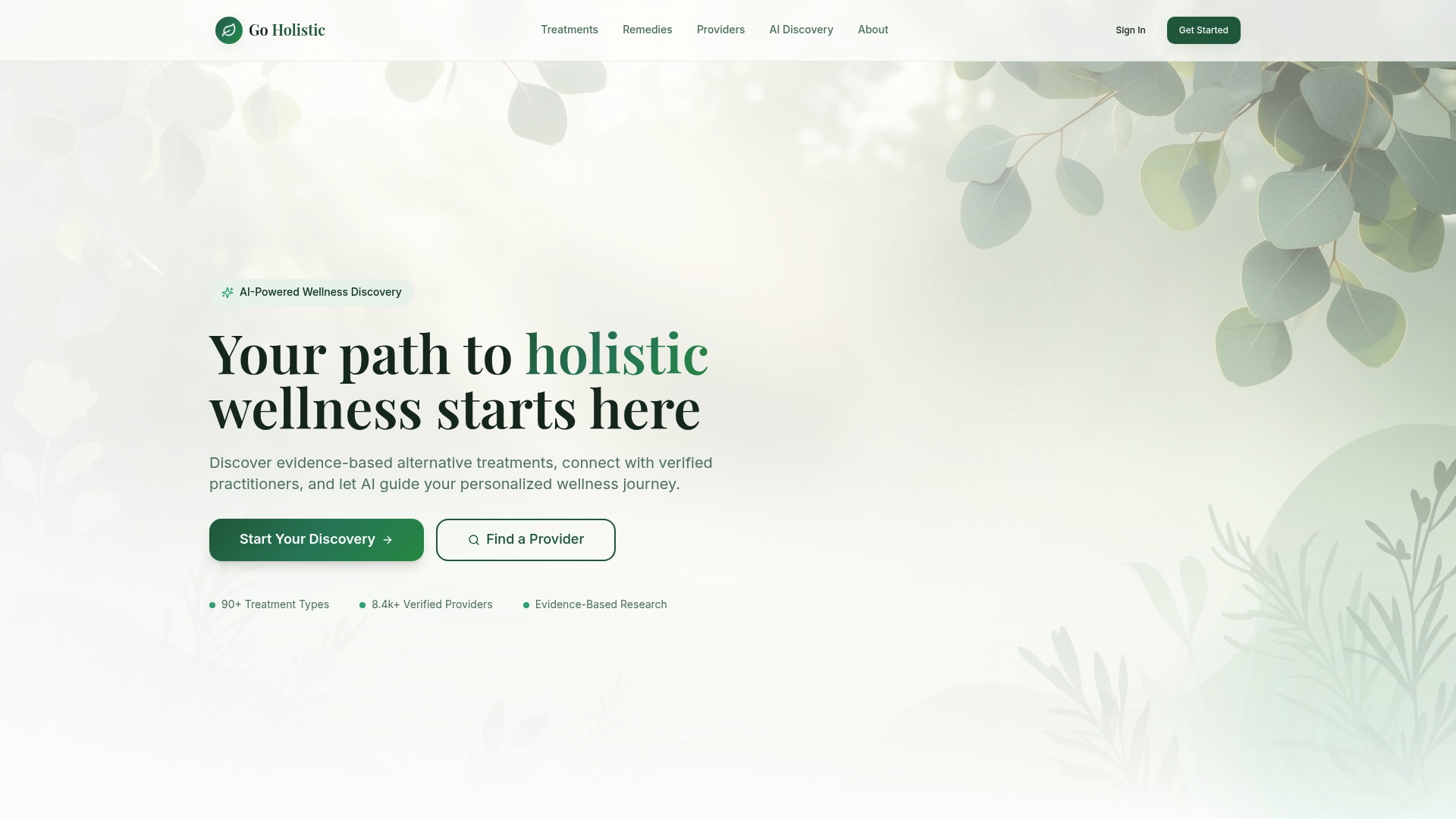
The platform goes beyond simple provider listings by featuring evidence-based holistic treatments backed by research summaries and peer-reviewed studies. You can explore over 200 therapy types, compare approaches, and make informed decisions about which treatments align with your health goals. The holistic wellness platform uses AI technology to analyze your specific health concerns and recommend personalized treatment options, connecting you directly with practitioners who specialize in your areas of need. Start your safe, evidence-based holistic health journey today with providers you can trust.
How do I verify if a holistic provider is licensed in my state?
Visit your state's medical board, naturopathic board, or acupuncture board website and use their license verification tool. Enter the provider's full name or license number to confirm active status, expiration dates, and any disciplinary actions. You can also use national registries like NCCAOM for acupuncturists or AANP for naturopathic doctors to cross-reference credentials. The licensed provider directory at Go Holistic pre-verifies credentials, saving you research time.
What are common red flags indicating a holistic provider may not be legitimate?
Key warning signs include reluctance to share license numbers, claims to cure serious diseases, discouraging you from conventional medical care, and using vague unregulated titles. High-pressure sales tactics for expensive treatment packages and lack of malpractice insurance also signal problems. Trust your instincts when providers become defensive about credential questions or promise unrealistic outcomes. Resources on holistic provider warning signs can help you recognize questionable practices before committing to treatment.
How can I confirm a holistic provider uses evidence-based treatments?
Ask providers to cite peer-reviewed studies supporting their recommended treatments and request documentation for any FDA-cleared devices they use. Legitimate practitioners willingly share scientific references and explain treatment rationales. Look for providers who collaborate with conventional doctors, discuss potential risks alongside benefits, and establish measurable treatment goals. Their openness to questions about evidence and integration with your existing healthcare team indicates commitment to science-based practice. Explore evidence-based treatments through platforms that vet therapies for research support.
Where can I find a directory of qualified holistic health practitioners?
Use trusted platforms like Go Holistic that verify licenses and certifications before listing providers in their directory. National registries such as NCCAOM for acupuncturists, AANP for naturopathic doctors, and NCH for homeopaths also maintain searchable databases. State licensing boards offer verification tools for all regulated healthcare providers. The qualified holistic practitioners directory at Go Holistic combines credential verification with treatment specialties, patient reviews, and direct booking capabilities for convenient, safe provider selection.