

TL;DR:
- Integrative health combines evidence-based natural therapies with conventional medical care for safer, effective support.
- Practical tips include mindfulness, yoga, plant-based eating, and regular movement, tailored to individual needs.
- Success depends on personalized routines, professional guidance, and addressing barriers like cost and access.
Wellness advice is everywhere, and most of it sounds convincing until you try to act on it. Between social media trends, supplement marketing, and conflicting research headlines, figuring out what actually supports your health can feel like navigating a maze with no map. Integrative health, which blends evidence-based natural therapies with conventional medical care, offers a more grounded path. This article cuts through the noise and gives you practical, research-backed tips you can realistically weave into your daily life, whether you are just starting out or looking to deepen an existing wellness routine.
Table of Contents
- How to choose evidence-based integrative health practices
- Top 10 actionable integrative health tips
- Comparing integrative approaches for different goals
- How to personalize your integrative wellness journey
- Why one-size-fits-all integrative wellness fails and what actually works
- Connect with trusted holistic health resources
- Frequently asked questions
Key Takeaways
| Point | Details |
|---|---|
| Evidence matters | Choose integrative practices that are scientifically supported and vetted for safety. |
| Personalization is key | Tailor your wellness strategy to your needs, values, and health conditions for best results. |
| Combine approaches | Blending several healthy habits, not relying on one, leads to greater long-term benefits. |
| Professional support helps | Consulting qualified experts ensures smart, sustainable changes and avoids harm. |
How to choose evidence-based integrative health practices
Before you try any new health approach, it helps to understand what you are actually choosing. Integrative health combines conventional medicine with natural therapies that have credible research behind them. It is not the same as alternative medicine, which replaces standard care entirely. That distinction matters. Integrative augments conventional care, and organizations like Mayo Clinic, NCCIH, and Harvard all favor this model. Alternative approaches that skip conventional care carry more risk and tend to have weaker evidence.
So how do you vet a tip before you try it? Use this simple framework:
- Evidence: Is there peer-reviewed research supporting it? Look for studies from recognized institutions, not just testimonials.
- Safety: Does it interact with any medications you take? Are there contraindications for your health conditions?
- Integration: Does it complement, not replace, your existing care plan?
- Provider qualifications: Is the practitioner licensed and credentialed in their field?
- Marketing red flags: Watch for promises of miracle cures, dramatic before-and-after claims, or pressure to buy expensive products.
The NCCIH recommends that you prioritize evidence-based practices and always integrate them with conventional care while consulting qualified professionals. This is not about being skeptical of natural wellness. It is about being smart and protecting yourself.
Personal research matters too. Spend time on reputable sources like PubMed, NCCIH, or evidence-based wellness guides before committing to a new practice. A good integrative health tip should hold up under scrutiny, not crumble when you ask a few basic questions.
Pro Tip: Before starting any new therapy, bring a list of your current medications and supplements to your doctor. This one step can prevent dangerous interactions and build a more collaborative care team.
Top 10 actionable integrative health tips
Now that you know how to evaluate what you are reading, here are ten practical, research-supported tips to explore. These wellness practices span mind, body, and lifestyle, giving you a well-rounded starting point.
- Mindfulness meditation: Even 10 minutes daily can reduce stress hormones and improve emotional regulation. Start with a free app like Insight Timer.
- Yoga: Gentle yoga supports flexibility, stress relief, and even pain management. Beginners do well with chair yoga or restorative styles.
- Tai chi: This slow, flowing movement practice is especially helpful for balance and joint health in older adults.
- Acupuncture: Particularly useful for chronic pain and nausea, acupuncture and massage are among the most researched integrative therapies.
- Massage therapy: Regular sessions can ease muscle tension, lower anxiety, and improve sleep quality.
- Plant-based eating: Shifting toward whole foods, vegetables, and legumes supports gut health, heart health, and long-term energy.
- Intuitive eating: This approach helps you reconnect with hunger and fullness cues, reducing the stress cycle that often surrounds food.
- Resilience building: Practices like journaling, gratitude exercises, and cognitive reframing strengthen your mental foundation over time.
- Regular movement: You do not need a gym. Daily walks, stretching, or dancing count. Consistency matters more than intensity.
- Mind-body apps: Digital tools for guided breathing, sleep tracking, or movement reminders make it easier to stay on track.
"Practicing five healthy lifestyle habits, including good nutrition, physical activity, sleep, a positive attitude, and strong social connections, can dramatically reduce chronic disease risk." — Harvard Health
Pro Tip: Group activities like community yoga or walking clubs add a social layer that boosts motivation and accountability. Explore top holistic therapies to find what resonates with your lifestyle.

Comparing integrative approaches for different goals
Not every practice serves every goal equally well. This table maps common integrative approaches to the wellness outcomes they support most, based on current research.
| Practice | Chronic pain | Fatigue | Stress and anxiety | Daily energy | Resilience |
|---|---|---|---|---|---|
| Acupuncture | High support | Moderate | Moderate | Low | Low |
| Yoga | Moderate | Moderate | High | Moderate | Moderate |
| Tai chi | Moderate | Low | Moderate | Moderate | Low |
| Massage therapy | Moderate | Moderate | High | Low | Low |
| Mindfulness meditation | Low | Moderate | High | Moderate | High |
| Plant-based nutrition | Low | Moderate | Low | High | Moderate |
| Resilience training | Low | Low | High | Low | High |
| Regular movement | Moderate | High | Moderate | High | Moderate |
A few things worth noting about this table. Evidence shows low-to-moderate benefits from acupuncture, yoga, tai chi, and massage for chronic pain conditions like fibromyalgia and osteoarthritis. These are real benefits, but they are generally modest, and individual response varies quite a bit.
For fatigue specifically, digital integrative programs reduced fatigue and even decreased emergency department visits and hospitalizations in real-world data. That is a meaningful signal that these approaches can do more than just feel good.
Here is a quick guide to who tends to benefit most from each category:
- Acupuncture and massage: People managing chronic pain, cancer-related symptoms, or tension-related headaches.
- Yoga and tai chi: Those seeking gentle movement with mental health benefits, especially older adults.
- Mindfulness and resilience training: Anyone dealing with high stress, anxiety, or emotional burnout.
- Nutrition and movement: People focused on long-term prevention and sustained daily energy.
For a deeper look at holistic methods for chronic health conditions, or to explore alternative therapies by category, there are excellent resources to guide your next step.
How to personalize your integrative wellness journey
Knowing your options is one thing. Building a routine that actually sticks is another. The key is starting with what fits your life right now, not what looks ideal on paper.
Here is a simple checklist to get started safely:
- Consult your primary care provider before adding new therapies, especially if you take medications.
- Research potential interactions between supplements and prescriptions.
- Start with one or two practices rather than overhauling everything at once.
- Adapt each tip to your schedule, budget, and physical limitations.
- Revisit your plan every few weeks and adjust based on what you notice.
Not every practice works for every person. Some yoga poses, for example, are unsafe for glaucoma, and certain herbal supplements can interfere with blood thinners or antidepressants. Checking in with a provider is not just a formality. It is genuinely protective.
Access and cost are real barriers for many people. The good news is that group activities and meditation apps are low-cost entry points that integrative medicine doctors actively recommend. Virtual consultations with dietitians, wellness coaches, or holistic practitioners have also made expert guidance far more accessible than it used to be.
Building personalized wellness habits means honoring your own pace. Motivation ebbs and flows. A flexible plan that you can scale up or down is far more sustainable than a rigid program that collapses the moment life gets busy. And when you need help staying accountable, working with verified holistic providers can make a real difference in your long-term progress.
Pro Tip: Track how you feel, not just what you do. A short daily note about your energy, mood, or sleep gives you real data to share with your care team and helps you spot what is actually working.
Why one-size-fits-all integrative wellness fails and what actually works
Here is something most wellness articles will not tell you: top-ten lists, including this one, are starting points, not solutions. The research behind integrative health is promising but uneven. Some practices have strong evidence for specific conditions and weak evidence for others. Treating any single list as a universal prescription is where people go wrong.
Real transformation in integrative wellness comes from three things working together: evidence, personal values, and professional support. Whole-person assessment, which covers nutrition, sleep, stress, movement, and even spirituality, paired with motivational interviewing, is what separates lasting change from a two-week experiment.
There are also structural barriers that rarely get mentioned: insurance gaps, geographic access to practitioners, and the time cost of building new habits. Acknowledging these barriers is not defeatist. It is realistic, and it helps you plan around them.
The most effective integrative wellness journeys we see are built on personalized wellness outcomes, not borrowed routines. Start with what the evidence supports, layer in what fits your life, and get professional input when you hit a wall. That combination is far more powerful than any list.
Connect with trusted holistic health resources
You have done the reading. Now it is time to take action that actually fits your life.
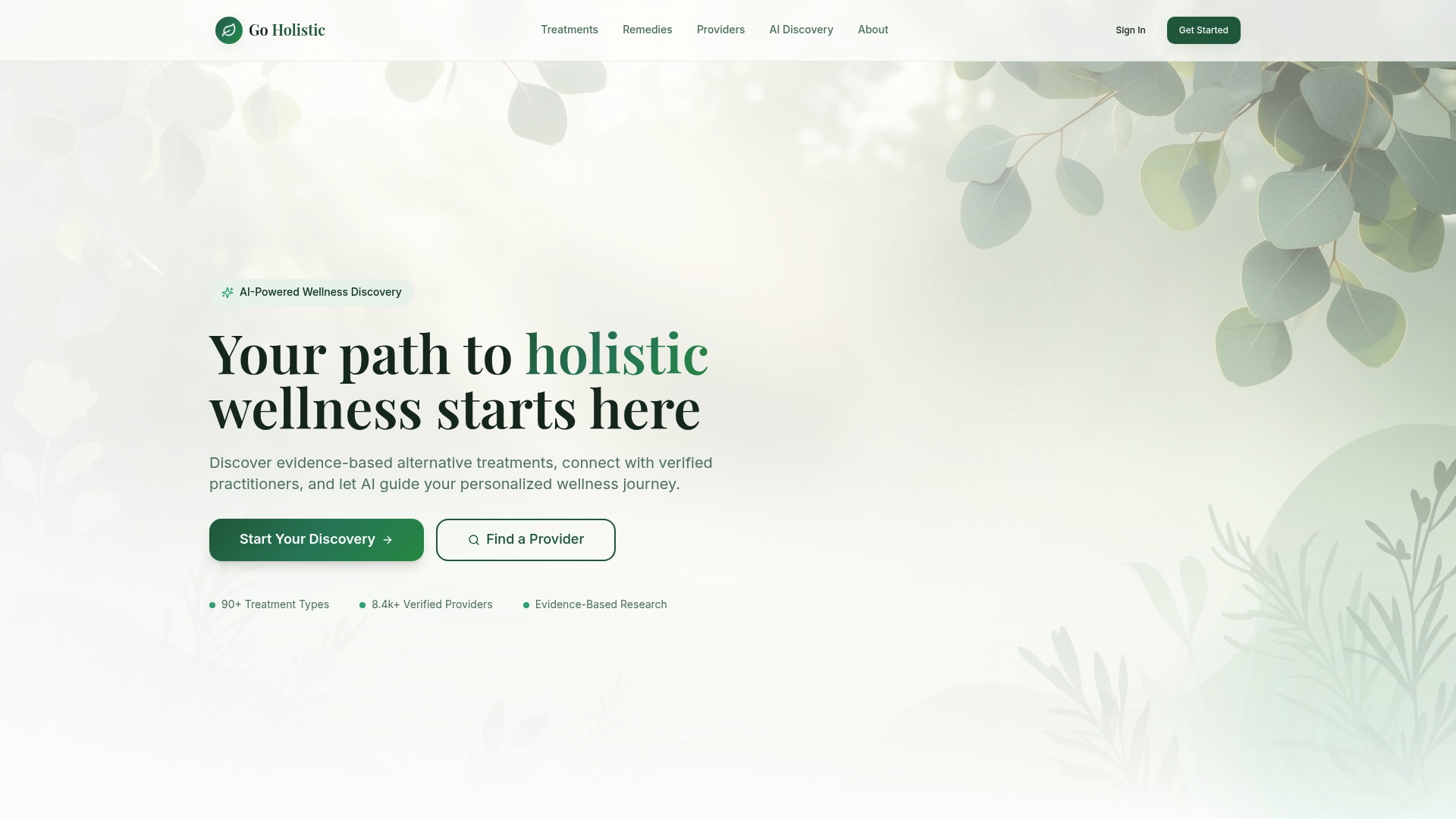
Go Holistic makes it easy to move from curiosity to care. Browse over 200 holistic health treatments in our curated library, each backed by research summaries so you know exactly what you are exploring. Use our verified find holistic providers directory to connect with licensed acupuncturists, massage therapists, Ayurvedic practitioners, and more. Our AI-powered tools analyze your health concerns and match you with personalized recommendations. Whether you are managing chronic pain, stress, or simply want to feel better every day, find practitioners near you and take your next step with confidence.
Frequently asked questions
What is the difference between integrative and alternative health practices?
Integrative health combines evidence-based natural therapies with conventional medical care, while alternative health replaces standard care entirely, which is generally discouraged by leading health organizations.
Are integrative health tips safe for everyone?
Not every approach fits all people; always check for safety concerns and possible medication interactions, and consult a provider before starting any new practice.
Which integrative health tip is best for managing chronic pain or fatigue?
Yoga, tai chi, massage, and acupuncture offer modest but research-supported relief for chronic pain and fatigue, with individual results varying based on the condition and consistency of practice.
How do I start an integrative health routine on a budget?
Begin with free or low-cost options like meditation apps and group walks, and consider virtual consultations to access expert guidance without high out-of-pocket costs.
Do insurance plans cover integrative wellness services?
Coverage varies by plan and provider; some services like acupuncture may be partially reimbursed, so always confirm your benefits before booking.