

TL;DR:
- Millions seek non-invasive treatments annually, but the strength of evidence varies greatly depending on the condition and modality. Carefully matching treatments like exercise, mindfulness, or acupuncture to specific pain mechanisms and reviewing research supports informed decision-making for better outcomes. Building a multimodal, realistic plan grounded in evidence and ongoing reassessment enhances the likelihood of meaningful, sustainable relief.
Millions of people living with chronic health issues turn to non-invasive treatments every year, hoping for relief without surgery or long-term medication. The options available are genuinely exciting. But here's the reality most wellness content glosses over: the strength of evidence behind these treatments varies enormously depending on the condition you have, the specific modality you choose, and how well that choice is matched to your needs. Getting clear on what the research actually shows, rather than what marketing promises, is the most empowering step you can take for your long-term wellness.
Table of Contents
- What are non-invasive treatments?
- What does the evidence say about effectiveness?
- How condition and pain type influence recommendations
- Holistic, mind-body, and lifestyle approaches explained
- How to make informed decisions and set expectations
- Why clear-eyed, evidence-based optimism is key to holistic non-invasive care
- Explore holistic solutions with expert guidance
- Frequently asked questions
Key Takeaways
| Point | Details |
|---|---|
| Evidence varies widely | The effectiveness of non-invasive treatments depends greatly on pain type, intervention, and quality of research. |
| Match treatment to pain | Guidelines and best practices recommend aligning approaches with the specific mechanism and subtype of your chronic condition. |
| Holistic strategies are complementary | Mind-body and lifestyle approaches show modest day-to-day benefits and are best used as part of a broader, balanced plan. |
| Set realistic expectations | Modest improvement is typical from non-invasive options, with progress best seen over weeks to months. |
| Reassess and personalize | Regularly review your progress and tailor your holistic plan based on ongoing results and evidence. |
What are non-invasive treatments?
To understand how and why non-invasive approaches work, it's critical to get clear on what actually counts as "non-invasive" in holistic care. Simply put, non-invasive means any intervention that does not physically break the skin, enter the body, or require surgical access. This is an important distinction because it covers an enormous range of therapies, from ancient practices to cutting-edge technology.
Non-invasive treatments are different from procedures like injections, implants, or surgery. Instead, they work through external mechanisms such as movement, touch, sound, light, electrical stimulation, or the power of focused mental practice. This is what makes them so appealing if you're looking to avoid the risks and recovery time that come with more aggressive medical interventions.
Common categories you'll encounter include:
- Physical therapies: Exercise therapy, physiotherapy, manual therapy, chiropractic care
- Neuromodulation: Transcranial magnetic stimulation (TMS), transcutaneous electrical nerve stimulation (TENS), and related technologies that use electrical or magnetic fields to influence nerve activity
- Traditional and alternative therapies: Acupuncture, massage, Ayurveda, and other time-honored systems
- Mind-body modalities: Mindfulness-based stress reduction (MBSR), yoga, cognitive behavioral therapy (CBT) for pain, guided imagery
- Lifestyle interventions: Nutrition, targeted movement programs, sleep optimization, and stress management
As non-invasive approaches show, these modalities collectively span a spectrum that includes exercise, nutrition, supplements, mind-body techniques, acupuncture, and spinal manipulation for pain. That breadth is both a strength and a reason to be thoughtful about which path suits your specific situation.
What does the evidence say about effectiveness?
With these definitions in mind, it's important to see how specific treatments stack up when put under the microscope of clinical research. Not all non-invasive treatments are equally supported by science, and knowing the difference protects you from wasted effort and disappointment.
For one of the most common complaints, low back pain, the picture is nuanced. Large Cochrane review research confirms that non-pharmacological treatments show benefits for some outcomes in non-specific low back pain, but the quality of evidence varies substantially across modalities. Some approaches show consistent moderate benefit, while others have only weak support.
For chronic neuropathic pain (pain caused by nerve damage or dysfunction), the evidence for non-invasive neuromodulation is promising but still limited. Research indicates that neuromodulation can reduce pain intensity in neuropathic conditions, but the overall certainty of that evidence is rated low. That doesn't mean it's useless. It means we need more robust trials before it can be considered a reliable first-line choice.
"First-line non-invasive options like antidepressants and α2δ ligands are strongly supported, while neuromodulation and opioids are later-line treatments, reflecting a graded approach to evidence-based care."
Here's a quick comparison of common non-invasive treatments and the general quality of evidence behind them for chronic pain:
| Treatment | Condition best studied | Evidence quality | Typical benefit magnitude |
|---|---|---|---|
| Exercise therapy | Non-specific low back pain | Moderate | Moderate pain and function improvement |
| Manual therapy (spinal) | Low back pain | Low to moderate | Small to moderate short-term benefit |
| Acupuncture | Various chronic pain types | Low to moderate | Modest pain reduction |
| Mindfulness-based therapy | Chronic pain, fibromyalgia | Moderate | Moderate quality-of-life improvement |
| Transcutaneous electrical stimulation (TENS) | Neuropathic, musculoskeletal pain | Low | Variable, often small |
| Cognitive behavioral therapy (CBT) | Chronic pain with psychological overlay | Moderate to high | Significant function and mood improvement |
| Yoga | Low back pain, general wellness | Moderate | Modest pain, improved function |
Looking for science-backed natural pain relief that's grounded in this kind of evidence? The key is choosing treatments that match both your condition and the strength of available research. You can also explore evidence-based holistic methods to see how different modalities compare within integrative care frameworks.
How condition and pain type influence recommendations
Differences in evidence lead directly into how physicians, holistic practitioners, and guidelines make nuanced recommendations based on pain type. This is where a lot of wellness content falls short: it treats "chronic pain" as a single thing when, in reality, your specific pain mechanism changes everything about which treatments are appropriate.
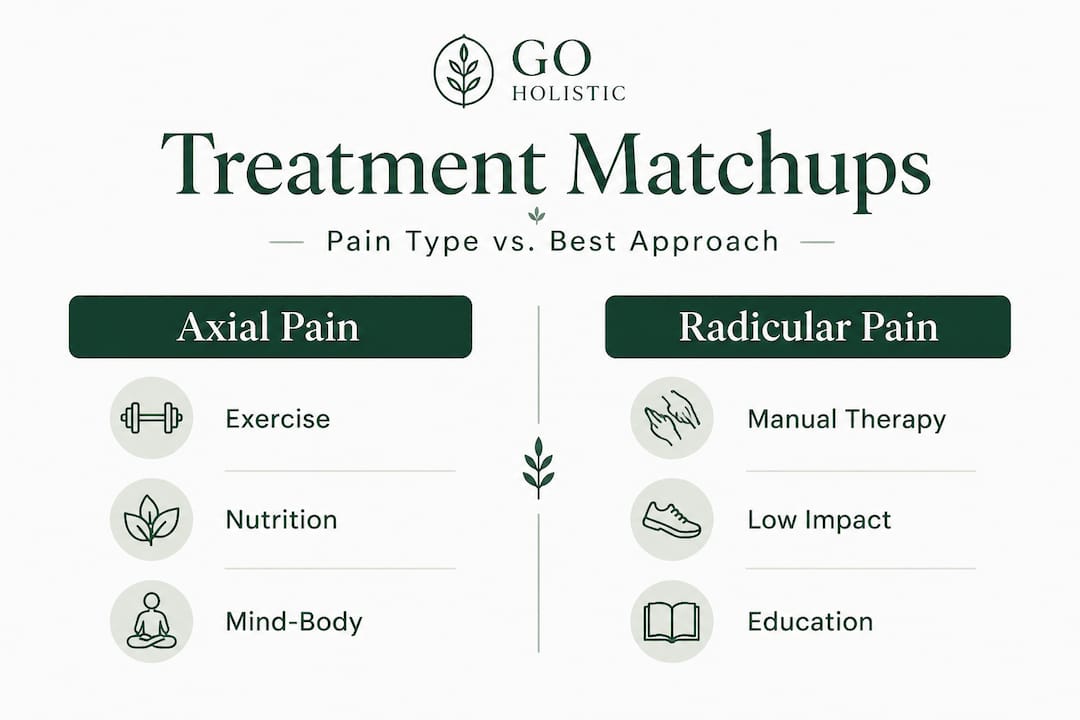
There are two broad categories that come up often in clinical settings. Axial pain refers to pain centered in the spine itself, such as lower back stiffness with no radiation down the legs. Radicular pain (sometimes called nerve root pain) involves sensations like shooting pain, numbness, or tingling that travel down an arm or leg, indicating nerve involvement. These two presentations often require quite different approaches.
For people with radicular or nerve-involved chronic pain, physical manipulation or high-intensity exercise may not be the first recommendation. Mind-body approaches or targeted neuromodulation might be more appropriate. For axial pain without nerve involvement, structured exercise therapy and manual therapy tend to have stronger support.
| Pain type | Commonly supported approaches | Approaches with limited support |
|---|---|---|
| Axial low back pain | Exercise therapy, manual therapy, CBT | Most interventional procedures |
| Radicular (nerve root) pain | Targeted physical therapy, mindfulness | Aggressive manipulation, unsupported TENS |
| Neuropathic pain | First-line medications, select neuromodulation | Opioids as first-line, most surgical options |
| Fibromyalgia / central sensitization | CBT, graded exercise, mindfulness | Single-modality physical approaches alone |
Clinical guidelines add another layer of caution here. BMJ Rapid Recommendations note that most interventional procedures for chronic spine pain should be avoided outside of clinical trials for many patient groups. That's a strong signal: even well-established medical institutions are urging restraint with unproven procedures, and safe non-invasive options grounded in evidence deserve priority.
Pro Tip: Before committing to any non-invasive treatment program, ask your practitioner to explain which specific type of pain mechanism the treatment targets. If they can't answer clearly, that's a sign to seek a second opinion or more information.
Holistic, mind-body, and lifestyle approaches explained
Many people want to look beyond traditional options, seeking holistic methods. Understanding the benefits and limitations of these is the next step, and it starts with having realistic expectations.

Holistic care rarely works through a single heroic treatment. Instead, it builds strength through combination. A typical multimodal program for someone with chronic low back pain might include twice-weekly yoga, daily mindfulness practice, dietary anti-inflammatory adjustments, and monthly acupuncture sessions. Each piece contributes modestly, but together they can create meaningful shifts in how you feel and function day to day.
That said, it's worth being honest about what "meaningful shifts" usually look like in practice. Multimodal mind-body approaches for chronic pain often deliver modest rather than dramatic benefits. You might experience a 20 to 30 percent reduction in pain intensity, improved sleep, better mood, and greater capacity for daily activities. That's genuinely valuable, but it's not the same as a cure. Setting this expectation from the beginning protects you from frustration and helps you stay consistent.
Mind-body techniques deserve special attention because they target something most physical treatments don't: the way your brain processes and amplifies pain signals. Chronic pain often involves central sensitization, where the nervous system becomes hypersensitive. Practices like mindfulness meditation, progressive muscle relaxation, and yoga have been shown to modulate this pain-amplifying process for many people, improving both pain perception and emotional resilience.
Here are the most well-supported holistic and lifestyle approaches for chronic conditions:
- Mindfulness-based stress reduction (MBSR): Structured eight-week programs with solid evidence for chronic pain and related psychological distress
- Yoga: Particularly beneficial for low back pain; also supports mental health and flexibility
- Tai chi: Strong evidence for balance, fall prevention, and chronic musculoskeletal pain in older adults
- Anti-inflammatory nutrition: Diets rich in omega-3s, plants, and whole foods show support for inflammatory pain conditions
- Sleep hygiene interventions: Chronic pain and poor sleep reinforce each other; addressing sleep often reduces pain perception
- Graded exercise therapy: Gradual, progressive movement that rebuilds physical capacity without triggering flare-ups
You can find a wealth of evidence-based wellness practices and deepen your understanding of evidence-based wellness frameworks to see how these fit into a full holistic care plan.
Pro Tip: Don't wait until your pain is severe before adding lifestyle interventions. Starting with consistent movement and stress management early in a chronic condition creates a much stronger foundation than trying to "fix" things after years of inactivity.
How to make informed decisions and set expectations
With a wealth of treatments available, the final core step is knowing how to apply all this knowledge to your own wellness journey. Here's a practical process you can follow:
-
Identify your pain type and mechanism. Work with a qualified practitioner to determine whether your pain is primarily inflammatory, neuropathic, musculoskeletal, or rooted in central sensitization. This step changes everything about which approaches are appropriate for you.
-
Prioritize condition-matched evidence. Once you know your pain type, look specifically for treatments that have been studied in people with your condition. General claims about a therapy being "effective for pain" are far less useful than evidence tied to your specific situation. Mechanism-based selection targets neuroplasticity and central sensitization in chronic pain, but outcomes still depend on the individual and the treatment protocol used.
-
Set incremental, realistic goals. Instead of aiming to eliminate pain entirely, focus on measurable improvements such as reduced pain on a 0 to 10 scale, improved sleep quality, or greater ability to walk or exercise. Small, consistent gains compound over time.
-
Build a multimodal plan. Combine two or three well-supported approaches rather than relying on a single treatment. The whole is typically greater than the sum of its parts in holistic chronic pain care.
-
Reassess regularly and adjust. Give each approach a fair trial, typically six to twelve weeks, then honestly evaluate whether it's moving the needle. Balanced plans that pair empirically supported options with transparent expectations and ongoing reassessment are consistently recommended by integrative health researchers.
-
Stay engaged with your practitioner. Regular check-ins allow you to course-correct, avoid treatments that aren't working, and build on what is. Don't let the journey become passive.
Your holistic wellness checklist is a useful starting point for mapping these steps into your own routine.
Why clear-eyed, evidence-based optimism is key to holistic non-invasive care
Here's a take you won't often find in wellness content: the biggest obstacle most people face in holistic chronic care isn't a lack of treatment options. It's an uncalibrated mindset that swings between cynicism and magical thinking.
Some people dismiss non-invasive and holistic treatments entirely because they "haven't seen the proof." Others dive into every new modality with the belief that this one will finally be the cure. Both extremes lead to poor outcomes. The cynics miss genuine, meaningful relief. The true believers burn time, money, and emotional energy chasing transformations that rarely arrive.
The most effective approach sits between these poles. We've seen, across the evidence summarized here, that non-invasive treatments like mindfulness, exercise therapy, and carefully chosen neuromodulation genuinely improve quality of life for many people with chronic conditions. The benefits are real. They are also, more often than not, modest. That's not a failure of the treatments. It reflects the complexity of chronic pain.
What's often undervalued in mainstream health conversations is self-efficacy, the growing sense that you have tools and agency in managing your own health. Many people who stick with a well-designed holistic program report that the improvement in how they feel about their condition is just as valuable as the reduction in symptom severity. That shift has lasting effects on daily function, mental health, and long-term resilience.
The benefits of holistic directories and guided practitioner discovery are most powerful when you bring this balanced mindset with you. Seek verified, credentialed practitioners. Ask about their evidence base. And commit to the process, not just the outcome.
Explore holistic solutions with expert guidance
You've now got a clear, honest picture of what non-invasive treatments can offer and how to choose wisely. The next step is finding the right support for your unique wellness journey.
At Go Holistic, we connect you with verified, credentialed practitioners across more than 200 therapy types, from acupuncture and Ayurveda to mindfulness coaching and physical therapy. Our AI-powered platform analyzes your health concerns and surfaces personalized, research-backed recommendations so your choices are grounded in evidence, not guesswork. Browse our full library of holistic treatment options, find holistic providers near you, or explore wellness practitioners near you matched to your specific goals. Get started today, free, and take your first confident step toward lasting wellness.
Frequently asked questions
Are non-invasive treatments safe for everyone?
Most non-invasive treatments are safe for a wide range of people, but safety always depends on the specific modality and your individual health conditions. Mind-body and lifestyle approaches are generally considered safe but must be matched to the individual to be both effective and appropriate.
How long does it take to see results from non-invasive treatments?
Results vary widely depending on the treatment and the condition being addressed. Most clinical studies assess outcomes at short-term follow-up, and Cochrane review data for non-specific low back pain typically measures benefits within three months of starting treatment.
Do holistic and mind-body approaches replace medical treatment?
Holistic and mind-body approaches are best used alongside standard medical care, not instead of it. Multimodal approaches, including mind-body interventions, are recommended as part of integrated chronic pain management rather than as sole replacements for medical care.
What are the most evidence-based non-invasive treatments for chronic pain?
The strongest evidence typically supports exercise therapy, CBT, and mind-body practices, with specific options varying by pain type. For neuropathic pain specifically, first-line options include certain medications alongside exercise and mind-body approaches, with neuromodulation considered for later-line use when initial options haven't been sufficient.