

TL;DR:
- Non-invasive therapies like PEMF can significantly reduce pain and medication use safely.
- These treatments modulate neural activity and support tissue healing without surgical risks.
- Success often requires patience, ongoing sessions, and integration with holistic lifestyle practices.
A treatment that cuts pain by 36% and slashes medication use by nearly half, without a single incision, sounds too good to be true. Yet PEMF therapy (pulsed electromagnetic field therapy) does exactly that for joint and soft tissue pain, outperforming standard care by a wide margin. If you've been managing a chronic condition and feel stuck between "just take this medication" and "you'll need surgery eventually," there's a growing, evidence-backed middle ground worth knowing about. This article walks you through how non-invasive therapies actually work, what the research says, and how they can fit beautifully into a whole-person wellness approach.
Table of Contents
- Understanding non-invasive treatments: What sets them apart?
- The science: Effectiveness and safety of non-invasive therapies
- Limitations, nuances, and patient selection: Getting the best results
- How non-invasive therapies support holistic wellness goals
- Our perspective: What most people miss about non-invasive care
- Find tailored holistic non-invasive care
- Frequently asked questions
Key Takeaways
| Point | Details |
|---|---|
| Safer for chronic conditions | Non-invasive therapies offer significant pain relief with fewer risks compared to surgery or medications. |
| Evidence supports outcomes | Research shows these approaches can outperform standard care in pain and medication reduction. |
| Tailor to your needs | Choosing the best treatment depends on your health goals, risk profile, and desire for a holistic wellness approach. |
| Integration maximizes results | Combining non-invasive therapy with holistic lifestyle choices produces the strongest and longest-lasting results. |
Understanding non-invasive treatments: What sets them apart?
With growing interest in less aggressive health options, it's essential to clarify what non-invasive actually means and exactly how these therapies function.
The term "non-invasive" refers to any treatment that does not require surgery, incisions, or the insertion of instruments into the body. That definition might make them sound simple, even passive. In reality, many of these therapies work through sophisticated biological mechanisms that rival, and sometimes outperform, their more aggressive counterparts.
Some of the most researched non-invasive modalities include:
- tDCS (transcranial direct current stimulation): Uses low-level electrical currents applied to the scalp to shift neural excitability and reduce pain perception
- rTMS (repetitive transcranial magnetic stimulation): Delivers magnetic pulses to specific brain regions to interrupt pain signaling
- PEMF (pulsed electromagnetic field therapy): Uses electromagnetic pulses to reduce inflammation, improve circulation, and support tissue repair
- PBMT (photobiomodulation therapy): Applies specific wavelengths of light to stimulate mitochondrial activity and cellular healing
- Acupuncture, massage therapy, and Ayurvedic practices: Time-tested modalities that influence the nervous system, energy pathways, and physiological balance
Understanding what integrative health means helps put these tools in context. They aren't replacements for all medical care. They are a smarter, lower-risk starting point for many chronic conditions, particularly when the goal is sustainable management, not just temporary symptom suppression.
"Non-invasive treatments are prioritized for chronic pain management due to their ability to modulate neural activity and neuroplasticity without surgical intervention, offering a safer alternative to invasive methods."
The appeal is real, not just philosophical. Shorter recovery times, fewer complications, and alignment with natural healing make these approaches particularly attractive for people managing ongoing health challenges. When your goal is to feel better for years, not just weeks, the method matters as much as the outcome.
Pro Tip: Ask any practitioner you consult about which mechanism of action their recommended therapy targets. Understanding whether a treatment works via neural modulation, anti-inflammatory effects, or tissue repair helps you evaluate whether it fits your specific condition.
The science: Effectiveness and safety of non-invasive therapies
Understanding these therapies' core science lays the groundwork for examining the evidence behind their outcomes and real-world advantages.
The most common objection to non-invasive care is the assumption that "gentle" equals "weak." The data tells a different story. Let's look at the numbers.
Comparative outcomes: Non-invasive vs. standard care
| Therapy | Condition | Pain Reduction | Medication Use Reduction |
|---|---|---|---|
| PEMF | Joint/soft tissue pain | 36% | 55% |
| Standard care | Joint/soft tissue pain | 10% | 12% |
| rTMS | Neuropathic pain | ~50% in responders | Reduced with treatment |
| tDCS/rTMS | Chronic low back pain | Significant vs. sham | Supports function |
The PEMF superiority data is striking. A 55% reduction in pharmacologic use is not a minor footnote. For people managing chronic joint pain who are concerned about long-term medication side effects, that figure represents a meaningful shift in quality of life.
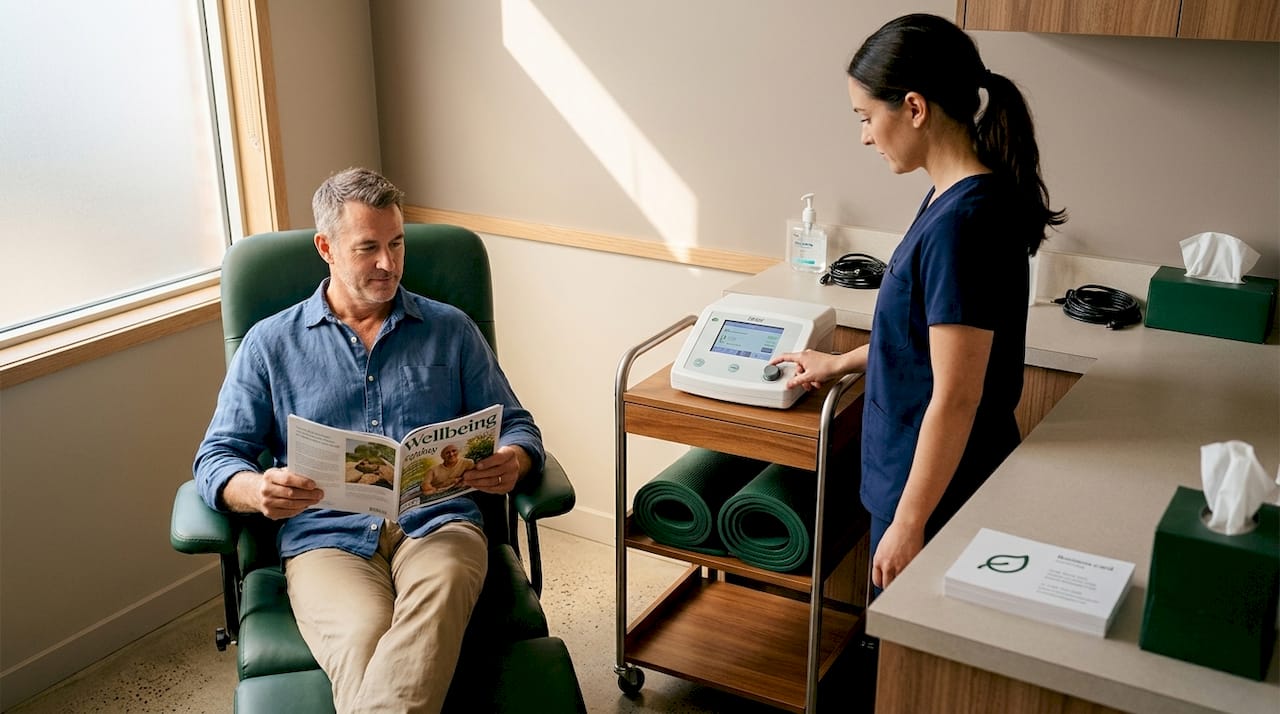
The safety profile is equally compelling. Researchers use two key metrics to evaluate therapies objectively: NNT (number needed to treat, meaning how many patients need the therapy for one to benefit) and NNH (number needed to harm, meaning how many need the therapy before one experiences an adverse effect). For rTMS in neuropathic pain, the NNT is 4.2 for a 50% reduction in pain, with a very high NNH, indicating an excellent safety profile compared to most pharmacological alternatives.
Here's a practical way to understand that: if you and four other people with neuropathic pain try rTMS, statistically, at least one of you will cut your pain in half. The chance of harm? Extremely low. That balance is rare in medicine.
For chronic low back pain specifically, research confirms that brain stimulation therapies like tDCS and rTMS significantly reduce pain intensity and disability compared to sham treatments. This is important because chronic low back pain is one of the leading causes of disability globally, and most standard interventions carry notable risks or diminishing returns over time.
Want to dig deeper into the research? Exploring evidence-based holistic approaches can help you understand which therapies have the strongest backing for your specific situation. The breadth of holistic treatment options now available means there's almost always a research-supported path worth exploring before moving to more invasive options.
Key outcomes worth tracking with non-invasive care:
- Pain intensity scores on validated scales (like the VAS or NRS)
- Functional improvement in daily activities
- Reduction in prescribed medication dosage or frequency
- Sleep quality improvements, since pain and sleep are deeply connected
- Patient-reported wellbeing and mood changes
These aren't soft outcomes. They're measurable, reproducible, and increasingly tied to long-term health trajectories.
Limitations, nuances, and patient selection: Getting the best results
While non-invasive options are compelling, an evidence-backed approach also means knowing when and how to use them most effectively.
No therapy is a universal answer. Understanding who benefits most from non-invasive care, and when invasive approaches are genuinely warranted, is what separates thoughtful wellness planning from wishful thinking.
Who tends to respond best to non-invasive therapies:
- People with low-to-moderate risk chronic conditions such as fibromyalgia, osteoarthritis, and chronic back pain
- Individuals who are not surgical candidates due to age, comorbidities, or personal preference
- Those who want to reduce medication load as a primary goal
- Patients at early or moderate stages of a condition, before structural damage becomes severe
For conditions like intermittent claudication (reduced blood flow to the legs causing cramping during activity), non-invasive treatments offer a safer path with fewer complications, even though invasive options may produce faster short-term gains in walking distance and circulation markers. This is a useful example because it shows that "better short-term" doesn't always mean "better overall" when you factor in recovery burden and complication risk.
When invasive approaches may be warranted:
| Situation | Likely best approach |
|---|---|
| Structural joint damage requiring repair | Surgical intervention |
| Acute vascular emergency | Invasive/surgical |
| Low-risk chronic pain, early-stage | Non-invasive first-line |
| Moderate-high risk subsets needing specific outcomes | Individualized; may include invasive |
The research is clear: non-invasive care is preferred first-line for low-risk chronic pain patients, while invasive options may benefit moderate to high-risk subsets with very specific outcome goals. This isn't an either/or situation. It's a spectrum.
One nuance worth noting is that some non-invasive therapies require repeated sessions to maintain their effects. This isn't a flaw; it's simply how many physiological processes work. Think about how physical therapy works. A few visits rarely produce lasting change. Consistent, ongoing care does. The same principle applies to rTMS, tDCS, and even acupuncture.
Pro Tip: When consulting with a practitioner, ask specifically about maintenance protocols. How many initial sessions are recommended? What does a long-term care plan look like? This gives you a realistic picture of both commitment and cost.
Finding the right practitioner makes all the difference. When you're ready to find holistic practitioners who specialize in non-invasive approaches, look for those who discuss personalized protocols and are transparent about expected timelines. You can also browse resources on the best holistic therapies currently supported by research to arrive at consultations well-informed.
How non-invasive therapies support holistic wellness goals
After evaluating the nuances of when and how to use non-invasive therapies, it's clear these approaches also fit seamlessly with a holistic view of wellness and prevention.
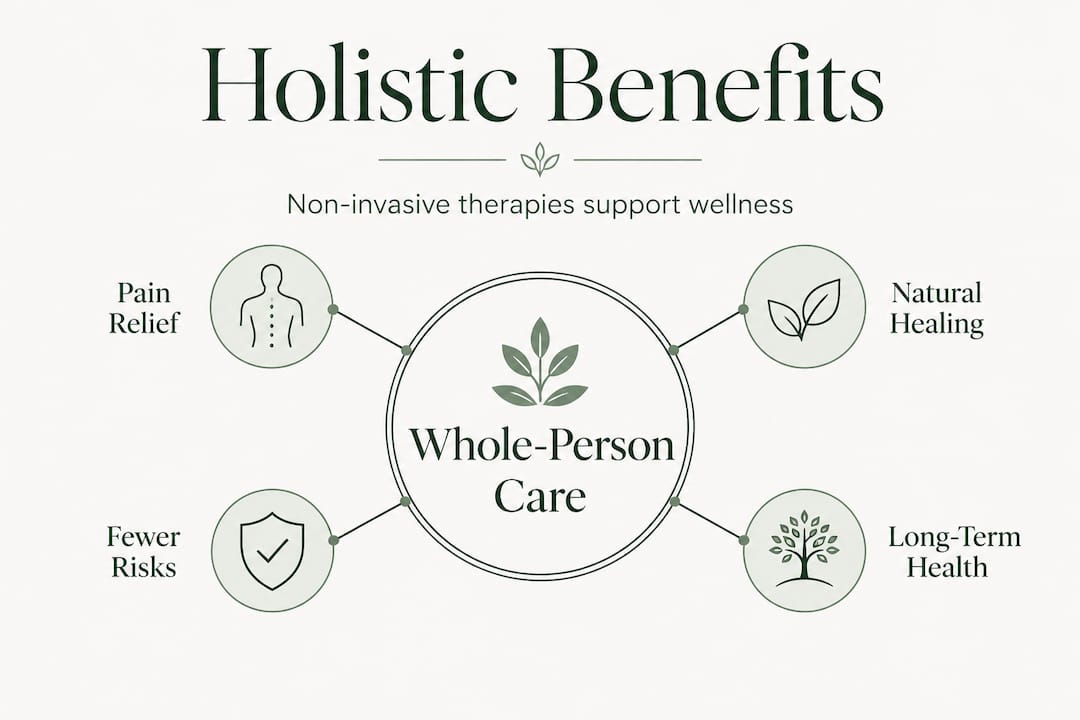
The connection between non-invasive treatments and whole-person wellness isn't incidental. It's structural. These therapies are built on mechanisms that support the body's own capacity to heal and regulate itself.
Specifically, the mechanisms at work include mitochondrial activation through PBMT, neural excitability modulation via tDCS and rTMS, and nitric oxide signaling through PEMF. These processes promote anti-inflammatory effects, tissue repair, and pain pathway normalization. No incisions. No foreign substances. Just targeted stimulation of processes the body already knows how to do.
This aligns naturally with what most wellness-focused people are already pursuing:
- Reduced medication reliance: PEMF and neuromodulation therapies actively support reducing drug dependence while managing chronic conditions effectively
- Shorter recovery and less downtime: Without surgery or heavy medication adjustments, you stay active and engaged in your daily life
- Patient empowerment: These therapies encourage you to take an active role in your health, tracking your responses and working with practitioners to refine your care
- Integration with lifestyle: They layer well with nutrition, movement practices, mindfulness, and sleep optimization because they don't disrupt the body's natural rhythms
You might explore alternative holistic treatments that pair especially well with technologies like PEMF or rTMS, such as anti-inflammatory eating patterns, gentle movement therapies, or mindfulness-based stress reduction. When these elements work together, the result is often greater than any single therapy could achieve alone.
The big picture here is balance. Non-invasive therapies don't fight your body. They support it. That's a meaningful distinction when you're managing something long-term.
Our perspective: What most people miss about non-invasive care
Here's what tends to get lost in conversations about non-invasive treatments: people often expect them to work exactly like medications, producing fast, strong, obvious results. When that doesn't happen in the first two sessions, they assume the therapy isn't working and move on.
That mindset is one of the biggest barriers to getting real results from these approaches. The optimal outcomes come from thoughtful protocol design, including targeting the right brain region (like the primary motor cortex, M1, in tDCS), consistent session frequency, and integration with broader lifestyle changes. This requires patience and partnership with an experienced practitioner.
We also think the framing of "alternative vs. mainstream" is outdated and honestly unhelpful. Non-invasive treatments aren't waiting in the wings for medicine to accept them. They're already in clinical practice, supported by controlled trials, and recommended in evidence-based guidelines for conditions ranging from depression to neuropathic pain. The better question isn't whether they work; it's how to match the right therapy to the right person at the right time.
The future of chronic condition management points toward exactly this: proactive, personalized, low-risk care that respects the whole person. That's not a soft philosophy. It's where the evidence is pointing. Exploring holistic evidence-based strategies isn't stepping outside modern medicine. It's stepping into a smarter version of it.
Find tailored holistic non-invasive care
If this article has shifted how you think about managing your chronic condition, the next step is connecting with people who can actually help you build a plan. Reading about PEMF and rTMS is useful. Working with a practitioner who knows how to apply them to your specific needs is transformative.
Go Holistic makes that connection straightforward. You can browse our curated library of holistic health treatments covering more than 200 therapy types, each supported by research summaries so you can evaluate options with confidence. Ready to find someone local? Search our verified directory of local holistic practitioners filtered by specialty, location, and approach. You can also explore our full list of holistic providers and book a consultation directly. Your wellness journey doesn't have to be complicated. It just has to start somewhere.
Frequently asked questions
What are common examples of non-invasive treatments for chronic pain?
Common non-invasive treatments include rTMS, tDCS, PEMF, and PBMT, all of which modulate neural or cellular function to reduce pain without surgery or incisions. Acupuncture, massage therapy, and Ayurvedic practices are also widely used non-invasive options.
Are non-invasive therapies always safer than surgery or medications?
Non-invasive therapies generally carry fewer risks and complications, especially for chronic conditions where surgical risk may outweigh benefit. However, the best option always depends on your specific condition, risk profile, and a thorough assessment with a qualified health professional.
How long do non-invasive treatments take to show results?
Some people notice improvements within a few sessions, but effects often require repeated applications over weeks for meaningful, lasting relief. Combining therapy with holistic lifestyle practices tends to enhance and sustain outcomes.
Can non-invasive treatments replace medications for chronic conditions?
Research shows that therapies like PEMF can reduce pharmacologic use by 55% for certain pain conditions, but complete medication replacement should always be personalized and reviewed regularly with your healthcare provider.