

Finding reliable support for chronic pain and wellness can feel overwhelming when every search yields conflicting advice. Many platforms promise holistic care but leave you unsure which practitioners are truly qualified. Holistic directories change this by offering integrated care approaches that unite physical, mental, and social health needs into one human-centered solution. Discover how evidence-based practitioner listings empower your journey toward comprehensive well-being and debunk common myths holding people back.
Table of Contents
- Defining Holistic Directories and Common Myths
- Types and Features of Holistic Directories
- How Holistic Directories Streamline Wellness Discovery
- Practitioner Verification and Evidence-Based Safety
- Comparing Holistic Directories to Alternatives
Key Takeaways
| Point | Details |
|---|---|
| Holistic Directories Connect People with Verified Practitioners | These platforms focus on integrating care across various wellness modalities, promoting evidence-based practices. |
| Holistic Care is Comprehensive | It addresses physical, mental, and social well-being rather than treating symptoms in isolation. |
| Myths About Holistic Directories | Common misconceptions include the idea that holistic means unscientific or that these directories are only for alternative medicine. |
| Importance of Practitioner Verification | Quality directories ensure practitioners are thoroughly vetted, ensuring safety and accountability for users. |
Defining Holistic Directories and Common Myths
Holistic directories are curated platforms connecting people with verified practitioners across multiple wellness disciplines. They represent a shift toward accessible, evidence-based healthcare that honors the whole person, not just symptoms.
Unlike traditional medical directories, holistic directories emphasize integrated care approaches that address physical, mental, and social dimensions of health. These platforms help you find practitioners spanning acupuncture, massage therapy, Ayurveda, herbalism, and dozens of other modalities—all verified and evidence-supported.
But what exactly qualifies as "holistic"? The answer surprises many people.
What Holistic Really Means
Holistic health isn't about choosing one treatment over another. Instead, it's about recognizing that your body, mind, and social connections work together. The World Health Organization defines health as a state of complete physical, mental, and social well-being—and holistic healthcare applies this comprehensive humanistic approach to actual patient care.
This means a holistic practitioner doesn't just treat your chronic pain in isolation. They explore your sleep patterns, stress levels, diet, relationships, and lifestyle. They ask questions like: Are you sleeping poorly? Experiencing work stress? Feeling isolated? All of these affect healing.
Real holistic care is integrative, not alternative-only. Holistic directories help you find practitioners who blend evidence-based methods with personalized, humanistic care.
Five Common Myths About Holistic Directories
Misunderstandings keep many people from accessing holistic care. Here are the biggest ones:
-
Myth 1: Holistic means "unscientific." Practitioners in reputable directories undergo rigorous vetting and their methods are evidence-backed through research-supported care models. Acupuncture has thousands of clinical trials; massage therapy shows measurable benefits for chronic pain.
-
Myth 2: Holistic directories are "alternative medicine" only. Many practitioners integrate conventional insights with holistic principles. Your acupuncturist understands anatomy; your herbalist knows drug interactions.
-
Myth 3: All practitioners in holistic directories are equally qualified. Legitimate directories verify credentials, licenses, and certifications before listing anyone. Go Holistic, for example, requires evidence of licensing and training.
-
Myth 4: Holistic care replaces conventional medicine. It doesn't. It complements medical care, especially for chronic pain, stress-related conditions, and quality-of-life improvements.
-
Myth 5: Holistic directories are expensive and inaccessible. Modern platforms offer flexible pricing, telehealth options, and free consultation tiers to reach more people.
Holistic directories democratize access to verified wellness practitioners—making personalized, evidence-supported care available to anyone with an internet connection.
Pro tip: When exploring a holistic directory, check practitioner credentials first. Look for specific licenses (like Licensed Acupuncturist or Registered Massage Therapist) and verify their training in your condition of interest.
Types and Features of Holistic Directories
Not all holistic directories work the same way. Some focus on local practitioners in your city, others span globally. Some are free, others charge premium membership fees. Understanding these differences helps you pick the right platform for your wellness journey.
Holistic directories vary based on scope, specialization, and how they verify practitioners. The best ones combine targeted practitioner listings with robust verification systems and user-friendly search features.

Directory Types: Scope and Specialization
Holistic directories fall into distinct categories based on geographic reach and focus:
-
Local directories list practitioners in specific cities or regions. Useful if you prefer in-person sessions and want someone nearby.
-
National directories cover practitioners across an entire country. Helpful if you're willing to travel or explore multiple states.
-
Global directories connect you with practitioners worldwide. Essential for rare specialties or if you prefer online consultations.
-
Specialty-focused directories emphasize specific modalities like acupuncture-only or Ayurveda-specific platforms. These offer deeper expertise in one area.
-
Multi-modality directories list diverse practitioners—acupuncturists, massage therapists, herbalists, energy healers—all in one place. This matches how most people seek holistic care.
Specialized directories serve niche wellness needs by offering targeted listings and referral traffic that generic health directories cannot provide.
Here's how common holistic directory types address user needs:
| Directory Type | Ideal For | Geographic Reach | Modalities Listed |
|---|---|---|---|
| Local | In-person care, nearby visits | Single city or region | Varies, usually multiple |
| National | Those open to travel | Nationwide | Broad, most licensed fields |
| Global | Seeking rare specialties or telehealth | Worldwide | Extensive, including niche practices |
| Specialty-focused | Deep expertise in one modality | Regional to global | Single discipline like Ayurveda |
| Multi-modality | Users wanting integrated options | Local to global | Acupuncture, massage, herbalism, more |
Key Features That Matter
Beyond type, quality holistic directories share essential features:
-
Verified credentials showing licenses, certifications, training, and years of experience. Never trust unverified listings.
-
Searchable filters allowing you to narrow by modality, location, insurance acceptance, availability, and language spoken.
-
User reviews and ratings from real patients sharing outcomes and experiences. Look for patterns, not single reviews.
-
Practitioner profiles with detailed bios, treatment approaches, conditions they address, and pricing transparency.
-
Booking integration letting you schedule consultations directly without phone calls or back-and-forth emails.
-
AI-powered recommendations suggesting practitioners matched to your specific health concerns and preferences.
The best holistic directories balance accessibility with credibility—making it easy to find verified practitioners while maintaining rigorous verification standards.
Free vs. Premium Models
Directory models differ. Understanding your options prevents confusion.
Free directories offer basic listings and search at no cost. You browse practitioners and contact them directly. Payment happens between you and the practitioner.
Premium directories charge membership fees, usually monthly or annually. In return, you get advanced filtering, priority booking, insurance verification, and personalized recommendations. For chronic pain sufferers juggling multiple health needs, premium features often save time and frustration.
Hybrid models offer free basic access plus optional premium upgrades. This approach lets you test-drive before committing financially.
Pro tip: Start with a directory's free tier to test the search experience, then upgrade to premium if you value the advanced features for your specific health needs.
How Holistic Directories Streamline Wellness Discovery
Finding the right holistic practitioner used to mean hours of research, word-of-mouth referrals, and trial-and-error. Holistic directories eliminate that friction by centralizing verified practitioners and treatments in one searchable platform.
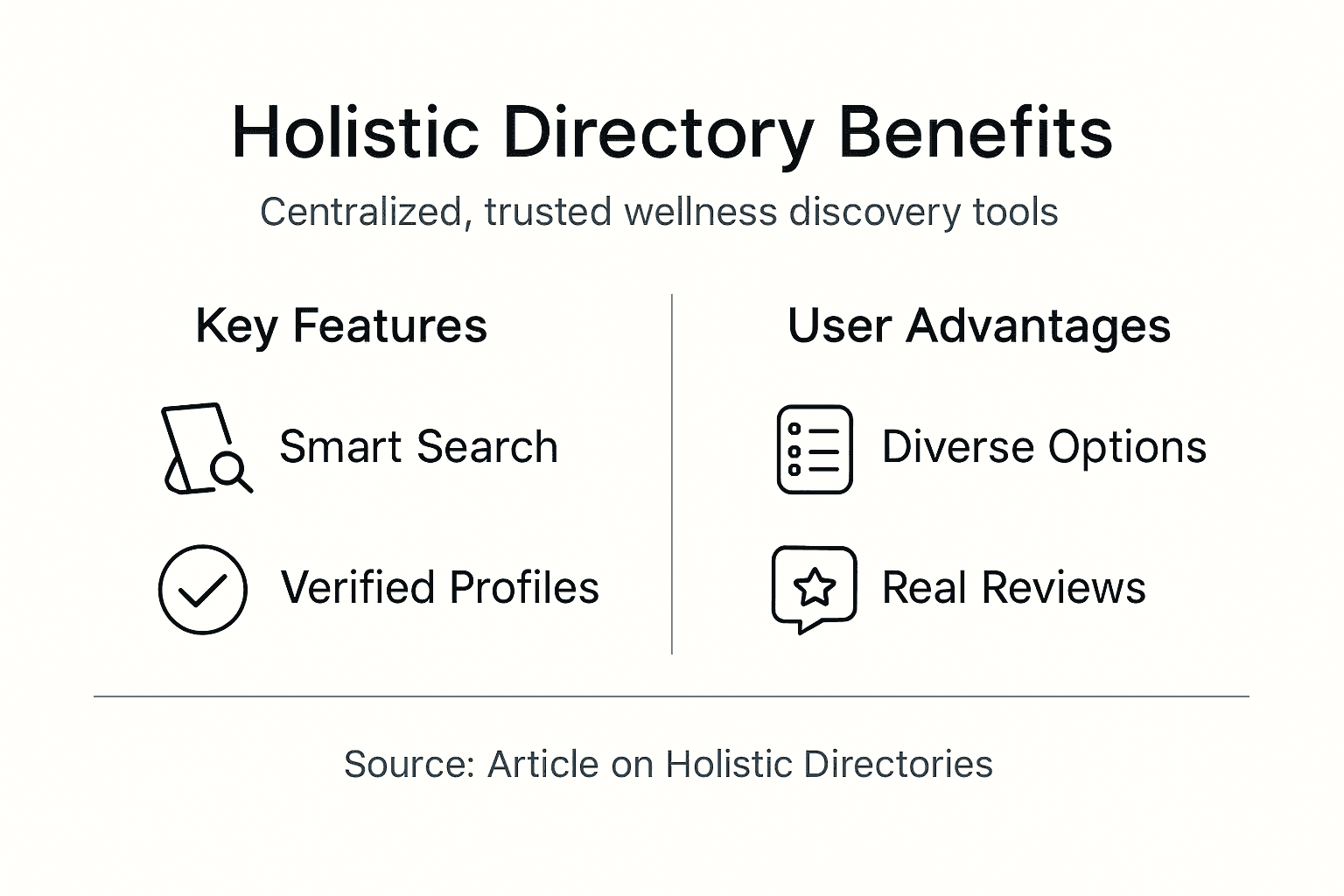
Instead of bouncing between Google searches, health forums, and insurance websites, you access curated listings organized by modality, location, and credentials. This saves time and reduces the overwhelm that often stops people from exploring holistic care.
Centralized Access to Diverse Modalities
Traditional medical directories focus on doctors and hospitals. Holistic directories work differently because they recognize wellness spans multiple disciplines.
A single platform connects you with acupuncturists, massage therapists, herbalists, nutritionists, energy healers, and dozens of other practitioners. You don't need separate directories for each modality. Everything lives in one place.
This integration matters because most people addressing chronic pain or complex health issues benefit from multiple approaches simultaneously. You might combine acupuncture for pain relief with massage therapy for muscle tension and nutritional counseling for inflammation.
Holistic wellness systems incorporate multicultural and interdisciplinary approaches that simplify discovering diverse practitioners and modalities within integrated platforms.
Smart Search and Filtering
Without smart filtering, centralized listings become overwhelming. Quality holistic directories solve this with targeted search features.
Instead of scrolling endless practitioner profiles, you filter by:
- Specific conditions (chronic pain, anxiety, insomnia, digestive issues)
- Treatment modalities (acupuncture, herbal medicine, massage)
- Location and distance (within 5 miles, telehealth available)
- Insurance acceptance (covered or affordable)
- Practitioner credentials (licensed, certified, years of experience)
- Availability (evening appointments, weekend slots)
- Languages spoken (multilingual access)
This targeted filtering transforms overwhelming choice into manageable selection. You're not browsing hundreds of profiles. You're reviewing five vetted practitioners matched to your actual needs.
Personalized Recommendations
Some directories go further with AI-powered matching. You describe your health concerns, preferences, and constraints. The platform analyzes this and recommends practitioners most likely to help.
For someone with fibromyalgia seeking gentle massage combined with acupuncture, the system identifies practitioners offering both modalities nearby. No manual cross-referencing required.
This personalization accelerates discovery and improves outcomes because matched practitioners understand your specific situation from the start.
Centralized, intelligently organized directories transform wellness discovery from a frustrating search into a guided pathway toward the right practitioners.
Verified Reviews and Outcomes
Rated practitioner profiles with real patient feedback build confidence. You see what others experienced—symptom relief, improved sleep, reduced pain—from practitioners in your area.
Reviews highlight practical details: Does the practitioner listen? Do they follow up? Are they worth the cost? This transparency eliminates guesswork about whether someone is truly qualified or just good at marketing.
Pro tip: When reviewing practitioner profiles, prioritize recent reviews from people with conditions similar to yours rather than reading reviews from every patient.
Practitioner Verification and Evidence-Based Safety
Not all holistic practitioners are equally qualified. Without verification, you might book with someone lacking proper training, credentials, or ethical standards. Quality directories solve this by vetting every practitioner before listing.
Practitioner verification protects you from waste, disappointment, and potential harm. It's the difference between finding a genuinely skilled acupuncturist and paying someone who watched YouTube videos.
How Directories Verify Practitioners
Reputable holistic directories implement multi-step verification processes that go beyond simple listings.
-
License and credential verification confirms practitioners hold valid licenses in their state or country. An acupuncturist should have a Diplomate credential from the National Certification Commission for Acupuncture and Oriental Medicine (NCCAOM).
-
Background checks screen for disciplinary history, complaints, or malpractice claims. Directories flag practitioners with unresolved complaints.
-
Training documentation requires proof of formal training from accredited schools. Hours and coursework matter. A 100-hour massage course differs vastly from a 750-hour licensed program.
-
Continuing education confirmation ensures practitioners stay current with evolving standards and new research.
-
Insurance and liability coverage verification guarantees they're professionally insured in case something goes wrong.
Robust regulatory frameworks assure practitioner competence and service quality globally, establishing trust through systematic verification approaches.
Accreditation Bodies and Standards
International accreditation organizations establish gold-standard verification. These bodies maintain rigorous criteria that practitioners must meet continuously.
International Practitioners of Holistic Medicine (IPHM) is one example. They credential holistic practitioners worldwide using evidence-based standards. Getting IPHM accreditation requires documented training, clinical experience, and passing assessments. Practitioners must renew credentials regularly and maintain ethical compliance.
Other credible bodies include state licensing boards for acupuncture and massage therapy, the American Herbalist Guild for herbalists, and specialty boards for Ayurvedic practitioners.
When browsing a holistic directory, look for these specific accreditations. They signal serious practitioners committed to excellence.
Why Evidence-Based Matters
Evidence-based safety means practitioners use methods backed by clinical research, not just tradition or marketing claims. An evidence-based acupuncturist can explain which studies support treating your specific condition.
This doesn't mean rejecting time-tested practices. Many traditional approaches have strong research support. It means practitioners can justify their recommendations with more than anecdotes.
Verified practitioners in legitimate directories combine years of training, ongoing education, and evidence-based methods—reducing risk and increasing your likelihood of actual results.
Red Flags That Signal Unverified Practitioners
Some practitioners operate outside directories, which raises concerns about accountability. Watch for these warning signs:
- Claims of treating serious diseases (cancer, diabetes) without mentioning working alongside conventional doctors
- Refusing to share credentials or training details
- Pressure to buy products or commit to long treatment packages upfront
- No liability insurance or professional affiliation
- Practitioners working from home kitchens or unmarked locations
- Unwillingness to discuss their experience with your specific condition
Pro tip: Always ask practitioners directly about their licenses, training, years of experience, and whether they carry liability insurance—then verify these claims with the directory or licensing board.
Comparing Holistic Directories to Alternatives
You have choices when searching for holistic practitioners. Google searches, traditional medical directories, social media recommendations, AI chatbots, and specialized holistic directories all exist. Each has distinct strengths and weaknesses.
Understanding these differences helps you pick the right tool for your wellness journey. Some alternatives work better for certain situations, but dedicated holistic directories outshine them for verified, integrated care discovery.
Google Searches vs. Holistic Directories
Google feels natural because you use it daily. Search for "acupuncturist near me" and you get results instantly. But Google doesn't verify credentials or curate quality.
Any practitioner with a website ranks if Google's algorithm favors them. The top result isn't necessarily the most qualified—it's often whoever paid for ads or optimized their website best.
You'll find unverified practitioners, outdated information, and mixed-quality reviews. Vetting takes hours of clicking, cross-referencing, and skepticism.
Holistic directories eliminate this friction. Listed practitioners pass verification. Reviews come from real patients. Search filters target your specific condition and modality.
Traditional Medical Directories
Medical directories like Healthgrades or Zocdoc excel at finding doctors and hospitals. But they treat holistic practitioners as afterthoughts.
They rarely list acupuncturists, herbalists, or energy healers. If they do, verification is minimal. Most were designed for conventional medicine, so searching for "herbal medicine for inflammation" yields nothing.
Traditional directories miss the whole point of holistic care—which is integrated, multi-modality approaches. You can't filter by treatment philosophy or find practitioners who blend approaches.
Social Media and Word-of-Mouth
Recommendations from friends feel trustworthy. "My friend swears by this massage therapist" sounds compelling. But personal networks are limited and biased.
Your friends' needs differ from yours. Someone's great experience with fibromyalgia treatment might not predict outcomes for your migraines. You rely on anecdotes, not verified credentials or evidence-based methods.
Social media amplifies this problem. Practitioners with slick Instagram accounts might lack serious training. Testimonials aren't verified. You have no way to confirm credentials.
AI-Powered Recommendation Engines
Newer AI-powered directory platforms promise personalized matching without human curation. Algorithms analyze your preferences and suggest practitioners.
This sounds perfect, but algorithms can't verify credentials or validate practitioner quality. They optimize for clicks and engagement, not outcomes.
AI recommendations lack the human judgment needed for healthcare decisions. A verified, curated holistic directory combines AI efficiency with human expertise.
Here's a comparison of holistic directories and alternative discovery methods:
| Method | Practitioner Verification | Integrated Modalities | User Reviews Quality |
|---|---|---|---|
| Holistic Directory | Rigorous checks, licensing required | Multiple, filterable | From verified patients |
| Google Search | No verification, varies widely | Limited, depends on SEO | Mixed, not always reliable |
| Medical Directory | Physicians verified, few holistic listings | Almost none | Medical focus, not wellness |
| Social Media | No credential checks | Only popular or promoted | Anecdotal, often unverified |
| AI-Powered Platforms | Automated matching, limited checks | Dependent on database breadth | AI-driven, quality varies |
Holistic Directories: The Integrated Advantage
Specialized holistic directories differentiate through verified practitioners and integrative services, offering advantages competing alternatives cannot match.
Quality holistic directories combine:
- Verified credentials through rigorous vetting
- Integrated search across multiple modalities simultaneously
- Evidence-based filtering by condition and treatment type
- Transparent reviews from real patients
- Professional accountability through accreditation standards
- Accessibility with flexible pricing and scheduling options
They're designed specifically for people seeking holistic care. Everything from search filters to practitioner bios reflects this focus.
Holistic directories solve what alternatives cannot: connecting verified, qualified practitioners with people who need them, efficiently and safely.
Pro tip: Use Google or social media to gather initial interest in specific modalities, then verify practitioners through dedicated holistic directories before booking consultations.
Discover Verified Holistic Care Tailored Just for You
Struggling to find trusted holistic practitioners who truly understand your whole health story is frustrating. The article highlights the challenge of navigating unverified listings and misinformation while seeking evidence-based, integrative care that addresses your unique needs. At Go Holistic, we solve this by combining rigorous practitioner verification with advanced AI-powered search to match your health concerns with certified experts in acupuncture, massage therapy, Ayurveda, and many more trusted modalities.
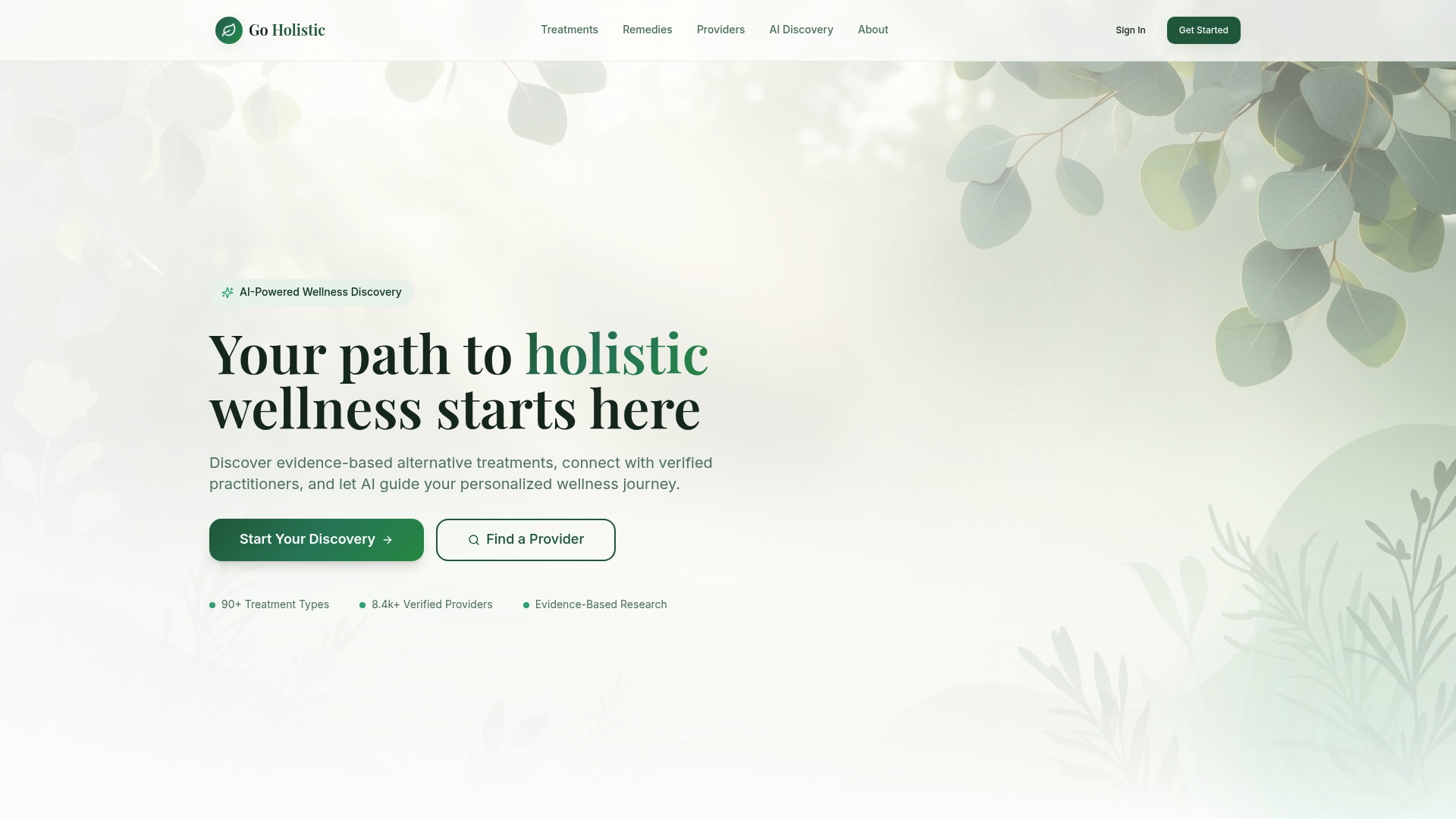
Explore how our curated provider directory and extensive treatment library empower you to make informed, confident wellness choices right now. Join thousands of others who use Go Holistic's accessible platform to find verified practitioners, read patient reviews, and book consultations easily. Take control of your health journey today by visiting Go Holistic and start your personalized discovery with our treatment library and provider directory. Your path to safe, natural healing begins here.
Frequently Asked Questions
What are holistic directories?
Holistic directories are curated platforms that connect people with verified practitioners across various wellness disciplines, focusing on integrated care approaches that address physical, mental, and social health.
How do holistic directories verify practitioners?
Holistic directories implement rigorous verification processes, checking licenses, certifications, training, background history, and insurance coverage to ensure the quality and legitimacy of all listed practitioners.
Can I find both local and global practitioners using holistic directories?
Yes, holistic directories can vary in scope to include local, national, and global practitioners, allowing users to find the care that best suits their needs, whether in-person or online.
Are holistic directories more reliable than traditional medical directories?
Yes, holistic directories are more reliable for finding holistic care options as they focus on multiple modalities, verify practitioners thoroughly, and offer user reviews, unlike traditional medical directories that often overlook holistic professionals.