
TL;DR:
- Evidence-based non-invasive therapies like acupuncture, tai chi, and mindfulness can effectively support chronic pain management.
- Combining these therapies with conventional medical care offers a personalized, layered approach to holistic health.
- Consistent practice over time and working with qualified professionals maximizes safety and treatment benefits.
Navigating the world of alternative therapies can feel like wandering through a crowded market, every voice promising the perfect solution. When you're managing chronic pain, fatigue, or stress, the last thing you need is more confusion. What you need is clarity: which therapies actually work, which are genuinely safe, and how to choose wisely. This article cuts through the noise by presenting an honest, evidence-based look at leading non-invasive treatments so you can move forward with confidence and finally find the relief you've been looking for.
Table of Contents
- How to evaluate safe non-invasive treatments
- Acupuncture: Targeted relief for chronic pain
- Tai chi: Gentle movement for mind-body healing
- Mindfulness-based practices: Calming body and mind
- Comparing leading non-invasive therapies
- Why a blended approach is your best strategy
- Explore holistic health solutions with expert guidance
- Frequently asked questions
Key Takeaways
| Point | Details |
|---|---|
| Prioritize safety | Always check practitioner credentials and discuss new therapies with your healthcare provider. |
| Evidence-based relief | Acupuncture, tai chi, and mindfulness offer proven, safe, non-invasive support for chronic pain and stress. |
| Adjunct, not replacement | Integrative therapies work best when supplementing standard medical care, not replacing it. |
| Tailor your approach | Choose therapies that align with your goals, preferences, and medical needs for best results. |
How to evaluate safe non-invasive treatments
Before you commit to any therapy, it helps to have a solid framework. Think of it as a checklist you carry with you into every wellness decision you make.
The most important factors to weigh include:
- Practitioner qualifications: Is the provider licensed, certified, or credentialed in their field? Credentials signal accountability and proper training.
- Clinical evidence: Has the therapy been studied in controlled settings? Is the evidence strong, moderate, or just preliminary?
- Reported risks: Every treatment has a risk profile, even gentle ones. Know what those are before you begin.
- Integration with your current care: Does this therapy work alongside your existing treatments, or could it interfere with medications or procedures?
- Your own health history: Conditions like pregnancy, bleeding disorders, or autoimmune disease may change which options are appropriate for you.
One of the most important distinctions to understand is the difference between therapies with strong clinical evidence and those with only early findings. Strong evidence typically means multiple well-designed randomized controlled trials show consistent results. Preliminary evidence means the research is promising but limited. Both can be valid starting points, but knowing where a therapy stands helps you set realistic expectations.
It's also worth understanding that safety in holistic practices isn't just about avoiding harm. It's about making sure that a therapy truly fits your body, your goals, and your overall health plan.
The NCCIH notes that effects for many complementary therapies are small to modest, best used as adjuncts rather than replacements, and that high variability across studies limits certainty. This isn't a reason to avoid these therapies. It's a reason to approach them thoughtfully, with trained professionals at your side.
Pro Tip: Before booking your first session with any practitioner, ask about their credentials, how many clients they've treated with your specific condition, and whether they collaborate with medical professionals. A good practitioner will welcome these questions.
Acupuncture: Targeted relief for chronic pain
Acupuncture is one of the most researched non-invasive therapies in the world, with thousands of clinical studies behind it. If you're exploring science-backed pain relief, acupuncture is a natural place to start.
From a traditional Chinese medicine perspective, acupuncture works by stimulating specific points along energy pathways in the body, restoring balance and flow. Western science explains it differently: needle insertion activates nerve fibers, triggering the release of endorphins and other natural pain-relieving chemicals, while also influencing inflammatory pathways and the nervous system.
Research shows that acupuncture relieves pain in chronic low-back pain, neck pain, osteoarthritis, and cancer-related symptoms. For chronic low-back pain specifically, acupuncture outperforms both no treatment and sham (placebo needle) conditions for short-term relief. That's a meaningful distinction: it's not just a placebo response.
One of the most encouraging findings is durability. Acupuncture benefits persist for up to one to two years in some patients, making it one of the longer-lasting non-invasive options available.
"Acupuncture offers more than short-term relief. For many chronic pain sufferers, its effects continue to support quality of life well beyond the treatment period."
Conditions that respond well to acupuncture include:
- Chronic low-back pain
- Neck and shoulder tension
- Osteoarthritis, especially in the knee
- Migraine prevention
- Cancer-related pain and nausea as part of integrative oncology care
However, acupuncture isn't for everyone. People with bleeding disorders or those taking blood-thinning medications need to discuss risks carefully with their doctor. Electroacupuncture (which uses mild electrical stimulation) is not appropriate for those with pacemakers. Evidence is also insufficient for acute low-back pain, so timing matters.
If you're interested in holistic methods for chronic health, always seek a licensed acupuncturist. In the US, that typically means someone certified by the National Certification Commission for Acupuncture and Oriental Medicine (NCCAOM).
Pro Tip: If needles feel intimidating, ask your acupuncturist about acupressure as a gentler introduction. It uses the same pressure points without any needles at all.
Tai chi: Gentle movement for mind-body healing
If acupuncture is targeted, tai chi is flowing. This ancient Chinese practice combines slow, deliberate movements with breath awareness and mindfulness, creating a kind of moving meditation. You don't need any special equipment, a high fitness level, or even a lot of space. That makes it one of the most accessible therapies in this entire guide.
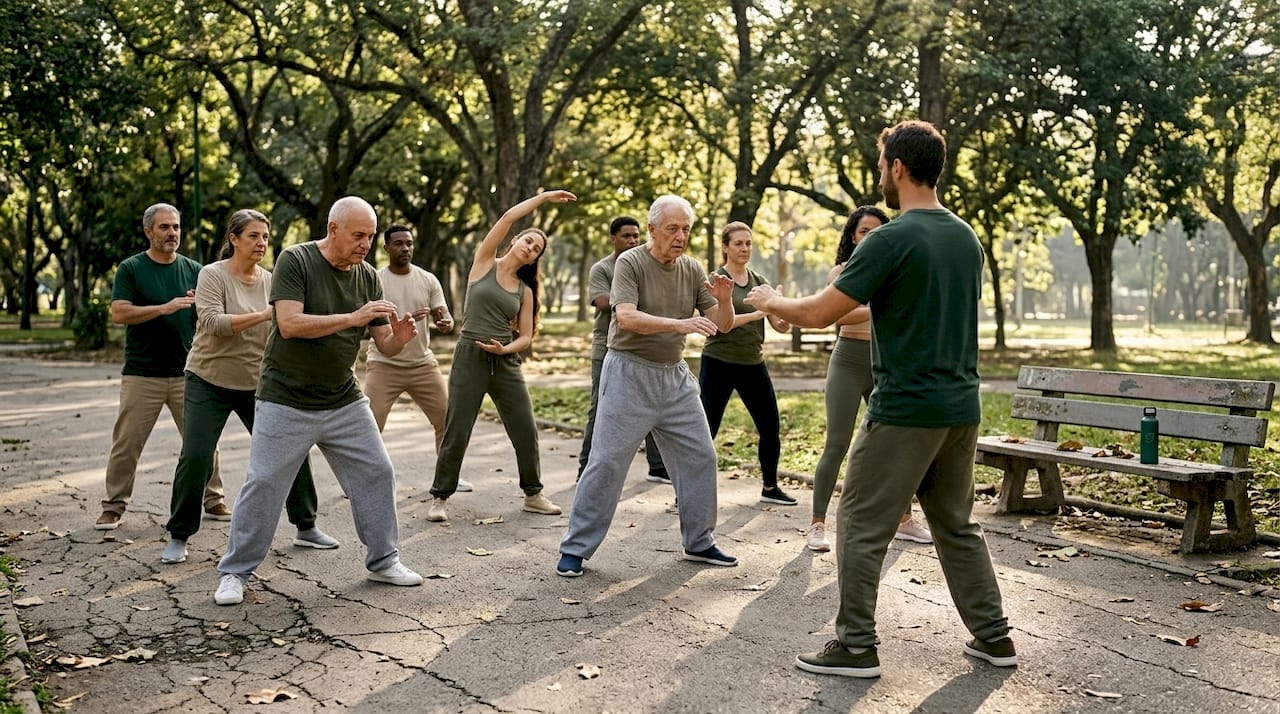
Research confirms that tai chi reduces pain in chronic low-back pain, osteoarthritis, and fibromyalgia, while also improving physical function and overall quality of life. It's not just about pain either. Participants in tai chi programs regularly report better balance, reduced fall risk, improved sleep, and a greater sense of calm.
For those wondering about format and frequency, research suggests that Chen-style tai chi and practicing more than three sessions per week may deliver stronger results. However, even two sessions per week can offer meaningful improvements over time.
Key benefits of tai chi include:
- Reduced chronic pain across multiple conditions
- Improved joint mobility and flexibility
- Better balance and lower fall risk, especially in older adults
- Reduced anxiety and improved emotional regulation
- Enhanced body awareness that supports self-care decisions
The evidence quality is rated as moderate by clinical review standards, which means it's promising but should still be considered adjunctive to conventional care rather than a standalone solution. Read more about how to layer these approaches effectively in these integrative health tips.
Here's a quick comparison of acupuncture and tai chi to help you think about which might fit your situation better:
| Feature | Acupuncture | Tai chi |
|---|---|---|
| Session setting | Clinical, with a practitioner | Group class or home practice |
| Physical involvement | Passive (you lie still) | Active (movement-based) |
| Evidence strength | Strong for chronic pain | Moderate for chronic pain |
| Best for | Targeted pain relief | Mobility, balance, stress |
| Accessibility | Requires practitioner | Learnable independently |
| Cost per session | Moderate to high | Low to moderate |
Exploring wellness practices for natural health becomes much easier when you understand these practical differences.
Pro Tip: Look for community tai chi classes at local recreation centers or senior centers. Many are low cost or free, making this one of the most financially accessible holistic therapies available.
Mindfulness-based practices: Calming body and mind
Physical movement isn't the only path to relief. Mindfulness-based practices work from the inside out, training your attention, changing how your brain processes pain signals, and building emotional resilience over time.
The most well-studied mindfulness intervention for chronic conditions is Mindfulness-Based Stress Reduction (MBSR), an eight-week structured program that includes guided meditation, body scan exercises, and mindful movement. Other evidence-backed formats include mindfulness-based cognitive therapy (MBCT) and simple daily meditation practices.
Research shows that mindfulness improves pain function, sleep quality, depression, and overall quality of life in chronic pain patients, with outcomes that are comparable to cognitive behavioral therapy (CBT). That's a notable finding. CBT is considered a gold standard psychological treatment, so matching its results through mindfulness practice speaks to the genuine power of this approach.
The strongest evidence supports mindfulness for:
- Chronic pain management, particularly when pain has a strong psychological or emotional component
- Insomnia and sleep disruption linked to chronic illness
- Depression and anxiety that often accompany long-term health challenges
- Stress reduction and emotional regulation across a wide range of conditions
Mindfulness is also one of the safest therapies in this guide. Most people can begin a simple breathing or body scan practice on their own, at home, today. However, if you're living with severe depression, trauma history, or psychosis, it's worth consulting a mental health professional before beginning intensive mindfulness work. Some people experience difficult emotions surfacing during meditation, and professional guidance can make that process safer and more constructive.
For those curious about the evidence-based integrative approaches that pair well with mindfulness, combining it with tai chi or acupuncture often creates a more balanced, whole-person care plan.
Statistic to know: Studies reviewed by the NCCIH found mindfulness-based interventions produced clinically meaningful improvements in pain interference and psychological well-being, not just minor statistical shifts. This matters because it means real people are reporting real changes in their daily lives.
Pro Tip: Start with just five minutes of guided breathing each morning before you check your phone. Apps like Insight Timer offer free guided sessions and are a low-pressure way to begin building a consistent practice.
Comparing leading non-invasive therapies
Now that you've seen each therapy up close, here's a side-by-side view to help you make a more informed decision.
| Therapy | Evidence strength | Primary benefit | Best suited for | Adjunctive to standard care? |
|---|---|---|---|---|
| Acupuncture | Strong | Chronic pain relief | Back pain, neck pain, osteoarthritis | Yes |
| Tai chi | Moderate | Mobility, pain, balance | Older adults, fibromyalgia, joint conditions | Yes |
| Mindfulness/MBSR | Moderate to strong | Mood, sleep, pain coping | Stress-related pain, anxiety, depression | Yes |
The NCCIH's evidence review reinforces what this table shows: acupuncture holds the strongest evidence for pain-specific outcomes, while evidence for mindfulness and tai chi is moderate but growing. All three are recommended alongside standard care, not as replacements.
Here's a simple decision guide based on your primary goal:
- Primary concern is pain: Start with acupuncture, ideally combined with your current medical care.
- Primary concern is mobility or balance: Tai chi is your strongest starting point, especially if you have joint issues or fall risk.
- Primary concern is stress, sleep, or mood: Mindfulness-based practices offer the most direct benefit and are easiest to access.
- You're managing multiple concerns: A blended approach incorporating all three, guided by a practitioner, is often most effective.
Bookmark this wellness guide as a long-term reference as you explore which combinations feel right for your body and goals.
Why a blended approach is your best strategy
Here's what we've seen time and again in the holistic wellness space: people who get the most lasting benefit aren't the ones who find a single "miracle" therapy. They're the ones who build a layered, personalized approach that fits their life, their body, and their conventional medical care.
The evidence supports this view. Integrative guidelines recommend non-invasive therapies alongside standard care, not instead of it. That's not a limitation. It's actually freeing. It means you don't have to choose between the doctor's office and the acupuncture studio. You can use both, and often, you should.
We also want to push back on a common pattern: the tendency to try one therapy for three weeks, decide it isn't working, and move on to the next thing. Most of these therapies require consistent practice over weeks or months to reveal their full benefit. Acupuncture often needs six to eight sessions before you see meaningful change. Tai chi builds its effects gradually. Mindfulness practice rewires neural pathways slowly but sustainably.
The role of alternative therapies isn't to compete with medicine. It's to fill the gaps that medicine sometimes leaves, supporting your quality of life, emotional well-being, and pain management in ways that prescription treatments often can't address alone.
Our honest advice: work with a practitioner who communicates openly with your primary care doctor. Find someone who understands the research, respects your goals, and doesn't promise more than the evidence supports. That kind of professional relationship is what turns a wellness experiment into a lasting health strategy.
Explore holistic health solutions with expert guidance
Finding the right therapist or treatment shouldn't feel like another source of stress. You deserve a clear, trustworthy path forward.
At Go Holistic, we've built a platform specifically to help you do exactly that. You can browse our directory of local holistic practitioners, all verified and credentialed, and filter by specialty, condition, and location. If you're still figuring out where to start, our AI-powered tool analyzes your health concerns and matches you with personalized recommendations backed by real research. Want to keep learning? Explore more holistic treatment options in our library of over 200 therapy types. Your next step toward lasting wellness is closer than you think. Get started today.
Frequently asked questions
Who should avoid acupuncture?
Acupuncture isn't advised for people with bleeding disorders or pacemakers, and evidence is insufficient to support its use for acute low-back pain specifically. Always consult your doctor before starting.
Is tai chi safe for beginners with mobility issues?
Yes, tai chi is a gentle, low-impact practice that suits most people, including those with limited mobility. Starting with a supervised group class helps ensure movements are adapted safely to your current range of motion.
Does mindfulness have any risks?
Mindfulness is generally safe for most people, but those with severe mental health conditions should consult a healthcare provider before beginning structured programs. For most chronic pain patients, mindfulness improves mood and sleep with minimal risk.
Can these therapies replace my standard medical care?
No. These therapies are best used alongside conventional medical treatment, not as substitutes. They add meaningful support to your overall health plan but work best when integrated with professional medical guidance.
Recommended
- Holistic Health Treatments | goholistic
- Go Holistic - Your Path to Holistic Wellness
- Go Holistic - Your Path to Holistic Wellness
- Go Holistic - Your Path to Holistic Wellness
- Why Holistic Recovery Matters for Addiction Treatment | Glendora Recovery Center
- Contemporary Rehab | Pain Relief & Wellness Tips