

TL;DR:
- Integrative health combines conventional medicine with evidence-backed complementary therapies for holistic well-being.
- Research shows benefits including pain reduction, improved mental health, and better cancer recovery outcomes.
- Personalization through AI and digital platforms is enhancing tailored, safe, and effective integrative care in 2026.
More people than ever are rethinking how they manage their health. Chronic conditions are rising, conventional treatments sometimes fall short, and the internet is flooded with conflicting wellness advice. Integrative health offers a middle path: combining the best of conventional medicine with evidence-backed complementary therapies to support your whole self. Over 30% of US adults now use some form of integrative approach, and that number keeps growing. This article walks you through what integrative health really means, what the research says about its benefits, how personalization is reshaping it in 2026, and how to choose safe, effective options for your own journey.
Table of Contents
- What is integrative health? Core principles and trends in 2026
- Top integrative health benefits proven by research
- Personalization and digital innovations in integrative health
- Choosing safe and effective integrative approaches
- Why integrative health in 2026 works best as a complement, not a cure-all
- Connect with trusted integrative health solutions
- Frequently asked questions
Key Takeaways
| Point | Details |
|---|---|
| Holistic, evidence-based care | Integrative health combines proven medical treatments with complementary therapies to address your full well-being. |
| Personalization is rising | AI and genetic advances in 2026 are making holistic health plans more tailored and effective. |
| Greatest benefits for chronic issues | Research supports integrative approaches for chronic pain, mental health, and cancer recovery, with measurable outcome improvements. |
| Safety and expertise matter | Choose qualified providers and evidence-backed therapies to get the most from integrative health while avoiding risks. |
What is integrative health? Core principles and trends in 2026
Integrative health is not about abandoning your doctor or swapping prescriptions for herbs. At its core, integrative health combines conventional medicine with complementary therapies to support holistic well-being. Think of it as building a care team that looks at all of you: your body, mind, lifestyle, and environment.
The philosophy rests on a few key principles:
- Personalization: Your care plan reflects your unique biology, history, and goals.
- Collaboration: Conventional and complementary providers work together, not in silos.
- Patient empowerment: You are an active participant, not a passive recipient.
- Prevention: The focus is on building resilience, not just treating symptoms.
In 2026, this field is moving fast. Mind-body practices, acupuncture, nutritional medicine, and even gene regulation techniques are becoming part of mainstream care pathways. Globally, the WHO Traditional Medicine Strategy for 2025 to 2034 is pushing governments and health systems to regulate and integrate evidence-based traditional and complementary medicine. That is a significant shift from the margins to the mainstream.
You can also see this momentum in the growing range of alternative therapies trends in 2026, where disciplines once considered fringe are now backed by clinical trials and hospital programs.
"The best integrative care is not about choosing one system over another. It is about building the most effective, personalized plan possible using every tool that has real evidence behind it."
Pro Tip: When evaluating any practitioner, ask directly whether they prioritize evidence-based approaches and whether they communicate with your other providers. Those two questions alone will filter out a lot of noise.
Top integrative health benefits proven by research
After exploring core ideas and definitions, let's look at concrete benefits proven in clinical and real-world studies. The evidence is more robust than many people realize.
Chronic pain relief is one of the most studied areas. The VA Whole Health model, which integrates acupuncture, yoga, and mindfulness into veteran care, shows significant improvements in pain and well-being, with a 39 to 41% reduction in invasive pain procedures. That means fewer surgeries and less reliance on opioids for many patients.
Mental health outcomes also improve meaningfully. Patients in integrative programs report higher therapy completion rates and measurable drops in depression and anxiety scores. The combination of conventional therapy with practices like meditation, acupuncture, or somatic movement creates a more supportive environment for healing.
Cancer recovery is another area where the data stands out. Digital integrative oncology programs show measurable gains in fatigue reduction, lower symptom distress, and fewer hospital visits for cancer survivors. These are not small quality-of-life improvements. They translate into real reductions in healthcare costs and suffering.
Here is a quick summary of the top research-backed benefits:
- Reduced chronic pain and lower use of invasive procedures
- Improved emotional well-being and lower anxiety
- Better lifestyle habits, including sleep, nutrition, and movement
- Fewer medication side effects through complementary support
- Shorter recovery times after illness or surgery
| Outcome area | Integrative approach | Conventional only |
|---|---|---|
| Chronic pain | 39 to 41% fewer invasive procedures | Standard pain management |
| Cancer fatigue | Significant reduction with digital programs | Symptom management only |
| Mental health | Higher completion, lower depression scores | Therapy and medication alone |
| Hospital visits | Reduced in integrative oncology | Standard follow-up care |
Explore more at evidence-based wellness benefits and browse specific holistic health treatments that align with these outcomes.
Personalization and digital innovations in integrative health
With a clear view of benefits, it is important to see how integrative health is becoming even more personalized and tech-driven. In 2026, this is where things get genuinely exciting.
Personalization via AI and nutrigenomics is now a defining trend in integrative care. Instead of a one-size-fits-all wellness plan, you can receive recommendations based on your genetic profile, lifestyle data, gut microbiome, and health history. This level of precision was not widely accessible even five years ago.

One striking example: mind-body practices can regulate up to 49 inflammation-related genes. Meditation is not just relaxing. It is actively influencing your biology at a cellular level. That kind of insight is reshaping how clinicians think about prescribing non-pharmacological interventions.
Digital platforms are also closing the access gap. Whether you live in a rural area or a busy city, you can now connect with integrative practitioners online, track your progress through apps, and receive AI-guided recommendations tailored to your concerns.
| Care type | Access | Personalization | Cost |
|---|---|---|---|
| In-person integrative | Limited by location | High with full assessment | Higher |
| Digital integrative | Broad, location-independent | Moderate to high with AI tools | Lower to moderate |
| Conventional only | Widely available | Moderate | Varies |
Here is a simple way to get started with a personalized integrative health plan:
- Identify your primary health concern or goal.
- Research which therapies have the strongest evidence for that condition.
- Consult your primary care provider and share your interest in integrative options.
- Use a verified platform to find credentialed integrative practitioners.
- Track your progress and adjust your plan based on real results.
Pro Tip: Explore personalized wellness strategies before your first consultation. Arriving with a clear sense of your goals helps practitioners build a more targeted plan from day one.
You can also read more about personalized holistic health benefits to understand why so many people are making this shift in 2026.
Choosing safe and effective integrative approaches
Personalized approaches offer real promise, but it is vital to know how to separate evidence-based care from hype or risk. Not every therapy labeled "holistic" or "natural" is safe or proven.
Here is a practical checklist for evaluating any integrative therapy or practitioner:
- Credentials matter: Look for licensed, certified practitioners with verifiable training.
- Ask about evidence: A good practitioner will point you to research, not just testimonials.
- Check for transparency: They should clearly explain risks, benefits, and realistic outcomes.
- Avoid replacement claims: Be cautious of anyone who suggests stopping conventional treatment entirely.
- Watch for red flags: Promises of miracle cures, pressure to buy supplements, or dismissal of your medical history are warning signs.
The best integrative results come when complementary methods support conventional care, not replace it. High-evidence modalities like acupuncture, mindfulness-based stress reduction, and certain nutritional interventions have strong clinical backing. Others may have limited data or carry real risks if used incorrectly.
"Watch for evidence gaps, potential drug interactions, and lack of standardization. These are the areas where integrative medicine still needs more rigor and where patients are most vulnerable to harm."
Research also highlights important cautions around drug interactions and the uneven quality of evidence across different complementary therapies. Some herbal supplements, for example, interact with blood thinners or chemotherapy drugs in ways that can cause serious harm.
Pro Tip: Always tell every provider, conventional and integrative, about every therapy, supplement, or practice you use. Full transparency is your best protection. You can find more integrative health safety tips and evidence-based wellness guidance to help you navigate this with confidence.
Why integrative health in 2026 works best as a complement, not a cure-all
Here is our honest take: integrative health is genuinely transformative for many people, but the transformation happens at the edges of conventional care, not in place of it. The most meaningful outcomes we see come from patients who use acupuncture alongside physical therapy, or who add mindfulness to their medication regimen, not from those who abandon their treatment plans entirely.
The biggest pitfall in this space is the search for a miracle cure. Wellness culture sometimes glamorizes radical alternatives, and that can lead people away from treatments that actually work. Clinician collaboration and open, honest communication are what separate empowering integrative care from risky experimentation.
Our perspective is straightforward: evidence-based, patient-centered integration beats quick fixes every time. If a practitioner cannot explain the research behind their approach or refuses to coordinate with your medical team, that is a signal to look elsewhere. Seek personalized plans, ask for second opinions, and trust the process. Read more about holistic therapies insights to keep building your knowledge base.
Connect with trusted integrative health solutions
You have done the research. Now it is time to put it into practice. Finding the right support makes all the difference in your integrative health journey.
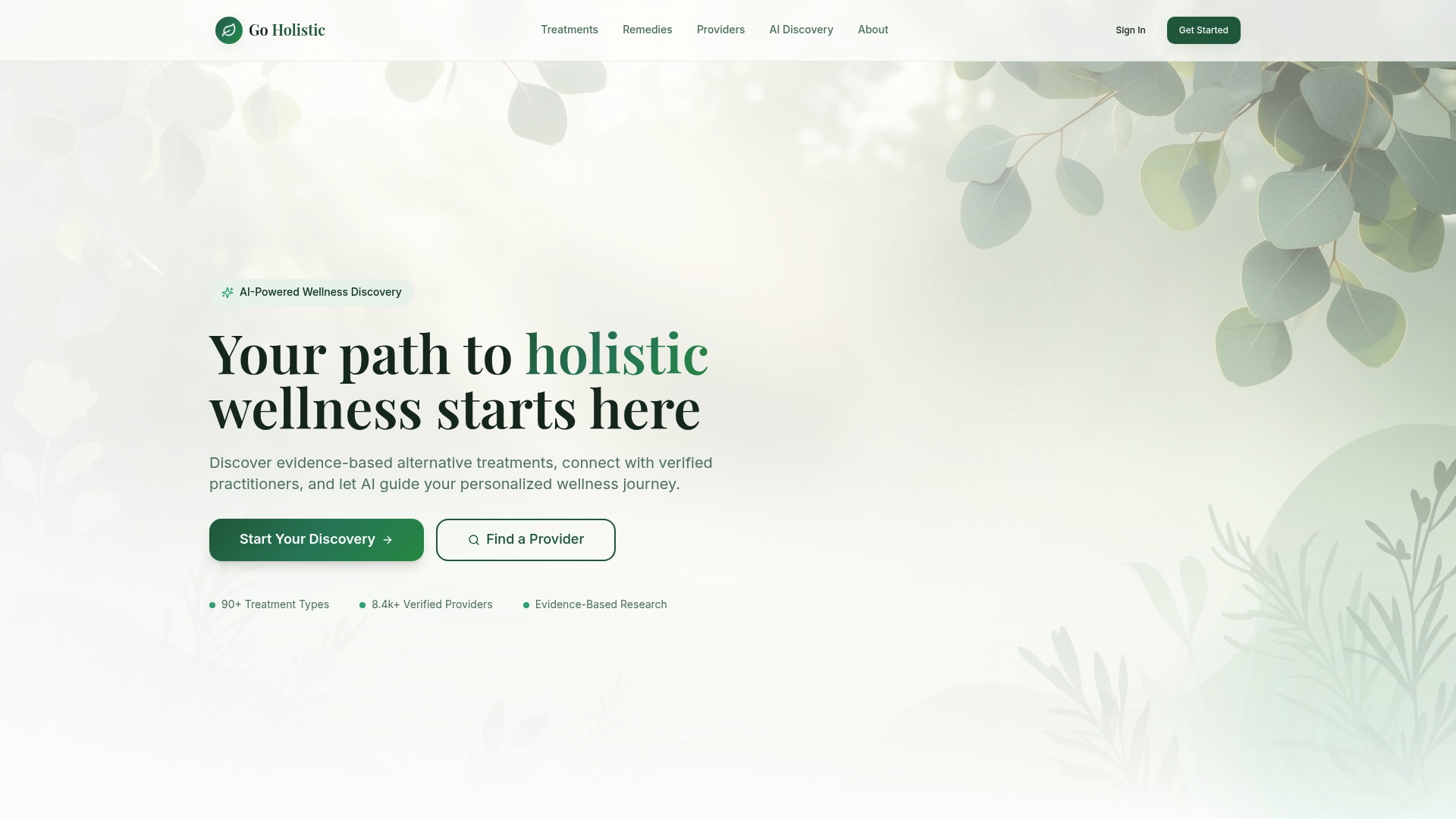
At Go Holistic, we connect you with verified, credentialed practitioners across disciplines like acupuncture, Ayurveda, massage therapy, and more. Our AI-powered platform analyzes your health concerns and matches you with evidence-backed recommendations tailored to your goals. You can find integrative practitioners near you or online, and explore holistic treatments across more than 200 therapy types. Whether you are just starting out or deepening an existing wellness practice, we are here to support every step. Get Started today and take your well-being in a direction that truly fits you.
Frequently asked questions
What conditions benefit most from integrative health approaches?
Chronic pain, mental health disorders, cancer recovery, and stress-related conditions respond particularly well to integrative health. Integrative models show strong improvements in pain, PTSD, and mental health outcomes across multiple studies.
Are integrative therapies safe to combine with conventional medicine?
Most integrative therapies are safe when overseen by qualified providers. Always inform your doctor about every therapy you use, since expert guidance emphasizes the importance of monitoring for drug interactions and unproven options.
How is integrative health becoming more personalized in 2026?
AI tools, genetic data, and digital platforms are enabling far more precise wellness plans. Personalization via nutrigenomics and AI-driven health analysis is now one of the defining trends in integrative care.
Does integrative health help cancer patients as much as other chronic conditions?
Integrative approaches reduce fatigue and distress for most cancer patients, but outcomes can vary. Research shows that cancer patients with diabetes may see fewer benefits compared to those without comorbidities.
How can I find reputable integrative health practitioners?
Look for verifiable credentials, evidence-based methods, and clear communication about risks and benefits. WHO and global experts urge regulated, evidence-based practice as the standard for integrative health providers.