
TL;DR:
- Natural therapies mainly improve daily function, sleep, and pain management, not complete elimination.
- Evidence supports mind-body practices like CBT, yoga, and mindfulness as effective chronic pain treatments.
- Integration and consistency of therapies, along with professional guidance, are key to sustainable relief.
Chronic pain rarely plays fair. You try one remedy after another, hoping something will finally switch it off, and when it doesn't, it's easy to feel defeated. Here's the counterintuitive truth that research keeps confirming: the most effective natural therapies don't always eliminate pain outright. Instead, they improve how you function, how you sleep, and how much pain controls your day. That shift in perspective changes everything. This article walks you through the strongest evidence-backed approaches, what each one actually does for your body and mind, and how to build a realistic plan that fits your life.
Table of Contents
- The science behind natural pain relief
- Evidence-based therapies: What works and why
- Acupuncture, cannabis, and special cases
- Integrating natural pain relief into daily life
- A holistic perspective: What most pain relief advice misses
- Explore holistic pain relief solutions with Go Holistic
- Frequently asked questions
Key Takeaways
| Point | Details |
|---|---|
| Therapies improve coping | Evidence-based natural therapies enhance daily function and coping skills even when they do not eliminate pain. |
| Choose proven methods | Yoga, tai chi, CBT, mindfulness, and acupuncture have the strongest research for chronic pain relief. |
| Expect gradual progress | Most people see meaningful changes within weeks to months with ongoing practice. |
| Combine approaches safely | For best results, integrate natural therapies with medical care and track your progress. |
The science behind natural pain relief
When people hear "natural pain relief," many picture herbal teas or warm baths. The reality is far more interesting. The therapies with the strongest research behind them work through real biological and psychological pathways, not just relaxation.
Mind-body practices like yoga, mindfulness, and cognitive behavioral therapy (CBT) reduce perceived pain through three main routes: lowering stress hormones that amplify pain signals, rewiring how the brain processes pain through neuroplasticity (the brain's ability to form new connections), and activating the body's own descending inhibition system, which naturally damps pain signals traveling up the spinal cord. Mind-body practices reduce perceived pain via these overlapping mechanisms, which is why they tend to work better over time rather than immediately.
It's also worth separating two ideas that often get confused: pain management versus pain elimination. Most natural therapies don't erase pain. What they do is reduce how much pain interferes with your daily life, your mood, and your sense of control. That's not a consolation prize. For many people living with chronic conditions, regaining those things is genuinely life-changing.
Evidence-based natural pain relief methods like CBT, acceptance and commitment therapy (ACT), yoga, tai chi, and mindfulness show real improvements in pain management and quality of life. Here's a quick snapshot of what these approaches target:
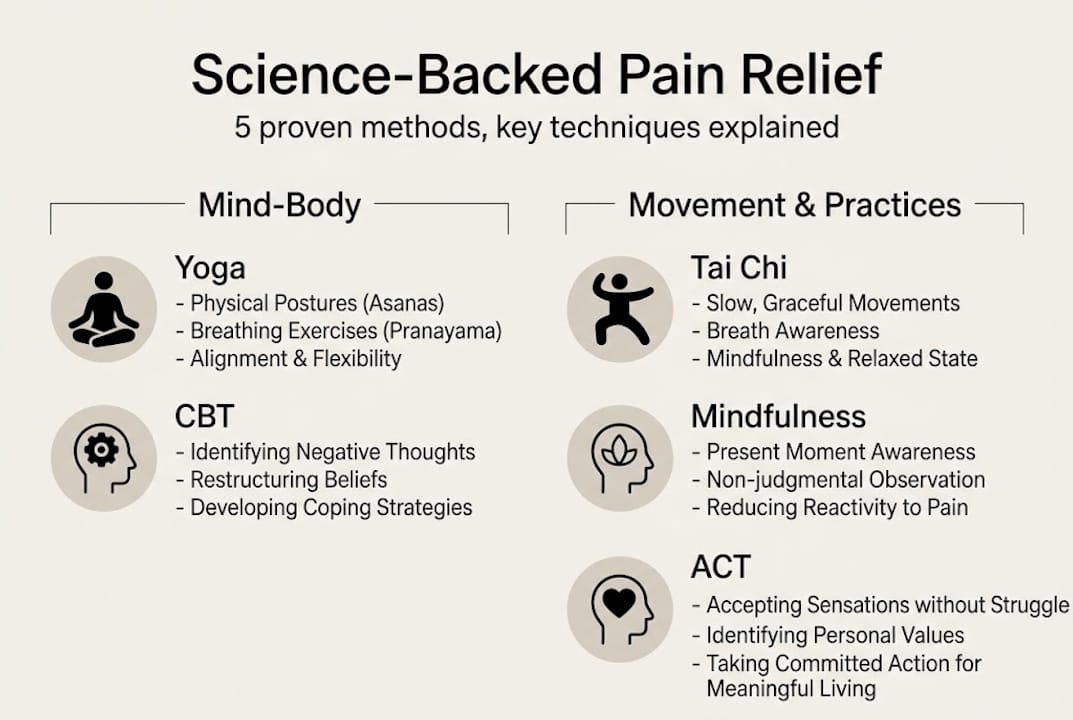
| Therapy | Primary mechanism | Key benefit |
|---|---|---|
| CBT | Thought pattern restructuring | Reduces pain-related distress |
| Yoga | Movement, breath, mindfulness | Improves flexibility and mood |
| Tai chi | Gentle movement, balance | Reduces fall risk, eases joint pain |
| Mindfulness | Attention regulation | Lowers pain catastrophizing |
| ACT | Acceptance-based coping | Improves daily function |
The complementary approaches for chronic pain recognized by the National Center for Complementary and Integrative Health align closely with this list. These aren't fringe ideas. They're part of mainstream pain care.
"The goal isn't to feel nothing. It's to feel capable again."
That reframe matters because it keeps expectations realistic and motivation high. When you measure success by how much you can do, rather than how little you feel, progress becomes visible much sooner.
Exploring wellness practices for natural pain management alongside these therapies can help you build a fuller picture of your options.
Evidence-based therapies: What works and why
Not all natural therapies carry equal weight. Some have decades of rigorous trials behind them. Others are promising but still early. Knowing the difference saves you time, money, and frustration.
Here's how the major evidence-backed therapies compare:
| Therapy | Evidence strength | Best for | Typical format |
|---|---|---|---|
| CBT | Strong | Pain distress, mood | Weekly sessions, 8-12 weeks |
| Exercise therapy | Strong | Low back pain, joints | Guided or self-directed |
| Yoga | Moderate-strong | Back pain, fibromyalgia | Group or online classes |
| Tai chi | Moderate | Older adults, arthritis | Group classes |
| Acupuncture | Moderate | Back, neck, headache | Clinic sessions |
| Biofield therapy | Emerging | Stress-related pain | Practitioner sessions |
Psychological therapies like CBT probably reduce pain intensity slightly and distress in chronic pain, according to Cochrane review evidence. The word "slightly" might sound underwhelming, but in chronic pain research, even modest reductions in intensity paired with meaningful improvements in daily function represent a significant win.

Exercise therapies reduce pain and improve function in chronic low back pain, with consistent results across multiple review studies. Movement, even gentle movement, changes how the nervous system responds to pain over time.
Here's a practical breakdown of how to use the top three approaches:
- CBT for pain: Work with a licensed therapist to identify thought patterns that amplify pain (like catastrophizing), then practice replacing them with more balanced responses. Most programs run 8 to 12 weeks.
- Yoga: Start with a beginner or restorative class focused on breath and gentle movement. Aim for two to three sessions per week. Consistency matters more than intensity.
- Exercise therapy: A physical therapist can design a program matched to your specific pain type. Walking, swimming, and resistance training all have evidence behind them.
Pro Tip: Don't wait until pain is at its worst to practice these therapies. Using them consistently during lower-pain periods builds the neural pathways and habits that help most when pain flares.
For a broader look at alternative therapy effectiveness across conditions, it helps to review what pain experts on natural therapies are currently recommending in clinical settings.
Acupuncture, cannabis, and special cases
Some therapies deserve their own spotlight because the evidence around them is nuanced, and the stakes of getting it wrong are higher.
Acupuncture has moved well beyond its reputation as an alternative curiosity. For chronic low back pain and treatment-resistant pain, acupuncture provides significant relief with a 58% complete cure rate reported in recent research and effects lasting up to 12 months. That's a meaningful result for people who've exhausted other options.
Acupuncture works best for:
- Chronic low back and neck pain
- Tension and migraine headaches
- Osteoarthritis, particularly in the knee
- Treatment-resistant pain that hasn't responded to standard care
Pro Tip: When choosing an acupuncturist, look for a licensed practitioner with credentials from an accredited program. You can explore verified acupuncture and holistic therapies providers through platforms that vet practitioners before listing them.
Medicinal cannabis is a more complicated story. It modulates pain via CB1 and CB2 receptors in the endocannabinoid system, which plays a real role in pain regulation. However, the evidence is mixed. Some people experience meaningful relief, particularly for neuropathic pain. Others experience adverse effects including dizziness, cognitive fog, and dependency risk.
Key stat: Cannabis may reduce pain scores by 30% or more in some neuropathic pain patients, but response rates vary widely and adverse effects are common.
For alternative treatments in special populations such as older adults or those with complex conditions, the risk-benefit calculation changes. Older adults may be more sensitive to cannabis side effects, and interactions with other medications require careful review.
Always prioritize safety in holistic therapies by consulting a healthcare provider before starting cannabis for pain, especially if you take other medications or have cardiovascular concerns.
Integrating natural pain relief into daily life
Knowing which therapies work is only half the equation. The other half is building a sustainable routine that you can actually stick with.
Here's a step-by-step approach to getting started:
- Start with one therapy. Trying everything at once leads to burnout. Pick the approach most aligned with your pain type and lifestyle, whether that's yoga, CBT, or acupuncture.
- Track your progress. Use a simple pain journal or app to log pain intensity, mood, sleep quality, and daily function. Measure what matters to you, not just a number on a scale.
- Add a second therapy after 4 to 6 weeks. Once the first feels routine, layer in a complementary approach. For example, pair exercise therapy with mindfulness practice.
- Review and adjust monthly. Pain changes. What works in one season of your life may need adjusting in another.
Mind-body therapies like yoga, meditation, and tai chi are endorsed by 68% of pain experts as the most promising approaches for pain management. That consensus reflects real-world clinical experience, not just lab results.
Common mistakes to avoid:
- Expecting results in days rather than weeks
- Stopping a therapy after one bad session
- Combining too many new approaches simultaneously
- Skipping professional guidance for complex or severe pain
Pro Tip: Keep your primary care provider in the loop. Natural therapies work best as part of a coordinated care plan, not as a secret side project.
For practical integrative health tips and guidance on pursuing holistic wellness, building a support network of both practitioners and peers makes the journey far more sustainable. The starting complementary approaches guidance from the NCCIH also offers a reliable framework for beginning safely.
A holistic perspective: What most pain relief advice misses
Most articles on natural pain relief read like a checklist. Try this, then try that. What they miss is the deeper shift that actually predicts success.
The people who benefit most from natural therapies aren't the ones who find the "right" method. They're the ones who stop measuring success by pain scores alone and start measuring it by what they can do. Can you walk further than last month? Sleep better? Engage with people you love without pain dominating the experience? Those are the wins that compound.
There's also a tendency in the wellness space to champion one therapy as the answer. The research tells a different story. Combining approaches, pairing movement with mindfulness, or CBT with acupuncture, consistently outperforms any single method. The medical literature is good at proving individual therapies work. It's less good at capturing how they work together in a real person's life.
Understanding why people seek natural remedies reveals something important: most aren't looking for a miracle. They want agency. They want to feel like active participants in their own recovery, not passive recipients of a prescription. Natural therapies, at their best, give you exactly that.
Explore holistic pain relief solutions with Go Holistic
If you're ready to move from information to action, Go Holistic is built for exactly this moment in your journey. The platform connects you with verified, licensed practitioners across acupuncture, massage therapy, yoga, and more, all vetted for credentials and quality.
You can browse over 200 evidence-backed holistic treatments, get AI-powered therapy recommendations based on your specific health concerns, and directly book consultations with trusted providers. Whether you're just starting out or refining a plan that's already working, find holistic health providers who match your needs and connect with wellness practitioners who understand chronic pain. Get Started today and take the next step toward a life where pain no longer sets the agenda.
Frequently asked questions
What is the most effective natural pain relief method?
Mind-body therapies like yoga, tai chi, and CBT have the strongest research support, with CBT, ACT, yoga, and mindfulness consistently improving coping and reducing pain intensity. Pain experts broadly endorse these as the most promising approaches available.
How long does it take to see results with natural therapies?
Most people notice meaningful improvements within 6 to 12 weeks of regular practice. Acupuncture and exercise therapies show particularly durable effects, with benefits lasting up to 12 months in clinical studies.
Can natural pain relief methods replace medication?
Generally, no. These approaches work best alongside medical care rather than as replacements. Effects are modest and most effective when integrated with conventional treatment for severe or complex pain.
Are there any risks with acupuncture or medicinal cannabis?
Acupuncture is considered low risk when performed by a licensed practitioner. Cannabis carries real potential for side effects and drug interactions, so starting low and going slow with medical supervision is essential.
How do I find a qualified practitioner for natural pain relief?
Look for providers with formal training, active licenses, and listings on platforms that verify credentials. Professional societies and holistic health directories are reliable starting points for finding trustworthy care.