

Many people assume natural remedies are fringe alternatives reserved for those skeptical of modern medicine. The reality is far different. Today, millions of individuals turn to holistic health treatments not as a rejection of conventional care, but as a proactive choice to address chronic health issues that standard approaches often fail to resolve. This article explores the key motivations driving clients toward natural remedies, the evidence supporting their effectiveness, and practical guidance for integrating these therapies into your wellness journey.
Table of Contents
- Why clients turn to natural remedies: key motivations
- Evidence and safety: why natural remedies appeal
- Comparing natural remedies with conventional treatments
- How to choose and apply natural remedies safely and effectively
- Explore holistic health solutions with GoHolistic
- FAQ
Key takeaways
| Point | Details |
|---|---|
| Holistic care focus | Clients pursue natural remedies mainly for whole-body healing and chronic condition management. |
| Safety and side effects | Desire for fewer pharmaceutical side effects and drug interactions motivates many to explore natural options. |
| Empowerment and personalization | Seeking active participation in healing and customized treatment drives natural remedy popularity. |
| Evidence-based trust | Growing scientific support and practitioner guidance improve confidence in natural therapies. |
Why clients turn to natural remedies: key motivations
The shift toward natural remedies stems from real frustrations with conventional healthcare limitations. Chronic conditions like migraines, digestive disorders, arthritis, and anxiety often receive symptom management rather than root cause resolution. Pharmaceuticals may mask pain temporarily but leave underlying imbalances unaddressed. Clients increasingly recognize this gap and seek alternatives that treat the whole person, not isolated symptoms.
Natural remedies offer personalized, whole-body approaches that conventional medicine frequently overlooks. Instead of standardized protocols, holistic practitioners assess individual biochemistry, lifestyle factors, emotional health, and environmental influences. This comprehensive evaluation leads to customized treatment plans that address multiple body systems simultaneously. For someone with chronic digestive issues, a holistic approach might combine dietary modifications, herbal supplements, stress management techniques, and gut microbiome support rather than simply prescribing acid reducers.
The desire for fewer side effects drives many toward natural options. Pharmaceutical medications often come with extensive side effect profiles that create new problems while addressing the original complaint. Antidepressants may cause weight gain and sexual dysfunction. Pain relievers can damage the liver or kidneys with long-term use. Blood pressure medications might trigger fatigue or dizziness. Natural remedies typically present milder side effect profiles, though they still require careful selection and monitoring.
Empowerment through active participation transforms the client experience. Rather than passively receiving prescriptions, individuals engage in their healing process by learning about nutrition, herbal medicine, movement practices, and mind-body techniques. This education builds health literacy and confidence. Clients report feeling more in control of their wellness journey when they understand how specific herbs support liver detoxification or how acupuncture regulates nervous system function. The knowledge itself becomes therapeutic.
Pro Tip: Start your natural remedy exploration by identifying your primary health concern and researching which holistic modalities have the strongest evidence base for that specific condition. Focus your initial efforts rather than trying multiple therapies simultaneously.
Key motivations include:
- Addressing chronic conditions inadequately managed by conventional approaches
- Receiving personalized treatment plans based on individual constitution and circumstances
- Avoiding pharmaceutical side effects and long-term medication dependence
- Taking active ownership of health through education and lifestyle modification
- Accessing preventive care that strengthens overall resilience rather than just treating disease
Evidence and safety: why natural remedies appeal
Scientific validation of natural remedies has expanded dramatically over the past two decades. Rigorous clinical trials now demonstrate effectiveness for numerous herbal medicines, nutritional supplements, and mind-body practices. Turmeric shows anti-inflammatory effects comparable to some NSAIDs. Omega-3 fatty acids reduce cardiovascular disease risk. Meditation measurably lowers cortisol and blood pressure. This growing evidence base gives clients confidence that natural remedies offer more than placebo effects.

Safety considerations significantly influence client choices. While no therapy is entirely risk-free, natural remedies generally present lower risk profiles than pharmaceutical interventions when used appropriately. Herbal medicines rarely cause the severe adverse reactions associated with prescription drugs. Acupuncture complications are extremely uncommon with qualified practitioners. Nutritional therapies pose minimal danger compared to surgical procedures. This relative safety appeals to clients seeking gentler interventions, especially for chronic conditions requiring long-term management.
Common safety myths deserve clarification. "Natural" does not automatically mean "safe" or "effective." Some herbs interact with medications or pose risks for specific populations. Quality varies dramatically among supplement manufacturers. Unqualified practitioners may provide inappropriate recommendations. Understanding scientific backing helps clients make informed, confident choices by distinguishing evidence-supported therapies from unproven claims.
Integrative approaches combine natural and conventional methods for optimal outcomes. Rather than viewing these modalities as mutually exclusive, progressive healthcare providers recognize their complementary strengths. A cancer patient might use chemotherapy for tumor reduction while incorporating acupuncture for nausea management and meditation for stress reduction. An arthritis patient could take anti-inflammatory medication during flare-ups while using turmeric, fish oil, and physical therapy for long-term joint health. This integration maximizes benefits while minimizing risks.
Pro Tip: Always consult qualified practitioners before starting natural remedies, especially if you take prescription medications or have serious health conditions. Professional guidance prevents dangerous interactions and ensures appropriate therapy selection.
"The best medicine combines the precision of modern science with the wisdom of traditional healing. Natural remedies excel at supporting the body's inherent healing capacity when applied with knowledge and care."
Evidence and safety factors attracting clients:
- Peer-reviewed research validating effectiveness for specific conditions
- Lower risk of severe adverse reactions compared to many pharmaceuticals
- Fewer drug interactions when properly managed by knowledgeable practitioners
- Ability to address root causes rather than merely suppressing symptoms
- Compatibility with conventional treatments in integrative care models
The holistic research hub provides access to current studies supporting various natural therapies, helping clients evaluate evidence quality and applicability to their situations.
Comparing natural remedies with conventional treatments
Philosophical differences fundamentally distinguish natural remedies from conventional treatments. Natural approaches view health as dynamic balance across physical, mental, emotional, and spiritual dimensions. Disease represents imbalance requiring restoration of harmony. Conventional medicine typically defines health as absence of disease and focuses on identifying and eliminating specific pathological processes. These contrasting frameworks lead to different treatment strategies and outcome measures.
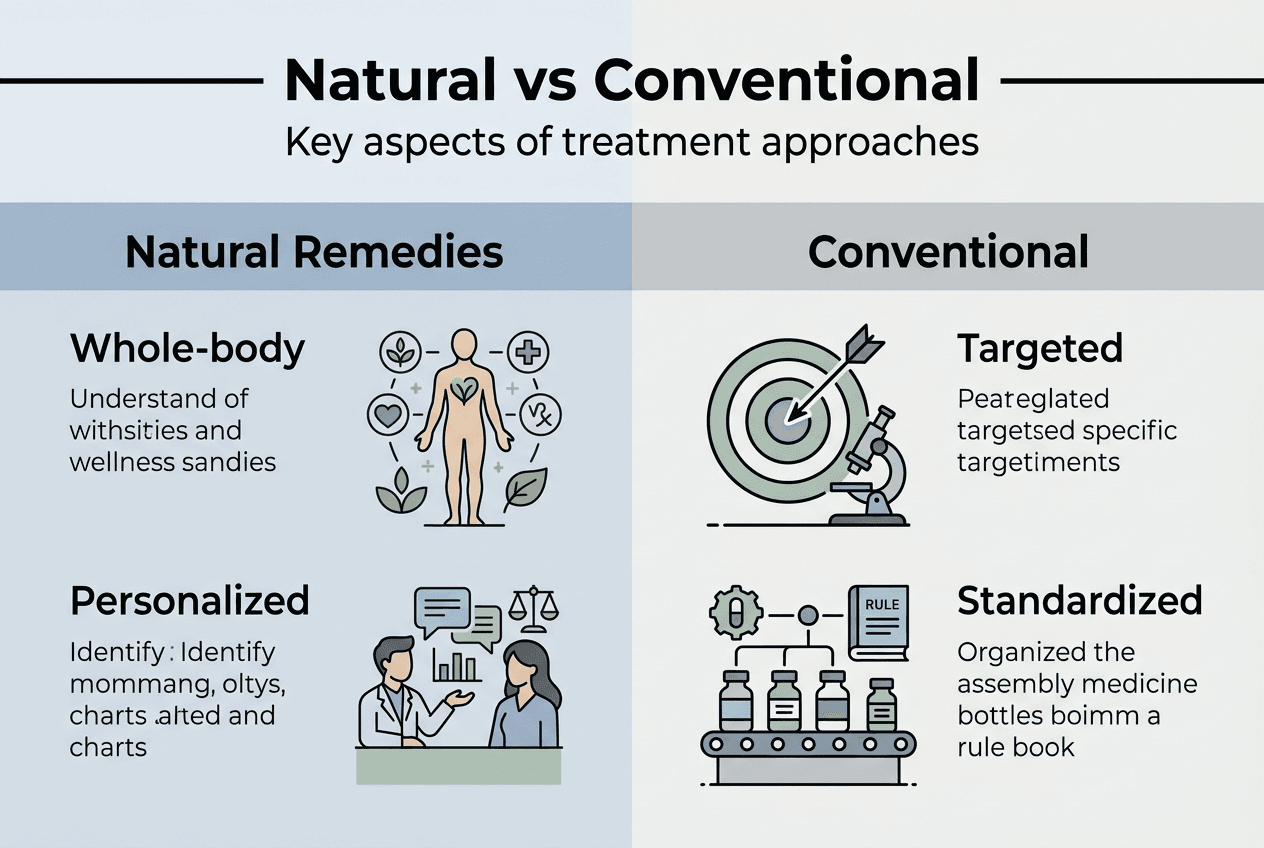
Treatment focus varies significantly between modalities. Natural remedies emphasize whole-body healing, addressing multiple systems simultaneously to restore optimal function. A practitioner treating insomnia might investigate adrenal function, blood sugar regulation, neurotransmitter balance, and stress patterns rather than simply prescribing sleep medication. Conventional treatments target specific symptoms or disease mechanisms, offering powerful interventions for acute conditions but sometimes missing broader context in chronic illness.
Side effect profiles differ distinctly between natural and pharmaceutical options. Prescription medications undergo rigorous testing but often produce significant adverse effects due to their potent, targeted mechanisms. Natural remedies typically cause milder side effects, though quality, dosage, and individual sensitivity still matter. Clients weigh effectiveness, side effects, and philosophical alignment when choosing between approaches, often preferring gentler interventions for chronic conditions and reserving stronger pharmaceuticals for acute situations.
| Aspect | Natural Remedies | Conventional Treatments |
|---|---|---|
| Treatment philosophy | Whole-body balance and root cause resolution | Symptom suppression and disease elimination |
| Approach | Personalized based on individual constitution | Standardized protocols based on diagnosis |
| Side effects | Generally milder, fewer severe reactions | Often significant, may require additional medications |
| Evidence base | Growing research, traditional use history | Extensive clinical trials, regulatory approval |
| Cost | Variable, often out-of-pocket | Insurance coverage common, high without coverage |
| Time to results | Often gradual, building over weeks or months | Can be rapid for acute conditions |
Personalization represents a key advantage of natural approaches. Holistic practitioners spend substantial time understanding individual circumstances, creating tailored protocols that account for unique biochemistry, lifestyle, preferences, and goals. Conventional medicine increasingly recognizes personalization's value through precision medicine initiatives, but standard practice still relies heavily on diagnosis-based treatment algorithms that may not fit every patient perfectly.
Cost and accessibility considerations influence treatment choices. Natural remedies often require out-of-pocket payment since insurance coverage remains limited, though costs vary widely. Some herbs and supplements are inexpensive, while specialized treatments like acupuncture or functional medicine consultations can be costly. Conventional treatments typically receive insurance coverage but may involve high deductibles, copays, or denied claims. Geographic access to qualified holistic health practitioners also affects feasibility for some clients.
Key comparison factors:
- Treatment philosophy and approach to health and disease
- Personalization level and consideration of individual factors
- Side effect severity and frequency
- Evidence quality and quantity supporting effectiveness
- Insurance coverage and overall cost burden
- Accessibility of qualified practitioners and treatment facilities
How to choose and apply natural remedies safely and effectively
Selecting appropriate natural remedies requires systematic evaluation of quality, safety, and evidence. Start by researching which therapies have the strongest scientific support for your specific condition. Not all natural remedies work equally well for all problems. Acupuncture excels for pain management and nausea. Certain herbs effectively address anxiety or inflammation. Nutritional interventions powerfully influence metabolic and cardiovascular health. Match the remedy to the condition based on evidence, not marketing claims or anecdotal reports alone.
Quality verification protects against contaminated or ineffective products. Supplement manufacturing remains poorly regulated in many jurisdictions, leading to products that contain incorrect ingredients, inadequate active compounds, or dangerous contaminants. Look for third-party testing certifications from organizations like USP, NSF, or ConsumerLab. Purchase from reputable manufacturers with transparent sourcing and quality control processes. For herbal medicines, consider whether you need standardized extracts with guaranteed active constituent levels or whole plant preparations.
Professional guidance dramatically improves outcomes and safety. Qualified holistic practitioners possess training in herb-drug interactions, contraindications, appropriate dosing, and treatment protocols. They can identify which therapies suit your constitution and circumstances while monitoring your response and adjusting as needed. Self-treatment based on internet research carries risks of inappropriate remedy selection, incorrect dosing, or failure to recognize when conventional medical care is necessary.
Pro Tip: Keep a detailed symptom journal when starting natural remedies. Track what you take, dosages, timing, and any changes in symptoms or side effects. This documentation helps you and your practitioner assess effectiveness and make informed adjustments.
Implementation steps for safe, effective natural remedy use:
- Identify your primary health concern and research evidence-based natural therapies for that condition
- Consult qualified holistic practitioners to develop a personalized treatment plan appropriate for your situation
- Verify product quality through third-party testing certifications and reputable manufacturers
- Start with single remedies rather than complex combinations to assess individual effects
- Monitor your response systematically, documenting symptoms, side effects, and progress
- Communicate with all healthcare providers about natural remedies you use to prevent interactions
- Adjust your approach based on results, giving adequate time for effects to manifest
- Integrate natural remedies with conventional care when appropriate for comprehensive treatment
Evidence-based protocols provide frameworks for effective application. Rather than random experimentation, follow established guidelines for dosing, duration, and combination with other therapies. Many natural remedies require consistent use over weeks or months to produce full effects, unlike pharmaceuticals that often work rapidly. Patience and adherence to protocols improve success rates significantly.
Integration with conventional care enhances safety and effectiveness. Inform all healthcare providers about natural remedies you use, including herbs, supplements, and mind-body practices. Some combinations enhance therapeutic effects, while others create dangerous interactions. Your providers can monitor for potential problems and adjust treatments accordingly. The goal is coordinated care that leverages the strengths of both natural and conventional approaches. For practical implementation guidance, explore natural detox steps that demonstrate safe, evidence-based protocols.
Explore holistic health solutions with GoHolistic
Your journey toward natural wellness deserves expert guidance and reliable resources. GoHolistic connects you with certified holistic health treatments backed by scientific evidence and delivered by qualified practitioners. Whether you're managing chronic conditions, seeking preventive care, or exploring integrative approaches, our platform provides the tools and support you need.
Discover personalized treatment recommendations based on your unique health concerns. Browse our directory of verified holistic health providers to find practitioners specializing in acupuncture, herbal medicine, nutrition, Ayurveda, and more. Access research summaries that help you make informed decisions about natural remedies. Start your holistic wellness journey today with confidence, clarity, and professional support.
FAQ
What chronic conditions do clients commonly seek natural remedies for?
Clients frequently explore natural remedies for migraines, arthritis, digestive disorders, and stress-related illnesses that conventional medicine struggles to resolve completely. Autoimmune conditions, hormonal imbalances, chronic fatigue, and anxiety also drive many toward holistic approaches. These conditions often benefit from whole-body strategies that address underlying imbalances rather than just suppressing symptoms.
Are natural remedies safe to use alongside conventional medications?
Natural remedies can generally be used safely with conventional medications when supervised by knowledgeable healthcare providers. However, some herbs and supplements interact with prescription drugs, potentially reducing effectiveness or increasing side effects. Always disclose all natural remedies to your doctors and pharmacists. A qualified practitioner can identify potential interactions and adjust your protocol accordingly.
How can I find qualified practitioners for natural remedies?
Use trusted platforms like GoHolistic to find holistic health providers with verified credentials and specializations. Look for practitioners with recognized certifications in their specific modality, such as licensed acupuncturists, registered herbalists, or certified nutritionists. Check reviews and ask about their training, experience with your condition, and approach to treatment. Professional organizations for each discipline also maintain practitioner directories.
How long does it take for natural remedies to show results?
Timelines vary significantly based on the condition, remedy, and individual factors. Acute issues like headaches or nausea may respond within hours to days. Chronic conditions typically require weeks to months of consistent treatment before substantial improvement appears. Some nutritional and herbal interventions need 8-12 weeks to produce measurable effects as they gradually restore balance. Patience and adherence to protocols are essential for success with natural remedies.
Recommended
- Holistic Health Treatments | goholistic
- Go Holistic - Your Path to Holistic Wellness | Alternative Medicine Platform
- Find Holistic Health Providers | Go Holistic
- Find Holistic Health Practitioners Near You | GoHolistic
- Why Choose Natural Vitamins for Wellness Success – Oxyhealth
- Plant-Based Supplements: Benefits for Wellness Seekers