

TL;DR:
- Mind-body medicine uses techniques like mindfulness and yoga to reduce stress biologically.
- Regular practice improves pain, anxiety, sleep, and immune function in chronic conditions.
- These approaches complement standard treatment and require consistent, gentle engagement.
Medication and surgery aren't always the only answers when chronic pain, stress, or anxiety take hold. Mind-body medicine, a science-backed collection of non-invasive techniques, offers a genuinely different path. Practices like mindfulness, yoga, and qigong work by changing how your body responds to stress at a biological level, and the research behind them is growing fast. This article walks you through what mind-body medicine actually is, how it works, who benefits most, and how you can start today with confidence.
Table of Contents
- What is mind-body medicine?
- How mind-body medicine works: The science explained
- Benefits for chronic pain, stress, and emotional health
- Who should (and shouldn't) try mind-body medicine?-try-mind-body-medicine?)
- Getting started: Practical tips and resources
- A holistic perspective: Why mind-body medicine matters now
- Explore holistic options with Go Holistic
- Frequently asked questions
Key Takeaways
| Point | Details |
|---|---|
| Evidence-based benefits | Mind-body medicine measurably reduces stress, anxiety, and helps with chronic pain. |
| Works with standard care | Best results come from combining mind-body practices with conventional treatment, not replacing it. |
| Safe for most people | Most mind-body approaches are safe and non-invasive, though medical guidance is advised for serious conditions. |
| Consistency matters | Regular practice—even just a few minutes a day—yields the strongest results. |
What is mind-body medicine?
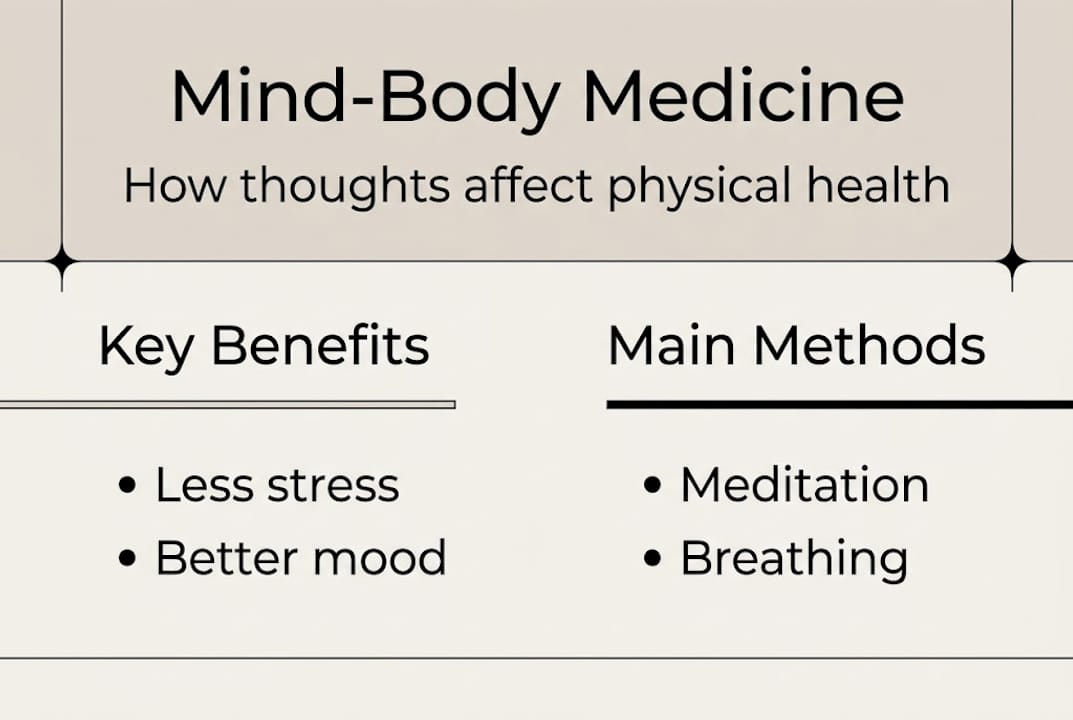
Mind-body medicine is a healing approach that uses the connection between your thoughts, emotions, and physical health to support well-being. Rather than treating the body and mind as separate systems, it works with both at once. That's what makes it so different from conventional treatments, which often target physical symptoms alone.
The roots of mind-body medicine run deep. Ancient practices like yoga, meditation, and tai chi have been used for thousands of years across cultures. What's changed is that modern science has now validated many of these traditions, showing measurable effects on stress hormones, immune function, and brain activity.
Common mind-body modalities include:
- Mindfulness-based interventions (MBIs): Structured programs that train focused, non-judgmental awareness
- Meditation: Quiet mental practice that shifts attention and reduces reactivity
- Yoga: Movement, breath, and focused attention combined
- Tai chi and qigong: Gentle, flowing movement practices rooted in Chinese medicine
- Breathing exercises: Controlled breath patterns that activate the relaxation response
- Progressive muscle relaxation: Systematic tensing and releasing of muscle groups
The NCCIH mind-body overview describes these as practices that bring together mental and physical processes to promote health. The key mechanism is stress regulation. Mind-body techniques reduce chronic stress by mitigating effects on physiological systems including the HPA axis, inflammation, and allostatic load.
"Mind-body techniques don't just calm the mind. They change the biology of stress, reducing the physiological burden that chronic pressure places on the body."
This is why mind-body medicine sits at the intersection of evidence-based Ayurveda benefits and modern integrative care. It's not alternative in the sense of unproven. It's alternative in the sense of offering a different, and often complementary, route to healing. Exploring integrative health advantages can help you see how these approaches fit alongside conventional medicine.
How mind-body medicine works: The science explained
Your body has a built-in stress response system. When you perceive a threat, the hypothalamic-pituitary-adrenal (HPA) axis triggers the release of cortisol and other stress hormones. Short-term, this is helpful. Long-term, it drives inflammation, weakens immunity, and contributes to conditions like anxiety, depression, and chronic pain.
Mind-body practices interrupt this cycle. Effects on the HPA axis show that regular practice lowers cortisol, reduces inflammatory markers, and helps the brain regulate attention and emotion more effectively.
| Stress marker | Practitioners | Non-practitioners |
|---|---|---|
| Cortisol levels | Measurably lower | Elevated under stress |
| Inflammatory markers | Reduced over time | Often chronically elevated |
| Attention regulation | Improved focus | More reactive, scattered |
| Mood stability | Greater resilience | Higher anxiety baseline |
The MBI methodologies include mindfulness meditation using monitoring and acceptance, breathing exercises, body scans, yoga and tai chi combining movement with breath and focus, and progressive relaxation. Each of these activates what researcher Herbert Benson called the "relaxation response," a physiological state that counteracts the stress response.
Research also shows improvements in immune function and meaningful reductions in depression and anxiety. Holistic methods for chronic health often draw on these exact mechanisms to support people dealing with long-term conditions.
Pro Tip: Pair acceptance with mindfulness when dealing with acute stress. Research shows that monitoring attention alone isn't enough. Adding an accepting, non-judgmental attitude toward your experience is what produces the strongest stress reduction.
Benefits for chronic pain, stress, and emotional health
The evidence for mind-body medicine is strongest in three areas: chronic pain, emotional health, and stress-related conditions. Let's look at each.

For chronic pain, mind-body approaches provide modest relief for conditions like fibromyalgia, low back pain, and osteoarthritis. They improve function and reduce symptoms when added to conventional care, not instead of it.
| Outcome | Mind-body approaches | Standard care alone |
|---|---|---|
| Pain intensity | Moderate reduction | Variable, often medication-dependent |
| Physical functioning | Improved | Modest improvement |
| Mood and anxiety | Significant improvement | Limited direct effect |
| Sleep quality | Often improved | Rarely addressed directly |
For emotional health, the results are compelling. Mind-body exercises significantly reduce depression and anxiety symptoms, with qigong showing optimal results at 31 to 60 minute sessions, three times per week.
Key benefits for people managing chronic illness or stress:
- Reduced pain perception through altered nervous system response
- Lower anxiety and depression with consistent practice over weeks
- Better sleep quality linked to reduced cortisol and mental quieting
- Improved immune function from reduced chronic inflammation
- Greater sense of control over symptoms and daily functioning
Exploring science-backed natural pain relief can help you understand how these benefits connect to broader holistic care strategies. For a wider view, integrative wellness tips offer practical guidance on weaving these practices into everyday life.
Pro Tip: Consistency matters far more than intensity. Three sessions a week, even short ones, creates better mental health outcomes than one long session on the weekend.
Who should (and shouldn't) try mind-body medicine?
Most people dealing with chronic stress, pain, anxiety, or mood challenges can benefit from mind-body practices. They're especially well-suited for people who want to take an active role in their own health, or those who haven't found full relief through conventional care alone.
That said, mind-body medicine works best as a partner to standard treatment, not a replacement. Research in chronic conditions shows benefits for quality of life, sleep, immune function, and blood pressure in people with cancer, multiple sclerosis, and cardiovascular disease. But these gains come when mind-body practices are added to, not substituted for, medical care.
Who is likely to benefit most:
- People with chronic pain conditions like fibromyalgia or low back pain
- Individuals managing anxiety, depression, or burnout
- Those with stress-related health issues like high blood pressure or poor sleep
- Anyone seeking a greater sense of agency in their health journey
When to seek medical advice first:
- If you have a serious psychiatric condition, some intensive practices may need supervision
- If you're managing a complex physical illness, check with your physician before starting
- If you experience worsening symptoms during practice, pause and consult a professional
Practical safety tips:
- Start slowly and choose gentle practices like breathing or body scans
- Use qualified instructors when learning movement-based practices like yoga or tai chi
- Track your experience to notice what helps and what doesn't
As top wellness practices consistently show, the most important principle is that mind-body medicine is an adjunct to standard treatment, not a replacement. More rigorous research is still needed in many areas, so staying connected to your healthcare team matters.
Getting started: Practical tips and resources
Starting mind-body medicine doesn't require a retreat or a big time commitment. Small, regular habits build the foundation. Here's a step-by-step approach:
- Choose one method to start. Pick something that feels accessible, whether that's five minutes of breathing exercises, a beginner yoga video, or a guided body scan. Mindfulness meditation, breathing exercises, and yoga are all well-researched starting points.
- Set a consistent time. Morning routines tend to stick best, but any regular slot works. Consistency matters more than timing.
- Use reputable apps and online guides. Apps like Insight Timer, Calm, or Headspace offer free guided meditations and breathing exercises. Many hospitals and wellness centers also offer free or low-cost online programs.
- Find a qualified instructor for movement practices. Yoga and tai chi benefit from in-person guidance, especially at the start. Look for certified instructors with experience working with people who have health conditions.
- Track your progress simply. A short daily note about mood, sleep, or pain levels helps you see patterns over time and stay motivated.
- Be patient with the process. Benefits build gradually. Most people notice stress relief within a few weeks, while deeper shifts in pain or mood take a few months of regular practice.
For deeper integration into your health routine, evidence-based integrative approaches offer a broader framework. And if you want to explore mind-body pain relief techniques, Harvard Health has practical, accessible guidance.
A holistic perspective: Why mind-body medicine matters now
Here's something most wellness articles won't tell you: the hype around mind-body medicine sometimes outpaces the evidence. Study sizes are often small, and not every technique works equally well for every condition. Healthy skepticism is actually a sign of good judgment.
But here's what we've seen consistently. The real value of mind-body medicine isn't that it cures disease. It's that it gives you a new relationship with pain, stress, and discomfort. That shift in perspective is genuinely powerful, and it's something no pill can replicate.
Most people underestimate how much consistency and acceptance matter. Showing up three times a week, even when you don't feel like it, and approaching your experience without judgment, that's where the results live. Not in the perfect session, but in the steady practice.
The best outcomes happen when mind-body methods and mainstream care work together. If you're curious about holistic methods for chronic care, the evidence supports exploring these tools as a meaningful addition to your health plan, not a replacement for it.
Explore holistic options with Go Holistic
If reading this has sparked your curiosity, you're in the right place. Go Holistic connects you with certified, verified practitioners across disciplines like acupuncture, massage therapy, yoga, and Ayurveda, all in one easy-to-navigate platform.
Our AI-powered tool analyzes your health concerns and offers personalized treatment recommendations backed by real research. You can find holistic practitioners near you, browse our directory, and book consultations directly. Want to see what's available? Explore holistic health treatments across more than 200 therapy types and take your next step toward balanced, supported well-being. Get Started today.
Frequently asked questions
Is mind-body medicine safe for people with chronic illnesses?
Most techniques are safe alongside standard care, but always consult your healthcare provider before starting new practices, especially with serious conditions. Research shows benefits for quality of life and immune function in people with cancer, MS, and cardiovascular disease.
How quickly can you feel results from mind-body practices?
Some benefits like reduced stress may appear within days or weeks, while improvements in pain or mood often need consistent practice for a few months. Qigong at 31 to 60 minute sessions three times per week shows optimal results for depression and anxiety.
Can mind-body medicine replace medication or conventional treatment?
No. Mind-body medicine is best used alongside conventional care, not as a substitute, and should always be discussed with your physician. NCCIH research confirms it works best as an adjunct to standard treatment.
What are the most effective mind-body techniques for stress?
Mindfulness meditation, yoga, and qigong have the strongest evidence for stress relief, with consistent weekly practice recommended for best results. These techniques reduce chronic stress by mitigating effects on the HPA axis, inflammation, and allostatic load.
Recommended
- Top evidence-based wellness practices for natural health
- What evidence-based wellness means for holistic health
- Naturopathy explained: principles, benefits, and evidence
- Evidence-based holistic methods for chronic health
- Manual therapy explained: evidence, benefits, and guidance
- Discover The Best Binaural Healing Beats For Mind And Body Wellness