
TL;DR:
- Naturopathy emphasizes natural healing by working with the body's innate capacity to self-heal.
- It incorporates diverse modalities like nutrition, herbal medicine, and acupuncture, with varying scientific support.
- Use naturopathy as a complementary approach alongside conventional medicine for chronic and preventive care.
Naturopathy has quietly moved from the fringes into mainstream wellness conversations. Usage has grown from just 0.2% of US adults in 2002 to 1.3% in 2022, and the number of practitioners doubled between 2000 and 2016. That kind of growth signals something real: more people are looking for natural, personalized approaches to their health. But curiosity and skepticism often travel together, and for good reason. This article cuts through the noise to give you a clear, honest look at what naturopathy actually is, how it works, what the science says, and how you can use it wisely.
Table of Contents
- What is naturopathy? History, philosophy, and core principles
- How naturopathy is practiced: Modalities and treatment approaches
- Naturopaths: Training, regulation, and what to look for
- Evidence, safety, and criticisms: Navigating the science
- Applying naturopathy: Tips for integrating natural approaches safely
- Our perspective: When naturopathy makes sense—and when it doesn't
- Find your holistic health path with Go Holistic
- Frequently asked questions
Key Takeaways
| Point | Details |
|---|---|
| Naturopathy’s guiding principles | This holistic approach emphasizes nature, prevention, and treating root causes for whole-person wellness. |
| Evidence varies by therapy | Science supports some naturopathic methods but not the entire system, so scrutiny is essential. |
| Training and regulation matter | Practitioner qualifications and licensing can differ widely, so always verify credentials before seeking care. |
| Best as a complement | Naturopathy can be valuable when used alongside conventional medicine, especially for chronic conditions. |
| Safety is key | Safely integrating naturopathy requires evidence, communication, and a clear understanding of risks. |
What is naturopathy? History, philosophy, and core principles
Naturopathy is a system of health care rooted in the belief that the body has an innate ability to heal itself when given the right conditions. Its origins trace back to 19th-century Europe, where the "nature cure" movement emphasized fresh air, clean water, whole foods, and sunlight as medicine. German physician Benedict Lust brought these ideas to the United States in the early 1900s, formally establishing naturopathic medicine as a distinct practice.
At its heart, naturopathy is guided by a philosophy of working with the body rather than against it. Think of it less like fighting a fire and more like tending a garden: you create the right environment, remove what harms growth, and trust the natural process to take over.
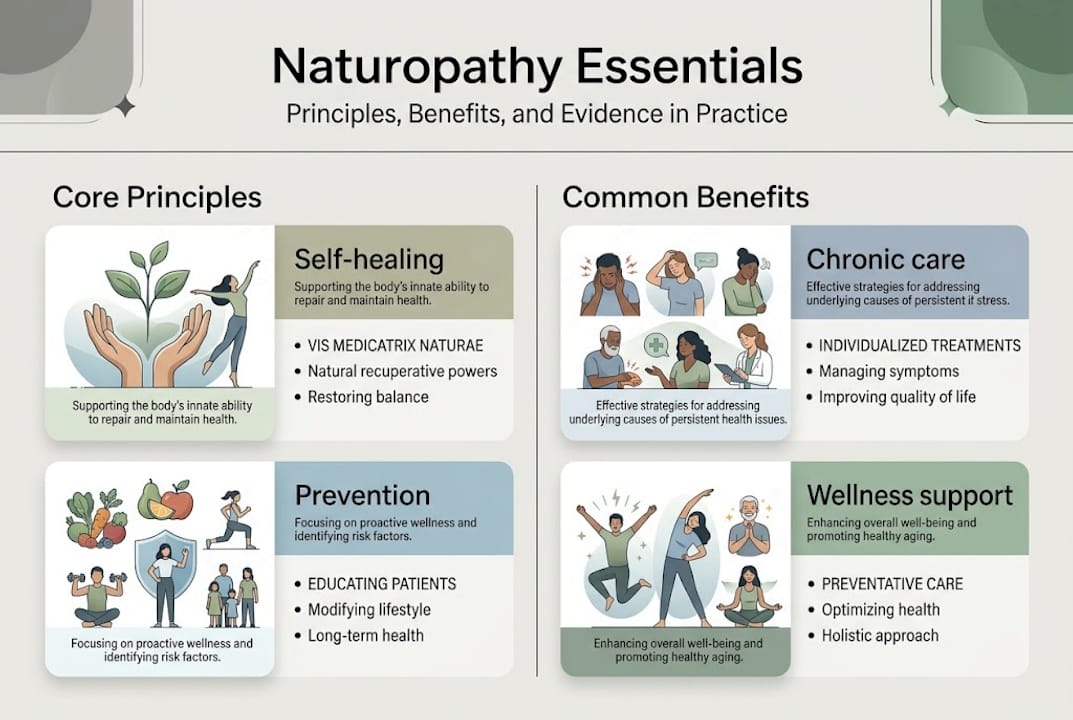
Naturopathic practice is built on six core principles:
- The healing power of nature: Trust the body's wisdom to heal itself.
- Identify and treat the causes: Address root causes, not just symptoms.
- First do no harm: Use the gentlest, least invasive therapies first.
- Doctor as teacher: Educate and empower patients in their own health.
- Treat the whole person: Consider physical, mental, emotional, and social factors.
- Prevention: Focus on building health before illness takes hold.
These principles shape how naturopaths approach every consultation. Rather than prescribing a single fix, they look at the full picture of your life.
"Naturopathic methodologies include clinical nutrition, herbal medicine, homeopathy, hydrotherapy, acupuncture, lifestyle counseling, manipulative therapies, and sometimes pharmaceuticals."
This range reflects naturopathy's core strength: it draws from a wide toolkit to create personalized care. You can explore many of these approaches through holistic health treatments to get a clearer sense of what resonates with your wellness goals.
How naturopathy is practiced: Modalities and treatment approaches
When you walk into a naturopath's office, expect a longer conversation than you might be used to. Initial consultations often run 60 to 90 minutes, covering your health history, diet, sleep, stress levels, and lifestyle habits in detail. This depth is intentional. The goal is to understand you, not just your symptoms.
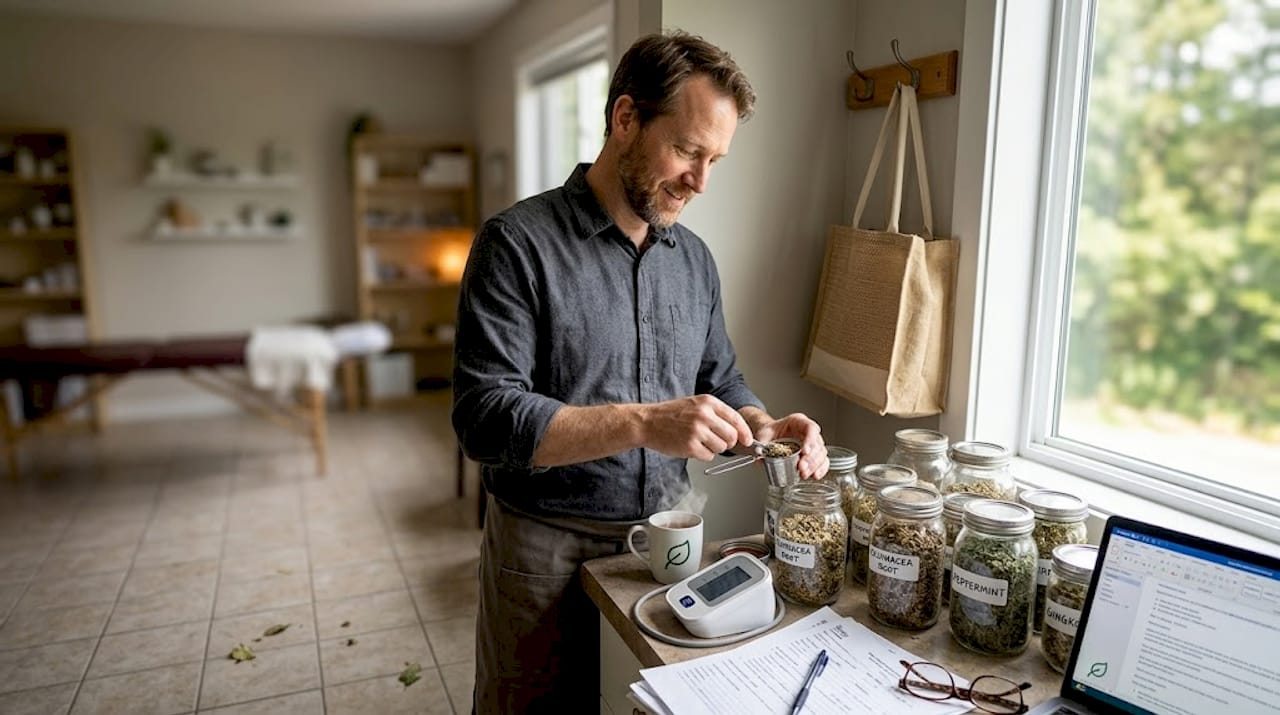
Naturopaths draw from a broad range of treatment modalities including clinical nutrition, herbal medicine, homeopathy, hydrotherapy, acupuncture, lifestyle counseling, and manipulative therapies. Here is a quick comparison of how these approaches differ in evidence strength:
| Modality | Evidence strength | Common uses |
|---|---|---|
| Clinical nutrition | Strong | Chronic disease, weight management |
| Acupuncture | Moderate to strong | Pain, stress, digestive issues |
| Herbal medicine | Variable | Immunity, sleep, inflammation |
| Hydrotherapy | Moderate | Circulation, muscle recovery |
| Homeopathy | Weak | Varies widely |
| Lifestyle counseling | Strong | Stress, prevention, chronic wellness |
Naturopaths customize these tools based on your individual needs, health history, and goals. Someone managing type 2 diabetes might receive a nutrition plan, stress reduction techniques, and herbal support. Someone with chronic fatigue might focus on sleep hygiene, gentle movement, and targeted supplementation.
The key distinction worth knowing is this: some naturopathic therapies are well-supported by research, while others are not. Nutrition and acupuncture have solid evidence bases. Homeopathy, on the other hand, lacks robust scientific support. Exploring top holistic therapies can help you identify which approaches align with the strongest evidence, and learning about evidence-based wellness practices gives you a sharper filter when evaluating options.
Pro Tip: When speaking with a naturopath for the first time, ask directly which therapies they recommend for your concern and what the research says about each one. A good practitioner will welcome that question.
Here are a few things to expect during a typical naturopathic consultation:
- A detailed intake covering your full health history
- Discussion of diet, sleep, stress, and lifestyle patterns
- A personalized treatment plan with clear goals
- Follow-up appointments to track progress and adjust
Naturopaths: Training, regulation, and what to look for
This is where things get more complicated, and where many people get tripped up. Not everyone who calls themselves a naturopath has the same level of training. Understanding the difference protects you.
Licensed naturopathic doctors (NDs) complete accredited four-year graduate programs that include biomedical sciences, clinical training, and supervised patient care. Traditional naturopaths, by contrast, may have completed correspondence courses or short certificate programs with no standardized requirements.
Here is a breakdown of the key differences:
| Licensed ND | Traditional naturopath | |
|---|---|---|
| Training | 4-year accredited program | Variable, often unregulated |
| Clinical hours | 1,200+ supervised hours | Often none required |
| Licensing | Required in ~20 US states | Generally unregulated |
| Scope of practice | Defined by state law | No legal standard |
Licensing also varies significantly by location. Around 20 US states and several Canadian provinces license NDs, while others have no regulation at all. This patchwork means the title "naturopath" can mean very different things depending on where you are. You can review naturopathy professional standards to understand what applies in your region.
Here is how to vet a practitioner before booking:
- Confirm they hold an ND degree from an accredited institution.
- Check that they are licensed in your state or province.
- Ask about their experience with your specific health concern.
- Verify they support coordination with your primary care doctor.
- Look for transparency about what they can and cannot treat.
Pro Tip: Use the provider directory at find holistic health practitioners to filter for verified, credentialed naturopaths in your area. It saves time and removes guesswork.
Knowing who you are working with is just as important as knowing what treatments they offer.
Evidence, safety, and criticisms: Navigating the science
Naturopathy sits in a nuanced space scientifically. Some of its methods have solid research behind them. Others do not. Being honest about this distinction is essential for making smart health decisions.
A 2024 Australian government review conducted a systematic assessment of naturopathy's effectiveness and found that while individual modalities like nutrition and acupuncture showed meaningful benefits, high-quality randomized controlled trials for naturopathy as a whole system remain limited. In other words, the parts are often stronger than the sum.
"The evidence base for naturopathy as a complete system is still developing, but select individual therapies within it carry genuine clinical support."
Criticisms of naturopathy are real and worth taking seriously. Common concerns include inadequate training compared to medical doctors, the inclusion of pseudoscientific practices like homeopathy, risks of delaying proven conventional care, and unverified health claims. Former naturopath Britt Marie Hermes became a prominent critic after leaving the profession, citing these exact issues.
Here is a clear-eyed look at the main safety considerations:
- Delayed care: Relying solely on naturopathy for serious conditions can delay life-saving treatment.
- Unproven remedies: Some herbal supplements can interact with medications.
- Credential gaps: Practitioners without proper training may cause harm through omission or commission.
- Overreaching claims: Be cautious of any practitioner who claims to cure serious diseases naturally.
Understanding what evidence-based wellness means helps you apply a sharper lens, and exploring evidence-based holistic methods for chronic health gives you concrete examples of where the science holds up.
Naturopathy works best as a complement to conventional medicine, not a replacement for it.
Applying naturopathy: Tips for integrating natural approaches safely
If you are ready to explore naturopathy, the good news is that integrating it into your health routine does not have to be complicated. It just takes a thoughtful approach.
Evidence is stronger for individual naturopathic modalities than for the whole system, which means your best strategy is to focus on therapies with solid research support and use them alongside your existing medical care. Think of naturopathy as a layer of support, not a standalone solution.
Here are practical steps to get started safely:
- Talk to your primary care doctor first. Let them know you are considering naturopathic care so they can flag any potential conflicts.
- Start with evidence-backed modalities. Nutrition, lifestyle counseling, and acupuncture are good starting points.
- Choose a licensed ND. Credentials matter more than testimonials.
- Set realistic goals. Naturopathy tends to work gradually, especially for chronic conditions.
- Track your progress. Keep notes on what changes and share them with both your naturopath and your doctor.
- Watch for red flags. Avoid practitioners who discourage conventional care or make sweeping cure claims.
For chronic wellness management, naturopathy can be particularly valuable. Managing stress through lifestyle counseling, optimizing nutrition for inflammation, or using acupuncture for pain relief are all realistic, research-supported goals. Check out integrative health tips and integrative health benefits for more guidance on building a balanced approach.
Pro Tip: Keep a simple health journal for the first 90 days of any new naturopathic protocol. Patterns become visible quickly, and it gives your care team real data to work with.
The goal is not to choose between natural and conventional care. It is to build a team that works together for your benefit.
Our perspective: When naturopathy makes sense—and when it doesn't
Here is something most wellness articles will not tell you: naturopathy's greatest strength is also its biggest vulnerability. Its whole-person, root-cause philosophy is genuinely valuable, especially for lifestyle-driven chronic conditions like metabolic syndrome, stress-related illness, and digestive dysfunction. But that same broad scope can become a problem when practitioners overreach into territory that requires conventional medicine.
We believe the healthiest mindset is one that is skeptical but open. Not every natural therapy is effective, and not every conventional treatment is necessary. The real skill is learning to tell the difference. Focus on therapies with actual evidence behind them. Ask hard questions. Expect clear answers.
The current evidence base for naturopathy as a complete system is still thin. But the individual tools within it, especially nutrition, movement, stress management, and acupuncture, are genuinely powerful when applied well. Exploring evidence-based wellness practices is a smart place to sharpen that discernment.
Naturopathy at its best is not about rejecting science. It is about expanding the conversation around health.
Find your holistic health path with Go Holistic
You have done the hard work of understanding naturopathy from the ground up. Now comes the rewarding part: finding the right support for your personal wellness journey.
Go Holistic makes it easy to connect with verified, credentialed holistic practitioners who are ready to meet you where you are. Whether you want to find holistic health practitioners in your area or explore holistic treatments across more than 200 therapy types, the platform gives you the tools to make informed, confident decisions. Our AI-powered recommendations match your health concerns with research-backed options, so you spend less time searching and more time healing. Get Started today and take that first step toward a more balanced, supported you.
Frequently asked questions
What is the main difference between a naturopath and a licensed naturopathic doctor (ND)?
Licensed NDs complete accredited four-year programs and meet standardized licensing requirements, while traditional naturopaths may have far less formal or consistent training depending on where they practice.
Is there strong scientific evidence for naturopathy?
Evidence is stronger for individual therapies like nutrition or acupuncture than for naturopathy as a whole system, as confirmed by a 2024 systematic review that found limited high-quality trials for the full naturopathic approach.
Can naturopathic care replace my primary doctor?
Naturopathy is best used as a complement to conventional care, not a replacement, since evidence favors individual modalities working alongside standard medicine rather than substituting for it.
What kinds of conditions is naturopathy commonly used for?
People most often turn to naturopathy for chronic conditions, preventive care, and general wellness, a trend reflected in rising usage rates from 0.2% to 1.3% of US adults over two decades.
Are there risks to naturopathic treatments?
Yes, risks include unproven claims and delayed care, so always verify your practitioner's credentials, coordinate with your healthcare team, and prioritize therapies with solid research support.