

TL;DR:
- Massage therapy helps improve overall well-being by easing muscle tension and calming the nervous system when tailored to individual goals. Preparing a personalized, goal-oriented checklist enhances session effectiveness, communication, and recovery strategies. Ongoing tracking and honest feedback maximize benefits within safe, evidence-informed holistic health practices.
Massage therapy has become one of the most sought-after tools in the holistic health world, and for good reason. Regular sessions can ease muscle tension, calm the nervous system, and support overall well-being in ways that complement your broader wellness routine. But here's the thing: not every session delivers the same results. Without a clear plan, you might walk away feeling uncertain about whether your time and money were well spent. This checklist-driven guide gives you the practical, evidence-informed framework you need to get the most out of every single session.
Table of Contents
- Essential criteria for effective massage therapy
- The ultimate massage therapy checklist for holistic health
- Comparing popular massage therapy options
- Personalizing your massage checklist for holistic wellness
- The hidden truths about maximizing massage therapy
- Enhance your holistic health journey with goholistic
- Frequently asked questions
Key Takeaways
| Point | Details |
|---|---|
| Checklist drives results | Using a structured massage therapy checklist helps ensure safety, comfort, and stronger wellness outcomes. |
| Personalization is key | Adapt your massage checklist and session approach to your individual health goals and circumstances. |
| Evidence matters, but experience counts | While scientific studies show mixed results, tracking your own wellness journey is crucial for optimal benefit. |
| Safety rarely an issue | Proper screening and communication make massage therapy a very safe addition to holistic routines. |
Essential criteria for effective massage therapy
Before you book your next appointment, it helps to know what you're actually looking for. Think of this phase as setting your wellness compass. Clear criteria help you measure success, communicate with your therapist, and choose the right approach for your body and goals.
Start by defining your goals. Are you looking for deep relaxation and stress relief? Targeting a specific area of chronic tension? Hoping to improve mobility after an injury? Your answer shapes everything, from the technique your therapist uses to how often you schedule sessions. Relaxation goals might point you toward Swedish massage, while pain relief and injury recovery often call for deeper, more targeted work.
Verify your therapist's credentials. A licensed massage therapist (LMT) has completed formal education, passed exams, and meets state-level standards. For holistic health, look for practitioners who also integrate wellness-informed approaches, such as an understanding of the mind-body connection, breathwork, or complementary modalities. Ask directly about their training and whether they're familiar with non-invasive holistic treatments that might support your goals alongside massage.
Request explanations for recommended techniques. A trustworthy therapist welcomes your questions. If they recommend a specific method, ask what evidence supports it. This is especially important for conditions like neck pain. A Cochrane review found low certainty evidence and little to no difference compared to placebo for neck pain at 12 weeks, partly due to small study sizes and heterogeneity. That doesn't mean massage isn't helpful for you. It means you should track your own outcomes carefully rather than assuming a specific result.
Screen for any contraindications. Some health conditions require modified techniques or physician clearance before massage. Conditions like blood clotting disorders, open wounds, or certain skin conditions fall into this category. Share your full health history upfront, every single time, even with a therapist you've seen before.
- Clarify your primary wellness goals before scheduling
- Verify licensure and ask about holistic training
- Discuss evidence behind recommended techniques
- Disclose all medications, injuries, and health conditions
- Ask about expected outcomes and session frequency
- Explore science-backed pain relief methods to complement your massage plan
Pro Tip: Write down your top three health goals and bring the list to your first session. It takes two minutes and completely changes how your therapist approaches your treatment plan.
With criteria in mind, let's walk through what makes a massage session truly effective.
The ultimate massage therapy checklist for holistic health
With the essentials established, here is a step-by-step checklist to use for every massage. Think of it as a living guide, something you refine with each session as you learn more about what your body responds to best.
Pre-session checklist:
- Review your therapist's credentials and any new certifications they've added
- Write out your session goals, whether pain relief, relaxation, or recovery
- Disclose any new health changes, medications, or stress triggers since your last visit
- Hydrate well in the hours before your session, since well-hydrated muscle tissue responds more readily to manipulation
- Eat a light meal at least 90 minutes beforehand to avoid discomfort during bodywork
- Avoid intense exercise immediately before, especially if your focus is recovery
During the session:
- Speak up about pressure immediately, too light or too firm, neither serves you well
- Monitor therapist hygiene, clean linens, fresh draping, and hand hygiene are non-negotiables
- Notice whether the therapist adjusts their technique based on your feedback
- Use slow, steady breathing to help your nervous system release tension more effectively
- Stay present rather than scrolling mentally through your to-do list
Post-session checklist:
- Drink at least 16 ounces of water within the hour after your session
- Note any soreness or discomfort and track whether it resolves within 24 to 48 hours
- Reflect on how your goals were addressed and rate session effectiveness on a simple 1 to 5 scale
- Schedule a follow-up based on your goals, not just convenience, since consistency drives results
- Integrate your massage therapy benefits into your broader wellness routine
Pro Tip: If you exercise regularly, time your massage session for at least a few hours after a hard workout. Research on post-exercise recovery in humans suggests there is a relatively narrow window where massage provides the most benefit for reducing muscle soreness, so planning ahead makes a real difference.
Explore top holistic therapies that you can stack with massage for a more rounded wellness approach.
"Safety is high when properly screened, and most adverse events are rare and mild." — Evidence Map: Massage Therapy Update 2018 to 2023
This is reassuring context. According to the VA Evidence Map update, adverse events are rare and typically mild, with soreness being the most common. When sessions are properly screened, safety is high. That said, knowing what to watch for and reporting anything unusual to your therapist keeps your wellness journey on track.
Comparing popular massage therapy options
Knowing how to maximize your session, let's compare the massage options available. Choosing the right modality is like selecting the right tool for a job. A hammer is excellent for some tasks and completely wrong for others.

Swedish massage is the most widely recognized style and serves as the foundation for many other techniques. Long, flowing strokes promote circulation, ease surface-level muscle tension, and activate the parasympathetic nervous system, which is your body's rest-and-digest mode. The evidence base for relaxation and general wellness is moderate, making it a solid starting point for most people.
Deep tissue massage uses slower, more deliberate strokes that target deeper layers of muscle and connective tissue. It's particularly popular for chronic musculoskeletal issues and injury recovery. Evidence for its effectiveness in chronic pain conditions is somewhat limited, and the need for more randomized controlled trials in massage research is well documented. That said, many people report significant relief, especially when sessions are consistent and tailored.
Trigger point therapy focuses on specific areas of tightness within muscle tissue, sometimes called knots. Firm, sustained pressure is applied to these spots to release tension. Evidence is mixed for long-term outcomes, but trigger point massage is a strong option for short-term, localized pain relief.
| Modality | Primary goal | Evidence strength | Best for | Risk level |
|---|---|---|---|---|
| Swedish | Relaxation, stress relief | Moderate | General wellness, first-timers | Very low |
| Deep tissue | Chronic pain, injury recovery | Limited | Musculoskeletal conditions | Low to moderate |
| Trigger point | Targeted pain relief | Mixed | Short-term, localized tension | Low |
| Sports massage | Athletic recovery, mobility | Emerging | Active individuals | Low |
| Myofascial release | Connective tissue flexibility | Emerging | Chronic tension, postural issues | Low |
Each of these modalities connects to the broader world of non-invasive therapies, and understanding the differences helps you ask better questions when booking.
- Swedish: Great for beginners; builds trust and body awareness
- Deep tissue: Effective for stubborn areas; may cause temporary soreness
- Trigger point: Highly targeted; works best with a skilled, communicative therapist
- Sports massage: Timed around activity for maximum recovery benefit
- Myofascial release: Slower and subtler, but powerful for long-standing tension patterns
For a wider look at how these fit into your wellness ecosystem, check out evidence-based wellness practices that practitioners often pair with massage.
Personalizing your massage checklist for holistic wellness
Once you've chosen options, fine-tune the checklist for your individual goals. A template is just a starting point. The most effective checklist is the one shaped around your body, your lifestyle, and your evolving health priorities.
For stress and emotional well-being: Prioritize Swedish or aromatherapy-enhanced massage. Add a brief mindfulness or breathing practice before your session to help your nervous system downshift faster. Note your stress levels on a simple scale before and after each session to track patterns over time.
For pain management and chronic tension: Deep tissue and trigger point techniques tend to serve better here. Communicate your pain thresholds clearly, and avoid the temptation to "push through" discomfort. Pair massage with gentle movement practices like yoga or walking to extend the benefit between sessions.
For post-exercise recovery: Sports massage and lymphatic techniques work well here. Time sessions strategically around your training schedule. Combine massage with proper hydration, sleep, and nutrition for a truly integrated recovery approach.
For whole-body holistic wellness: Layer massage with alternative therapies for wellness like acupuncture, mindfulness, or Ayurvedic body treatments. The synergy between modalities often exceeds what any single therapy can achieve alone.
Keep in mind that the evidence base for massage across many conditions is still growing, with small study sizes and varied methodologies creating some uncertainty. This is not a reason to avoid massage. It is a reason to track your personal outcomes closely and use that data to guide your decisions.
- Review your checklist after every three sessions and update it based on what's working
- Share outcome notes with your therapist so they can adjust their approach
- Add or remove checklist items as your wellness goals shift
- Consider pairing massage with journaling to spot emotional and physical patterns
The hidden truths about maximizing massage therapy
Here is a perspective you won't find in most massage therapy guides: the real power of massage isn't in the technique. It's in how honestly you pay attention to your own experience.
Most checklists treat massage like a prescription. Follow the steps, get the result. But wellness doesn't work that way. What relaxes one person may leave another feeling overstimulated. What relieves pain for one body might not touch another. The checklist matters, but your personal feedback loop matters even more.
We've seen again and again that people who track their outcomes and communicate openly with their therapist get dramatically better results than those who simply show up and lie quietly on the table. That sounds obvious, but it's surprisingly rare in practice. Most people feel uncomfortable redirecting their therapist mid-session, and that silence costs them real benefit.
There's also an important truth about research. A Cochrane review found low certainty evidence, with little to no difference compared to placebo for neck pain in some studies. Some wellness advocates find this discouraging. We think it's freeing. It means the evidence is still being written, and your experience is a valid and important part of that story.
Explore alternative treatments for chronic conditions to understand how massage fits within a broader, evidence-aware wellness plan.
"Evidence limitations mean your experience matters more than any protocol."
Use your checklist as a living document. After each session, ask yourself: Did my goal get addressed? What felt different? What would I change? Over time, those notes become your personal evidence base. That's not a workaround for weak research. That's good science applied to real life.
Enhance your holistic health journey with goholistic
Ready to take your checklist from theory to practice? Connecting with the right practitioner changes everything, and that's exactly where we can help.
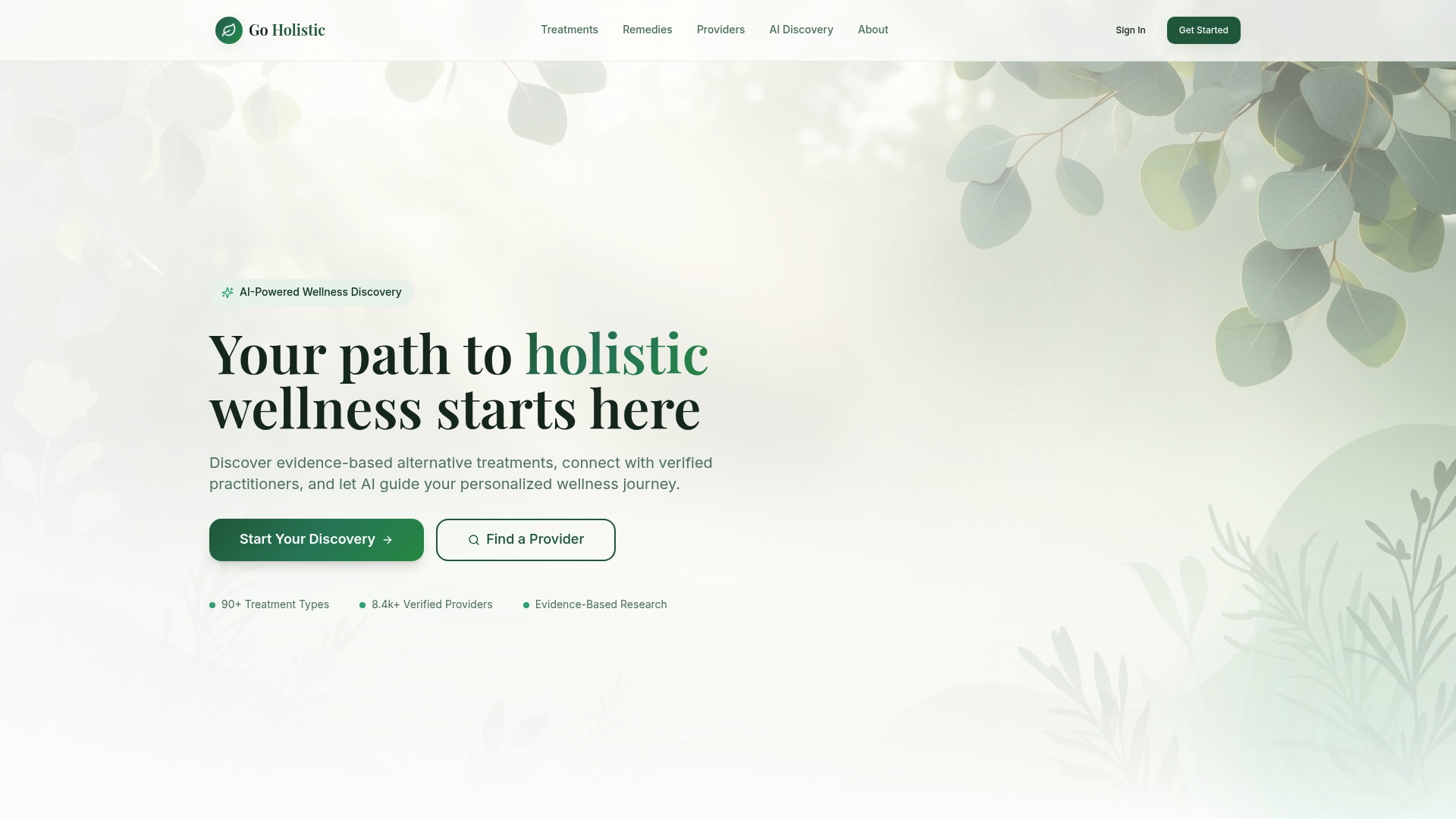
At Go Holistic, we've built a space where your wellness journey feels supported every step of the way. Browse our full library of holistic health treatments spanning over 200 therapy types, all backed by evidence summaries. Use our AI-powered tool to match your health concerns with personalized recommendations. Then find holistic health providers in our verified practitioner directory, where every listing is reviewed for credentials and holistic alignment. Whether you're new to massage therapy or ready to expand your practice, visit wellness practitioners near you and take the next step toward a more balanced, intentional you. Get started today.
Frequently asked questions
What should I look for in a massage therapist for holistic health?
Verify their licensure and training, understand how they incorporate holistic principles, and confirm they customize sessions based on your specific health goals and needs rather than using a one-size-fits-all approach.
Are massage adverse events common or serious?
Adverse events are rare and typically mild, most often presenting as temporary soreness after deeper work. According to the VA Evidence Map, safety is high when sessions are properly screened.
Does massage therapy always work for neck or musculoskeletal pain?
Not universally. A Cochrane review on neck pain found low-certainty evidence, suggesting outcomes vary widely and more high-quality trials are still needed to draw firm conclusions.
How can I maximize the benefits of massage therapy?
Use a structured checklist before and after every session, communicate your goals and feedback openly with your therapist, and personalize the experience to your evolving health priorities rather than following a rigid protocol.
Recommended
- Top 4 Holistic Therapies 2026
- Holistic Health Treatments | goholistic
- 6 evidence-based advantages of Ayurveda for wellness
- How to book a holistic consultation: easy guide for 2026
- Therapeutic massage: benefits, techniques, and evidence
- Postpartum recovery essentials: Your expert guide for holistic healing