

TL;DR:
- Choose remedies based on solid scientific evidence and your specific health goals.
- Always verify safety, drug interactions, and quality before incorporating natural remedies.
- Track your responses over time and adjust your plan with professional guidance.
You've been dealing with nagging joint pain or recurring digestive issues for months, and someone recommends a natural remedy that changed their life. It sounds promising, but then you find five conflicting articles, three warning labels, and zero clarity on what actually works. That tension is real, and you're not alone in feeling it. The natural wellness space is full of genuine options and genuine risks, often sitting side by side. This guide walks you through a practical, evidence-based process for identifying which remedies are worth trying, how to check safety, and how to track what's actually working for your body.
Table of Contents
- Understand your needs and research options
- Assess remedy safety and interactions
- Verify evidence and select credible sources
- Integrate, monitor, and adjust your natural remedy plan
- Why personal experimentation beats 'one-size-fits-all'
- Get support on your holistic health journey
- Frequently asked questions
Key Takeaways
| Point | Details |
|---|---|
| Research before use | Not all natural remedies are equally safe or effective—evidence and personal needs matter most. |
| Prioritize safety | Check for interactions, credentials, and standardized products before starting any new remedy. |
| Track and personalize | Effectiveness varies, so monitor your response carefully and adjust your approach as needed. |
| Integrate with care | Combining natural remedies with professional healthcare leads to safer and more reliable results. |
Understand your needs and research options
Before you reach for anything, get specific about what you're trying to achieve. Are you managing a chronic condition like osteoarthritis or irritable bowel syndrome? Looking to support general wellness and immunity? Or addressing a specific symptom like poor sleep or frequent headaches? Your answer shapes everything that follows, from which remedies make the list to how long you should give them before drawing conclusions.
Once your goal is clear, start building a short list of remedies with documented claims. Curcumin, the active compound in turmeric, has well-studied benefits for joint inflammation. Enteric-coated peppermint oil has real evidence behind it for IBS symptom relief. These are very different from remedies that trend on social media but lack any clinical backing. Popularity is not the same as proof.
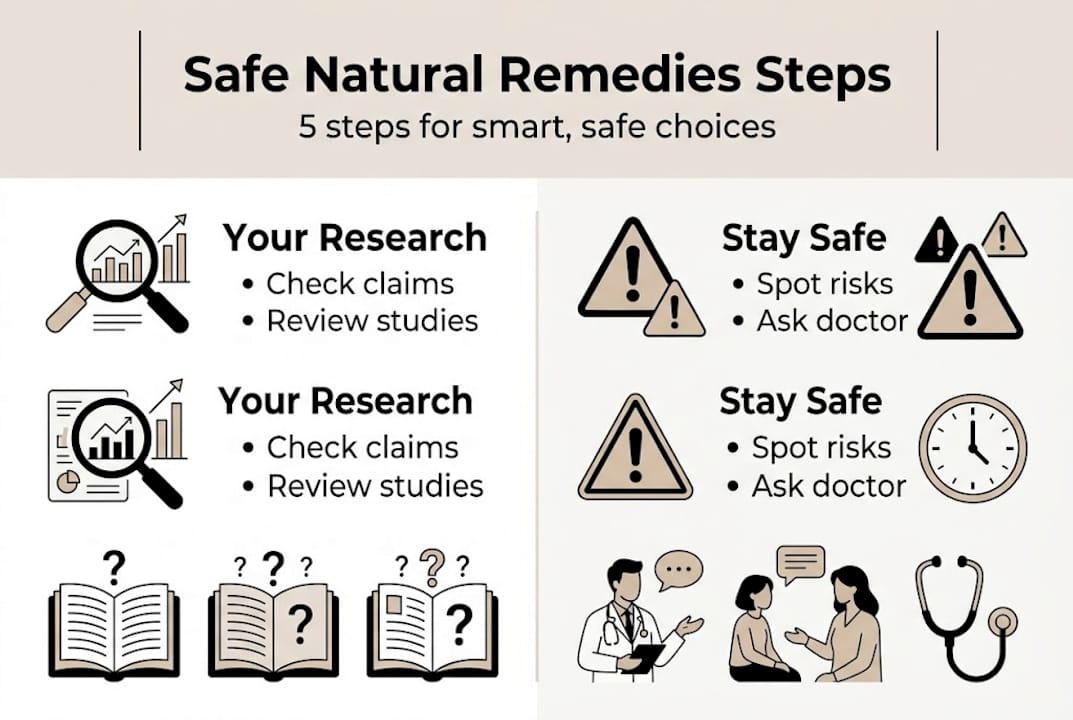
The science of complementary health approaches makes clear that scientific validation matters far more than tradition when selecting remedies. That doesn't mean traditional use is irrelevant, but it should support evidence, not replace it. Look to databases like PubMed or systematic reviews from the Cochrane Collaboration. These give you access to actual study data, not just summaries shaped by marketing.
Also consider whether evidence-based wellness practices align with your demographic. Some remedies carry restrictions for pregnant women, children, or older adults. Knowing your starting context keeps your list realistic and relevant.
Pro Tip: Use PubMed or Cochrane to verify any claim you find on a wellness blog. If a study doesn't exist, that's important information too.
Here's a quick snapshot of common conditions, associated remedies, and current evidence strength:
| Condition | Remedy | Evidence strength |
|---|---|---|
| Osteoarthritis | Curcumin | Moderate |
| IBS | Peppermint oil | Strong |
| Anxiety | Ashwagandha | Moderate |
| Cold prevention | Echinacea | Weak to moderate |
| UTI recurrence | Cranberry extract | Moderate |
Using this kind of structured overview helps you prioritize remedies worth deeper investigation, and those worth skipping. When you do connect with practitioners, these tips for selecting practitioners from the NCCIH offer a solid starting framework.
Assess remedy safety and interactions
Identifying a promising remedy is only step one. Before you add anything to your routine, you need to answer one clear question: is this safe for you specifically?

Here's a key truth that gets overlooked far too often. "Natural" does not mean safe. Comfrey can cause liver damage. High-dose licorice root raises blood pressure. St. John's wort, one of the most widely used herbal supplements, can significantly reduce the effectiveness of birth control, antidepressants, and blood thinners. These aren't edge cases. They're well-documented interactions.
The WHO's position on traditional medicine is clear: rigorous safety and efficacy validation is essential before use, regardless of how long a remedy has been in cultural practice. That's a standard worth holding yourself to.
To work through safety systematically, follow these steps:
- List all medications and supplements you currently take.
- Search each potential remedy alongside your medications using a drug interaction checker.
- Check age and pregnancy restrictions for each remedy.
- Look for standardized extracts with clear dosage information.
- Start at the lowest effective dose before increasing.
For a deeper look at herb and botanical safety, the NCCIH maintains updated research reviews that are worth bookmarking.
Here's a comparison of commonly used remedies and their key safety considerations:
| Remedy | Known risks | Drug interactions | Avoid if |
|---|---|---|---|
| St. John's wort | Photosensitivity | SSRIs, birth control, warfarin | Pregnant, on antidepressants |
| Turmeric/curcumin | GI upset at high doses | Blood thinners | Pre-surgery, on anticoagulants |
| Valerian root | Drowsiness | Sedatives, alcohol | Driving, liver conditions |
| Echinacea | Allergic reactions | Immunosuppressants | Autoimmune conditions |
For guidance on verifying provider safety when working with practitioners, that's an area worth researching in parallel.
Pro Tip: Prioritize third-party tested products carrying certifications from NSF International, USP, or ConsumerLab. These labels mean the product contains what it claims, at the dose listed, without harmful contaminants.
Verify evidence and select credible sources
Once safety checks are done, shift your focus to quality and credibility. Not all supplements are created equal, even when they share a name on the label. A curcumin product with no mention of piperine or a phospholipid complex may absorb poorly and deliver minimal benefit. The details matter.
When evaluating a remedy product, look for:
- Standardized extracts (e.g., "95% curcuminoids")
- Third-party testing certifications
- Clear labeling with ingredient quantities
- No vague "proprietary blend" hiding key dosages
- A reputable manufacturer with contact information and transparent sourcing
On the practitioner side, checking credentials matters just as much as product quality. Look for licensed professionals in their field, whether that's a naturopathic doctor, licensed acupuncturist, or certified Ayurvedic practitioner. Verify that they carry liability insurance and ask whether they have experience with your specific condition.
Here are clear red flags to watch for when evaluating both products and practitioners:
- Claims that a remedy "cures" a disease without referencing studies
- No ingredient transparency or dosage information
- Pressure to purchase in bulk or sign up for auto-shipments
- Reviews that sound generic or overly uniformly positive
- Practitioners who discourage conventional medical care entirely
For more structured guidance, these real-life evidence frameworks for remedies can help you apply research findings to your daily decisions.
Pro Tip: Create a simple tracking sheet with columns for each remedy you're considering, its evidence rating, safety notes, cost, and your source. Comparing options side by side removes a lot of the guesswork.
Explore integrative health tips that connect these evaluation steps into a longer-term wellness strategy.
Integrate, monitor, and adjust your natural remedy plan
You've done your research, checked safety, and selected credible products. Now comes the part most people skip: systematic integration and tracking. This is where your personal data starts to build.
The most important rule here is one remedy at a time. If you add three supplements simultaneously and feel better in two weeks, you'll have no idea which one helped. If something causes a side effect, you won't know the source. Introduce one new remedy, give it a defined window (typically four to eight weeks for most botanical remedies), and document what changes.
Tracking outcomes over weeks, not just days, gives you meaningful data. Pairing that tracking with conventional medical care ensures you don't miss something important.
Here's a simple sequence to follow:
- Choose one remedy and confirm the starting dose with your healthcare provider.
- Begin a daily symptom diary noting severity, sleep quality, energy, and any side effects.
- Set a four-week check-in to review patterns.
- At eight weeks, make a keep, adjust, or discontinue decision.
- If continuing, reassess again at three months.
Signs worth paying attention to include:
- Positive progress: reduced symptom frequency, improved sleep, better energy levels
- Concerning signals: new digestive issues, skin reactions, unusual fatigue, mood shifts
Also explore holistic treatments that work well alongside lifestyle changes, because no supplement replaces sleep, movement, and stress management. The integrative benefits of combining approaches are well-documented and worth building into your plan from the start.
Pro Tip: Lifestyle foundations like an anti-inflammatory diet, consistent sleep, and stress management often amplify the effects of natural remedies significantly. Think of them as the soil in which your remedies can actually take root.
Why personal experimentation beats 'one-size-fits-all'
Here's the uncomfortable truth about natural remedies: the same ashwagandha supplement that dramatically reduces anxiety in one person may do absolutely nothing for another, and occasionally cause harm for a third. This isn't a flaw in holistic medicine. It's human biology doing exactly what it's supposed to do.
Most wellness content presents remedies as universally beneficial if the evidence is positive. But study results reflect populations, not individuals. Your genetics, gut microbiome, stress load, and existing conditions all shape how your body responds. No meta-analysis captures that.
This is why your tracking journal is more valuable than any wellness article, including this one. The personal tracking data you build, combined with regular check-ins from your healthcare provider, gives you something no general guide can: your own evidence.
Most long-term gains in holistic health come not from discovering a perfect remedy, but from layering good habits with targeted, monitored support. Explore evidence-based alternatives that align with your specific health goals rather than chasing trends.
Pro Tip: Build a minimal natural medicine cabinet focused on immune support and anti-inflammatory basics, like vitamin D, zinc, and a well-studied adaptogen. A focused three-item shelf beats an untested collection of twenty.
Get support on your holistic health journey
If this guide has given you a framework to move forward, the next step is finding practitioners and resources that match your standards. Knowing what to look for is powerful. Having the right support behind you makes it sustainable.
At Go Holistic, you can find holistic providers who are verified, credentialed, and aligned with evidence-based care. Browse our local holistic practitioners directory to connect with specialists in acupuncture, Ayurveda, massage therapy, and more. Whether you're just starting out or refining an existing wellness plan, Go Holistic is here to help you take your next step with confidence. Get Started today and explore the full range of holistic treatments available through our platform.
Frequently asked questions
Can natural remedies replace conventional medicine?
Natural remedies work best as a complement to conventional care, not a replacement, especially for chronic, serious, or diagnosed conditions. An integrative approach consistently produces better outcomes than either approach used alone.
How do I know if a natural remedy is safe?
Look for third-party testing certifications, check for drug interactions using a reliable database, and talk to your healthcare provider before starting. WHO guidelines emphasize that safety validation is non-negotiable, regardless of a remedy's traditional use history.
Are there natural remedies proven to work for common conditions?
Yes. Enteric-coated peppermint oil reduces IBS pain, and cranberry reduces UTI recurrence by roughly 25% in susceptible individuals. Many other remedies lack equivalent evidence and require careful evaluation.
Who should avoid certain natural remedies?
Children under one, pregnant women, and people on medications like blood thinners or immunosuppressants should avoid many common herbal supplements. Certain populations face specific risks that make professional guidance especially important before starting any new remedy.