

TL;DR:
- Personalized treatment selection tailors therapies to individuals' unique health profiles, goals, and preferences. It involves comprehensive assessments, shared decision-making, and ongoing plan adjustments, often supported by AI tools. Effective plans require collaboration and regular reviews to adapt to changing needs and real-world constraints.
Personalized treatment selection is the process of tailoring medical and wellness therapies to your unique characteristics, preferences, and health needs to achieve the best possible outcomes. This guide to personalized treatment selection covers everything from foundational assessments to step-by-step plan building, common pitfalls, and long-term monitoring. The standard of care in 2026 has moved decisively away from one-size-fits-all methods toward shared decision-making that centers your goals alongside clinical evidence. Goholistic exists to make that shift accessible for anyone pursuing chronic health management or holistic wellness.
What are the essential components of personalized treatment selection?
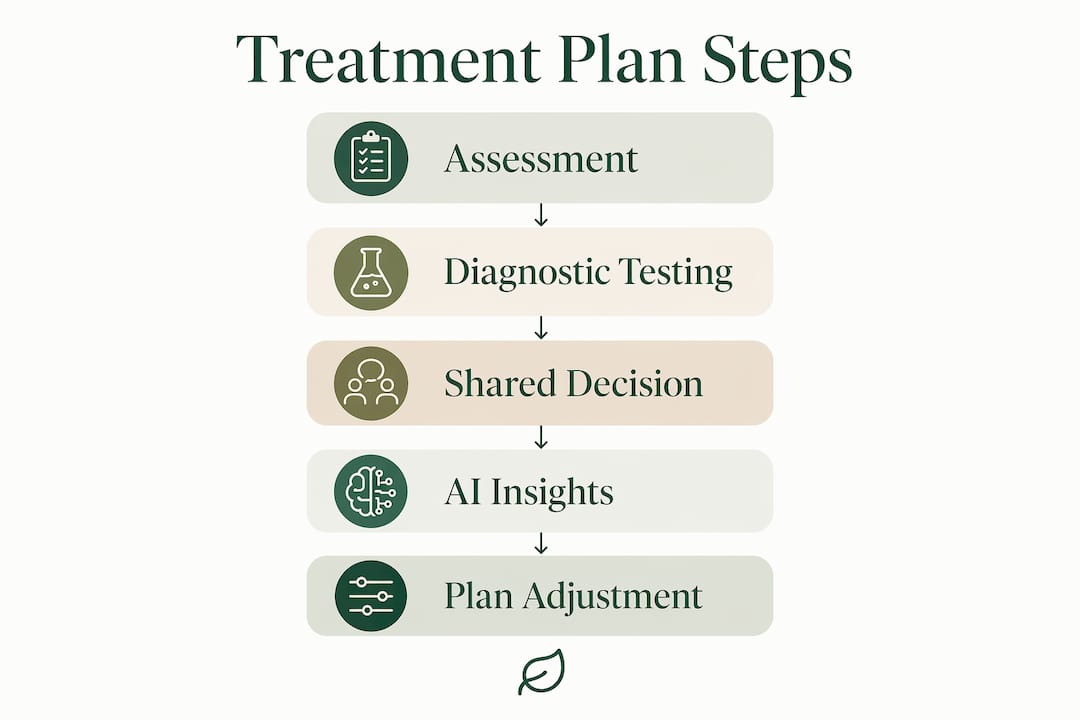
Effective personalized care starts with a complete picture of who you are, not just what condition you have. A thorough assessment covers your medical history, current symptoms, lifestyle habits, psychosocial factors, and personal values. Without this foundation, even well-intentioned treatment plans miss the mark.

Diagnostic testing adds another layer of precision. For chronic conditions, this can include blood panels, inflammatory markers, or functional health assessments. In more complex cases, genetic and molecular profiling reveals individual variation that standard testing cannot capture. Research shows that 95% of advanced cancer patients have distinct genetic profiles, which means nearly every person requires a different treatment approach. That finding applies beyond oncology: it reinforces why cookie-cutter plans consistently underperform.
Shared decision-making is the third pillar. Clinicians present risks and benefits clearly, and you bring your life priorities, whether that means staying active for work, managing family responsibilities, or avoiding certain side effects. The plan that emerges from that conversation fits your real life, not just a clinical average.
The table below summarizes the core assessment areas and what each one captures.
| Assessment area | What it evaluates |
|---|---|
| Medical and symptom history | Condition severity, duration, and prior treatment responses |
| Lifestyle and psychosocial factors | Sleep, stress, diet, relationships, and mental health |
| Diagnostic and lab testing | Biomarkers, inflammatory levels, and functional capacity |
| Genetic or molecular profiling | Individual biological variation affecting therapy response |
| Patient values and preferences | Personal goals, cultural considerations, and treatment priorities |
AI tools now assist clinicians in managing complex data from these assessments, particularly genomic information. AI augments human judgment rather than replacing it. The result is faster, more evidence-grounded decisions that still center your input. Goholistic uses a similar AI-assisted approach to match you with evidence-based holistic methods suited to your specific health profile.
How do you develop a personalized treatment plan step by step?
Building a customized medical treatment plan is a structured process. Skipping steps leads to vague goals and poor follow-through. The numbered sequence below reflects best practice across both conventional and alternative care settings.
- Complete your baseline assessment. Gather all relevant health data, including symptom logs, lab results, and lifestyle information, before any treatment decisions are made.
- Identify and prioritize your health concerns. Work with your practitioner to rank problems by urgency and impact on your daily life. This prevents the plan from spreading too thin.
- Set SMART goals. SMART goals are Specific, Measurable, Achievable, Relevant, and Time-bound. "Reduce lower back pain enough to walk 30 minutes daily within eight weeks" is a SMART goal. "Feel better" is not.
- Select evidence-based interventions. Match each goal to a therapy with documented effectiveness for your condition. For chronic pain, this might include acupuncture, massage therapy, or Ayurvedic protocols alongside any conventional care you receive.
- Build a realistic schedule. Assign specific days and times for each therapy or practice. Vague intentions do not produce consistent results.
- Define your review checkpoints. Decide in advance when you and your practitioner will evaluate progress. Weekly check-ins work well for active outpatient therapies. Monthly reviews suit longer-term wellness goals.
- Document everything. Keep a simple log of symptoms, energy levels, and therapy responses. This record becomes the evidence base for future adjustments.
Pro Tip: Avoid goals like "manage stress better." Instead, write "practice 10 minutes of guided breathwork five mornings per week for four weeks and rate stress on a 1–10 scale before and after." Specificity is what makes progress measurable.
The step-by-step plan building process works best when you treat it as a collaboration, not a prescription handed to you. Your practitioner brings clinical knowledge. You bring lived experience. Both are required for a plan that actually holds.
What common challenges arise in personalized care and how do you overcome them?
The most consistent failure point in personalized treatment is lack of collaboration. Co-created plans produce higher engagement and better outcomes than plans imposed solely by a provider. When you feel ownership over your plan, you follow through. When a plan feels handed down to you, compliance drops.
Real-world impact is a second challenge that often goes unaddressed. A therapy that requires three clinic visits per week may be clinically sound but practically impossible for someone with a demanding job or caregiving responsibilities. Lifestyle, family, and work demands heavily influence whether a plan succeeds. Raising these constraints early in the planning conversation prevents frustration later.
Managing expectations around unfamiliar therapies is another friction point. Acupuncture, Ayurveda, and functional nutrition approaches often work on longer timelines than pharmaceutical interventions. People sometimes abandon effective therapies before they have had time to work. Setting realistic timelines during goal-setting prevents this.
"Patients often overlook real-world impacts of treatments. Speaking with others who share your treatment can inform better personalized decisions." — National Institute of Diabetes and Digestive and Kidney Diseases
Pro Tip: Connect with peer groups or online communities of people managing the same condition. Their firsthand experience with specific therapies, including side effects, scheduling realities, and what actually helped, fills gaps that clinical research cannot.
Client engagement strategies in wellness settings consistently show that regular check-ins between appointments keep people on track. Even a brief weekly self-assessment, rating your symptoms and energy, creates accountability and surfaces problems before they derail progress.
How do you monitor and adjust your personalized treatment plan over time?
A personalized treatment plan is a living document. It should change as you change. Treating it as fixed after the first appointment is one of the most common mistakes people make with long-term health management.
Weekly reviews are recommended for many outpatient therapies, particularly in the early weeks when the plan is untested against your real life. These reviews do not need to be lengthy. A 10-minute check-in with your practitioner or a structured self-assessment covers the essentials: Are your SMART goals on track? Have new symptoms appeared? Does the schedule still fit your life?
When adjustments are needed, the SMART framework guides the revision. If a goal is not being met, the first question is whether it was achievable in the first place, not whether you failed. Revising a goal downward is not a setback. It is accurate calibration.
The table below compares common plan adjustment strategies by trigger and approach.
| Adjustment trigger | Recommended response | Review frequency |
|---|---|---|
| No symptom improvement after 4 weeks | Reassess therapy selection and dosage or intensity | Weekly during adjustment period |
| New or worsening symptoms | Pause affected therapy and consult practitioner | Immediate |
| Life change (work, family, travel) | Revise schedule and reduce session frequency temporarily | At next scheduled review |
| Goal achieved ahead of schedule | Set a new SMART goal or increase therapy intensity | At next scheduled review |
| Side effects or discomfort | Start any new combination at lower intensity and increase gradually | Weekly |
Starting new therapy combinations at lower doses and gradually increasing them allows your body to adapt while keeping side effects manageable. This principle applies equally to herbal protocols, bodywork intensity, and dietary interventions. Goholistic's AI-assisted care tools help practitioners track these adjustments and flag when a plan needs recalibration based on your reported progress.
Selecting tailored treatment strategies that evolve with your health status is what separates effective long-term care from a one-time consultation. The goal is a plan that grows with you.
Key Takeaways
Personalized treatment selection works because it matches care to your unique biology, lifestyle, and goals through shared decision-making, structured goal-setting, and regular plan reviews.
| Point | Details |
|---|---|
| Start with a full assessment | Cover medical history, lifestyle, diagnostics, and personal values before selecting any therapy. |
| Use SMART goals | Specific, measurable goals make it possible to track progress and know when to adjust. |
| Co-create the plan | Plans built with your active input produce better compliance and outcomes than provider-imposed ones. |
| Treat the plan as a living document | Review and revise regularly, especially in the first weeks, as your condition and life evolve. |
| Address real-world constraints early | Lifestyle, work, and family demands must shape the plan from the start, not be added as afterthoughts. |
What I've learned from watching personalized care done right and wrong
The biggest gap I see between people who thrive with personalized care and those who don't is not the quality of the therapy. It's the quality of the conversation that produced the plan. When someone walks out of an appointment with a list of instructions they didn't help create, the plan is already in trouble. When they walk out having negotiated the goals, the schedule, and the fallback options, they are invested.
I've also noticed that people underestimate how much their daily context shapes treatment outcomes. A person managing chronic fatigue who works night shifts needs a fundamentally different plan than someone with the same diagnosis who works from home. Clinical evidence tells you what works on average. Your life tells you what works for you. The best practitioners I've observed hold both truths at once.
The integration of alternative therapies with conventional medicine is where I see the most untapped potential. Acupuncture alongside physical therapy, Ayurvedic nutrition alongside functional medicine protocols, breathwork alongside cognitive behavioral approaches. These combinations are not fringe. They are increasingly supported by research, and they address dimensions of health that single-modality plans miss entirely. The principles of shared decision-making apply here too. You deserve to know what the evidence says about every option on the table, conventional and alternative alike, so you can choose with full information.
— Andrew
How Goholistic connects you to personalized wellness care
Finding the right practitioner for your specific needs used to mean navigating an overwhelming number of directories with little guidance. Goholistic changes that.
The platform uses AI to analyze your health concerns and match you with verified practitioners across acupuncture, massage therapy, Ayurveda, and more than 200 other therapy types. Every provider in the directory is certified and vetted, so you spend less time researching credentials and more time getting care. You can browse holistic health treatments by condition, therapy type, or practitioner specialty, and book directly from the platform. Whether you are starting your first personalized plan or refining one that needs a reset, Goholistic gives you the resources and the practitioners to do it well.
FAQ
What is personalized treatment selection?
Personalized treatment selection is the process of choosing therapies based on your unique medical profile, lifestyle, values, and goals rather than applying a standard protocol. It relies on shared decision-making between you and your practitioner.
How do SMART goals improve treatment outcomes?
SMART goals make progress measurable by defining exactly what success looks like and by when. This clarity allows you and your practitioner to identify quickly when a plan needs adjustment.
How often should a personalized treatment plan be reviewed?
Weekly reviews are recommended for active outpatient therapies, especially in the first month. Monthly reviews work well for longer-term wellness goals once the plan is stable.
Can alternative therapies be part of a personalized treatment plan?
Yes. Therapies like acupuncture, Ayurveda, and massage therapy are increasingly supported by research and can be integrated with conventional care when selected based on your specific condition and goals.
What is the biggest risk in personalized treatment planning?
The greatest failure point is lack of collaboration. Plans imposed by a provider without your active input consistently produce lower engagement and worse outcomes than co-created plans.