

TL;DR:
- Different therapy types have unique goals, methods, and evidence supporting their effectiveness for specific conditions.
- Choosing a therapy should be based on your problem, available evidence, and your preferences rather than reputation alone.
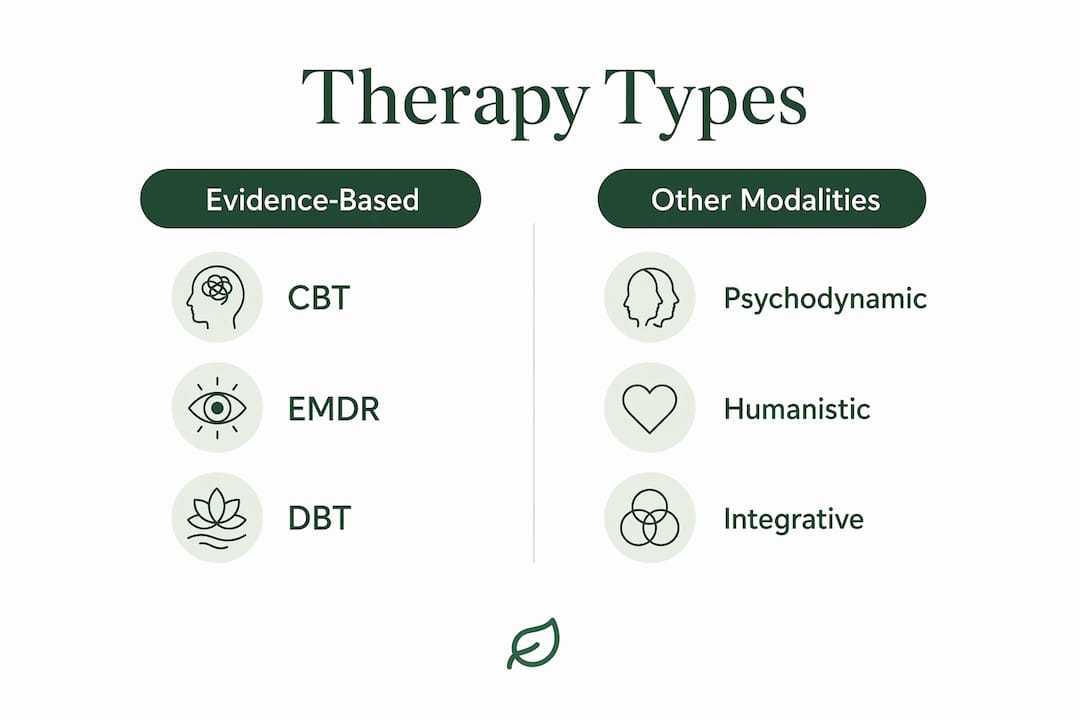
Comparing therapy types means evaluating each modality's goals, methods, evidence base, and fit with your specific needs and circumstances. The field of psychotherapy includes dozens of recognized approaches, from Cognitive Behavioral Therapy (CBT) and Dialectical Behavior Therapy (DBT) to Eye Movement Desensitization and Reprocessing (EMDR), Psychodynamic therapy, Acceptance and Commitment Therapy (ACT), and Humanistic approaches. Knowing how to compare therapy types gives you a real advantage before you ever sit down with a provider. This guide walks you through the core differences, the evidence behind each approach, and the practical criteria that actually matter when you choose.
What are the main therapy types and how do they differ?
The six most widely practiced therapy modalities each have a distinct focus, structure, and best use case. Understanding those differences is the starting point for any meaningful types of therapy comparison.

| Therapy | Core Focus | Typical Sessions | Best For |
|---|---|---|---|
| CBT | Changing thought and behavior patterns | 5–20 sessions | Anxiety, depression, phobias |
| DBT | Emotional regulation and distress tolerance | 12–24+ sessions | Borderline personality, self-harm |
| EMDR | Processing traumatic memories | 3–12 sessions | PTSD, single-incident trauma |
| Psychodynamic | Exploring unconscious patterns | 50+ sessions | Chronic relationship issues, identity |
| ACT | Acceptance and values-based action | 8–16 sessions | Chronic pain, anxiety, depression |
| Humanistic | Self-growth and personal meaning | Variable | Low self-esteem, life transitions |
Session counts by modality vary widely across approaches. That range matters because a 50-session commitment looks very different on your calendar and budget than an 8-session course.
CBT targets the connection between thoughts, feelings, and behaviors. It is structured, goal-oriented, and typically short-term. DBT builds on CBT but adds skills training in mindfulness, emotional regulation, and interpersonal effectiveness. It was originally developed for borderline personality disorder and remains the gold standard for that diagnosis.
EMDR uses guided eye movements to help the brain reprocess traumatic memories. It sounds unusual, but the evidence behind it is strong. Psychodynamic therapy takes the opposite approach: it is open-ended, exploratory, and focused on uncovering unconscious patterns that drive current behavior. ACT teaches you to accept difficult thoughts rather than fight them, then commit to action aligned with your values. Humanistic therapies, including Person-Centered therapy developed by Carl Rogers, prioritize your capacity for growth and self-direction.
How do you evaluate therapy effectiveness and evidence?
CBT has the most extensive research base of any therapy modality, with over 2,000 randomized controlled trials documenting its effectiveness for anxiety, depression, and PTSD. That volume of evidence means clinicians and insurers often recommend it first. But a large research base does not automatically make CBT the right choice for every person.
EMDR's evidence is equally striking for trauma. Up to 90% of single-trauma patients no longer meet PTSD criteria after just three 90-minute sessions. That efficiency matters if you want results quickly and your trauma is specific and recent.
A critical nuance in therapy type evaluation is the gap between clinical trials and real-world practice. Real-world therapy outcomes often differ from controlled trial results because routine clinical settings involve diverse client needs, co-occurring conditions, and resource limits. A therapy that performs brilliantly in a university study may look different in a community clinic. Practice-based evidence, meaning data collected from actual clinical settings, often gives you a more realistic picture of what to expect.
When reviewing evidence, ask these questions:
- Has this therapy been tested specifically for my condition, not just for general mental health?
- Were the study participants similar to me in age, background, and symptom severity?
- Does the research measure outcomes I care about, such as daily functioning, not just symptom scores?
- Is the evidence from real clinical settings, or only from tightly controlled trials?
Pro Tip: Ask any prospective therapist which studies or guidelines they follow for your specific condition. A good therapist will answer that question clearly and without defensiveness.
What practical criteria should you use to compare therapy types?
The most useful framework for choosing therapy starts with your problem, not the modality name. Matching therapy to your specific problem produces better outcomes than picking a therapy because it sounds credible. CBT fits well for specific, identifiable symptoms. Psychodynamic therapy fits better when you sense that long-standing patterns are driving your difficulties but you cannot name the source.
Use this step-by-step approach:
- Name your primary concern. Write down the one or two problems you most want to address. Anxiety about work? Recurring relationship conflicts? Grief after a loss? Your answer points toward specific modalities.
- Check the evidence match. Look up whether your concern appears in the research base for the therapies you are considering. NIMH and the American Psychological Association both publish accessible summaries.
- Assess your time and budget. Psychodynamic therapy at 50-plus sessions costs far more than a 12-session CBT course. Be honest about what you can sustain.
- Consider your learning style. CBT and DBT involve homework, worksheets, and skill practice between sessions. If structured exercises appeal to you, those modalities fit well. If you prefer open conversation, Humanistic or Psychodynamic therapy may feel more natural.
- Evaluate the therapist, not just the method. Therapeutic alliance quality is often a stronger predictor of therapy success than the specific modality chosen. A skilled therapist practicing ACT will likely outperform a poorly matched therapist practicing CBT, even if CBT has more trials behind it.
- Ask about integrative approaches. Combining therapy approaches and collaborative treatment planning often yield the best results for complex conditions. Many experienced therapists draw from multiple modalities rather than practicing one rigidly.
Understanding what makes a therapy research-backed in wellness helps you ask better questions when you meet a provider. Access and availability also shape your real options. Telehealth has expanded access to CBT and DBT significantly, while EMDR requires specific training and is less universally available. Check whether your insurance covers the modality and whether providers in your area are trained in it.
Pro Tip: Schedule a brief consultation call with two or three therapists before committing. Ask each one how they would approach your specific concern. The quality and warmth of that answer tells you more than their credentials alone.
What mistakes should you avoid when comparing therapy options?
The biggest mistake people make is fixating on modality names rather than outcomes. Therapy brand names like "CBT" or "EMDR" carry cultural weight, but many therapies produce similar outcomes across a range of conditions. Researchers call this the "Dodo Bird Verdict," a finding that suggests common factors like empathy, structure, and a safe relationship drive results more than the specific technique. That does not mean all therapies are identical, but it does mean you should not rule out a good therapist because they practice a less famous modality.
Watch out for these common errors in therapy type evaluation:
- Choosing by reputation alone. CBT is widely known, but it is not the best fit for every person or every problem.
- Ignoring the relationship. If you feel unheard or judged after two or three sessions, that is a signal worth acting on. Switching therapists is standard practice, not a failure.
- Treating therapy as static. Therapy should be flexible, with ongoing evaluation and adjustment as your needs change. A good therapist revisits goals with you regularly.
- Skipping psychological testing when it would help. Psychological testing clarifies diagnosis and can make therapy more efficient by pointing toward the right modality from the start. Testing is not therapy, but it informs it.
Collaborative treatment planning, where you and your therapist agree on goals, methods, and checkpoints, is the most reliable way to keep therapy on track. If your therapist never asks whether the approach is working for you, raise it yourself.
Key Takeaways
The most effective therapy choice combines evidence-based modality matching, honest self-assessment, and a strong working relationship with your provider.
| Point | Details |
|---|---|
| Match therapy to your problem | Start with your specific concern, then find the modality with the strongest evidence for it. |
| Evidence base varies widely | CBT has 2,000-plus trials; EMDR shows strong results for trauma in as few as three sessions. |
| Therapist fit matters most | Therapeutic alliance predicts outcomes more reliably than modality choice alone. |
| Duration affects commitment | Session counts range from 5 for CBT to 50-plus for Psychodynamic; budget and schedule accordingly. |
| Stay flexible | Revisit your therapy goals regularly and switch approaches or providers if progress stalls. |
What I have learned from watching people choose therapy
The most common regret I hear from people who spent months in the wrong therapy is not that they chose the wrong modality. It is that they stayed too long with a therapist who was not a good fit because they felt it would be rude to leave. That loyalty cost them real time and money.
The research on the Dodo Bird Verdict is genuinely liberating once you internalize it. It means you have more flexibility than the therapy industry's marketing suggests. You do not need to find the single "correct" modality. You need a skilled, warm, well-trained therapist who takes your goals seriously and adjusts when something is not working.
My honest advice: spend as much time evaluating the person as you do evaluating the method. Read about integrative health approaches so you understand that combining methods is normal and often wise. And treat your first few sessions as a mutual interview, not a commitment. A good therapist expects that and welcomes it.
— Andrew
Ready to find the right wellness support for you?
Choosing a therapy type is one piece of a larger picture. Many people find that mental and emotional well-being improves most when they address the whole person, including physical health, stress, and lifestyle factors alongside talk therapy.

Goholistic connects you with certified, verified practitioners across more than 200 holistic health treatments, from acupuncture and Ayurveda to massage therapy and beyond. The platform uses AI to match your health concerns with evidence-backed options and lets you browse, filter, and book directly with licensed providers. Whether you are exploring therapy for the first time or looking to complement an existing plan, Goholistic makes it easy to find holistic health practitioners who fit your needs and your schedule.
FAQ
What is the best therapy type for anxiety?
CBT is the most researched therapy for anxiety, with strong evidence across thousands of trials. ACT is also effective, particularly for generalized anxiety and chronic worry.
How many sessions does therapy typically take?
Session counts vary by modality. CBT typically runs 5–20 sessions, DBT runs 12–24 or more, and Psychodynamic therapy often exceeds 50 sessions.
Does the type of therapy matter more than the therapist?
Research suggests the therapeutic alliance, meaning the quality of the relationship between you and your therapist, predicts outcomes more reliably than the specific modality. Both matter, but fit with your therapist is the stronger factor.
Can I switch therapy types if the first one is not working?
Yes. Switching therapists or approaches after several sessions is standard practice, not a setback. Ongoing evaluation of therapy fit is a recognized part of good clinical care.
What is the difference between psychological testing and therapy?
Psychological testing is a diagnostic process that clarifies your condition and informs treatment planning. Therapy is the ongoing treatment itself. Testing is not therapy, but it can make therapy more targeted and efficient.