

TL;DR:
- Healing art therapies provide a nonverbal path to emotional healing, enhancing mental health through creative expression. They include modalities like expressive arts, visual art, music, dance, and writing, often supporting trauma recovery, self-identity, and social connection. Choosing a qualified, credentialed provider and exploring various methods can maximize their therapeutic benefits.
Healing art therapies — formally known in clinical settings as expressive arts therapy or art-based therapy — offer something most wellness approaches cannot: a path to emotional healing that does not require words. Whether you are processing stress, grief, or trauma, or simply looking for a richer way to support your mental health, creative healing methods give you a language beyond language. Research confirms that arts engagement works through at least fifty distinct mechanisms, from behavioral engagement to social connection to meaning-making. This guide walks you through ten of the most accessible and evidence-supported options so you can find what fits.
Table of Contents
- Key takeaways
- 1. Expressive arts therapy: the most accessible healing art therapy
- 2. Visual art therapy for emotion regulation and self-identity
- 3. Music therapy and the science of shared healing
- 4. Dance and movement therapy for body-based healing
- 5. Drama therapy for narrative and role-based healing
- 6. Writing and poetry therapy for meaning-making
- 7. Art as therapy in community and social prescribing programs
- 8. Sandplay and fiber arts therapy for tactile processing
- 9. Comparing the top healing art therapies: a quick-reference guide
- My honest take on what makes these therapies actually work
- Find your healing art therapy match with Goholistic
- FAQ
Key takeaways
| Point | Details |
|---|---|
| No artistic skill required | Most healing art therapies prioritize emotional process over creative output or talent. |
| Multiple mechanisms at work | Art therapies support mental health through behavior, social connection, regulation, and meaning. |
| Credentialing matters | For clinical populations, always seek a licensed or accredited art therapy provider. |
| Many modalities to explore | Options range from visual art and music to movement and writing, each with distinct benefits. |
| Sustained engagement pays off | Regular participation in arts programs produces measurable improvements in wellbeing scores. |
1. Expressive arts therapy: the most accessible healing art therapy
Expressive arts therapy is the broadest entry point into art-based healing, and it is the one most likely to work for you if you have ever said, "I'm not creative." That statement is irrelevant here. Sessions may involve drawing, collage, free movement, journaling, music, or a combination of all of them. The therapist guides the process; you follow what feels right.
What sets this modality apart is its commitment to emotional safety over product. There is no finished painting to evaluate, no song to perform. The work is about what surfaces during the making, not what you end up with afterward. This makes it especially useful for people carrying trauma or anxiety who might freeze under performance pressure.
Research supports its trauma-informed structure. Sessions are built around client choice, pacing, and reflection, which reduces the risk of emotional overwhelm while still allowing deep exploration.
- Draws on drawing, writing, music, movement, and drama
- No artistic background or skill level required
- Particularly effective for trauma, grief, and anxiety
- Focuses on regulation and emotional exploration
Pro Tip: If you are new to creative healing methods, expressive arts therapy is the best starting point. It lets you sample several modalities before committing to one.
2. Visual art therapy for emotion regulation and self-identity
Visual art therapy uses painting, clay work, collage, and drawing as the primary medium for therapeutic exploration. What makes it clinically significant is what happens in the brain during the process. According to a neuro-psycho-cultural model, visual art therapy influences the default mode network, the salience network, and the central executive network. These are the systems responsible for self-identity, emotional response, and focused attention.
That neurobiological basis is why visual art therapy shows up in clinical settings for depression, trauma, and even neurodegenerative conditions like dementia. Making something tangible gives the nervous system something to anchor to while the emotional work unfolds underneath.
- Painting, sculpture, collage, and drawing are common forms
- Supports self-identity processing and emotion regulation
- Used in trauma recovery, depression treatment, and dementia care
- Practitioners are often licensed through state boards and accredited via CAAHEP
Pro Tip: When choosing a visual art therapist, ask about their credentials. Look for board-certified art therapists (ATR-BC) and check your state's licensure requirements before your first session.
Goholistic's certified practitioner checklist can help you ask the right questions before booking.
3. Music therapy and the science of shared healing
Music therapy is one of the most researched creative healing methods available. It comes in two forms: active (where you play, sing, or compose) and receptive (where you listen and reflect). Both have documented benefits, but they work through slightly different pathways.
Active music therapy builds agency and expression. Receptive approaches are more regulative, calming the nervous system and reducing cortisol. What both share is a remarkable social dimension. Neuroimaging evidence shows that music therapy creates interpersonal neural synchrony between client and therapist, meaning your brains begin to align during a session. That is part of why music therapy feels like connection, not just treatment.
- Reduces anxiety, depression, and perceived stress
- Available in clinical, school, and community settings
- Active and receptive forms suit different goals and needs
- Accessible to people with physical or cognitive limitations
Music therapy shows up in hospitals, hospice care, schools, and rehabilitation centers. If you are exploring mental health art practices and you have always connected deeply with music, this modality deserves serious consideration. The WHO recognizes arts as a valuable tool in illness prevention and management, and music therapy sits squarely within that evidence base.
4. Dance and movement therapy for body-based healing
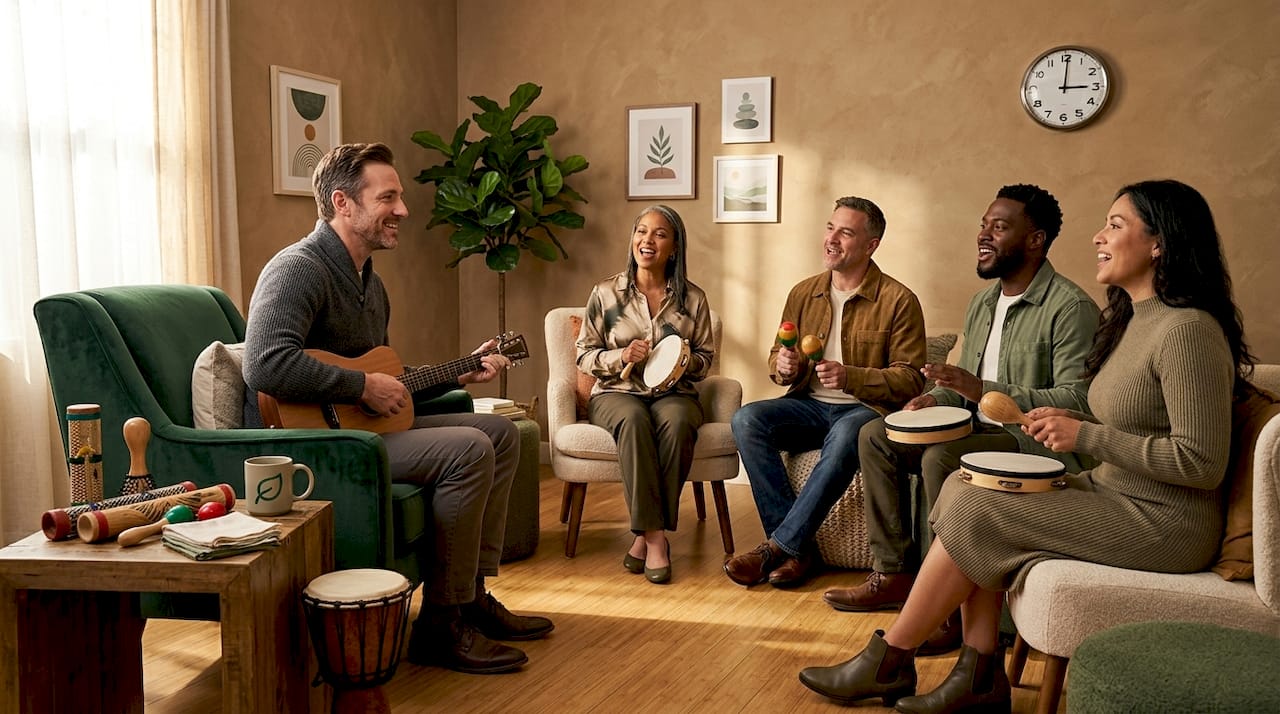
Dance and movement therapy (DMT) works on a premise that talk therapy often skips: the body holds what the mind cannot always articulate. Practitioners use structured and improvised movement to help clients process emotion, develop body awareness, and regulate their nervous systems.
This makes DMT especially relevant for trauma survivors. Trauma is stored somatically, meaning in the body's physical memory, and movement offers a way to process it that bypasses the verbal parts of the brain that often shut down under stress. Sessions can be one-on-one or group-based, and no dance experience is needed.
- Builds body awareness and emotional expression simultaneously
- Effective for trauma, PTSD, eating disorders, and depression
- Connects naturally to other mind-body practices like yoga and somatic therapy
- Group sessions also reduce isolation and build community
The social dimension of group DMT is worth noting separately. Arts participation reduces loneliness across diverse populations, and movement-based group work amplifies that benefit. You are not just moving. You are moving with others, which changes the therapeutic experience entirely.
5. Drama therapy for narrative and role-based healing
Drama therapy uses storytelling, role play, improvisation, and theatrical techniques to help people explore their experiences from a safe distance. The "character" becomes a container for emotions that feel too big to own directly. This protective distance is one of drama therapy's most powerful features.
It is used extensively with adolescents, trauma survivors, and people navigating identity challenges. The process of giving voice to a character can unlock insight that direct conversation never reaches. Sessions are guided by a registered drama therapist (RDT) and can take place individually or in groups.
6. Writing and poetry therapy for meaning-making
Therapeutic writing goes far beyond journaling. In poetry therapy and narrative therapy approaches, structured writing exercises help you externalize your inner experience, find patterns, and construct meaning from difficult events. The act of shaping language gives shape to emotion.
Research on sustained arts engagement from longitudinal programs like Art Pharmacy shows significant improvements in WHO-5 wellbeing scores when people participate regularly. Writing-based programs are among the most accessible because they require nothing more than pen and paper.
7. Art as therapy in community and social prescribing programs
Not every healing art practice happens in a clinical office. Social prescribing programs connect people to community arts activities, craft circles, choir groups, or mural projects as part of a broader health plan. This is art as therapy in its most democratic form.
The evidence here is real. Arts-based social prescribing programs in the U.S. show sustained mental health improvements with regular participation. These programs also address the root causes of poor mental health, including isolation, lack of purpose, and disconnection from community.
This approach pairs well with other holistic practices. You can explore how evidence-based wellness frameworks support the integration of community arts into a broader health plan.
8. Sandplay and fiber arts therapy for tactile processing
Some people heal through their hands. Sandplay therapy, derived from Jungian psychology, uses miniature figures and a sand tray to create symbolic worlds that reflect inner states. Fiber arts therapy, including weaving, knitting, and textile work, uses rhythmic tactile movement to regulate the nervous system and reduce anxiety.
Both approaches are lower-profile but increasingly recognized in holistic therapies discussions. They suit people who process better through physical sensation than verbal or visual expression.
9. Comparing the top healing art therapies: a quick-reference guide
Choosing among these modalities comes down to your goals, comfort level, and access to providers. This table gives you a side-by-side view.
| Therapy type | Skill level needed | Primary benefit | Best for | Session style |
|---|---|---|---|---|
| Expressive arts therapy | None | Emotional safety and exploration | Beginners, trauma | Multi-modal, flexible |
| Visual art therapy | None | Emotion regulation, self-identity | Trauma, depression, dementia | Individual or group |
| Music therapy | None | Anxiety and mood regulation | Diverse clinical settings | Active or receptive |
| Dance/movement therapy | None | Somatic healing, body awareness | Trauma, PTSD, isolation | Individual or group |
| Drama therapy | None | Narrative processing, identity | Adolescents, trauma | Group or individual |
| Writing and poetry therapy | Basic writing | Meaning-making, insight | Grief, life transitions | Individual or workshop |
| Community arts prescribing | None | Social connection, purpose | Loneliness, mild anxiety | Group, community-based |
| Sandplay therapy | None | Symbolic processing | Children, trauma, inner work | Individual |
| Fiber arts therapy | Minimal | Nervous system regulation | Anxiety, chronic stress | Individual or group |
| Red light therapy (complementary) | None | Mood support, physical well-being | Stress, seasonal mood changes | Individual |
Red light therapy, while not a traditional art-based practice, is increasingly used as a complement to expressive therapies for mood support. Research suggests it may support emotional regulation in ways that pair well with creative healing work.
Pro Tip: Start with your instinct. If a particular modality makes you slightly curious and slightly nervous at the same time, that tension is worth exploring. It usually means something real is ready to surface.
My honest take on what makes these therapies actually work
I've spent years looking at the research and talking with practitioners across the creative healing spectrum. Here is what I've found that most articles skip.
The fifty-plus mechanisms that explain arts therapy's benefits are not a sign that we don't understand it. They are a sign that it works on many levels at once. No single technique carries all the weight. That is a strength, not a weakness.
What I've learned is this: the specific modality matters less than the quality of the container around it. A skilled therapist who creates safety, allows client choice, and avoids performance pressure will get results with almost any art form. A poorly structured session with the trendiest modality can do the opposite.
I also think the distinction between clinical art therapy and community art-making gets blurred too often. If you are managing serious trauma or a diagnosed condition, please seek a credentialed therapist. Accreditation standards exist for a reason. But if you are working on stress, connection, or self-understanding, a community arts program or a guided expressive workshop can be genuinely transformative without requiring a clinical setting.
My encouragement: try more than one. The one you resist is often the one with the most to offer.
— Andrew
Find your healing art therapy match with Goholistic
Ready to take the next step? Goholistic makes it easier to move from curiosity to actual care.
The platform hosts a treatment library covering more than 200 holistic therapy types, including many of the creative healing methods covered here. You can read about each approach, review evidence summaries, and then search a curated directory of verified practitioners who specialize in exactly what you are looking for. Goholistic's AI-powered recommendation tool even matches your specific health concerns to the most supported treatment options, so you are not guessing.
Whether you want to explore visual art therapy, find a registered music therapist, or discover community wellness programs near you, the practitioner directory is a practical place to start. Browse, filter by specialty, and book directly. Your next creative step is closer than you think.
FAQ
What are healing art therapies?
Healing art therapies are structured therapeutic approaches that use creative expression, including visual art, music, movement, and writing, to support emotional and physical well-being. They are practiced in clinical and community settings by trained professionals.
Do you need artistic talent for art therapy to work?
No. Most art-based therapy approaches focus on emotional process, not artistic quality. The goal is self-expression and regulation, not producing something beautiful or technically skilled.
How does art therapy work in the brain?
Art therapy influences key brain networks involved in self-identity, emotional regulation, and attention. A neuro-psycho-cultural framework shows it works through biological, psychological, and cultural mechanisms simultaneously.
What is the difference between expressive arts therapy and visual art therapy?
Expressive arts therapy uses multiple creative modalities in a single session, while visual art therapy focuses specifically on visual media like painting and sculpture. Both are valid, but expressive arts therapy offers more flexibility for newcomers.
How do I find a qualified art therapy provider?
Look for therapists with credentials such as ATR-BC (board-certified art therapist) or state licensure. Platforms like Goholistic's holistic provider directory let you filter by specialty and verify practitioner credentials before booking.