

TL;DR:
- Personalized treatment uses individual genetic, lifestyle, and environmental data to tailor medical care, improving outcomes and reducing costs. It addresses biological differences that cause varied responses, leading to faster, safer, and more effective therapies. However, challenges like healthcare disparities and data infrastructure must be navigated to ensure equitable access and implementation.
Most people assume that a treatment proven effective in clinical trials will work equally well for them. That assumption is one of the most common and costly mistakes in modern healthcare. Why personalized treatment matters is not an abstract question reserved for researchers. It has real consequences for how quickly you recover, how many side effects you endure, and how much you pay. Precision medicine improves risk prediction and therapeutic response by using individual patient data, yet most care still follows a one-size-fits-all model. That gap between what science makes possible and what most people receive is exactly what this article addresses.
Table of Contents
- Key takeaways
- Why personalized treatment matters in modern healthcare
- The real benefits of individualized therapy
- Challenges you should know about
- How to access personalized care today
- My honest take on why this matters
- Start your personalized wellness path with Goholistic
- FAQ
Key takeaways
| Point | Details |
|---|---|
| One size does not fit all | Biological differences mean the same treatment can help one person and harm another. |
| Personalized care cuts costs | Panel-based pharmacogenetics reduces total healthcare costs by an average of €276 per patient. |
| Faster results, fewer side effects | Pharmacogenomics reduces trial-and-error dosing, getting you to effective therapy sooner. |
| Equity challenges are real | Without policy support, personalized medicine risks deepening health disparities across populations. |
| Holistic care fits naturally | Personalized wellness, including alternative therapies, complements and strengthens individualized treatment. |
Why personalized treatment matters in modern healthcare
Think of standard care as a map drawn for the average person. It gets most people in the general direction, but if your biology, history, or environment differs from the average, that map can lead you off course. Personalized treatment redraws the map specifically for you.
The formal term you will hear most often is precision medicine. It refers to tailoring medical decisions to the individual characteristics of each patient, including genetics, lifestyle, and environment. A related field called pharmacogenetics looks specifically at how your genes influence your response to medications. These are not futuristic concepts. They are being used in clinics today for conditions ranging from depression to cancer to high blood pressure.
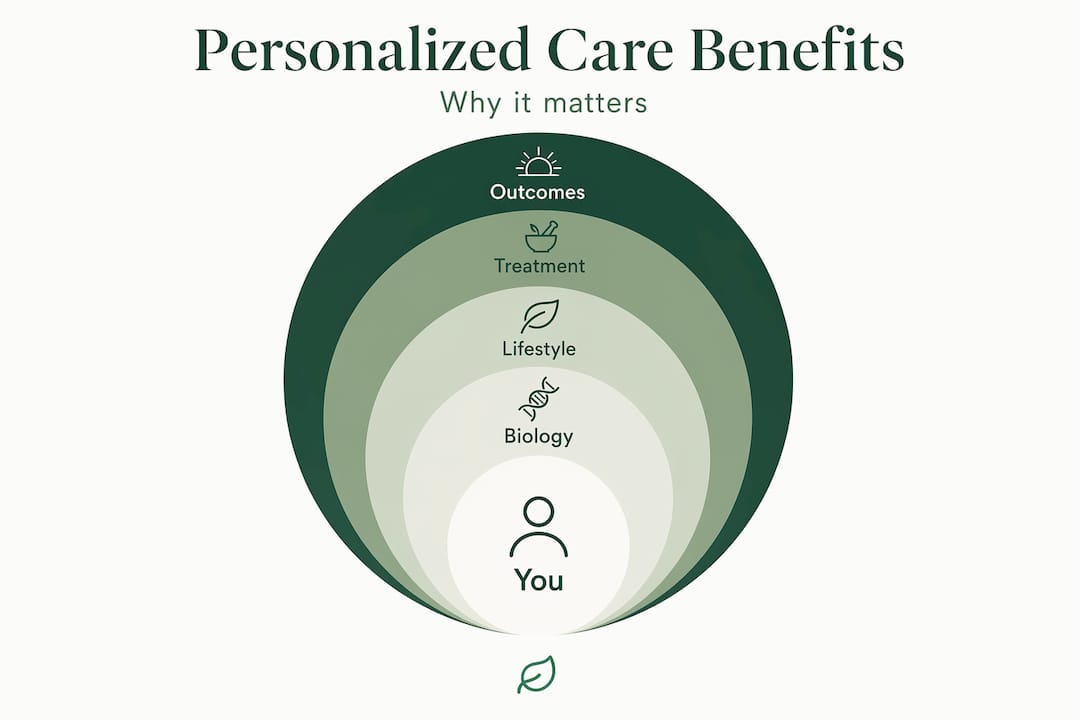
Here is what makes this so significant. Biological heterogeneity limits one-size-fits-all care, meaning the same drug at the same dose can produce wildly different results in different people, even people with the same diagnosis. Your liver enzymes, your immune markers, your stress patterns, your gut microbiome. All of these influence how you respond to treatment.
Consider two people with hypertension who are given identical medication. One sees their blood pressure normalize within weeks. The other sees no improvement and develops fatigue and dizziness. Same diagnosis, same prescription, completely different outcomes. Personalized treatment aims to predict that difference before you go through weeks of ineffective care.
Key factors that shape your individual treatment response:
- Genetics: Variations in specific genes determine how fast your body metabolizes certain drugs.
- Lifestyle: Diet, sleep, exercise, and stress levels all modify how you respond to therapy.
- Environment: Where you live, what you are exposed to, and your social circumstances affect your health trajectory.
- Comorbidities: Having more than one condition changes how treatments interact in your body.
- Prior treatment history: What has worked or failed before is data that should shape what comes next.
Pro Tip: Before your next medical appointment, write down any medications that have caused side effects or simply not worked for you. This information is one of the most useful inputs a provider can have when tailoring your care.
The real benefits of individualized therapy
The benefits of individualized therapy are not just theoretical. They show up in clinical data, in reduced costs, and in the day-to-day experiences of patients who finally find something that works.
Here is a clear look at where the evidence lands:
-
Reduced trial-and-error. One of the most exhausting parts of managing a chronic condition is trying medication after medication until something sticks. Pharmacogenomics reduces trial-and-error by predicting which drugs are more likely to be safe and effective for your specific genetic profile. That means fewer failed attempts and faster relief.
-
Better blood pressure control. A clinical study found that returning APOL1 genotype results to patients with uncontrolled blood pressure led to a mean 4.1 mm Hg greater reduction in systolic pressure at three months compared to a control group. That may not sound dramatic, but in cardiovascular medicine, that margin translates to measurable risk reduction over time.
-
Improved patient knowledge and risk awareness. Research on breast cancer patients showed that those who received genetic testing and quantitative counseling reported more accurate personal risk assessments. Knowing your actual risk level changes how you and your provider make decisions together.
-
Lower healthcare costs. This one surprises many people. A multinational analysis found that pharmacogenetics-guided treatment reduced total healthcare costs to €491 per patient compared to €767 in the control group. That is a saving of €276 per patient, even before accounting for downstream benefits like fewer hospitalizations.
-
Higher treatment adherence. When a treatment is designed around your biology and lifestyle, you are more likely to stick with it. Adherence is one of the biggest drivers of long-term health outcomes, and personalized care addresses the root causes of why people stop following their treatment plans.
| Benefit | Evidence |
|---|---|
| Reduced side effects | Pharmacogenomics predicts adverse reactions before they occur |
| Faster effective therapy | Genetic data shortens the path to the right medication |
| Cost savings | Personalized care saves an average of €276 per patient |
| Better disease management | Genotype-guided care improved blood pressure control in hypertension patients |
| Stronger patient engagement | Individualized plans lead to better understanding and adherence |
The significance of personalized patient care extends beyond any single condition. Whether you are managing mental health, chronic pain, metabolic disorders, or cardiovascular risk, the advantages of tailored treatment build on each other over time.

Challenges you should know about
Personalized treatment is genuinely exciting, but presenting it as a perfect solution would not be honest. There are real challenges that affect who benefits and how quickly these approaches reach everyday care.
The most pressing concern is equity. Without deliberate planning, personalized medicine can actually widen the gap between those who have access to advanced care and those who do not. Genetic tests, specialized counseling, and precision therapies cost money. In healthcare systems without strong policy support, these tools often reach affluent patients first and underserved communities last.
Infrastructure is another layer of complexity. Effective personalized care requires interoperability, meaning your genetic data, your medical history, your lab results, and your lifestyle information all need to communicate with each other in real time. Most healthcare systems are not built that way yet. Data lives in silos, providers use incompatible systems, and workforce training has not kept pace with what the science now allows.
Other real-world challenges include:
- Data privacy risks: Sharing genomic data raises legitimate concerns about how that information is stored and who can access it.
- Implementation gaps: Evidence-based precision medicine has limited success in routine practice, partly because of poor study designs and challenges translating research into clinical workflow.
- Genomic screening limitations: A clinical trial on opportunistic genomic screening for familial hypercholesterolemia showed only modest, nonsignificant reductions in LDL-C, a reminder that even promising tools need the right implementation strategy to deliver meaningful results.
- Workforce readiness: Many providers have not yet received training in genomics or precision medicine, which limits how confidently they can offer or interpret personalized options.
Pro Tip: Ask your provider directly whether pharmacogenetic testing is appropriate for any medication you are currently taking or being prescribed. Not all providers will raise it unprompted, but many are open to it when patients ask.
How to access personalized care today
You do not have to wait for the healthcare system to catch up. There are concrete steps you can take right now to move toward more individualized care.
Start by having an honest conversation with your provider about your treatment history, what has worked, what has not, and whether your current plan accounts for your individual biology and lifestyle. Many providers are open to this conversation but wait for the patient to initiate it.
Questions worth asking at your next appointment:
- Has my genetic profile been considered in my current medication plan?
- Are there pharmacogenomic tests relevant to the drugs I am taking?
- How does my lifestyle, diet, or stress level factor into this treatment approach?
- Are there integrative or holistic therapies that could complement what I am already doing?
Beyond conventional medicine, the reason for tailored healthcare extends naturally into holistic wellness. Practices like acupuncture, Ayurveda, and massage therapy have long operated on the principle that no two bodies are the same. These approaches assess your whole picture, not just your symptoms, and build care around your specific constitution, patterns, and needs.
For a deeper grounding in what personalized care means across both conventional and alternative settings, the 2026 personalized treatment guide is a useful place to start. Understanding how personalized wellness improves outcomes is the first step to making informed decisions about your own care.
You can also explore tools like a personalized supplement quiz to identify individualized nutritional support that fits your health profile. And if your care involves mental health, understanding the role of culturally responsive therapy can add another layer of meaningful personalization.
Looking ahead, we can expect AI-driven health assessments, broader genomic testing, and more integrated care models that bring conventional and holistic approaches together under one roof. The future is personalized. The question is whether you are positioned to benefit from it now.
My honest take on why this matters
I have spent years watching people cycle through treatments that were never quite right for them. Same diagnosis, same protocol, same frustration. What I have come to believe, quite firmly, is that the standard model was never designed to account for the person. It was designed to account for the average.
In my experience, the patients who see the most meaningful change are those who start asking different questions. Not just "What do I take?" but "Why is this the right choice for me, specifically?" That shift in thinking changes the entire relationship between a person and their care.
I will be direct about something most articles skip: personalized treatment is not automatically better just because it sounds tailored. The quality of personalization depends entirely on the quality of the data behind it, the skill of the practitioner interpreting it, and the infrastructure supporting it. A genetic test result handed to someone without the context to act on it is not care. It is a data point.
What gives me genuine optimism is that holistic approaches have always understood this. Ayurveda does not prescribe the same herb to every patient. Traditional Chinese Medicine does not treat every case of anxiety identically. The individualization was baked in from the start. What we are seeing now is conventional medicine slowly, imperfectly catching up to something holistic practitioners have known for centuries.
My advice is simple. Advocate for yourself. Ask for individualized options. Explore integrative care alongside what your doctor recommends. Your health is not average, and your treatment should not be either.
— Andrew
Start your personalized wellness path with Goholistic
If this article has you thinking about what personalized care could look like in your own life, Goholistic is built exactly for that next step.

The platform connects you with verified holistic practitioners across disciplines like acupuncture, massage therapy, and Ayurveda, all of whom work with your specific health picture, not a generic template. Goholistic also uses AI to match your health concerns with evidence-backed treatment recommendations from a library of over 200 therapy types. Whether you are managing a chronic condition, looking to support your mental health, or simply wanting to feel more balanced, you can browse holistic treatments tailored to you and find practitioners near you who specialize in individualized care. Get started today and take your wellness into your own hands.
FAQ
What does personalized treatment actually mean?
Personalized treatment means tailoring medical or wellness care to your individual biology, genetics, lifestyle, and environment rather than applying a standard protocol. It draws on data like genetic markers, health history, and lifestyle factors to guide decisions that are specific to you.
How does personalized care reduce healthcare costs?
Research shows that pharmacogenetics-guided treatment lowers total healthcare costs by an average of €276 per patient by reducing ineffective treatments and unnecessary medication adjustments.
Is personalized treatment available outside of hospitals?
Yes. Holistic and integrative wellness practices like Ayurveda, acupuncture, and nutritional therapy have always offered individualized care. Platforms like Goholistic make it easy to connect with verified practitioners who specialize in tailored, evidence-informed approaches.
Can personalized treatment worsen health disparities?
It can, if access is not managed carefully. Without equitable policies and infrastructure, precision medicine tools tend to reach higher-income populations first, which can deepen existing gaps. This is why advocacy for affordable, accessible personalized care matters alongside the science.
What questions should I ask my doctor about personalized care?
Ask whether pharmacogenomic testing is relevant to your current medications, how your lifestyle factors into your treatment plan, and whether integrative or holistic therapies could complement your existing care. Most providers will engage seriously when patients raise these questions directly.