

TL;DR:
- Non-invasive treatments offer effective, lower-risk options for chronic pain and respiratory conditions.
- Personalization and evidence-based planning are key to achieving meaningful health improvements.
- Combining therapies with medical guidance enhances outcomes and supports long-term wellness.
For years, many people assumed that real results required drastic measures. Surgery, injections, and pharmaceutical regimens were seen as the only serious paths to relief for chronic health issues. That assumption is shifting fast. A growing body of research now confirms that non-invasive treatments, ranging from manual therapy and acupuncture to laser therapy and mind-body practices, produce measurable, meaningful improvements in pain, mobility, and quality of life. This guide walks you through what the evidence actually says, which conditions respond best, where caution is still warranted, and how to build a personalized non-invasive care plan that truly supports your wellness journey.
Table of Contents
- What are non-invasive treatments? Key concepts and common types
- Proven benefits for chronic conditions: What the evidence shows
- Limitations, edge cases, and what the research warns about
- Maximizing results: How to choose and personalize your non-invasive care
- A holistic perspective: Why evidence and personalization matter most
- Explore holistic solutions for your wellness journey
- Frequently asked questions
Key Takeaways
| Point | Details |
|---|---|
| Broad evidence base | Non-invasive treatments have strong scientific support for several chronic conditions, especially pain and respiratory disorders. |
| Personalization matters | Matching the treatment protocol to the patient maximizes safety and benefit. |
| Expect moderate results | While most effects are meaningful, results can be modest and vary by condition. |
| Low risk profile | Most non-invasive options carry fewer risks and help improve quality of life with minimal downtime. |
| Expert guidance is key | Consulting qualified providers ensures the safest, most effective integration of non-invasive approaches into your care plan. |
What are non-invasive treatments? Key concepts and common types
Before weighing your options, it helps to understand exactly what "non-invasive" means in a clinical context. Non-invasive treatments are those that work without any cuts, needles inserted into tissue, or tools placed inside the body. They enhance the body's natural healing capacity rather than bypassing it. That distinction matters, because it also shapes the risk profile: lower risk, minimal downtime, and a gentler learning curve for your body.
The surgical vs non-surgical comparison makes this clear. Surgical procedures involve anesthesia, tissue disruption, and recovery periods measured in weeks or months. Non-invasive approaches, by contrast, often allow you to return to daily activity the same day.
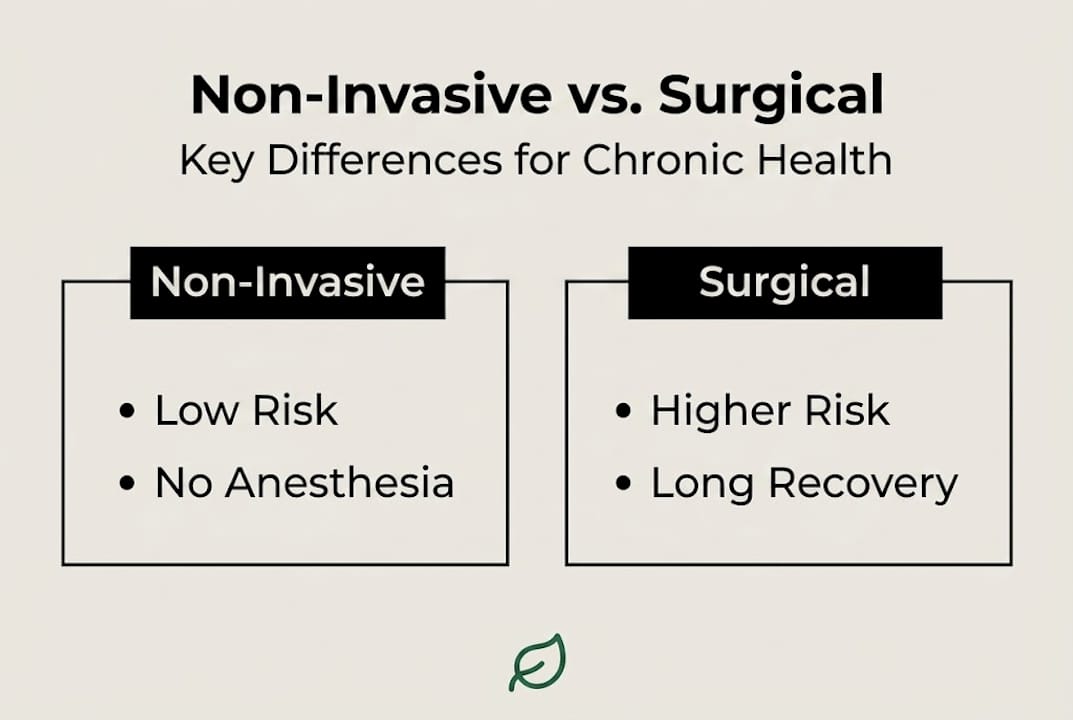
Here's a quick look at how they stack up:
| Feature | Non-Invasive Treatments | Surgical or Invasive Procedures |
|---|---|---|
| Recovery time | Minimal to none | Days to months |
| Risk of complications | Low | Moderate to high |
| Setting | Clinic, home, or wellness center | Hospital or surgical facility |
| Anesthesia required | Rarely | Often |
| Reversibility | Usually reversible | Often permanent |
Common non-invasive treatment types include:
- Manual therapy: Hands-on techniques such as massage, spinal manipulation, and myofascial release
- Laser therapy: Low-level light applied to tissue to reduce inflammation and support repair
- Shock wave therapy: Sound waves delivered externally to stimulate healing in soft tissue
- Acupuncture: Superfine needles placed at specific points (technically minimally invasive but widely grouped here)
- Non-invasive ventilation (NIV): Breathing support via mask rather than intubation
- Non-invasive brain stimulation: Techniques like transcranial magnetic stimulation (TMS)
- Mind-body practices: Yoga, meditation, guided breathing, and tai chi
You can explore a broader alternative therapies overview to see how these fit within the larger wellness picture. For more specific modalities, check out these holistic therapy examples and evidence-based integrative approaches.
Who should consider non-invasive options? You may benefit if you:
- Live with a chronic pain condition and want to avoid surgery
- Are managing a respiratory disorder and exploring supportive care
- Have tried medication alone and want to complement it
- Prefer low-risk, gradual approaches that fit into everyday life
- Want to support long-term wellness, not just symptom suppression
Research confirms the value here. Manual, laser, and shock wave therapies yield statistically significant pain and disability reduction in myofascial pain syndrome, one of the most common and stubborn chronic pain conditions.
Proven benefits for chronic conditions: What the evidence shows
The science has caught up with what many wellness practitioners have long observed. Non-invasive treatments aren't just soothing, they can produce real, measurable changes in how your body feels and functions.
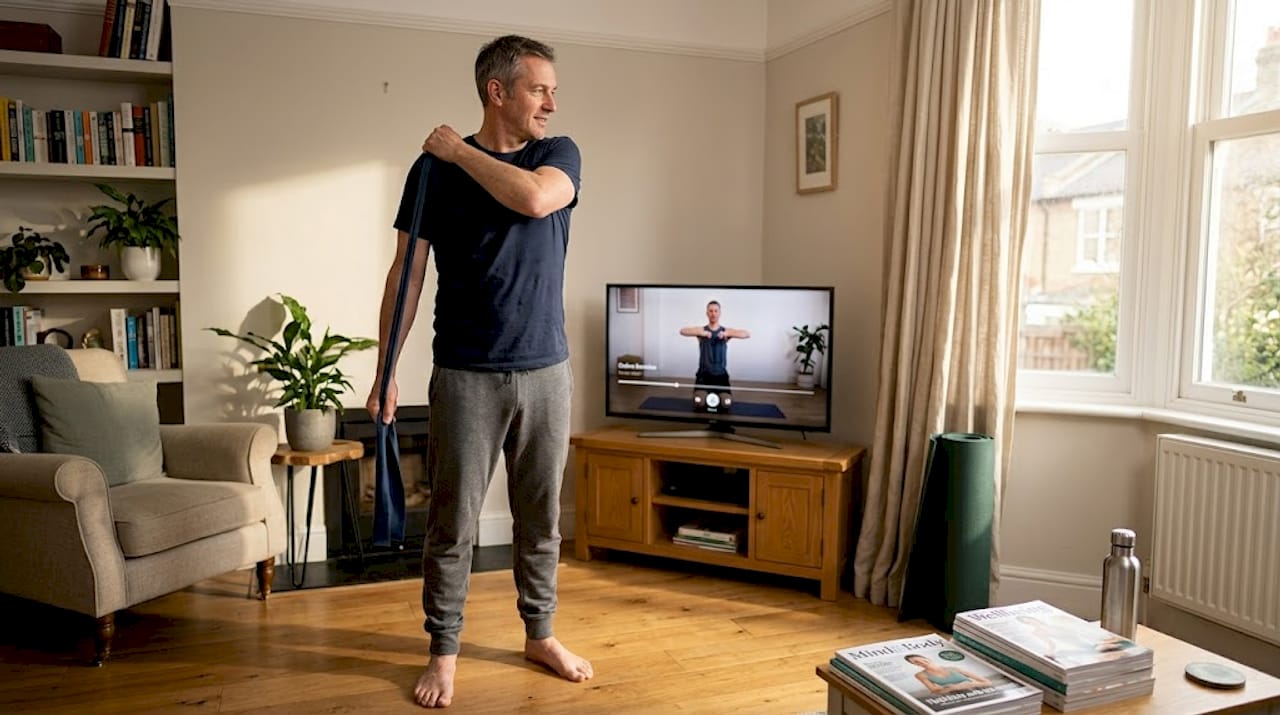
Here's what major research tells us about the most well-documented benefits:
| Condition | Treatment | Key Outcome |
|---|---|---|
| Myofascial pain syndrome | Manual therapy, laser, shock wave | Significant pain and disability reduction |
| COPD | Non-invasive ventilation | Reduced mortality, fewer exacerbations |
| Chronic low back pain | Manual therapy, mind-body | Improved function and reduced pain |
| Anxiety and stress | Yoga, meditation | Lower cortisol, improved mood |
For chronic pain, the results are particularly encouraging. Significant pain and disability improvements are well-documented across manual, laser, and shock wave approaches for myofascial pain. These aren't small, hard-to-notice changes. They reflect outcomes that affect daily function, work capacity, and sleep quality.
For respiratory conditions, the evidence is equally strong. NIV reduces mortality, intubation rates, and exacerbation frequency in COPD patients compared to standard care alone. That's a significant finding for anyone managing a long-term breathing condition.
"Non-invasive care works best as part of an integrated plan, not a standalone quick fix. Pairing it with lifestyle support and medical guidance amplifies every benefit."
For science-backed pain relief and broader integrative health outcomes, the evidence strongly supports combining modalities rather than relying on one alone.
Pro Tip: When starting a new non-invasive treatment, give it at least 6 to 8 weeks before evaluating results. Chronic conditions took time to develop, and healing follows a similar rhythm.
Limitations, edge cases, and what the research warns about
Honesty matters here. Non-invasive treatments offer real promise, but no approach is a universal solution. Understanding where the evidence is weaker helps you make smarter, safer choices.
One important nuance: benefits can be modest and depend heavily on evidence quality, condition specifics, and how well the intervention is delivered. A massage protocol designed for one type of muscle pain won't necessarily transfer results to another condition.
For brain stimulation techniques, the picture is more complex. Effect sizes in brain stimulation research are often mild and inconsistent, largely because protocols vary significantly across studies and patient populations. What works well in one research setting may not replicate in a clinic with different equipment or patient profiles.
Fibromyalgia is another area where enthusiasm sometimes outpaces evidence. Preliminary findings are encouraging, but the research base isn't yet robust enough to draw firm conclusions about which non-invasive approaches work best and for whom.
"The biggest risk in alternative care isn't the treatment itself. It's skipping medical oversight, choosing providers without verifying credentials, or expecting results that the evidence simply doesn't support yet."
Here's when to slow down and ask for expert input:
- Your condition is newly diagnosed or has changed significantly
- You're on medications that might interact with physical therapies
- You've had no response after a reasonable trial period
- The provider can't explain the evidence basis for your specific treatment
- The marketing promises feel too certain or too broad
Personalized non-surgical strategies work precisely because they account for your individual profile, not a generalized protocol. Reviewing the role of alternative therapies in a realistic context helps you set expectations that serve your actual progress.
Pro Tip: Before trying any new approach, search for the treatment name plus your specific condition on PubMed or NCCIH to get a quick read on the strength of available evidence. It takes five minutes and can save you months of frustration.
Maximizing results: How to choose and personalize your non-invasive care
Personalization isn't just a wellness buzzword. It's what separates meaningful progress from a frustrating revolving door of treatments. Research confirms that matching therapy type and settings to the patient and condition produces significantly better outcomes than a generic approach.
Here's a practical step-by-step framework for building a non-invasive care plan that actually fits your life:
- Start with a full assessment. Work with a qualified provider to map your specific symptoms, triggers, history, and goals. Bring any previous diagnoses or test results.
- Check the evidence for your condition. Not all therapies are equally well-studied for every diagnosis. Prioritize treatments with documented outcomes for your specific concern.
- Consult a credentialed practitioner. Credentials, training, and experience matter. Use verified directories to find practitioners who specialize in your area of need.
- Begin a structured trial period. Commit to a consistent schedule, typically 6 to 12 sessions before reassessing. Note changes in pain, energy, sleep, and function.
- Track your outcomes honestly. Use a simple journal or app to log how you feel before and after each session. Patterns often emerge within a few weeks.
- Adjust and refine. Share your tracking notes with your provider. Good practitioners welcome feedback and will modify the approach based on your response.
Working with practitioners who emphasize safe holistic care and evidence-based holistic treatments makes this process much more reliable and rewarding.
Pro Tip: Ask your provider three specific questions before starting: "What outcomes should I realistically expect?" "How will we know if it's working?" and "What are the signs that we should adjust the plan?" These three questions alone can transform your experience.
A holistic perspective: Why evidence and personalization matter most
Here's something that mainstream wellness conversations often miss: not all non-invasive treatments are equal, and not all of them are mild. Some produce effects that rival pharmaceutical interventions. Others offer only modest relief in specific populations. Treating them as interchangeable is just as problematic as dismissing them entirely.
The most successful outcomes we see come from a careful blend of two things: respecting what the evidence actually says and tailoring the approach to the individual's physiology, lifestyle, and goals. Chasing trends or picking a treatment because it's popular is rarely the most effective path.
Protocol fit matters more than most people realize. A yoga program optimized for chronic low back pain looks very different from one designed for anxiety. The same principle applies across every modality. Ongoing adjustment, not a set-it-and-forget-it approach, is what separates good outcomes from great ones.
If you're curious about how different modalities actually integrate into a broader care plan, exploring the role of alternative therapies gives you a grounded, practical starting point. Trust the evidence. Personalize the path. That's where lasting wellness lives.
Explore holistic solutions for your wellness journey
If you're ready to discover options that fit your unique needs, here's an easy way to start your holistic journey. Go Holistic connects you with certified, thoroughly screened practitioners across more than 200 treatment types, from acupuncture and massage to specialized therapies for chronic conditions.
Our platform uses AI-powered matching to align your health profile with practitioners and treatments backed by real evidence. You can find wellness practitioners near you, explore treatments tailored to your condition, and find providers with verified credentials and specializations. Whether you're just starting to explore or ready to book your first consultation, GoHolistic makes the next step clear, simple, and supportive. Get Started today and take wellness into your own hands.
Frequently asked questions
How do non-invasive treatments compare to traditional surgery?
Non-invasive treatments carry far less risk, require minimal recovery time, and rarely involve anesthesia, though their effects may be more gradual. Research shows statistically significant pain improvements with manual, laser, and shock wave therapies, making them a compelling first step.
Which chronic conditions benefit most from non-invasive approaches?
Chronic pain syndromes like myofascial pain and respiratory conditions like COPD have the strongest evidence. For COPD specifically, NIV reduces mortality and exacerbations compared to standard care alone, which is a meaningful outcome.
Are non-invasive treatments safe for everyone?
Most non-invasive options are low-risk for the majority of people, but individual health history, medications, and condition severity all matter. Matching protocols to your specific needs is essential for both safety and effectiveness.
What should I ask my provider before starting non-invasive care?
Ask about the evidence for your specific condition, what realistic outcomes look like, and how the plan will be adjusted over time. Remember that benefits and effect sizes are often condition-specific and may build gradually rather than appearing overnight.
Recommended
- Holistic Health Treatments | goholistic
- Integrative health benefits: evidence-based approaches 2026
- 6 evidence-based advantages of Ayurveda for wellness
- Evidence-based holistic methods for chronic health
- Start Subtle: Why personalised non-surgical treatments are the smartest first step - Lux Plastic