

TL;DR:
- Collaborative wellness care involves coordinated efforts among multiple practitioners to improve health outcomes. It outperforms solo provider models by enhancing access, adherence, and patient satisfaction through shared data and evidence-based practices. Building a culture of shared governance and using technology like patient registries is essential for effective implementation.
Collaborative wellness care works because no single provider can see the whole picture. When certified practitioners across disciplines coordinate around your health goals, outcomes improve measurably. The Cochrane 2021 review of 79 randomized controlled trials found collaborative care outperforms routine care for depression and anxiety for up to two years. That is not a marginal edge. It is a structural advantage built into how the model is designed.
The formal term for this approach is the Collaborative Care Model (CoCM), developed at the University of Washington in the 1990s. It integrates care managers, primary care providers, and specialist consultants into a coordinated team, all tracking the same patients toward shared clinical goals. For anyone exploring evidence-based wellness and alternative treatments, understanding this model helps you make sharper decisions about who you work with and why.
Why collaborative wellness care outperforms solo provider models
Team-based care closes the gaps that single-provider models leave open. When your acupuncturist, nutritionist, and mental health counselor each work in isolation, treatment plans can conflict, overlap, or simply miss what the other practitioner is addressing. Collaborative care eliminates that fragmentation by design.
Core benefits backed by research:
- Improved outcomes sustained over time: Depression and anxiety outcomes improve significantly compared to routine care, with benefits lasting up to two years
- Faster access to treatment: Patients in collaborative care initiate treatment within 6 months 75% of the time, versus less than 25% in standard care
- Better medication adherence: Coordinated teams actively monitor and adjust treatment plans, keeping patients on track
- Reduced hospitalizations: Integrating behavioral and physical health reduces unnecessary emergency visits and redundant procedures
- Higher patient satisfaction: People feel more supported when their care team communicates and shares goals
What are the five core principles of collaborative care?
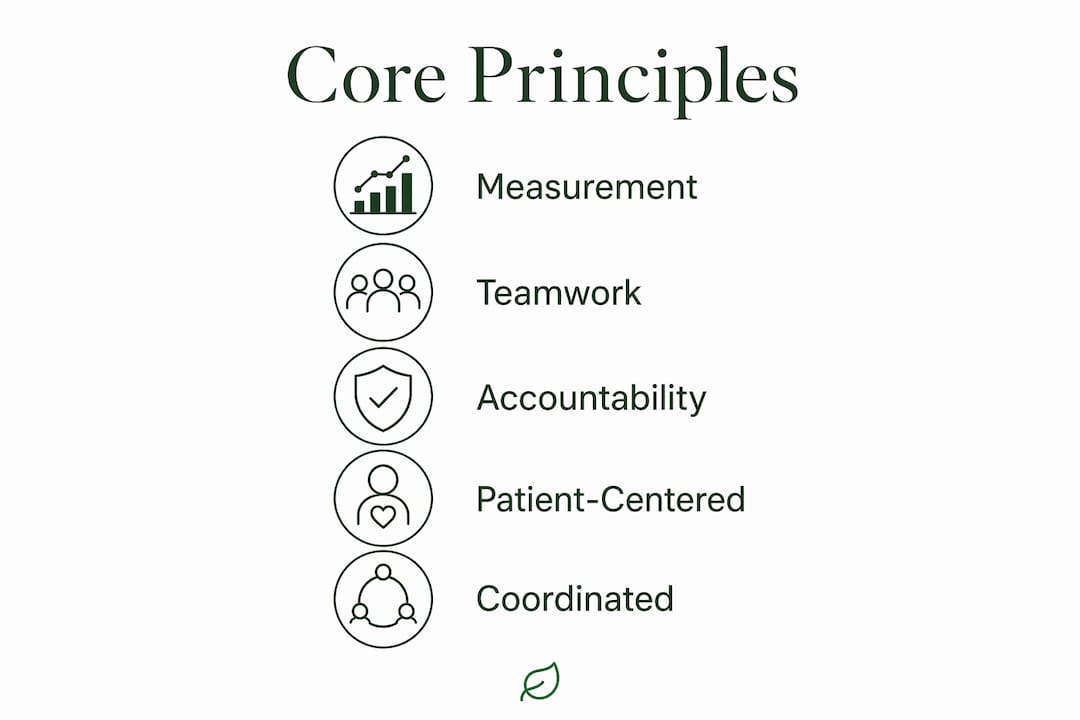
The AIMS Center at the University of Washington defines five principles that every effective collaborative care program must follow. Missing even one weakens the entire model.
- Patient-centered team care: Providers share care plans built around your personal goals, not just clinical checklists
- Population-based care: Teams track a defined group of patients using a registry, so no one falls through the cracks
- Measurement-based treatment to target: Validated tools like the PHQ-9 depression scale measure progress at every visit, and treatment changes if you are not improving
- Evidence-based care: Only therapies with credible research support are offered, including Cognitive Behavioral Therapy, Behavioral Activation, and Problem Solving Treatment
- Accountable care: Providers are accountable for clinical outcomes, not just the volume of services delivered
"If any one of these principles is missing, effective Collaborative Care is not being practiced." — AIMS Center, University of Washington
Each principle reinforces the others. Measurement-based care, for example, only works when the team is accountable for acting on what the data shows. Population tracking only prevents gaps when providers share governance over the same patient registry.
What does the science actually show about team-based care?
The evidence base for collaborative care is one of the strongest in behavioral health. More than 90 randomized controlled trials support its effectiveness across multiple conditions.
The Cochrane review found a short-term standardized mean difference (SMD) of -0.34 for depression outcomes, with similar results for anxiety. Those numbers reflect real clinical improvement across thousands of patients worldwide.
Pro Tip: The national IMPACT study, the largest collaborative care trial ever conducted, found a significantly higher proportion of patients receiving collaborative care achieved notable reductions in depressive symptoms at 12 months compared to usual care.
Cost savings follow the clinical gains. Initial investment in coordinated staffing and technology is offset by long-term savings from fewer emergency visits and lower overall healthcare utilization. The model also acts as a workforce multiplier. A psychiatric consultant in a collaborative care setting can consult on 10–15 patients per hour, compared to 1–2 under a traditional non-integrated model.
How do organizations build a culture that supports collaborative care?
Structure matters as much as intention. CDC guidelines emphasize shared governance between clinical leadership and frontline staff as a foundation for any collaborative wellness effort. When decision-making is distributed, trust builds and silos break down.
Key organizational enablers:
- Shared governance: Joint decision-making between management and practitioners keeps wellbeing central to operations
- Patient registries: Systematic tracking tools ensure every patient is followed and no one is lost between appointments
- Structured case reviews: Regular multidisciplinary meetings, not informal check-ins, align teams on progress and treatment adjustments
- Communication protocols: Clear escalation pathways and shared digital platforms keep everyone working from the same information
- Adequate staffing and training: Providers need preparation to work within stepped care protocols rather than autonomous solo practice
The biggest practical hurdle is usually the registry. Building a system to track and follow up every patient consistently requires investment in population health tools and interoperability with existing records systems. That upfront burden is real, but it is what separates a genuine collaborative care program from a loosely coordinated group of practitioners.
How Goholistic brings collaborative care to holistic wellness
Goholistic was built around the same principles that make the Collaborative Care Model effective: coordination, evidence, and patient-centered access. The platform connects you with certified practitioners across disciplines including acupuncture, massage therapy, and Ayurveda, all verified for credentials and quality.
- AI-powered recommendations: Goholistic analyzes your health concerns and surfaces personalized treatment options backed by research summaries, so your choices are grounded in evidence
- Curated provider directory: Browse, filter, and book directly with licensed practitioners, reducing the friction that delays care
- Treatment library: Over 200 therapy types are documented with evidence-based context, giving you and your care team a shared reference point
- Wellness curation: Goholistic's approach to wellness curation mirrors population-based care principles by matching you to the right practitioners for your specific needs
- Transparency and verification: Every provider listing reflects Goholistic's commitment to safety and practitioner accountability
The platform does not replace the clinical team. It makes building one easier, by putting verified, research-backed practitioners within reach and giving you the information to coordinate your own care with confidence.
How does collaborative care compare to seeing a single provider?
The difference comes down to what one person can realistically know and do. A single provider, however skilled, works from one clinical lens. They may not catch how your sleep issues connect to your chronic pain, or how stress is undermining the nutritional changes you are making.
Collaborative care models address this by design. Multiple practitioners share information, align on goals, and adjust their individual approaches based on what the full team observes. A New England Journal of Medicine study found that nurse care managers working closely with physicians in a coordinated model significantly improved both medical outcomes and depression in patients with multiple chronic conditions, compared to usual care.
Single-provider care also tends to delay treatment. Without a coordinated intake and tracking system, patients cycle through referrals and wait for appointments that may never align. The 75% versus less than 25% treatment initiation rate cited earlier reflects exactly that gap.
Which tools make collaborative care actually work in practice?
Technology is what turns good intentions into consistent coordination. Shared digital platforms, patient registries, and interoperable electronic records are the infrastructure that keeps a multidisciplinary team aligned across time and location.
A patient registry is the most critical piece. It gives every team member a real-time view of who is improving, who is not, and who needs follow-up. Without it, population-based care is impossible. Validated screening tools like the PHQ-9 feed data into the registry and trigger treatment adjustments through a stepped care protocol.
Communication tools matter too. Secure messaging, shared care plans, and telehealth connections allow psychiatric consultants to support primary care teams remotely, which is how the model scales beyond well-resourced urban settings. Goholistic's platform reflects this logic by centralizing practitioner information, treatment evidence, and booking in one place, reducing the coordination friction that typically keeps people from getting the integrative health benefits they are looking for.
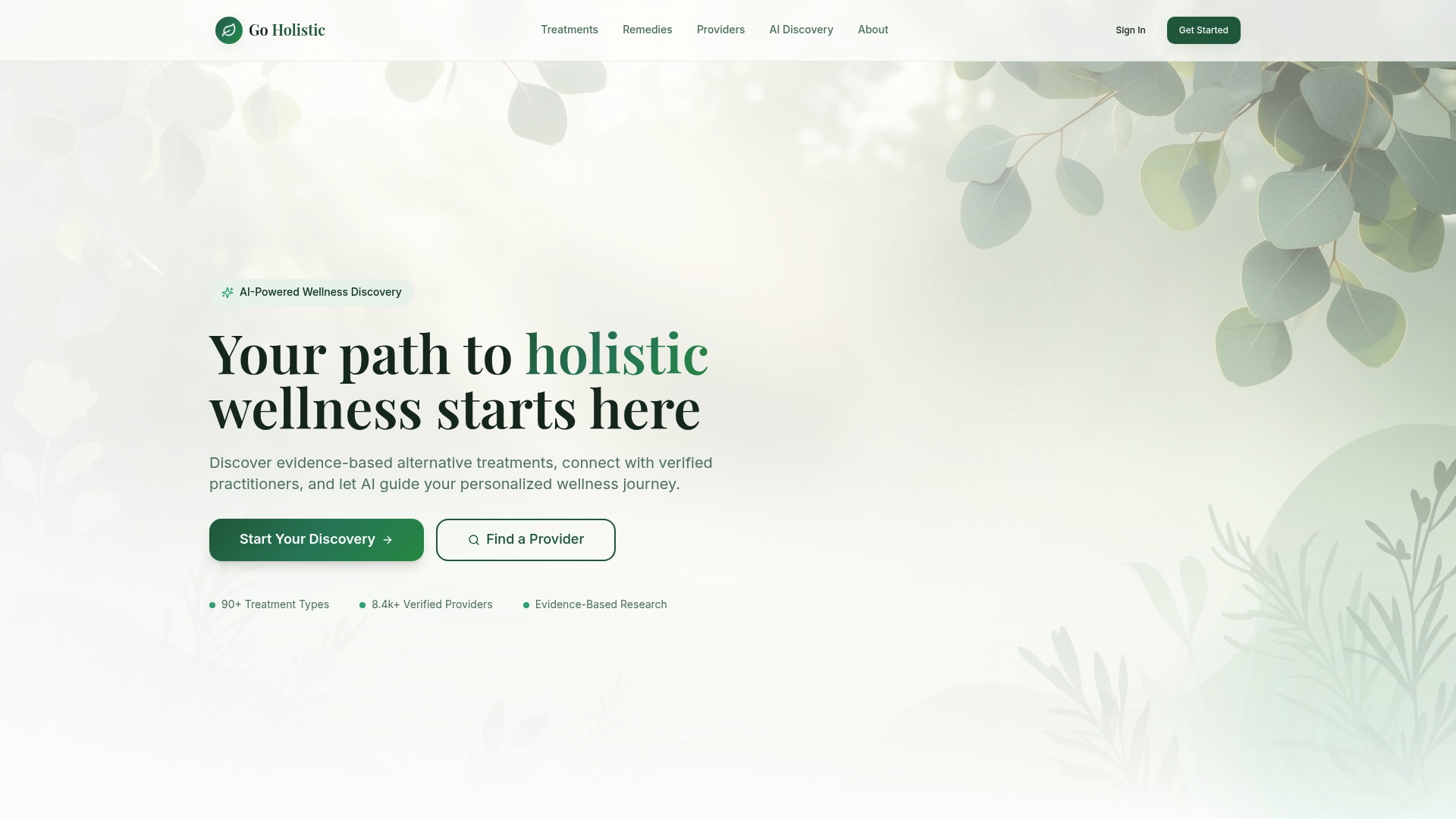
Ready to experience coordinated, evidence-based wellness care? Goholistic connects you with verified practitioners across disciplines, backed by research and built for your goals. Explore holistic treatments or find a certified practitioner near you today.
Key Takeaways
Collaborative wellness care consistently outperforms single-provider models because coordinated teams, shared data, and evidence-based protocols produce better outcomes across mental and physical health conditions.
| Point | Details |
|---|---|
| Evidence is strong | The Cochrane 2021 review of 79 trials found collaborative care outperforms routine care for depression and anxiety for up to two years. |
| Access improves dramatically | Patients in collaborative care initiate treatment within 6 months 75% of the time, compared to less than 25% in standard care. |
| Five principles are non-negotiable | The AIMS Center identifies five core principles; omitting any one prevents the model from functioning effectively. |
| Technology enables scale | Patient registries, shared digital platforms, and interoperable records are the infrastructure that makes population-based care possible. |
| Psychiatric reach multiplies | A psychiatric consultant in a collaborative model can consult on 10–15 patients per hour, compared to 1–2 in a traditional model. |