

TL;DR:
- Transparency ensures trust and helps consumers make informed, evidence-based wellness choices.
- Recognizing the difference between marketing claims and scientifically supported evidence is crucial.
- Verifiable protocols, published research, and honest disclosures are signs of trustworthy holistic care.
Picking up a supplement bottle and reading "supports immune health" feels reassuring. But that phrase tells you almost nothing about whether the product actually works. Consumers misinterpret structure/function claims on supplement labels as promises of disease prevention, when in reality those statements carry no such regulatory weight. This gap between perception and reality sits at the heart of why transparency matters so deeply in holistic wellness. When you know what to look for, and what questions to ask, you stop guessing and start making choices that genuinely serve your health. This guide walks you through exactly how to do that.
Table of Contents
- Transparency in wellness: Why it matters
- Understanding wellness claims: Evidence versus marketing
- Evidence-based holistic alternatives: The transparency challenge
- How to demand and recognize transparency in holistic wellness
- Why true transparency is the missing link in modern wellness
- Discover transparent wellness solutions with Go Holistic
- Frequently asked questions
Key Takeaways
| Point | Details |
|---|---|
| Transparency prevents confusion | Clear wellness claims and openly shared evidence protect consumers from misleading statements and false hopes. |
| Evidence supports holistic choices | Research shows acupuncture and mindfulness deliver real benefits when backed by transparent, high-quality studies. |
| Demand clinical proof | Asking for published trials and protocols is your best way to make safe, informed holistic wellness decisions. |
| Multimodal methods outperform | Combining transparent evidence-based alternatives delivers better results than relying on single, opaque strategies. |
Transparency in wellness: Why it matters
Trust is the foundation of any good health relationship. Whether you're working with a practitioner or choosing a product off a shelf, you need to feel confident that what you're getting is what's promised. Transparency makes that possible. Without it, you're essentially navigating in the dark.
The wellness industry is enormous and growing fast. That growth brings both opportunity and risk. More options mean more potential for vague, unverifiable claims to slip through. Regulated language, like the kind required for pharmaceutical drugs, demands proof of efficacy and safety. But many wellness products operate in a looser space, where statements about "balance" or "vitality" can mean almost anything.
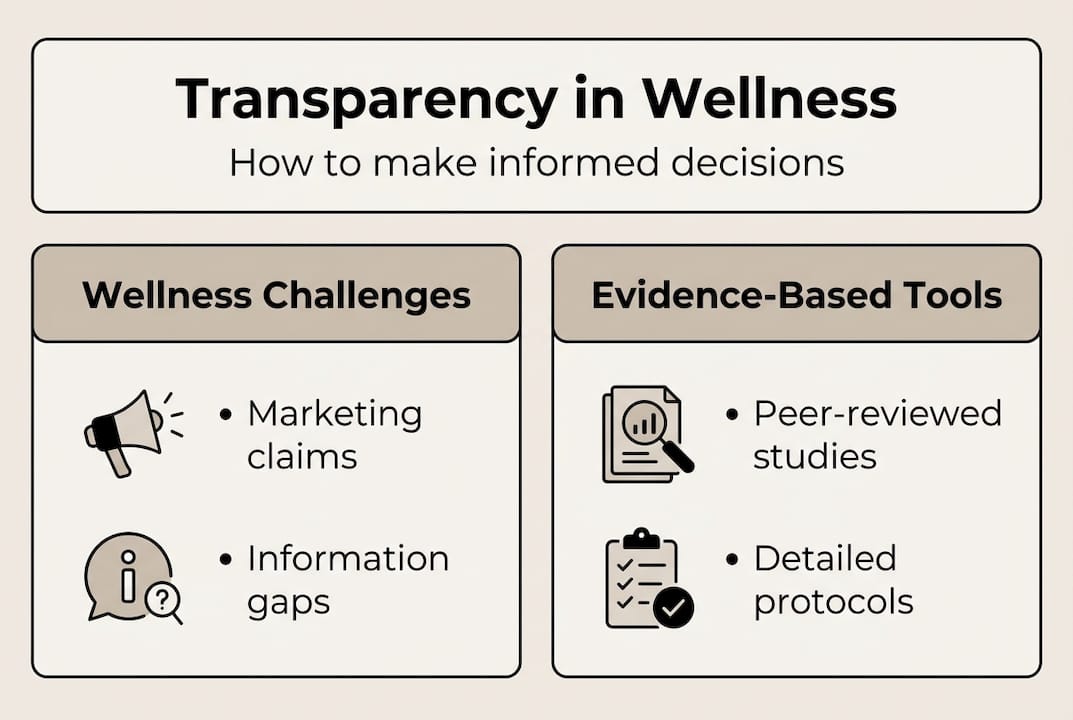
This is especially relevant because Millennials and Gen Z are driving demand for evidence-based and transparent wellness practices. These generations grew up with instant access to information, and they're not willing to take marketing copy at face value. They want clinical trial data. They want published research. They want to know that what they're putting into their bodies has been studied with rigor.
That shift in consumer expectations is genuinely changing the industry for the better. Practitioners and brands that embrace evidence-based wellness practices are building deeper, more lasting trust with their clients. Those who resist transparency are finding it harder to compete.
Here's what transparency in wellness actually looks like in practice:
- Published clinical trials or peer-reviewed research supporting the therapy or product
- Clear disclosure of ingredients, dosages, or treatment protocols
- Honest reporting of both benefits and potential risks or side effects
- Practitioner credentials that are verifiable and up to date
- Open communication about what is and isn't known
"The most trustworthy wellness providers are the ones who tell you what they don't know, not just what they do."
Pro Tip: Before trying any wellness product or program, search for its name alongside "clinical trial" or "systematic review" in a research database like PubMed. If nothing comes up, that's worth noting.
Exploring evidence-based holistic health doesn't mean abandoning natural or alternative approaches. It means holding them to the same honest standard you'd expect from any health decision.
Understanding wellness claims: Evidence versus marketing
Wellness marketing is sophisticated. The language used on product labels and in promotional content is carefully chosen to feel meaningful without making legally binding promises. Learning to spot the difference between genuine evidence and polished marketing is one of the most practical skills you can develop as a wellness consumer.

Structure/function claims are a prime example. A label that says "supports heart health" is making a structure/function claim. It sounds positive and health-focused. But it is not saying the product prevents heart disease. That distinction matters enormously, and structure/function claims mislead buyers far more often than most people realize. In fact, consumers are 23.3% more likely to perceive disease prevention when labels use ambiguous phrasing, even when no such claim is made.
Here's a quick comparison to help you tell the difference:
| Marketing statement | Evidence-backed claim |
|---|---|
| "Supports healthy joints" | "Reduced joint pain scores in a 12-week RCT" |
| "Boosts your immune system" | "Increased NK cell activity in a controlled study" |
| "Promotes balance and harmony" | "Improved HRV measures in a peer-reviewed trial" |
| "Helps you feel your best" | "Reduced fatigue ratings versus placebo group" |
Notice how evidence-backed claims reference specific outcomes, study designs, and measurable results. Marketing statements rely on feeling and implication.
You can also look at how millennial wellness trends are pushing brands to be more specific. When consumers demand proof, brands that can provide it stand out. That pressure is slowly raising the bar across the industry.
Here's a simple process for evaluating any wellness product or therapy:
- Read the label or promotional material carefully, noting any health claims made.
- Research those claims using independent sources like PubMed or Cochrane Library.
- Verify whether the evidence cited is from peer-reviewed studies or just brand-funded reports.
- Check the study quality: Was it randomized? Did it have a control group? How large was the sample?
- Ask the provider or brand directly for their evidence if it isn't publicly listed.
This process takes a few extra minutes, but it can save you from spending money on products that don't deliver. It also helps you find alternative therapies in wellness that genuinely earn their place in your routine, and discover evidence-based alternative treatments that are worth your trust.
Evidence-based holistic alternatives: The transparency challenge
Some of the most popular holistic therapies do have meaningful research behind them. The challenge is that even well-studied approaches can struggle with transparency in how their protocols are reported and replicated.
Acupuncture is a good example. A large review covering 862 acupuncture studies found positive effects for 10 different conditions, including chronic pain, headaches, and nausea. That's genuinely encouraging. But the same review noted that many studies lacked the methodological rigor needed to make broader claims with confidence. High-quality, transparently reported trials are still needed.
Mindfulness-based programs tell a similar story. A meta-analysis drawing on data from over 11,000 participants found small to moderate benefits for stress, anxiety, and depression. That's meaningful. But "small to moderate" is a wide range, and the specific protocols used across studies varied significantly, making direct comparisons difficult.
Here's a snapshot of where the evidence currently stands for some common holistic methods:
| Therapy | Evidence level | Transparency in reporting |
|---|---|---|
| Acupuncture | Strong for 10 conditions | Moderate, improving |
| Mindfulness | Moderate across conditions | Variable by program |
| Massage therapy | Moderate for pain and stress | Often limited detail |
| Ayurveda | Emerging, limited RCTs | Low in many cases |
| Herbal supplements | Mixed, highly variable | Frequently unclear |
The core issue is this: a therapy can have genuine benefits and still lack transparent reporting. When protocols aren't clearly described, other researchers can't replicate the study, and you as a consumer can't fully evaluate what you're getting. Transparency in protocol reporting is what turns promising findings into trustworthy practice.
If you're exploring holistic methods for chronic health concerns, look for therapies where the research describes exactly what was done, how often, and with what results. That level of detail is a green flag. Vague references to "ancient wisdom" or "centuries of use" without modern clinical backing deserve more scrutiny.
Building your wellness plan around integrative wellness tips that combine transparent, well-researched therapies gives you a much stronger foundation than relying on a single unverified approach.
How to demand and recognize transparency in holistic wellness
Knowing that transparency matters is one thing. Knowing how to find it and ask for it is where real empowerment begins. Here's a practical framework you can use right now.
What to look for in a transparent wellness provider or product:
- Clearly stated treatment protocols, including session length, frequency, and methods used
- References to published clinical trials, not just testimonials
- Honest disclosure of known risks, contraindications, or limitations
- Practitioner credentials that can be independently verified
- Willingness to answer your questions directly and without defensiveness
Steps to ask providers for clinical evidence:
- Ask directly: "Can you share the research that supports this treatment?"
- Request specifics: "What protocol do you follow, and is it based on a published study?"
- Inquire about outcomes: "What results do your clients typically see, and how do you measure them?"
- Check credentials: "Are you certified by a recognized professional body?"
- Seek second opinions if a provider resists transparency or becomes evasive.
Transparency in protocols is not a luxury. It's a baseline expectation for anyone offering health-related services.
Pro Tip: Prioritize multimodal therapies, meaning approaches that combine two or more evidence-backed methods, over single-strategy solutions. Multimodal care tends to be better studied, more openly reported, and more effective for complex health concerns.
Here's a quick-reference table to help you identify transparent versus opaque wellness options:
| Green flags | Red flags |
|---|---|
| Published peer-reviewed studies | Testimonials only |
| Detailed protocol descriptions | Vague or secret methods |
| Disclosed risks and limitations | Only benefits mentioned |
| Verifiable practitioner credentials | Unverifiable certifications |
| Open to questions and dialogue | Defensive or evasive responses |
Using this framework supports personalized wellness outcomes by helping you choose care that's actually suited to your needs. And if you're unsure where to start, a holistic consultation with a verified practitioner can help you map out your options with confidence.
Why true transparency is the missing link in modern wellness
Here's something the wellness industry doesn't talk about enough: the reluctance to publish detailed protocols isn't always about hiding bad results. Sometimes it's about protecting proprietary methods, or simply because transparent reporting takes more time and resources than many practitioners have. But the effect on consumer confidence is the same regardless of the reason.
We believe that multimodal, evidence-based approaches consistently outperform single-strategy wellness programs. And protocol transparency is what separates genuinely effective multimodal care from a collection of loosely connected treatments with no accountability.
The industry needs to move toward a standard where every practitioner can say, clearly and confidently, "Here is what I do, here is why, and here is the evidence." Consumers need to expect that. Platforms need to require it. And practitioners who embrace it will find that transparency doesn't undermine trust. It builds it. Exploring evidence-based wellness insights is how you stay ahead of the curve and make choices that truly support your health journey.
Discover transparent wellness solutions with Go Holistic
You've done the reading. Now it's time to put that knowledge to work.
Go Holistic connects you with verified, transparent practitioners across disciplines like acupuncture, massage therapy, Ayurveda, and more. Every provider in our directory is certified and committed to evidence-based care. You can explore holistic treatments backed by real research, find holistic providers who openly share their protocols and credentials, and connect with wellness practitioners who welcome your questions. Our AI-powered platform also personalizes recommendations based on your health concerns, so your next step is always grounded in evidence. Get Started today and experience what genuine transparency in wellness feels like.
Frequently asked questions
How can I tell if a wellness practice is actually evidence-based?
Look for published clinical trials, detailed protocols, and honest disclosure of both benefits and risks on provider or product websites. Millennials and Gen Z demand clinical transparency in wellness programs, and that standard is a good one for everyone to adopt.
Why are structure/function claims on supplements often misleading?
These claims can imply disease prevention even though they carry no regulatory proof of that effect, with 23.3% more consumers misinterpreting them as disease prevention promises than intended.
Are acupuncture and mindfulness evidence-based?
Yes, both are supported by substantial research. Acupuncture shows positive effects for 10 conditions, and mindfulness programs show moderate benefits in large meta-analyses, though both fields still need more transparently reported, high-quality studies.
What questions should I ask a holistic provider before starting treatment?
Ask about their methods, published evidence, possible side effects, and whether they combine therapies with clear reporting. Protocol transparency is a key marker of a trustworthy, evidence-based practitioner.