
TL;DR:
- Starting a holistic health journey requires a clear, evidence-based workflow to ensure organized, meaningful progress. Preparation, transparent practice, consistent tracking, and realistic expectations are essential for lasting results and trust. Adopting a nuanced, patient approach emphasizes small, cumulative wins over unrealistic promises, fostering genuine wellness.
Starting a holistic health journey without a clear roadmap can feel like wandering through a forest with no trail. You know there's something valuable ahead, but the path is murky, the options are overwhelming, and the mixed-quality information online makes it hard to know who or what to trust. Many people trying to manage chronic health issues through alternative therapies give up too early, not because holistic care doesn't work, but because they never had a structured, evidence-grounded process to follow. This article gives you exactly that: a clear, step-by-step wellness consultation workflow that helps you prepare well, engage meaningfully, avoid common traps, and actually track your progress.
Table of Contents
- What is a wellness consultation workflow?
- Preparing for your consultation: What you need and why
- Step-by-step: The evidence-based consultation process
- Troubleshooting and pitfalls: Common mistakes to avoid
- How to verify results and track progress
- A fresh look: Why honesty and nuance build real wellness success
- Ready to start your holistic wellness journey?
- Frequently asked questions
Key Takeaways
| Point | Details |
|---|---|
| Follow a structured workflow | Having a clear process makes holistic consultations more effective and easier to track. |
| Preparation is essential | Gathering records and goals before your consultation leads to more tailored and actionable plans. |
| Evidence matters | Work with practitioners who use research-backed approaches and set honest expectations. |
| Progress is gradual | Most holistic health improvements are modest over short terms but add up with sustained effort. |
| Honesty builds trust | Choosing transparency over hype ensures lasting credibility and better long-term results. |
What is a wellness consultation workflow?
A wellness consultation workflow is a structured, repeatable framework that guides both you and your practitioner through each stage of holistic care, from your very first conversation to ongoing monitoring. Think of it as the architecture behind a personalized health plan. Without it, consultations can feel scattered and reactive. With it, every session builds on the last.
Why does structure matter so much? Because holistic health, by nature, addresses the whole person: your physical health, emotional state, lifestyle habits, and even your environment. That's a lot of ground to cover. A workflow keeps everything organized and intentional.
Here's what a strong wellness consultation workflow delivers:
- Clarity: You know what to expect at each stage, which reduces anxiety and builds confidence.
- Improved outcomes: Structured care is more consistent care, and consistency leads to better results.
- Enhanced trust: When a practitioner follows a clear process, it signals professionalism and credibility.
- Accountability: Both you and your practitioner are aligned on goals, timelines, and next steps.
One important issue worth naming is that the holistic health space has a credibility problem. Holistic credibility issues often stem from practitioners overclaiming results without discernment. This damages trust and can discourage people who genuinely need support. An evidence-based workflow addresses this by grounding recommendations in research and maintaining transparency about what is and isn't proven.
The good news is that credible evidence does exist. For example, exercise is as effective as medication or counseling for managing depression in many people. That kind of finding illustrates what's possible when holistic approaches are taken seriously. Learning more about evidence-based holistic methods is a strong first step in building your own framework.
| Workflow element | Without structure | With evidence-based structure |
|---|---|---|
| Goal setting | Vague or reactive | Clear, measurable, personalized |
| Treatment selection | Based on trends or guesses | Grounded in research and history |
| Progress tracking | Inconsistent or absent | Regular, documented, actionable |
| Practitioner trust | Variable | Built on transparency and evidence |
When you invest in making evidence-based wellness choices, you're not just following a fad. You're building a relationship with your health that can actually last.
Preparing for your consultation: What you need and why
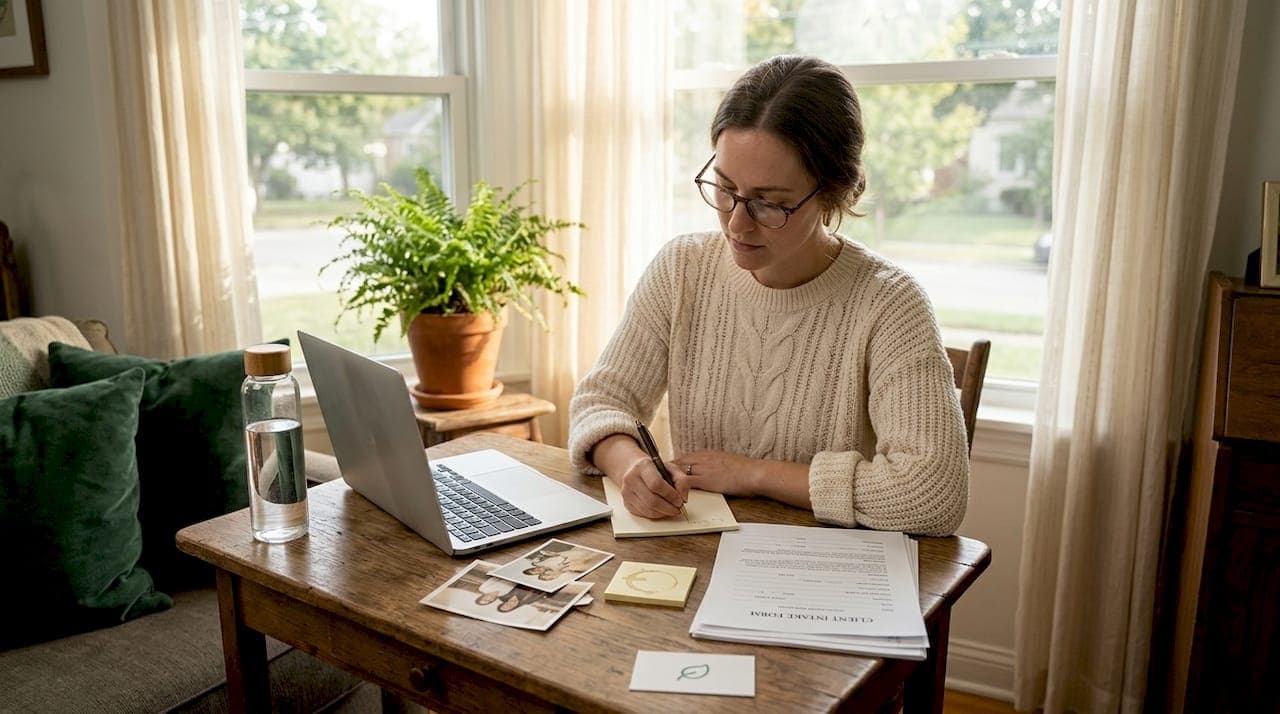
With a clear sense of what a workflow is, it's time to get ready for your consultation to make the most of each step. Preparation is one of the most underestimated parts of any holistic health journey. Walking into a first appointment without context is like starting a puzzle without looking at the picture on the box.
Here's what to gather before your first session:
- Recent lab work or medical records: These give your practitioner a baseline. You don't need to bring everything, but recent bloodwork, diagnoses, or imaging reports are helpful.
- A list of your primary health goals: Be specific. "I want to feel better" is less useful than "I want to reduce my lower back pain and improve my sleep within three months."
- Your current therapy or medication list: Holistic practitioners need this to avoid interactions and spot patterns.
- A list of questions: Write them down in advance. It's easy to forget what you wanted to ask once you're in the moment.
- Your medical and family history: Chronic conditions often have roots that go back years or even generations.
A key thing to keep in mind: personalized approaches produce real but sometimes modest results. Personalized nutrition trials show statistically significant weight loss improvements but non-significant BMI changes. This isn't a failure of personalization. It's a reminder that small changes are still meaningful and worth celebrating.
Understanding the personalized wellness benefits helps you set realistic expectations from the start. And learning how to approach booking a holistic consultation can save you time and set the tone for a productive first session.
Exploring resources around personalized medicine advantages can also give you broader context before your appointment, helping you arrive informed and engaged.
| Prepared client | Unprepared client |
|---|---|
| Brings health records | Relies on memory alone |
| Has specific goals listed | Describes vague discomfort |
| Knows current medications | Cannot recall dosages |
| Arrives with questions | Waits to be guided entirely |
| Aware of realistic outcomes | Expects immediate transformation |
Pro Tip: Create a simple one-page health summary to bring to your first session. Include your top three goals, current treatments, and your biggest daily health challenge. It saves time and helps your practitioner tailor the conversation immediately.
Step-by-step: The evidence-based consultation process
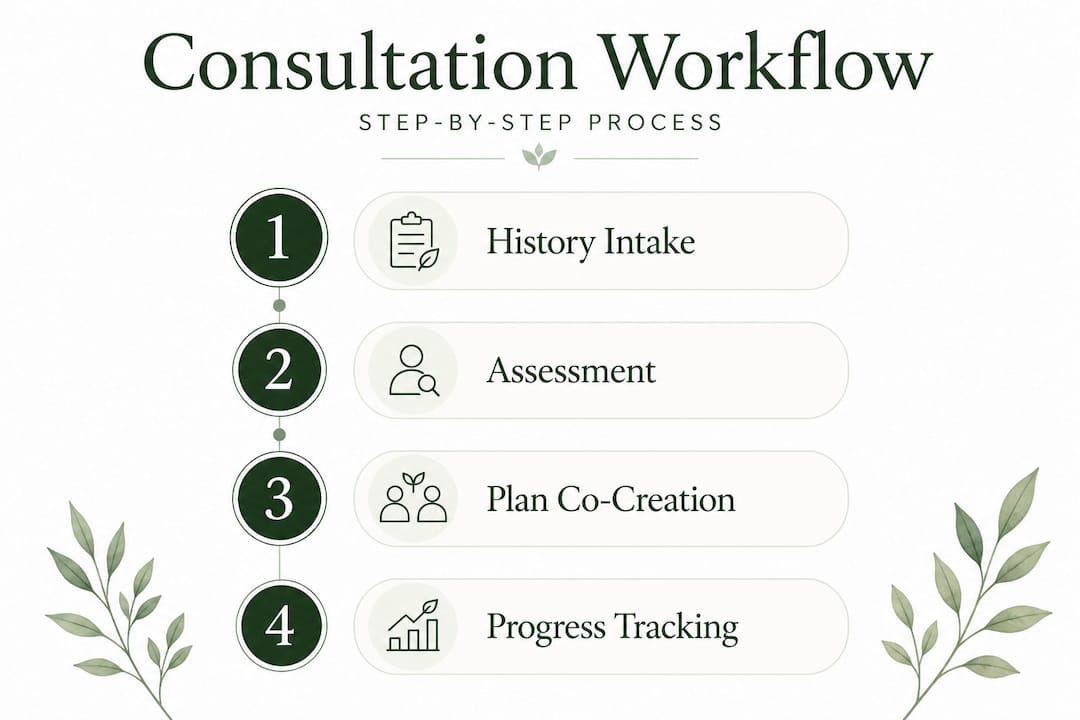
Once you've prepared, you're ready to follow a consultation process built on clarity and scientific rigor. Here's how a well-structured, evidence-based consultation typically unfolds:
-
Full personal and medical history intake: Your practitioner will ask about your health background, lifestyle, diet, sleep, stress levels, and current symptoms. This holistic portrait is the foundation of everything that follows. Be thorough and honest.
-
Root cause exploration: Rather than just treating symptoms, a good practitioner digs deeper. Chronic fatigue, for instance, might connect to poor gut health, nutritional gaps, or unresolved stress. Identifying the root cause changes the entire treatment direction.
-
Co-creating a personalized plan: This is where the evidence part really matters. Your practitioner should recommend interventions backed by research and explain why each one is relevant to your situation. You should feel like a partner in this plan, not just a recipient.
-
Setting realistic expectations and timelines: A transparent practitioner will tell you what outcomes are likely, what might take longer, and what remains uncertain. It's worth noting that whole-person outcome assessments have limited direct evidence for changing patient health outcomes, which means honest framing of expectations is ethically essential.
-
Establishing a follow-up and monitoring plan: Holistic wellness is not a one-time event. Schedule check-ins, agree on how you'll track progress, and build in moments to reassess and adjust the plan.
| Consultation phase | Key action | Why it matters |
|---|---|---|
| History intake | Document everything relevant | Reveals patterns and root causes |
| Root cause analysis | Ask "why" not just "what" | Prevents symptom-only treatment |
| Plan co-creation | Review evidence for each therapy | Builds credibility and alignment |
| Expectation setting | Discuss realistic timelines | Prevents disappointment and dropout |
| Follow-up planning | Set specific check-in dates | Ensures accountability and adjustment |
Exploring top evidence-based wellness practices before your appointment can help you recognize strong recommendations when you hear them. And browsing holistic treatments gives you a sense of the range of options available to you.
Pro Tip: During the plan co-creation phase, ask your practitioner to explain the evidence behind each recommended therapy. A confident, transparent answer builds trust. Vague responses or dismissiveness are red flags worth paying attention to.
Troubleshooting and pitfalls: Common mistakes to avoid
Knowing the steps, it's important to understand where people often struggle and how to navigate obstacles honestly. Even with a great practitioner and solid preparation, a wellness journey can get off track. Here's where things most often go wrong:
- Expecting immediate or dramatic results: Holistic health works through cumulative, layered improvements. Most meaningful change takes weeks or months of consistency, not days.
- Choosing practitioners who overpromise: If someone guarantees a cure or claims their method works for everyone, that's a warning sign. As the research on holistic credibility issues shows, overclaiming without discernment is one of the core ethical problems in alternative medicine, and the field genuinely benefits from epistemic honesty, which means being honest about what we know and what we don't.
- Abandoning a plan too soon: Many people quit a new therapy after two weeks because they don't see big changes. Small, consistent shifts in sleep, mood, or energy often precede more visible results.
- Ignoring what isn't working: On the flip side, don't stay with an approach that clearly isn't serving you. Track your responses honestly and adjust.
- Skipping follow-up appointments: These sessions are where the real optimization happens. They're not optional extras.
"The goal of a wellness consultation is not to find the perfect answer on the first try. It is to begin an honest, evolving conversation between you, your practitioner, and your own body."
Recording your experience in a journal or health tracking app is one of the most practical things you can do. Note your symptoms, energy, mood, and sleep each week. This data helps both you and your practitioner make informed adjustments and keeps the process grounded in your actual lived experience.

Understanding transparency in holistic care and understanding evidence-based wellness will help you build the kind of critical awareness that protects you from hype while keeping you open to real healing.
How to verify results and track progress
Once you've navigated the consultation and sidestepped pitfalls, it's time to learn how to measure and optimize your results. Progress in holistic wellness looks different from progress in conventional medicine. You may not have a lab test that tells you everything. But that doesn't mean you can't measure meaningful change.
Here's a practical approach to tracking:
- Keep a weekly wellness log: Record your sleep quality, energy levels, pain or discomfort, mood, and any specific symptoms relevant to your goals. Even five minutes a week creates valuable data over time.
- Use realistic benchmarks: Rather than only tracking weight or lab values, pay attention to quality-of-life indicators. Are you sleeping better? Feeling less anxious? Managing daily stress more easily? These shifts matter deeply.
- Review with your practitioner regularly: Bring your log to follow-up appointments. It gives your practitioner concrete feedback and helps them refine your plan with real information.
- Adjust based on evidence, not expectations: If something isn't working after six to eight weeks, it's fair to revisit it. If something is working modestly, give it more time.
- Celebrate small wins: A 10% improvement in sleep quality is not nothing. It's a signal that your approach is working and a foundation to build on.
Research backs up the value of patience here. Personalized nutrition studies consistently show that longer treatment durations lead to better outcomes, even when early results seem modest. This is true across many holistic modalities. The trajectory matters as much as the immediate result.
Exploring more about tracking evidence-based results can help you build a personal monitoring system that actually reflects your health journey over time.
Key progress indicators to watch:
- Sleep: Duration, quality, how rested you feel on waking
- Energy: Morning and afternoon energy levels, stamina during daily activities
- Mood: Frequency of low or anxious moods, emotional resilience
- Pain or discomfort: Intensity, frequency, any new patterns
- Digestion and appetite: Changes in gut comfort, food tolerance, hunger cues
A fresh look: Why honesty and nuance build real wellness success
Here's an opinion that doesn't get said enough in wellness spaces: the practitioners and programs that promise the most are often the ones that deliver the least. And the ones that speak honestly about the limits of what they know? Those are the ones worth trusting.
The holistic wellness space is full of beautiful ideas, and many of them are grounded in real science. But they're often wrapped in language that overpromises. You'll find "transformational" programs that claim to reverse chronic illness in 30 days, or practitioners who confidently prescribe the same protocol to every single client. The ethical problem of overclaiming without discernment erodes the trust that holistic medicine genuinely deserves.
What actually works is quieter and slower. It's the practitioner who says, "This approach has strong evidence for mood support, but results vary and we'll need to monitor your response." It's the client who tracks their symptoms weekly, adjusts their plan after eight weeks, and notices they're sleeping 40 minutes longer on average. That's not a headline. But it's real.
We believe wellness is built through cumulative small wins, not dramatic breakthroughs. The mindset that values honest evidence appraisal and individual tailoring will always outperform fad-driven approaches. When you're skeptical of silver bullets and committed to gradual, right-fit progress, you're already doing something most people don't: you're treating your health with the nuance it deserves.
Looking at evidence-based wellness in action reinforces how this patient, evidence-informed mindset translates into real, lasting results across a wide range of conditions and modalities.
Ready to start your holistic wellness journey?
You've now got the roadmap: prepare thoughtfully, follow a structured consultation process, stay honest about your expectations, track your progress, and keep adjusting. The framework is clear. Now comes the most important step: finding the right support to bring it all to life.
At Go Holistic, we've built a platform designed to make every step of your wellness consultation workflow easier and more effective. You can explore holistic health treatments across more than 200 therapy types, each supported by evidence-based research summaries. Our curated directory helps you find wellness practitioners who are verified, licensed, and aligned with your specific health needs. Whether you're just starting out or deepening an existing wellness practice, we're here to guide you every step of the way. Get started today and take your first real step toward a health journey built on honesty, evidence, and care that truly fits you.
Frequently asked questions
What should I bring to my wellness consultation?
Bring your recent health records, a list of goals, questions, and details about your current therapies. The more context you can provide, the more tailored your plan will be.
How long does it take to see results from a personalized wellness plan?
Results are often modest at first, and longer treatment durations consistently show better outcomes, so consistency over months is key.
Why is evidence-based practice important in holistic health?
It grounds recommendations in research and prevents overhyped claims. As research highlights, overclaiming without discernment is one of the most damaging patterns in alternative medicine.
Can exercise be as effective as medication for mental health?
Research shows exercise can be as effective as medication or counseling for depression in many people, making it a powerful and underutilized tool.
What if I do not experience dramatic changes after consultation?
Gradual improvement is entirely normal and meaningful. Sustained small gains in sleep, mood, and energy are realistic, valuable outcomes in holistic wellness, and they compound over time.
Recommended
- Why use personalized wellness for better health outcomes | Go Holistic Blog
- How to book a holistic consultation: easy guide for 2026
- Go Holistic - Your Path to Holistic Wellness | Alternative Medicine Platform
- Transparency in Wellness: Make Evidence-Based Choices
- Checklist for workplace wellness: enhance employee health – Aihealthician