
TL;DR:
- Meditation therapy is a structured, clinically guided practice aimed at addressing psychological and physical health concerns beyond simple relaxation. It combines evidence-based techniques like MBSR and MBCT within professional settings to promote emotional regulation and reduce stress hormones. Regular, guided practice can significantly improve mental health conditions such as anxiety and depression when integrated with broader care.
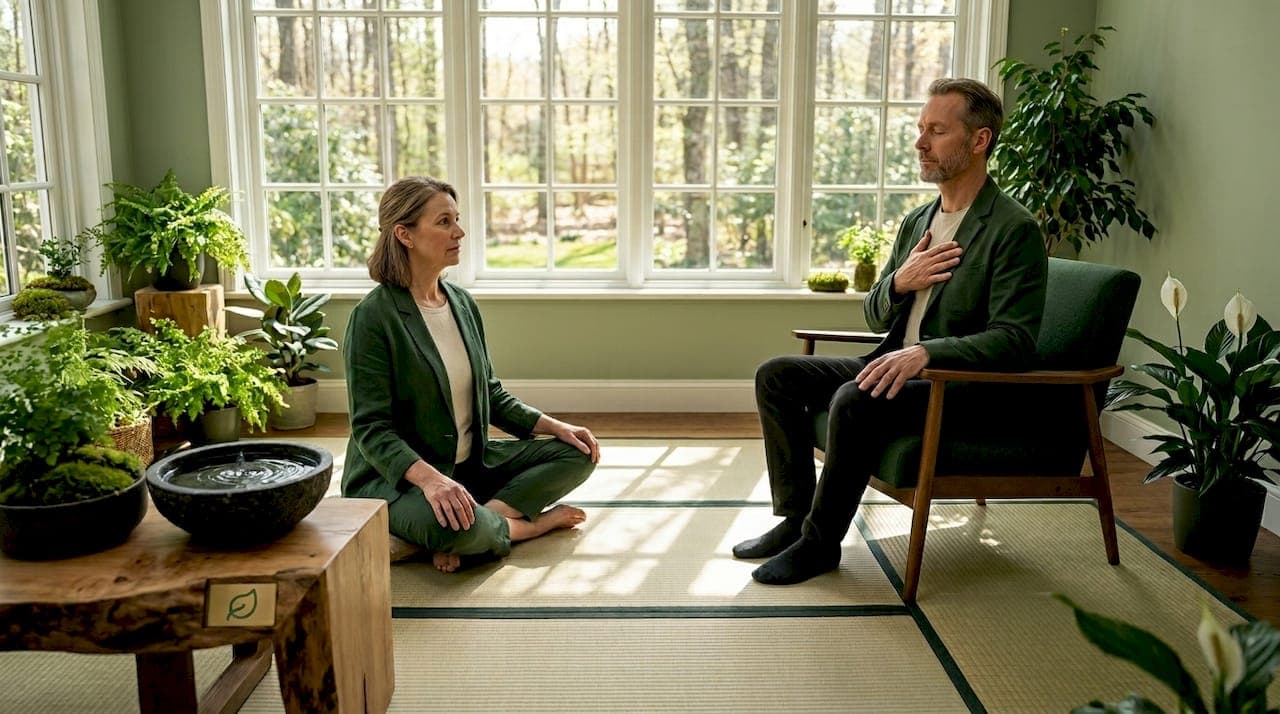
Meditation therapy is often mistaken for simple relaxation or a trendy wellness habit. But what is meditation therapy, really? It is a structured, clinically informed practice that goes well beyond sitting quietly with your eyes closed. Rooted in decades of psychological research, meditation therapy uses deliberate mental techniques to address anxiety, depression, chronic stress, and emotional imbalance. This guide walks you through what meditation therapy actually means, the science behind it, the most effective types and techniques, and how you can start applying it to your own wellness life with confidence.
Table of Contents
- Key takeaways
- What is meditation therapy, really?
- Types and techniques of meditation therapy
- How meditation therapy works in the mind and body
- The real evidence behind meditation therapy's benefits
- How to get started with meditation therapy
- My honest take on where meditation therapy stands
- Start your meditation therapy journey with Goholistic
- FAQ
Key takeaways
| Point | Details |
|---|---|
| More than relaxation | Meditation therapy is a structured clinical tool, not just a stress-relief hobby. |
| Two leading programs | MBSR and MBCT are the most researched formats, each with distinct mental health goals. |
| Brain and body both respond | Regular practice lowers stress hormones and reshapes how your brain handles emotions. |
| Research-backed effectiveness | Studies show MBSR can reduce anxiety as effectively as a common prescription medication. |
| Professional guidance matters | Working with a trained practitioner helps personalize your practice and avoids potential pitfalls. |
What is meditation therapy, really?
Most people think of meditation as something you do alone, maybe using a free app before bed. Meditation therapy is different. It is a clinical, structured intervention led by a trained professional, designed to target specific psychological and physical health concerns rather than simply promote general calm.
Think of it this way: casual meditation is like walking for general fitness. Meditation therapy is like working with a physical therapist on a specific injury, using precise movement to produce a measurable outcome. The goal is not just to feel peaceful in the moment. The goal is to shift the underlying patterns that create distress.
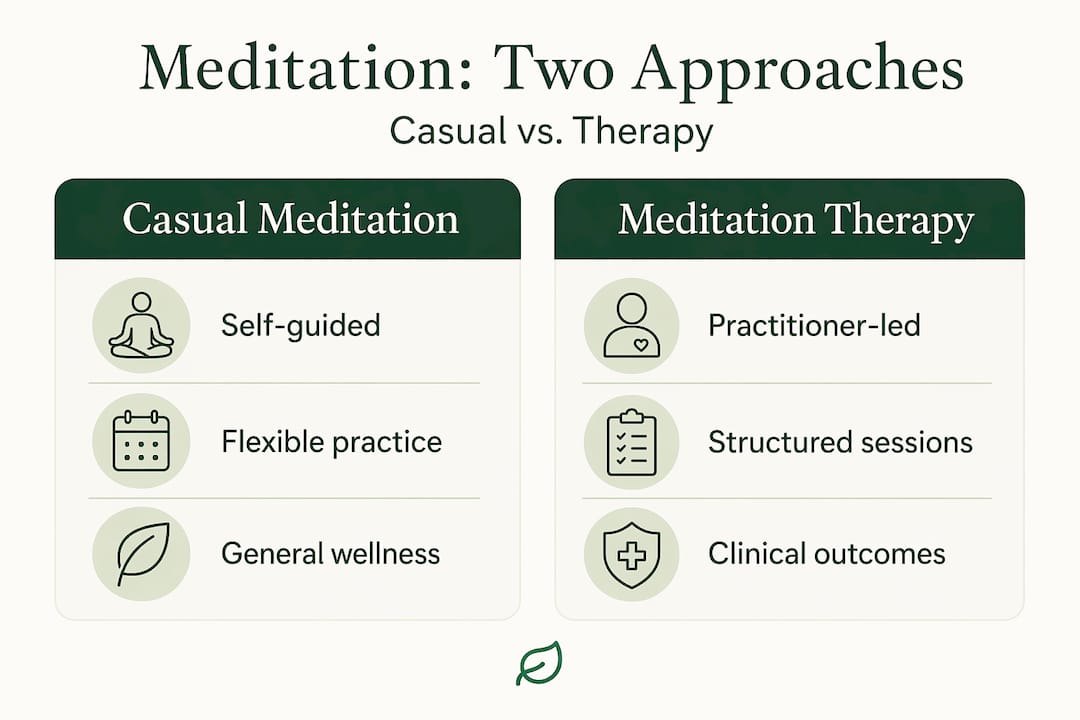
Meditation therapy is typically used as a complementary approach within a larger care plan. It works alongside psychotherapy, medication, or other holistic treatments rather than replacing them. Clinical settings where you might encounter meditation therapy include mental health clinics, integrative medicine practices, hospital-based wellness programs, and private therapy offices.
Here is what separates it from casual practice:
- Structure: Sessions follow a defined format with clear therapeutic objectives
- Professional leadership: A trained instructor or therapist guides the process
- Personalization: Techniques are adapted to your specific health history and needs
- Outcome focus: Progress is tracked toward clinical goals like reduced anxiety scores or improved sleep
Pro Tip: If you are exploring meditation for a mental health condition, look specifically for practitioners trained in MBSR, MBCT, or trauma-informed meditation. The credential matters more than the setting.
Types and techniques of meditation therapy
The two most widely studied programs are Mindfulness-Based Stress Reduction (MBSR) and Mindfulness-Based Cognitive Therapy (MBCT). Both follow structured 8-week programs with weekly group sessions of two to two and a half hours, plus 30 to 60 minutes of daily home practice. They share a foundation in mindfulness but serve different primary purposes.
MBCT was specifically designed to prevent depression relapse by weaving cognitive behavioral strategies into mindfulness practice. It helps you recognize the early warning signs of a depressive episode and disengage from the negative thought loops that drag you back in. MBSR, on the other hand, was originally developed to manage chronic pain and stress, making it broadly useful for anxiety, burnout, and stress-related physical symptoms.
Here is a comparison of the main types of meditation therapy:
| Type | Primary focus | Best suited for | Format |
|---|---|---|---|
| MBSR | Stress and pain reduction | Anxiety, chronic illness, burnout | 8-week group program |
| MBCT | Depression relapse prevention | Recurrent depression, negative thought patterns | 8-week group program |
| Guided meditation therapy | Relaxation and imagery | General stress, sleep issues | Individual or group sessions |
| Mantra-based meditation | Focused attention | Anxiety, concentration difficulties | Individual practice with guidance |
| Body scan meditation | Body awareness and tension release | Chronic pain, somatic stress symptoms | Group or individual |
Beyond MBSR and MBCT, several specific meditation therapy techniques appear frequently in clinical practice:
- Breathing-focused meditation: Anchors attention on the breath to interrupt anxious thought cycles
- Body scan: A slow, deliberate mental sweep from head to toe to release physical tension
- Guided imagery: A therapist walks you through calming mental scenes to lower physiological stress responses
- Mantra repetition: A word or phrase repeated silently to maintain focus and limit intrusive thoughts
- Open monitoring: A more advanced technique where you observe all mental events without reacting to any of them
The approach that works best for you depends on what you are trying to address. Someone managing mindfulness for mental health concerns like recurrent depression will benefit most from MBCT's cognitive restructuring component. Someone navigating work-related burnout may find MBSR's broader stress reduction tools more useful.
How meditation therapy works in the mind and body
The most common question people ask is: how does meditation therapy actually produce change? It is not magic, and it is not placebo. There are well-documented psychological and physiological mechanisms at work.
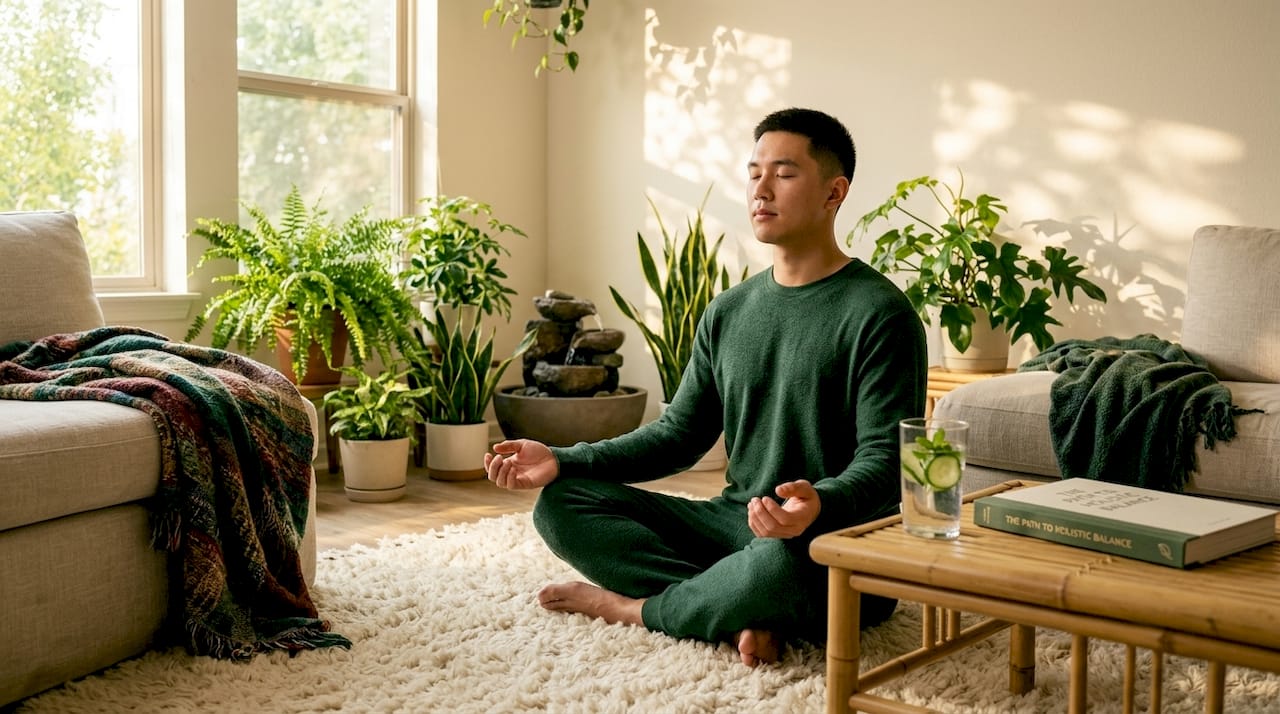
On the psychological side, the key process is metacognitive awareness. This is the ability to observe your own thoughts as mental events rather than as facts. When you practice watching a thought arise and pass without reacting to it, you gradually weaken the automatic link between a stressful thought and a stress response. Over time, this creates genuine emotional regulation rather than suppression.
Physiologically, regular meditation practice lowers cortisol (your primary stress hormone), reduces blood pressure, and has been shown to produce measurable changes in brain regions associated with emotional processing. The amygdala, which triggers fear and stress responses, becomes less reactive. The prefrontal cortex, which handles rational thinking and perspective, becomes more active. This is not just theory. It is visible on brain imaging in people who practice consistently.
Key physiological and psychological shifts that meditation therapy supports:
- Lower cortisol and adrenaline levels after regular practice
- Reduced reactivity in the brain's fear center
- Stronger connection between emotional experience and conscious reflection
- Improved sleep quality and reduced physical tension
- Greater capacity to sit with discomfort without escalating it
Pro Tip: Consistency matters far more than session length. Ten focused minutes every day produces more lasting change than an occasional hour-long session. Start small and protect that time like any other medical appointment.
The role of professional guidance during this process is significant. Therapist-led co-meditation phases help tailor the practice to your personal history, making sure the experience leads to emotional regulation rather than avoidance or overwhelm.
The real evidence behind meditation therapy's benefits
If you have spent any time researching wellness, you know that a lot of claims sound convincing but crumble under scrutiny. Meditation therapy is one of the areas where the research is genuinely strong, particularly for anxiety and depression.
A notable randomized controlled trial found that MBSR reduces anxiety as effectively as escitalopram, a commonly prescribed SSRI antidepressant, and with fewer adverse events. The results held up even when MBSR was delivered online. That is a remarkable finding. It positions mindfulness meditation therapy not as an alternative to "real" treatment but as a clinically equivalent option for many people.
Multiple randomized trials and meta-analyses confirm that MBCT and MBSR are effective adjuncts to pharmacotherapy for anxiety and depressive disorders. Effects are durable, meaning they persist well after the program ends, though researchers note the need for longer follow-up studies.
Here is a summary of what the research shows:
| Condition | Evidence level | Key finding |
|---|---|---|
| Anxiety disorders | Strong (multiple RCTs) | MBSR matches SSRI effectiveness with fewer side effects |
| Recurrent depression | Strong (meta-analyses) | MBCT significantly reduces relapse rates |
| Chronic stress | Moderate to strong | Regular practice lowers cortisol and subjective distress |
| Chronic pain | Moderate | MBSR reduces pain interference and improves quality of life |
| Sleep disturbance | Moderate | Mindfulness-based approaches improve sleep onset and quality |
That said, meditation therapy is classified as a complementary treatment, not a standalone solution. For severe clinical conditions, it is most effective when integrated with professional mental health care, medication when indicated, and broader lifestyle support.
"Meditation therapy is not a cure. It is a practice that, when done with intention and proper guidance, builds the mental and physical resilience needed to manage life's weight more steadily."
One caution worth taking seriously: for individuals with unresolved trauma, intensive meditation can occasionally trigger emotional dysregulation. This is why professional oversight is not optional if you are managing PTSD, severe depression, or complex anxiety. The evidence is strong, but so is the case for doing this thoughtfully.
How to get started with meditation therapy
Getting started does not require a big commitment up front. What it does require is a little clarity on your goals and where to find qualified support.
- Identify your goal. Are you managing anxiety, preventing depression relapse, reducing chronic stress, or exploring general wellness? Your goal shapes which type of meditation therapy fits best.
- Look for trained practitioners. Search for instructors certified in MBSR or MBCT, or therapists who integrate mindfulness into their practice. Credentials to look for include training from the Center for Mindfulness at UMass Medical School or similar accredited programs.
- Start with a structured program. Rather than piecing things together from YouTube, consider enrolling in a formal 8-week MBSR or MBCT program. Many are now offered online with comparable outcomes to in-person delivery.
- Build a daily home practice. The weekly sessions are only half the work. Daily practice, even 10 to 15 minutes, is where lasting change happens. Use a timer, a journal, or a simple breathing exercise to anchor your routine.
- Communicate with your other care providers. If you are already working with a therapist, psychiatrist, or primary care physician, tell them you are adding meditation therapy. This supports a truly integrated care approach.
- Be patient with the process. Most people notice meaningful shifts after four to six weeks of consistent practice. The first week often feels awkward. That is completely normal.
For those with mental health conditions, consider exploring evidence-based holistic care options that combine meditation therapy with other vetted modalities under professional guidance.
My honest take on where meditation therapy stands
I have worked alongside a lot of wellness practitioners and read through a significant body of research on this topic. What strikes me most is how consistently people underestimate what meditation therapy can actually do, and overestimate what casual self-guided apps deliver.
The research comparing MBSR to SSRIs for anxiety? That genuinely surprised me the first time I read it. Not because I doubted mindfulness, but because the effect size was large enough to be clinically meaningful, not just statistically significant. That distinction matters when you are talking about a practice rather than a pill.
What I see most often is people treating meditation as a last resort. They try medication, therapy, lifestyle changes, and then add meditation when nothing else fully closes the gap. In my experience, that sequence gets better results when flipped. Starting meditation therapy early, alongside other care, tends to amplify the benefits of everything else. It changes how you process your experience of treatment, not just your experience of stress.
The misconception I push back on most: that meditation is passive. Real meditation therapy is active mental training. You are building a skill, the same way physical therapy rebuilds a muscle. Progress is not linear, and some sessions will feel like nothing happened. But you are changing the structure of how your brain responds to difficulty. That is not passive at all.
My practical wisdom for sustaining benefits long-term: do not abandon your practice when things improve. That improvement is the practice working. Keep going.
— Andrew
Start your meditation therapy journey with Goholistic
If this article has sparked your curiosity about meditation therapy, Goholistic is built to help you take the next step with confidence. The platform connects you with verified, certified holistic practitioners across disciplines including mindfulness-based therapy, Ayurveda, acupuncture, and more. You can browse the full library of holistic health treatments to understand your options, then use Goholistic's AI-powered recommendation tool to match your specific health concerns with evidence-backed approaches.
Whether you are ready to book a session or simply want to explore what qualified wellness practitioners offer in your area, Goholistic makes it easy to move forward on your own terms. No guesswork. No wasted time chasing the wrong fit. Just clear, personalized guidance rooted in real research.
FAQ
What is meditation therapy used for?
Meditation therapy is used to treat anxiety, depression, chronic stress, chronic pain, and sleep disturbances. It is most effective as a complementary approach alongside psychotherapy or medication rather than as a standalone treatment.
How is meditation therapy different from regular meditation?
Regular meditation is self-guided and general, while mindfulness therapy is a structured, practitioner-led clinical intervention targeting specific psychological concerns. The professional guidance and outcome focus are what set them apart.
Is meditation therapy effective for anxiety?
Yes. Research shows that MBSR reduces anxiety as effectively as escitalopram, a common SSRI, with fewer side effects. Multiple clinical trials and meta-analyses support its use for anxiety disorders.
How long does meditation therapy take to work?
Most people notice meaningful changes after four to six weeks of consistent practice within a structured program. Structured programs like MBSR run eight weeks with daily home practice alongside weekly group sessions.
Can anyone start meditation therapy on their own?
Most people can begin with a guided program safely, but individuals managing trauma, severe depression, or PTSD should work with a trained professional. Intensive meditation can occasionally trigger emotional dysregulation in vulnerable individuals without proper support.