
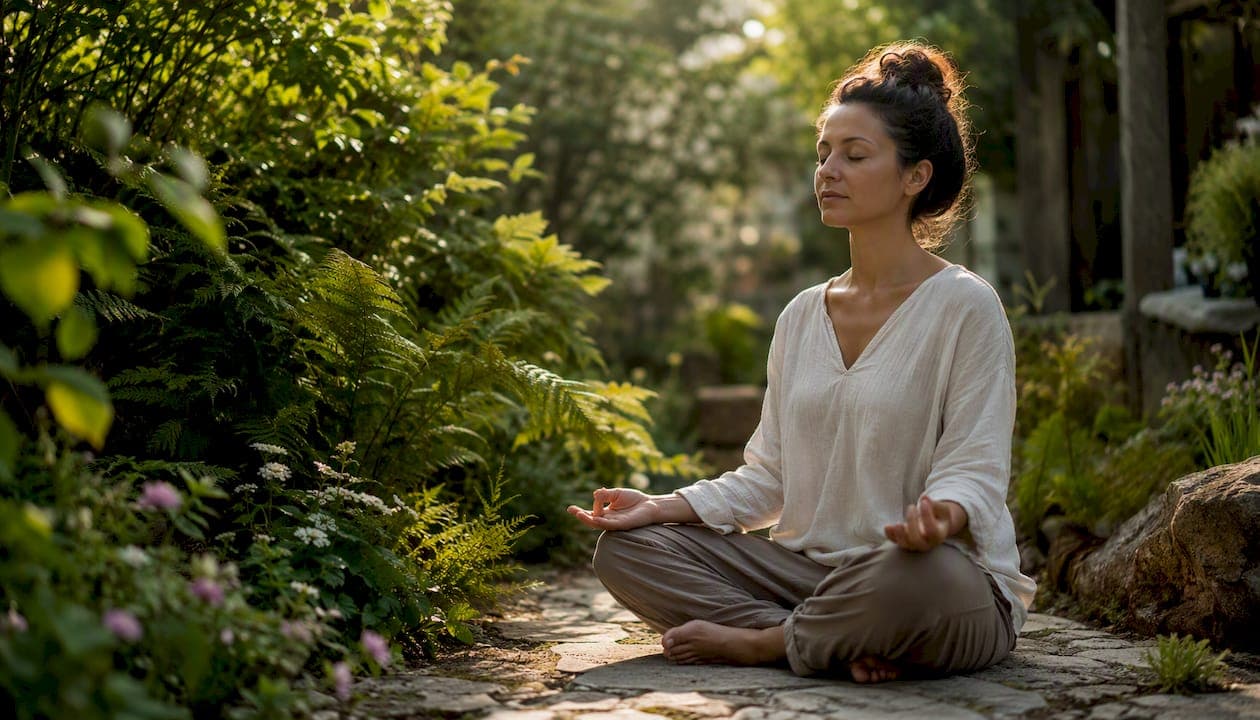
The fastest, most reliable stress relief techniques you can use right now are diaphragmatic breathing, box breathing, the 5-4-3-2-1 grounding method, progressive muscle relaxation (PMR), a brief cold-water face splash, a short walk, guided imagery, and a physiological sigh. Each technique takes five minutes or less to start, and each has a clear mechanism backed by research. Here's a quick-start list so you can pick two and try them today:
- Diaphragmatic breathing: Place one hand on your belly, inhale slowly through your nose for four counts until your belly rises, then exhale for six counts. Repeat for two minutes.
- Box breathing: Inhale for four counts, hold for four, exhale for four, hold for four. Repeat four to six cycles.
- 5-4-3-2-1 grounding: Name five things you see, four you can touch, three you hear, two you smell, one you taste. Takes about 90 seconds.
- Progressive muscle relaxation: Tense each muscle group for five seconds, then release for 10. Start at your feet and work upward.
- Cold-water face splash: Splash cool water on your face for 30 seconds to trigger the dive reflex and slow your heart rate.
- Short walk: A short walk outdoors shifts attention and can help lower cortisol.
- Guided imagery: Close your eyes and picture a calm, safe place in vivid sensory detail for three to five minutes.
- Physiological sigh: Take a normal inhale, then add a second short inhale through the nose before a long, slow exhale through the mouth.
Pick two techniques from this list, schedule two minutes of practice in the morning and two in the evening, and give it two weeks. That single habit is where most people see the first real shift.
Key Takeaways
Combining acute stress relief techniques with consistent lifestyle changes produces better, more lasting results than either approach alone.
| Point | Details |
|---|---|
| Start with two acute techniques | Box breathing and 5-4-3-2-1 grounding are reliable, immediate tools you can practice anywhere in under five minutes. |
| Aim for 20 minutes of daily practice | Harvard Health recommends approximately 20 minutes of relaxation practice per day for stronger, more durable effects. |
| Sleep is the highest-leverage habit | Sleep deprivation can amplify amygdala reactivity by as much as 60%; a consistent bedtime is the single most impactful change for many people. |
| Seek professional care for persistent symptoms | If stress causes functional impairment or persists for several weeks, CBT and medication are evidence-backed first-line options. |
| Goholistic connects you with verified practitioners | The platform's AI-matched recommendations and practitioner directory help you build a personalized, evidence-based stress-management plan. |
Table of Contents
- What are the best stress relief techniques for immediate calm?
- Core stress relief techniques: how-to, frequency, and timelines
- Which daily habits lower your baseline stress the most?
- When does stress need professional attention?
- How do you build a sustainable stress-management routine?
- Progressive muscle relaxation: a step-by-step guide with evidence
- Why most people build a stress toolkit backward
- How Goholistic supports your stress-management practice
- Sources
What are the best stress relief techniques for immediate calm?
Acute stress hits fast, and the right tool can bring you back to baseline in under five minutes. Grounding exercises like 5-4-3-2-1 and breath-control methods like box breathing are among the most reliable short-term tools for redirecting attention and reducing acute anxiety.
Box breathing (4-4-4-4): four minutes at your desk
- Sit upright with both feet flat on the floor.
- Exhale completely through your mouth.
- Inhale through your nose for a slow count of four.
- Hold your breath for four counts.
- Exhale through your mouth for four counts.
- Hold empty for four counts, then repeat four to six cycles.
Why it works: Controlled exhalation activates the vagus nerve, shifting your nervous system from sympathetic (fight-or-flight) toward parasympathetic (rest-and-digest) mode. You can do this at your desk, in a parked car, or in a bathroom stall before a difficult meeting.
The physiological sigh: 30 seconds, anywhere
- Take a normal inhale through your nose.
- Without exhaling, add a second short sniff through your nose to fully inflate your lungs.
- Exhale slowly and completely through your mouth.
- Repeat two to three times.
This double-inhale re-inflates collapsed air sacs in the lungs, and the long exhale triggers rapid vagal activation. Researchers have noted it as one of the fastest single-breath interventions for acute stress.
5-4-3-2-1 grounding: 90 seconds to shift your focus
- Pause and look around. Name five things you can see.
- Touch four surfaces near you and notice their texture.
- Listen for three distinct sounds.
- Identify two things you can smell.
- Notice one thing you can taste.
The mechanism here is attention-shift: your brain cannot sustain a stress spiral and a detailed sensory inventory at the same time. This technique works especially well during panic-adjacent moments or before high-stakes situations.
Cold-water face splash: 30 seconds, dive reflex
Splash cool water on your face, or hold a cold, damp cloth against your cheeks and forehead for 30 seconds. This activates the mammalian dive reflex, which slows heart rate and can interrupt a racing-thought loop almost immediately. It's a practical option when breathing exercises feel inaccessible.

Safety note: Breath-holding techniques like box breathing may not be appropriate for people with certain respiratory or cardiac conditions. If you have asthma, COPD, or a heart arrhythmia, check with your doctor before practicing breath-hold variations.
Pro Tip: Set a phone alarm labeled "2-minute reset" for mid-afternoon. That single cue removes the decision fatigue of remembering to practice, and consistency is what builds the skill.
Core stress relief techniques: how-to, frequency, and timelines
The Harvard Health guide to relaxation techniques describes six methods that reliably elicit the relaxation response: breath focus, body scan, guided imagery, mindfulness meditation, gentle movement, and repetitive prayer. Harvard recommends aiming for roughly 20 minutes of practice a day when possible, though even a few minutes builds a meaningful reserve of calm over time. The techniques below expand that list with practical how-to guidance and realistic timelines.
Breath focus
Sit comfortably, close your eyes, and breathe naturally while mentally repeating a calming word or phrase on each exhale ("calm," "let go"). When your mind wanders, gently return to the breath. Start with five minutes and build toward 15–20.
Body scan
Lie down or sit in a supported chair. Bring your attention slowly from the top of your head to the soles of your feet, noticing any tension without trying to fix it. A full body scan takes 15–20 minutes; a condensed version targeting shoulders, jaw, and hands takes about five.
Guided imagery
Close your eyes and picture a place where you feel completely safe and at ease. Engage all five senses: what do you see, hear, smell, feel underfoot? Three to five minutes is enough for an acute reset; 15–20 minutes produces deeper relaxation.
Mindfulness and MBSR
Mindfulness practice means paying deliberate, non-judgmental attention to the present moment. Mindfulness-Based Stress Reduction (MBSR) is an eight-week structured program that teaches body scan, gentle yoga, and sitting meditation. NCBI research on MBSR shows measurable improvements in both psychological and physiological stress markers after completing the full program. Daily sitting practice of 10–20 minutes is the standard starting point; apps like Insight Timer, Calm, and Headspace offer guided sessions if you prefer audio support.
Progressive muscle relaxation (PMR)
Systematically tense each muscle group for five seconds, then release for 10, working from feet to face. A standard session runs 20 minutes; a condensed version covering just the major groups (legs, abdomen, shoulders, face) takes 8–10 minutes. PMR is covered in depth in the dedicated section below.

Yoga and tai chi
Both practices combine breath control with deliberate movement, making them dual-action tools. A 20–30 minute session two to three times a week is a reasonable starting point. Benefits for stress and anxiety tend to become noticeable after four to six weeks of consistent practice.
Journaling
Write freely for five to ten minutes about what's on your mind, or use a structured gratitude format (three things you're grateful for, one thing that went well). The CDC recommends journaling as a daily stress-management practice, alongside deep breathing and time outdoors.
Exercise
A brisk walk can help lower cortisol. Longer sessions compound the benefit. See the lifestyle section below for the recommended weekly dose.
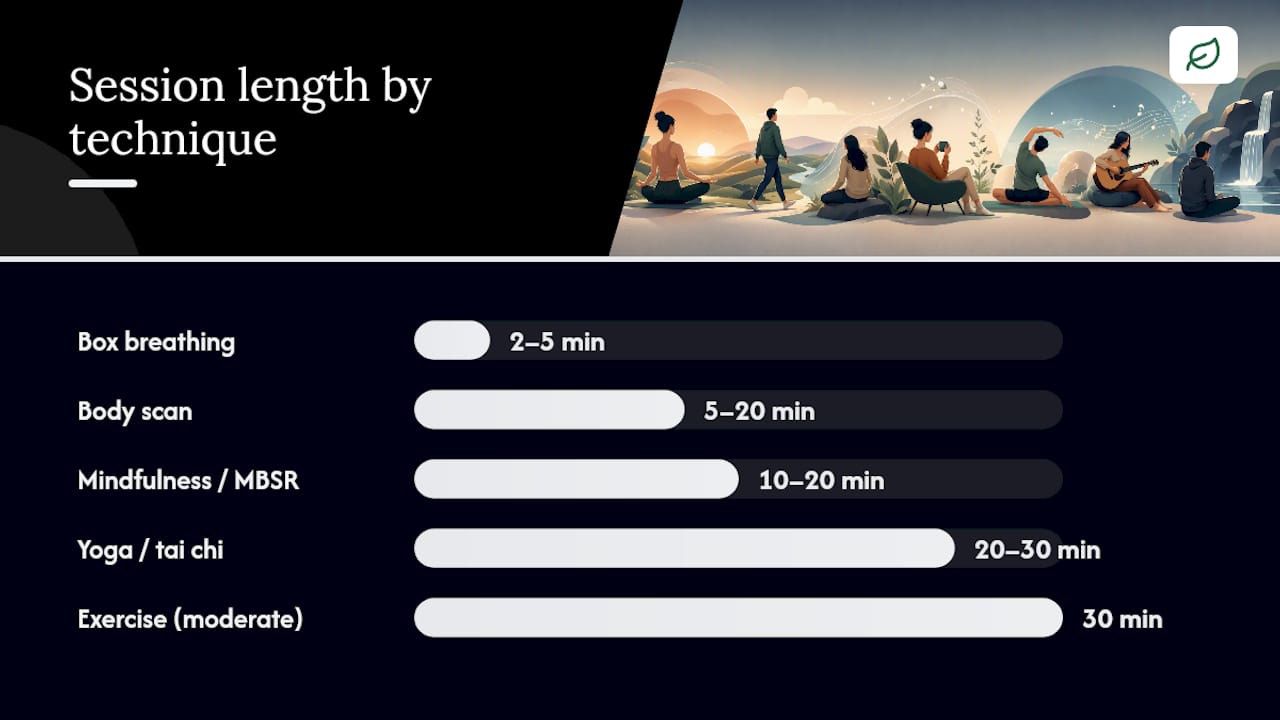
| Technique | Session length | Recommended frequency | Timeline for noticeable benefit |
|---|---|---|---|
| Box breathing | 2–5 min | Daily, or as needed | Immediate (within session) |
| Body scan | 5–20 min | Daily | 1–2 weeks |
| Guided imagery | 3–20 min | Daily | 1–2 weeks |
| Mindfulness / MBSR | 10–20 min | Daily (MBSR: 8-week program) | 4–8 weeks |
| PMR | 8–20 min | Daily | 2–4 weeks |
| Yoga / tai chi | 20–30 min | 2–3× per week | 4–6 weeks |
| Journaling | 5–10 min | Daily | 1–2 weeks |
| Exercise (moderate) | 30 min | 5× per week | 2–4 weeks |
A note on contraindications: Breath-hold techniques and vigorous yoga poses may not suit everyone. If you have a chronic health condition, start with the gentler options (body scan, guided imagery, journaling) and consult a healthcare provider before adding breath-hold or high-intensity movement.
For a broader look at holistic stress relievers that complement these practices, including acupuncture and massage therapy, the Goholistic blog covers nine natural methods with clinical context.
Which daily habits lower your baseline stress the most?
Acute techniques work in the moment, but your baseline stress level is shaped by what you do every day. Mayo Clinic guidance consistently points to sleep, movement, and social connection as the highest-leverage long-term levers, and recommends combining these foundations with acute skills rather than relying on either alone.
Sleep: the highest-leverage change you can make tonight
Sleep deprivation amplifies amygdala reactivity by as much as 60%, which means a poor night's sleep makes every stressor feel larger the next day. The CDC recommends adults get 7 or more hours per night as a baseline for emotional regulation.
Two small changes to start tonight: set a consistent bedtime (even on weekends) and put your phone in another room 30 minutes before sleep. Those two steps alone tend to improve sleep quality within a week.
Exercise: A recommended amount of moderate-intensity aerobic activity per week broken into sessions
The standard recommendation for adults is 150 minutes of moderate-intensity aerobic activity per week, which works out to about 30 minutes five days a week. If that feels like a lot, a 10-minute walk after each meal achieves a similar total. Exercise reduces cortisol, raises endorphins, and improves sleep quality, making it a triple-action stress intervention.
- Start small: A 10-minute walk after lunch is a realistic first step.
- Add variety: Cycling, swimming, or dancing all count and tend to feel less like "exercise."
- Consistency beats intensity: Three moderate walks a week outperforms one intense gym session for stress regulation.
Nutrition and substances
Caffeine raises cortisol and can worsen anxiety, particularly in the afternoon. Limiting intake to one or two cups before noon is a practical starting point. Alcohol is often used as a short-term stress reliever, but it disrupts sleep architecture and tends to increase anxiety the following day. Reducing alcohol to within recommended limits (no more than one drink per day for women, two for men, per U.S. dietary guidelines) supports both sleep quality and emotional regulation.
Eating regular meals with adequate protein and complex carbohydrates stabilizes blood sugar, which in turn stabilizes mood. Skipping meals is a surprisingly common driver of afternoon irritability and stress sensitivity.
Social connection and gratitude
A brief daily gratitude practice is tied to improved emotional resilience and is recommended by the CDC as a low-cost daily habit. It works partly by interrupting the rumination loop that keeps stress active after the stressor has passed.
Social connection acts as a buffer against stress. A weekly check-in with a friend or family member, even a 10-minute phone call, provides meaningful support. You don't need a large social network; one or two reliable relationships tend to matter more than breadth.
Pro Tip: Try the "worry window" technique: schedule a fixed period each day to process worries, then consciously set them aside outside that window. Scheduling worry time reduces intrusive thoughts more effectively than trying to suppress them, and it keeps rumination away from bedtime.
When does stress need professional attention?
Most everyday stress responds well to the techniques above. But some stress signals point to something that needs clinical support, and recognizing those signals early makes a real difference.
Seek professional care if you notice:
- Anxiety or stress that persists for several weeks despite consistent self-care
- Functional impairment: difficulty working, maintaining relationships, or completing daily tasks
- Panic attacks that interfere with your life or that you're beginning to avoid situations to prevent
- Physical symptoms (chest tightness, chronic headaches, GI distress) with no clear medical cause
- Suicidal thoughts or thoughts of self-harm
When stress crosses into clinically significant anxiety, CBT and medication (SSRIs or SNRIs) are often the first-line treatments, typically assessed and recommended by a licensed mental health provider or psychiatrist. CBT in particular targets the thought patterns and avoidance behaviors that maintain anxiety. Simply Psychology notes that exposure-based learning, a core CBT component, is the most evidence-supported intervention for persistent anxiety, working by breaking the avoidance cycle through extinction learning.
One important nuance: acute relief techniques like box breathing and grounding are supportive tools, not cures. Used compulsively as "rescue" behaviors, they can inadvertently maintain anxiety by reinforcing avoidance. A therapist can help you use these tools in a way that supports, rather than substitutes for, deeper behavioral work.
U.S. crisis resources:
- 988 Suicide and Crisis Lifeline: Call or text 988 (available 24/7)
- Crisis Text Line: Text HOME to 741741
- Emergency services: Call 911 for immediate danger
If you're experiencing suicidal thoughts or a mental health emergency, contact one of these resources or go to your nearest emergency room.
How do you build a sustainable stress-management routine?
Knowing the techniques is one thing. Building a habit that sticks is another. The most effective approach is gradual layering: add one or two practices at a time, let them settle, then build.
A four-week starter plan
- Week 1: Practice two acute skills daily (box breathing in the morning, 5-4-3-2-1 grounding in the afternoon). Two minutes each. Set phone alarms.
- Week 2: Add a 10-minute mindfulness or PMR session in the evening, three to four times this week. Use a guided audio if it helps.
- Week 3: Add one sleep hygiene change (consistent bedtime or phone-free bedroom) and a five-minute gratitude journal entry before bed.
- Week 4: Add 30 minutes of moderate exercise on three days this week, and schedule one social check-in (a call, a walk, a coffee).
Daily tracking template
At the end of each day, write one line:
Date | Technique(s) used | Time spent | Stress rating before (1–10) | Stress rating after (1–10)
That's it. The before/after rating is the most useful data point. After two weeks, look for patterns: which techniques move the needle most for you, and which feel forced or ineffective.
Evaluating and adapting after two to four weeks
- If your after-stress ratings are consistently lower, the technique is working. Keep it.
- If a technique feels like a chore after two weeks, swap it for a different one from the list.
- If your ratings aren't improving at all after four weeks of consistent practice, that's a signal to consider professional support.
The goal isn't a perfect routine. It's a flexible toolkit you actually use. For practical guidance on integrating evidence-based wellness practices into daily life, including movement, sleep, and nutrition, the Goholistic blog offers a grounded starting point.
Progressive muscle relaxation: a step-by-step guide with evidence
PMR is one of the most thoroughly studied relaxation methods available. Developed by physician Edmund Jacobson in the 1920s, it works on a simple principle: deliberate muscle tension followed by release produces a deeper state of relaxation than passive rest alone. A standard session runs 20 minutes; a condensed version covering the major muscle groups takes 8–10 minutes and is practical for daily use.
Statistic callout: Harvard Health recommends aiming for approximately 20 minutes of relaxation practice per day for stronger effects, noting that even a few minutes of daily practice builds a meaningful reserve of calm over time.
Full PMR script (20-minute standard session)
Work through each muscle group in order. Tense for five seconds, then release and rest for 10 seconds before moving on. Breathe normally throughout.
- Feet: Curl your toes downward. Tense, release.
- Calves: Pull your toes toward your shins. Tense, release.
- Thighs: Press your thighs together. Tense, release.
- Abdomen: Pull your belly button toward your spine. Tense, release.
- Hands: Make tight fists. Tense, release.
- Forearms: Flex your wrists upward. Tense, release.
- Upper arms: Curl your biceps. Tense, release.
- Shoulders: Shrug them toward your ears. Tense, release.
- Neck: Gently press your head back against a surface. Tense, release.
- Face: Scrunch your eyes, nose, and mouth together. Tense, release.
After completing the sequence, rest quietly for two to three minutes and notice the contrast between how your body felt at the start and how it feels now.
Condensed 8–10 minute version
Focus on four groups: feet and calves together, thighs and abdomen together, hands and arms together, shoulders and face together. Same tense-release timing, fewer steps.
What the evidence shows
Regular PMR practice reduces acute anxiety symptoms within a single session and, with repeated practice over weeks, lowers baseline stress. The NCBI review of mindfulness and relaxation interventions supports structured body-focused practices as producing durable improvements in stress markers, consistent with the broader evidence base for PMR.
Troubleshooting common problems
- Pain or limited mobility: Skip any muscle group that causes discomfort. PMR works even when practiced with only the muscle groups you can safely engage.
- Falling asleep during practice: This is common and not a problem if you're using PMR for sleep. For daytime practice, sit upright rather than lying down.
- Mind wandering: Normal. When you notice it, return attention to the current muscle group without judgment.
Pro Tip: Pair the release phase of each muscle group with a slow exhale. The combination of muscle release and breath exhalation deepens the relaxation response more than either alone.
Why most people build a stress toolkit backward
Most people reach for stress relief techniques only when they're already overwhelmed. That's understandable, but it's also why the techniques often feel like they're "not working." A breathing exercise practiced for the first time during a panic moment is like trying to learn to swim while drowning. The skill needs to be rehearsed when you're calm so it's available when you're not.
The research is clear that combining acute tools with lifestyle foundations produces better outcomes than either approach alone. But there's a subtler point worth sitting with: the lifestyle changes, sleep, exercise, social connection, are not supporting acts. For many people, they're the main event. A person who sleeps seven hours, moves their body regularly, and has one or two close relationships will often find that acute stress techniques become almost unnecessary, because their baseline is already stable.
That said, I'd encourage you to resist the urge to overhaul everything at once. Pick one acute technique and one lifestyle change, practice both for two weeks, and track what shifts. The goal is a toolkit that fits your actual life, not an idealized wellness routine that collapses under real-world pressure. And if you try these approaches consistently and still feel stuck, that's not a personal failure. It's a signal that professional support, whether CBT, therapy, or a guided program, is the right next step.
How Goholistic supports your stress-management practice
Knowing which techniques work is a strong start. Having personalized guidance and verified practitioners behind you makes the practice sustainable.
Goholistic gives you three things most self-help resources don't: an AI-powered tool that analyzes your specific health concerns and recommends treatments matched to your situation, a curated directory of verified holistic practitioners (including massage therapists, acupuncturists, and Ayurvedic specialists) you can book directly, and an evidence-based treatment library covering over 200 therapy types to help you understand what's actually supported by research before you commit to anything.
If you're ready to go beyond breathing exercises and build a personalized stress-management plan, you can find a verified practitioner near you for an introductory consult, explore guided PMR sessions, or get matched with a sleep-hygiene coach through the platform. The free tier gives you access to the directory and treatment library right away.
Sources
These are the primary sources used throughout this article, organized by what each one covers best.
- Six relaxation techniques to reduce stress - Harvard Health
- Managing Stress | Mental Health | CDC
- Mindfulness and related interventions (NCBI Bookshelf)
- Anxiety: Diagnosis and treatment | Mayo Clinic
- 8 techniques all anxious people should use, according to a psychologist | ScienceFocus
This article is general information, not a substitute for advice from a qualified doctor. Consult a qualified healthcare professional about your own circumstances before acting on anything here.