

TL;DR:
- Structured pain relief uses natural, evidence-based methods to restore function rather than eliminate pain completely.
- Starting with thorough assessment, setting SMART goals, and tracking progress improves conditions through consistent exercise, pacing, and mind-body techniques.
- Avoiding setbacks requires steady activity, ongoing adjustments, and integrating therapies like massage and acupuncture into a personalized, multimodal plan.
Structured pain relief is defined as applying progressive, evidence-based natural and holistic methods to reduce pain and restore function over time. This step by step pain relief guide follows clinical frameworks used by leading health authorities, including the UK's National Institute for Health and Care Excellence (NICE) and NHS guidelines, which recommend exercise and multimodal approaches as first-line treatments for chronic pain. The goal is not to eliminate pain entirely. The clinical focus has shifted to restoring function and reducing disability, which is a more realistic and achievable target. Setting SMART goals, specific, measurable, achievable, relevant, and time-bound, gives your plan direction and helps you track real progress.
What foundational assessments should you do before starting a pain relief plan?
Accurate pain assessment is the starting point for any effective pain management strategy. Without it, you are guessing at solutions instead of targeting the actual problem. The PQRST method is the standard for thorough pain assessment, and it covers five dimensions: Provocation and Palliation (what makes pain better or worse), Quality (sharp, burning, aching), Region and Radiation (where it spreads), Severity (rated 0–10), and Timing (constant vs. intermittent). This level of detail helps distinguish neuropathic pain from inflammatory pain, which directly shapes which treatments will work for you.
Before you begin any treatment, consult a healthcare professional for a confirmed diagnosis. Self-diagnosis leads to mismatched treatments and wasted effort. A clinician can also identify any red flags that require medical attention before natural methods are appropriate.
Once you have a diagnosis, set SMART goals to anchor your plan. A vague goal like "feel better" gives you nothing to measure. A SMART goal looks like: "Reduce my pain rating from 7/10 to 3/10 within 48 hours of starting a new activity protocol." Research confirms that SMART goal-setting improves functional outcomes in pain management compared to passive, undefined targets. Specific goals keep you accountable and make it easier to spot what is working.
Key preparation steps before starting:
- Record your baseline pain levels, functional limits, and daily triggers using the PQRST framework
- Confirm your pain type (neuropathic, inflammatory, or musculoskeletal) with a healthcare provider
- Set at least two SMART goals: one for pain reduction and one for functional improvement
- Identify your current activity tolerance so you know where to start, not where you wish you were
Pro Tip: Write your pain assessment in a notebook or app before your first appointment. Clinicians make better decisions when you arrive with specific, documented observations rather than general descriptions.
Which natural methods form the core steps in relieving chronic pain?
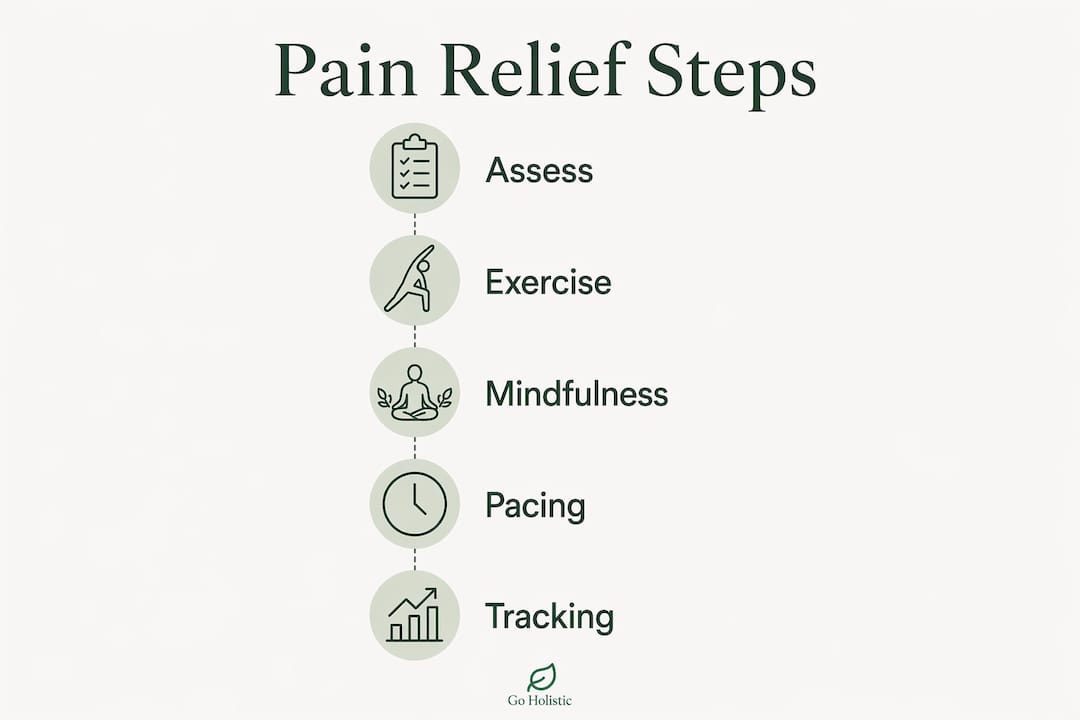
Exercise is the single most evidence-backed tool available for chronic pain relief. Exercise and physical activity are the only treatments with strong evidence for efficacy in chronic primary pain, according to NICE and Canadian health agencies. The type of exercise matters less than consistency and enjoyment. Walking, swimming, gentle stretching, and water aerobics all qualify. The key is choosing something you will actually do regularly.

Mind-body therapies are the second pillar of natural pain management. Relaxation techniques like deep breathing and mindfulness reduce pain amplification caused by stress. Stress activates the nervous system in ways that intensify pain signals, so calming that response is not optional. Practices like guided meditation, progressive muscle relaxation, and slow diaphragmatic breathing work best when done daily, not just during flare-ups.
Pacing is the third core method, and it is the one most people skip. Pacing means performing similar activity levels on good and bad days to safely build tolerance over time. Doing too much on a good day and crashing the next is the boom-bust cycle, and it keeps chronic pain stuck in place. Consistent, moderate effort beats sporadic intense effort every time.
Complementary therapies like massage and acupuncture add meaningful support to this foundation. They work best as additions to exercise and mind-body practice, not replacements. Goholistic connects you with verified practitioners across these disciplines, making it easier to build a complete, personalized plan.
Core natural methods at a glance:
- Exercise: Walking, swimming, or stretching at a consistent, enjoyable pace
- Mindfulness and breathing: Daily practice to reduce stress-driven pain amplification
- Pacing: Steady activity on both good and bad days to avoid boom-bust cycles
- Massage therapy: Reduces muscle tension and supports nervous system regulation
- Acupuncture: Supports pain modulation through targeted stimulation
Pro Tip: Start with just 10 minutes of gentle movement per day. Consistency over two weeks builds more tolerance than one intense session per week.
How do you execute and track a personalized pain relief plan?
Starting below your pain-aggravating threshold is the most important rule in executing a pain relief plan. Many people begin too aggressively and trigger a flare-up in the first week, which kills motivation. Begin at 50–70% of what you think you can handle, then increase gradually.
A structured tracking system turns vague feelings into useful data. Log your pain level (0–10), activity completed, sleep quality, and mood each day. After two weeks, patterns emerge. You will see which activities correlate with flare-ups and which ones consistently lower your pain score. That data drives your next adjustment.
Treatment plans must be flexible and responsive to patient feedback, embracing gradual progress over rapid fixes. This means reviewing your plan every two weeks and adjusting based on what your log shows. If pain increases after a new activity, reduce intensity, not frequency. Stopping entirely resets your progress.
A multimodal approach combining physical therapies, mind-body practices, and limited pharmacological support yields the best outcomes. Medications act as a bridge to enable active non-drug treatments, not as standalone solutions. Use them to get moving, then reduce reliance as your natural methods take hold.
A four-week execution framework:
- Week 1: Establish baseline activity. Start at 50% capacity. Log pain, sleep, and mood daily.
- Week 2: Add one mind-body practice (10 minutes of breathing or mindfulness) each morning.
- Week 3: Increase activity duration by 10–15%. Review your log and identify one trigger to address.
- Week 4: Add one complementary therapy session (massage or acupuncture). Reassess SMART goals.
| Week | Focus | Adjustment trigger |
|---|---|---|
| 1 | Baseline activity at 50% capacity | Pain spikes above baseline |
| 2 | Add daily mind-body practice | Stress levels remain high |
| 3 | Increase activity by 10–15% | Fatigue or flare-up after increase |
| 4 | Add complementary therapy session | Goals not met; reassess targets |
Continuous reassessment and patient education are critical for keeping a pain care plan effective over time. Education means understanding your medications, setting realistic expectations, and building self-management skills that reduce dependence on any single treatment.
What are common mistakes in pain relief plans, and how do you avoid them?
The boom-bust cycle is the most common and damaging pattern in chronic pain management. You feel good, do too much, pay for it the next day, and rest completely until you feel good again. This cycle prevents any real progress. Pacing breaks it by keeping activity levels consistent regardless of how you feel on a given day.
Overreliance on medication is the second major mistake. Medications can reduce pain enough to allow movement, but they do not address the underlying drivers of chronic pain. Using them as the sole strategy leads to diminishing returns and increasing side effects over time. The evidence-based path is to use medication as a short-term bridge while building non-drug habits.
Skipping psychological support is a mistake that costs people months of progress. Cognitive behavioral therapy (CBT) techniques help reframe unhelpful thoughts about pain, reduce fear-avoidance behavior, and build resilience. You do not need a formal CBT program to benefit. Journaling, guided self-compassion exercises, and working with a counselor all apply the same principles.
"Pain may persist, yet function can improve substantially. Success in chronic pain management is measured in what you can do, not in the absence of pain."
Common pitfalls and how to avoid them:
- Boom-bust cycle: Pace consistently on good and bad days; never exceed your planned activity level on a good day
- Medication overreliance: Use pharmacological support as a bridge, not a destination
- Skipping mind-body practice: Daily relaxation methods are non-negotiable for preventing stress-driven flare-ups
- Unrealistic expectations: Aim for functional improvement, not zero pain
- Abandoning the plan after setbacks: Flare-ups are normal; reduce intensity temporarily, then resume
Maintaining motivation over months requires reframing what success looks like. Climbing stairs without stopping, sleeping through the night, or walking to the mailbox without bracing are all wins worth tracking. Small functional gains compound into meaningful quality-of-life improvements.
Key Takeaways
A structured, multimodal approach combining exercise, pacing, mind-body practice, and professional guidance is the most effective path to lasting chronic pain relief.
| Point | Details |
|---|---|
| Assess before you act | Use the PQRST method and consult a clinician before starting any pain relief plan. |
| Exercise is first-line treatment | Physical activity has the strongest evidence for chronic pain relief; consistency matters more than intensity. |
| Pacing prevents setbacks | Keeping activity steady on good and bad days breaks the boom-bust cycle and builds real tolerance. |
| Track and adjust every two weeks | Daily logs reveal triggers and progress; flexible plans outperform rigid ones. |
| Function is the real goal | Clinical success means doing more, not feeling zero pain; reframe your expectations accordingly. |
What I've learned from watching people fight chronic pain
I've spent years reading the research on chronic pain, and the pattern that stands out most is this: the people who make the most progress are not the ones who push hardest. They are the ones who show up consistently at a manageable level and refuse to let a bad day become a full stop.
The shift from "I need to eliminate this pain" to "I want to do more of what matters to me" is not just motivational language. It reflects what the clinical evidence actually supports. Patients often misunderstand success in chronic pain management. Pain may persist, yet function can improve substantially. That reframe changes everything about how you approach a plan.
What I also see consistently is that people underestimate the role of the nervous system in chronic pain. Stress, poor sleep, and fear of movement all amplify pain signals. Addressing those factors through daily relaxation practice is not soft advice. It is physiologically grounded and clinically supported. Skipping it because it feels too simple is one of the most expensive mistakes a person can make.
Patient empowerment and active participation lead to better long-term outcomes. That means you are not a passive recipient of treatment. You are the one doing the daily work, tracking the data, and adjusting the plan. A good practitioner guides that process. You execute it.
Be patient with yourself. Chronic pain took time to develop, and it takes time to shift. But with a clear plan, honest tracking, and the right support, real improvement is within reach.
— Andrew
Goholistic supports your natural pain relief plan
Living with chronic pain is hard enough without having to search endlessly for the right practitioner or treatment approach.
Goholistic brings together a curated directory of certified practitioners specializing in natural pain management, including acupuncture, massage therapy, physical therapy, and mind-body practices. The platform covers over 200 therapy types, all backed by evidence-based research, so you can find the right fit for your specific pain profile. You can browse, filter, and book directly with verified providers who understand chronic pain. Whether you are building a plan from scratch or looking to add a complementary therapy to what you already do, Goholistic gives you the tools and the people to make it work.
FAQ
What is a step by step pain relief guide?
A step by step pain relief guide is a structured approach to reducing chronic pain using progressive, evidence-based natural and holistic methods. It typically begins with pain assessment, moves through exercise and mind-body practices, and adjusts based on ongoing tracking.
What is the most effective natural treatment for chronic pain?
Exercise and physical activity are the only treatments with strong evidence for chronic primary pain relief, according to NICE and Canadian health guidelines. Consistency and enjoyment of the activity matter more than the specific type.
How does pacing help with chronic pain?
Pacing means keeping activity levels consistent on both good and bad days to avoid the boom-bust cycle. This steady approach builds pain tolerance over time without triggering setbacks.
How often should I reassess my pain relief plan?
Reassess your plan every two weeks using your daily pain and activity log. Adjust intensity or add new methods based on what the data shows, not how you feel on any single day.
Can mindfulness really reduce physical pain?
Yes. Mindfulness and deep breathing reduce stress-driven pain amplification by calming the nervous system. Daily practice, even 10 minutes, helps break unhelpful pain cycles and prevents flare-ups.