

TL;DR:
- Non-invasive therapies work externally without breaking the skin and often deliver physiological changes.
- Evidence supports their effectiveness for conditions like depression, tremors, and pain, with personalized protocols.
- Selecting qualified providers and combining therapies enhances safety, efficacy, and holistic health outcomes.
Non-invasive therapy: 8 methods for holistic health
Most people assume that real, lasting health results require something drastic: surgery, injections, or procedures that leave you recovering for weeks. That assumption sells short a rapidly growing body of evidence showing that many of the most effective wellness approaches never break the skin at all. Non-invasive therapy is not a compromise or a lesser option. It is a carefully researched, actively evolving field that covers everything from sound waves to electromagnetic pulses, and it sits at the heart of modern holistic health practice. If you are curious about gentle yet evidence-backed paths to healing, you are in exactly the right place.
Table of Contents
- What is non-invasive therapy?
- Core methods and technologies in non-invasive therapy
- Evidence for effectiveness: What the science says
- How to choose and apply non-invasive therapies for holistic wellness
- Why 'non-invasive' sometimes means more than you think
- Discover your holistic health path with GoHolistic
- Frequently asked questions
Key Takeaways
| Point | Details |
|---|---|
| Non-invasive therapies defined | These therapies work externally without skin incisions or entering body cavities, using methods like energy, light, and sound. |
| Multiple methods available | Major types include ultrasound, PEMF, laser, and neurostimulation, each suited to different holistic needs. |
| Evidence supports nuanced use | Effectiveness often depends on the right match, cumulative sessions, and interdisciplinary care. |
| Choosing wisely is crucial | Evaluating providers and combining non-invasive with other therapies can maximize results for chronic pain and wellness. |
What is non-invasive therapy?
The term gets used loosely, so let's start with a clean, precise definition before going any further. According to medical research, non-invasive therapy refers to medical procedures that do not break the skin, involve no incisions, or enter body cavities beyond natural orifices, using external methods like observation, imaging, or energy-based applications.
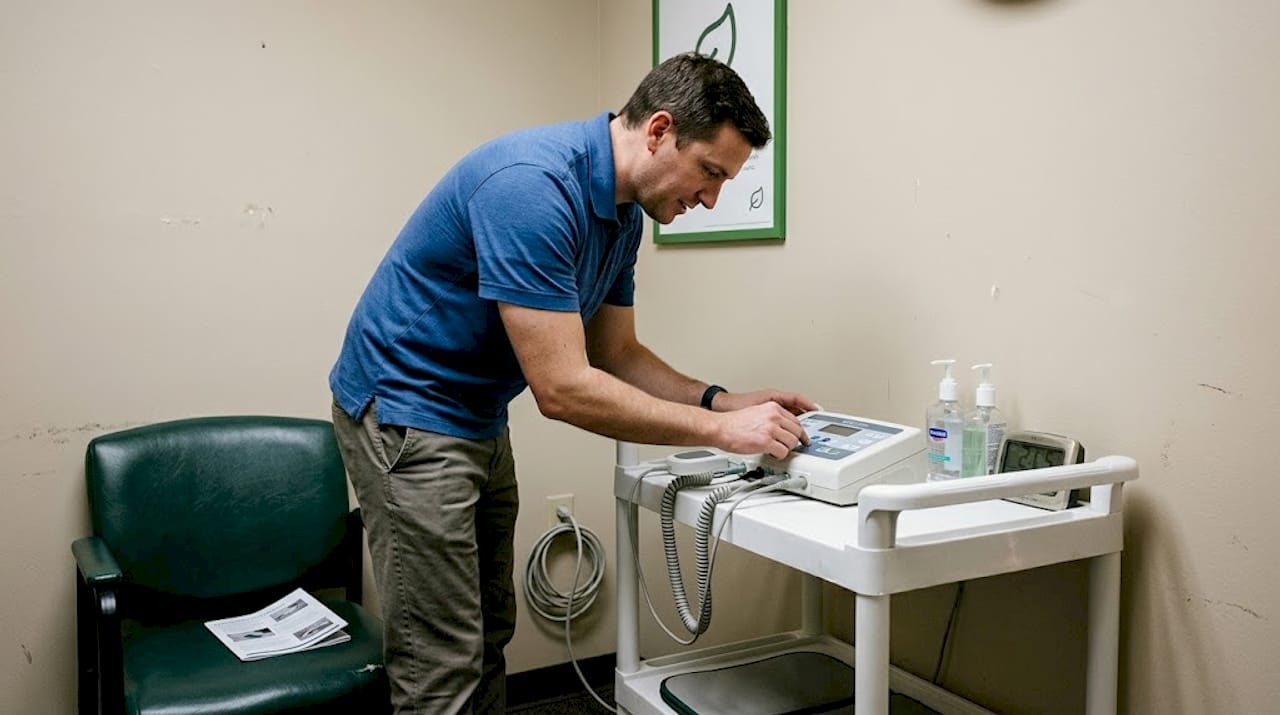
That definition is broader than most people realize. It includes everything from a standard ultrasound scan to pulsed electromagnetic field therapy applied through a coil held near your body. The unifying thread is that nothing penetrates tissue in a disruptive way. Your body's surface stays intact.
"Non-invasive does not mean passive. Many of these therapies deliver measurable physiological changes through energy, light, sound, or magnetic fields, without a single incision."
Key attributes shared by all non-invasive therapies include:
- No skin penetration or incisions
- No general anesthesia required in most cases
- External delivery of therapeutic energy or stimulation
- Shorter or no recovery time compared to surgical alternatives
- Adjustable intensity based on individual tolerance and response
A common misconception is that non-invasive automatically means mild or superficial. That is not true. Focused ultrasound, for example, can target deep brain structures with millimeter-level precision. Transcranial magnetic stimulation reaches cortical neurons through the skull. The skin stays unbroken while the therapeutic effect occurs at depth.
Another misconception is that these therapies lack scientific backing. In reality, many have decades of peer-reviewed research and regulatory approvals supporting their use. Exploring holistic health treatments today reveals just how wide and well-validated this landscape has become.
Who tends to benefit most? People living with chronic pain, neurological conditions, musculoskeletal issues, stress-related disorders, or those who want to support general wellness without the risks associated with surgery or long-term pharmaceutical use. The role of alternative therapies in mainstream healthcare is growing precisely because this population is enormous and underserved by conventional approaches alone.
Age, overall health status, and treatment goals all shape which non-invasive option fits best. That personalization piece matters enormously, and we will return to it throughout this article. For now, the key takeaway is simple: non-invasive therapy is rigorous, evidence-based, and far more powerful than the name might suggest.
Core methods and technologies in non-invasive therapy
With the groundwork laid, let's break down the core non-invasive therapy methods you might encounter. Common methodologies include energy-based therapies such as ultrasound, laser, radiation like radiosurgery such as Gamma Knife, pulsed electromagnetic field (PEMF) therapy, photobiomodulation (PBM), transcranial magnetic stimulation (TMS), transcranial direct current stimulation (tDCS), and focused ultrasound neuromodulation.
That list can feel overwhelming, so here is a practical comparison to help you orient:
| Therapy | Primary mechanism | Common uses | Typical session length |
|---|---|---|---|
| Therapeutic ultrasound | Sound wave vibration | Musculoskeletal pain, tissue healing | 5 to 15 minutes |
| Low-level laser (PBM) | Light energy absorption | Inflammation, wound healing, nerve pain | 10 to 20 minutes |
| PEMF therapy | Electromagnetic pulses | Bone healing, pain, mood | 20 to 60 minutes |
| TMS | Magnetic field pulses | Depression, OCD, chronic pain | 20 to 40 minutes |
| tDCS | Mild electrical current | Cognitive function, pain modulation | 20 to 30 minutes |
| Gamma Knife radiosurgery | Focused radiation beams | Brain tumors, trigeminal neuralgia | 1 to 4 hours |
| Focused ultrasound | Converging sound waves | Essential tremor, Parkinson's, tumors | 2 to 4 hours |
| Cryotherapy | Cold thermal application | Inflammation, recovery, skin conditions | 2 to 4 minutes |
Each method works through a distinct biological pathway. Photobiomodulation, for instance, uses specific wavelengths of red or near-infrared light to stimulate cellular energy production in mitochondria. This increases ATP output, reduces oxidative stress, and promotes tissue repair at the cellular level. It is used for everything from sports injuries to neuropathic pain.
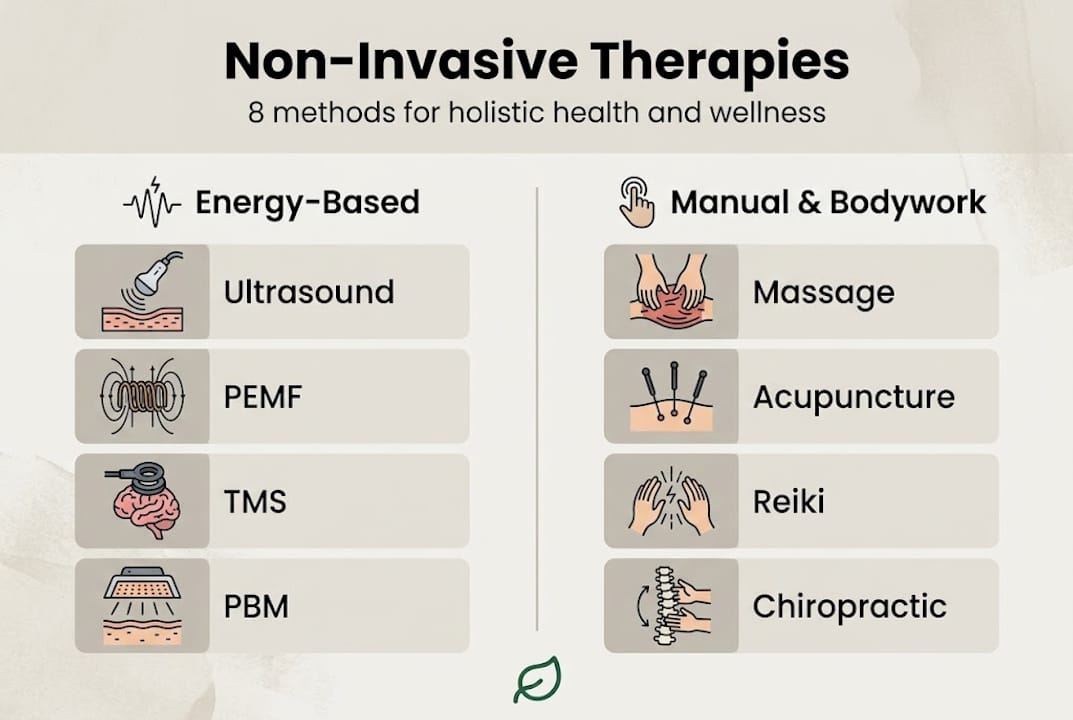
PEMF therapy works differently. Pulsed electromagnetic fields interact with charged particles in cells, influencing ion transport across membranes and supporting the body's natural electrical rhythms. Research links it to faster bone healing and reduced inflammation, and it is particularly popular among people recovering from orthopedic conditions.
TMS is one of the most studied options in the group. A coil placed near the scalp generates brief magnetic pulses that stimulate or inhibit specific brain circuits. The FDA has cleared it for major depressive disorder and obsessive-compulsive disorder, and clinical research is expanding into chronic pain and PTSD.
Not every method suits every person. Contraindications are real. Metal implants, pacemakers, pregnancy, and certain neurological conditions can rule out specific therapies entirely.
Pro Tip: Before exploring any energy-based therapy, bring a complete list of your implants, medications, and health conditions to your initial consultation. A qualified provider will screen you carefully. Exploring top holistic therapies in a curated, verified directory helps you avoid unqualified practitioners who skip this step.
The breadth of options in evidence-based alternative treatments means you are rarely limited to just one path. Many people combine two or three complementary methods for a more rounded approach.
Evidence for effectiveness: What the science says
Understanding the core methods, we now turn to what research and clinical practice reveal about how well these therapies actually work.
The evidence base varies by therapy and condition, but several stand out as particularly well-supported:
- TMS for depression: Multiple large-scale clinical trials show response rates between 50 and 60 percent in patients who did not respond to antidepressants. Remission rates sit around 30 to 35 percent, which is clinically significant for a treatment-resistant population.
- Focused ultrasound for essential tremor: FDA-cleared since 2016, with studies showing up to 47 percent improvement in tremor scores immediately following treatment and sustained benefit at 12-month follow-ups.
- PEMF for bone healing: The FDA cleared PEMF devices for non-union fractures in the 1970s, and subsequent decades of research confirm meaningful acceleration of bone repair.
- PBM for musculoskeletal pain: A 2022 meta-analysis covering over 3,500 patients found statistically significant pain reduction across knee osteoarthritis, neck pain, and low-back pain conditions.
- Cryotherapy for recovery: Widely used in sports medicine, with evidence supporting reduced delayed-onset muscle soreness and faster return to training after high-intensity exercise.
Here is how some key therapies compare on evidence strength:
| Therapy | Evidence level | Best-supported conditions | Key limitation |
|---|---|---|---|
| TMS | Strong (FDA cleared) | Depression, OCD | Requires many sessions |
| Focused ultrasound | Strong (FDA cleared) | Essential tremor, Parkinson's | High cost |
| PEMF | Moderate to strong | Bone healing, pain | Variable device quality |
| PBM | Moderate | Pain, inflammation, tissue repair | Dose standardization needed |
| tDCS | Emerging | Cognitive rehab, pain | Research still maturing |
A critical insight from current clinical literature is worth highlighting: results are rarely instant. Research consistently shows that cumulative sessions are needed, combining treatment with physical therapy creates synergy, and patient selection is key, particularly for therapies targeting smaller or more accessible tissue sites. Ongoing research continues to optimize parameters for long-term neuroplastic changes.
This means the "try it once and see" approach often undersells what these therapies can do. A person who does three TMS sessions and stops will have a very different experience than someone who completes a full protocol of 30 to 36 sessions.
Experts also emphasize that the evidence and outcomes for non-invasive therapies are strongest when treatment is personalized. A one-size-fits-all protocol rarely delivers the same results as one calibrated to your specific condition, symptom profile, and treatment history.
Safety is generally favorable across the board. Most non-invasive therapies carry minimal side effects. TMS can cause mild scalp discomfort or temporary headache. PBM is generally very well tolerated. PEMF is considered safe for most adults outside of contraindicated groups.
Understanding why holistic health matters in a broader context helps frame why this evidence base matters so much. Choosing non-invasive therapies is not just about avoiding surgery. It is about working with your body's own systems rather than overriding them.
How to choose and apply non-invasive therapies for holistic wellness
Armed with the evidence, let's look at how you can make confident, informed decisions about using non-invasive therapies for your health.
The process works best as a series of deliberate steps rather than a single rushed decision. Here is what a thoughtful approach looks like:
- Step 1: Clarify your goals. Are you managing chronic pain, supporting recovery, addressing a mental health condition, or pursuing general wellness? Your goal shapes which therapies are even worth researching.
- Step 2: Research your options. Not all therapies are created equal for all conditions. Use peer-reviewed summaries, treatment libraries, and credible wellness platforms to match evidence strength to your specific concern.
- Step 3: Consult a qualified provider. This is non-negotiable. A proper intake assessment screens for contraindications, establishes a baseline, and allows the provider to build a protocol rather than a one-off session.
- Step 4: Verify credentials. Ask about training, certifications, and the specific devices or modalities used. Knowing how to find safe holistic providers protects you from unqualified practitioners who may use substandard equipment or skip safety screening.
- Step 5: Set realistic expectations. Discuss likely timelines, expected response curves, and what benchmarks indicate progress. Ask what happens if your response is slower than typical.
- Step 6: Monitor and adjust. Track your symptoms between sessions and report changes to your provider. Adjustments mid-protocol are normal and often necessary.
Practical session tips matter too. Arrive well-hydrated, especially for therapies that influence cellular function like PEMF or PBM. Wear comfortable clothing that allows easy access to the treatment area. Avoid caffeine for a few hours before TMS sessions, as it can affect cortical excitability. Ask your provider about anything that feels unclear before the session begins, not during it.
Combining non-invasive therapies with other holistic approaches often amplifies results. Acupuncture paired with PBM, for example, addresses both energetic and cellular dimensions of pain. Movement-based practices like yoga or tai chi support the neuroplastic changes that TMS initiates. Nutrition and sleep hygiene form the foundation that any therapy builds on.
Pro Tip: Keep a personal outcome journal. After each session, note your pain level, mood, energy, and sleep quality on a simple 1 to 10 scale. Over weeks, patterns emerge that help both you and your provider fine-tune the approach. This habit transforms passive receiving into active participation in your own healing.
Your wellness path is unique. Matching the right explore holistic treatments to your specific body, history, and goals is what separates a good outcome from a remarkable one.
Why 'non-invasive' sometimes means more than you think
Stepping back, let's consider what truly makes non-invasive therapy powerful for holistic health, and what most guides miss.
Most articles treat non-invasive as a technical descriptor. A procedure either breaks the skin or it does not. But in holistic practice, the concept carries deeper meaning. It speaks to a philosophy of working with the body rather than acting upon it forcibly.
We have noticed that people who seek out non-invasive options are often responding to something beyond physical symptoms. They want agency. They want healing that respects the body's intelligence rather than bypassing it. That is why clients seek natural remedies at such high rates, even when more aggressive options are available.
The real power of non-invasive therapy is its adaptability. Unlike surgery, which commits you to a fixed intervention, non-invasive protocols can be paused, adjusted, or combined with other modalities without compounding risk. This flexibility makes personalization genuinely possible in a way that invasive approaches rarely allow.
We also believe that multidisciplinary care consistently outperforms single-modality thinking. Energy-based therapies work best when they are part of an integrated plan that addresses movement, nutrition, sleep, and emotional wellbeing together. Holistic care alternatives are not competitors to conventional medicine. They are collaborators in a richer, more complete model of health. More aggressive does not mean more effective. Gentler can go deeper, when it is applied with precision and intention.
Discover your holistic health path with GoHolistic
If you are ready to take the next step in holistic healing, here is how GoHolistic can help. GoHolistic connects you with a curated library of over 200 therapy types, all evidence-reviewed and clearly explained, so you can browse evidence-based treatments at your own pace without information overload.
When you are ready to move from research to action, our verified provider directory makes it straightforward to find trusted providers near you, filtered by specialty, modality, and location. Every practitioner in our network is screened for credentials and training. You can also connect with wellness practitioners through our community hub, where personalized AI-powered recommendations help match your health concerns to the right therapies. Your journey is yours. We are simply here to make the path clearer.
Frequently asked questions
What counts as a non-invasive therapy?
Any therapy that does not break the skin or enter the body, such as ultrasound, light, or energy-based treatments, is considered non-invasive. This includes methods like PEMF, TMS, photobiomodulation, and therapeutic massage.
Is non-invasive therapy safe for everyone?
Most non-invasive therapies are well-tolerated, but safety depends on individual health conditions, and patient selection is key for achieving the best outcomes. Always disclose implants, medications, and medical history before starting any new therapy.
What results can I expect from non-invasive treatments?
Results vary widely by method and condition. Research consistently shows that cumulative sessions are needed and that outcomes improve significantly when treatment is personalized and combined with supportive lifestyle practices.
Do I need a referral to start non-invasive therapy?
While some therapies like TMS or focused ultrasound may require a physician referral, many holistic and energy-based treatments are directly accessible through certified holistic providers without a formal referral.