
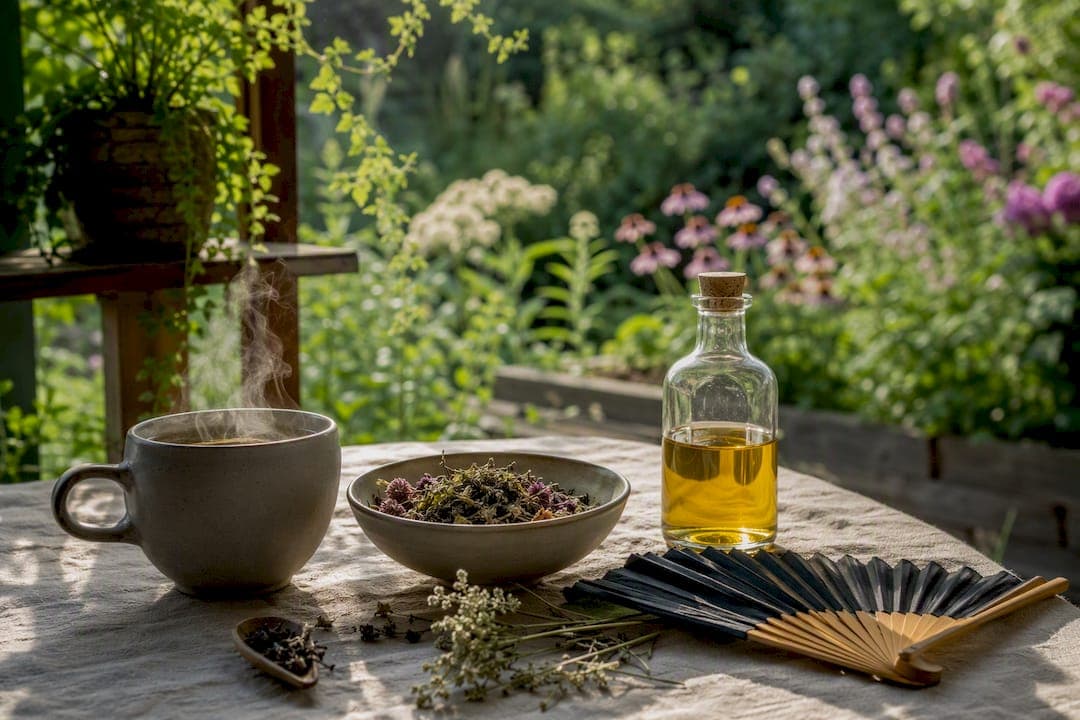
Evidence supports lifestyle changes and mind-body practices as the most consistently helpful menopause natural remedies, while herbal supplements like black cohosh and red clover show modest, inconsistent results at best. That gap matters because supplements aren't regulated the way medications are, and some interact with common drugs or carry risk for women with certain health histories.
Start here, today, with steps that have real evidence behind them:
- Shift toward a Mediterranean-style eating pattern
- Add 30 minutes of moderate exercise most days
- Set a consistent sleep schedule and cool your bedroom
- Try paced breathing during hot flash episodes
- Talk to a clinician before adding any herbal supplement
Key Takeaways
Lifestyle changes and mind-body therapies show the most consistent evidence for menopause symptom relief, while herbal supplements remain modest, inconsistent, and require clinician input before use.
| Point | Details |
|---|---|
| Start with lifestyle first | Mediterranean-style eating, regular exercise, and sleep hygiene have the strongest evidence base. |
| Treat herbs cautiously | Black cohosh, red clover, and soy isoflavones show modest or inconsistent results, not guaranteed relief. |
| Watch for interactions | St. John's wort, SSRIs, and anticoagulants can interact with several menopause supplements. |
| Expect gradual results | Give lifestyle changes 4-12 weeks and supplements 6-8 weeks before judging effectiveness. |
| Get expert guidance | Goholistic connects you with verified practitioners and evidence summaries to build a personalized plan. |
Table of Contents
- Menopause Natural Remedies at a Glance
- Lifestyle Changes with the Strongest Track Record
- Herbal Supplements: What the Research Actually Shows
- Mind-Body Therapies Worth Considering
- How to Reduce Risk Before You Try Anything New
- What Results Should You Actually Expect?
- What the Research Consensus Actually Says
- Frequently Asked Questions
- Sources
Menopause Natural Remedies at a Glance
You don't need to try everything at once. Here's a quick scan of what's worth your time first, and what carries weaker evidence.
- Mediterranean-style diet — modest evidence for hot flashes and mood
- Regular exercise — modest evidence for sleep, mood, and weight
- Weight management — modest evidence for hot flash frequency
- Soy isoflavones — inconsistent evidence for hot flashes
- Black cohosh — inconsistent evidence for hot flashes
- Red clover — limited evidence for hot flashes
- Flaxseed — limited evidence for hot flashes and lipids
- Yoga and mindfulness — modest evidence for sleep and mood
A 2026 meta-analysis of complementary and traditional interventions found real signals of benefit across these approaches, but also significant inconsistency between trials, a reminder that "natural" doesn't mean "guaranteed." If your hot flashes are frequent and disruptive, or you're managing a condition like breast cancer or a clotting disorder, pair any of these with clinical guidance rather than going it alone.
Lifestyle Changes with the Strongest Track Record
Lifestyle interventions carry the most consistent evidence of anything in this article, and they're the ones your clinician will bring up first. The Mediterranean diet, rich in vegetables, olive oil, fish, and whole grains, is linked to lower inflammation and may ease hot flashes and mood swings. Pair it with adequate calcium and vitamin D, since bone density starts declining faster once estrogen drops.
Movement matters just as much as food. Here's a simple weekly structure worth building toward:
- Aerobic exercise, three to five sessions weekly (walking, cycling, swimming)
- Resistance training, twice weekly, to protect bone and muscle mass
- Flexibility or balance work, such as stretching or tai chi, a few times a week
- Consistent sleep and wake times, even on weekends
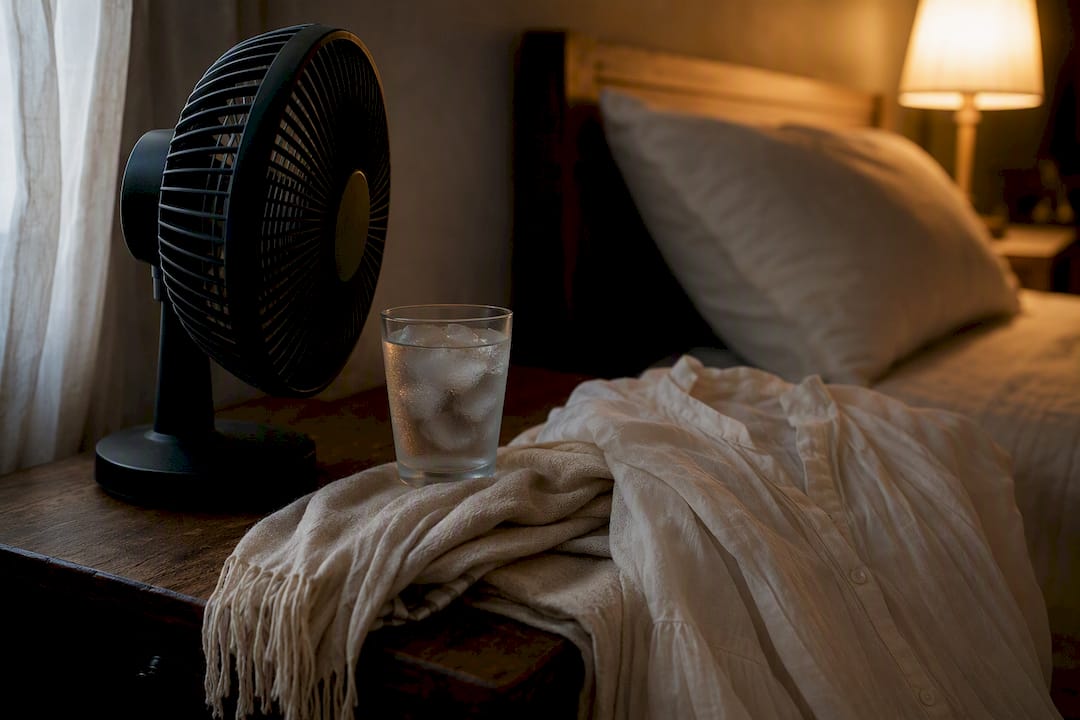
- A cool, dark bedroom with breathable bedding and layered sleepwear for night sweats
Weight management deserves its own mention. Carrying excess weight is associated with more frequent, more intense hot flashes, so even modest loss can ease symptoms over time.
Pro Tip: Keep a fan and a glass of ice water by your bed. It sounds almost too simple, but rapid cooling at the first sign of a night sweat can shorten the episode significantly.
Give this combination four to twelve weeks before judging results. Sleep often improves first, hot flash frequency tends to follow.
Herbal Supplements: What the Research Actually Shows
Six herbs and nutrients dominate the natural remedies conversation for menopause, and each deserves a clear-eyed look at both what it might do and what could go wrong.
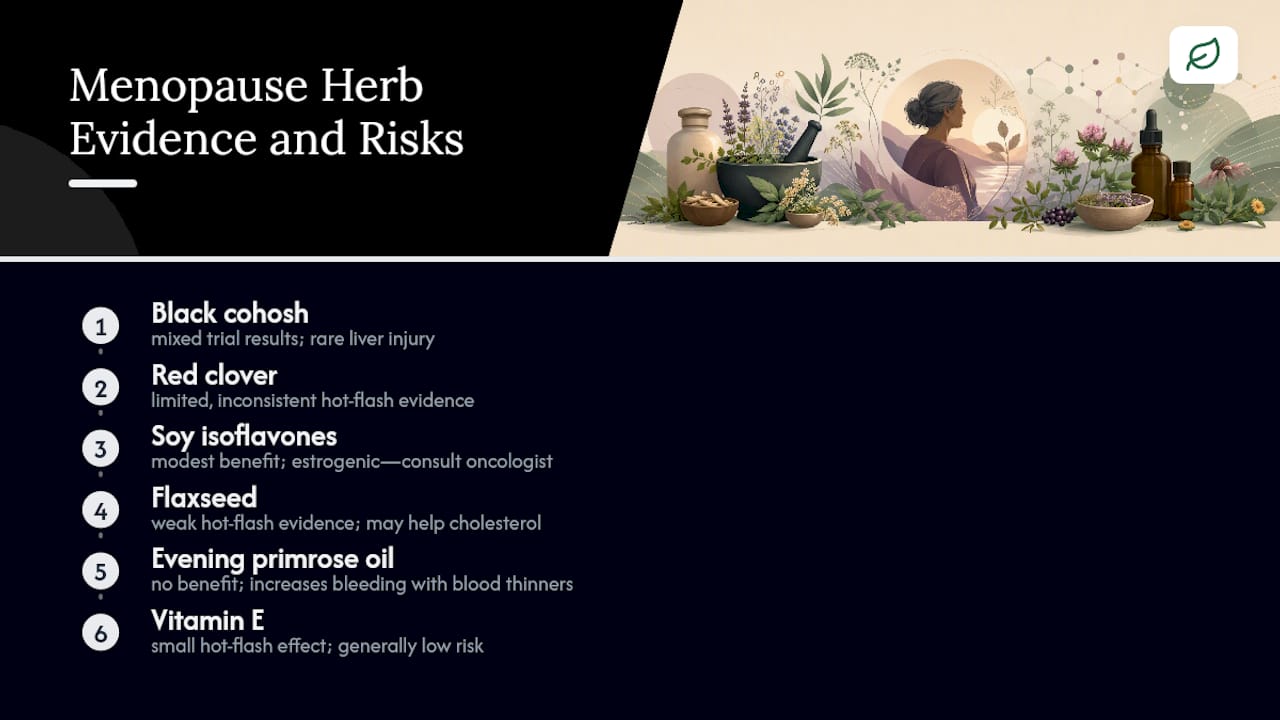
Black cohosh has been studied more than most menopause herbs, with some trials showing modest reductions in hot flashes and others showing no benefit over placebo. The NCCIH notes that results vary by extract and study quality. Rare cases of liver injury have been reported, so anyone with liver disease should avoid it or use it only under monitoring.
Red clover contains isoflavones similar to soy, but evidence for hot flash relief remains limited and inconsistent across trials.
Soy isoflavones show the most promising signal among the herbal options, with some studies pointing to modest hot flash reduction. Because soy has estrogenic activity, women with a history of hormone-sensitive breast cancer should discuss it with an oncologist first.
Flaxseed, ground or as oil, has weaker evidence for hot flashes specifically, though it may support cholesterol and digestive health as part of a broader diet.
Evening primrose oil hasn't held up well in controlled trials for hot flashes, and it can increase bleeding risk when combined with blood thinners.
Vitamin E shows only a small effect on hot flash frequency in trials, though it's generally low risk at typical doses.
Across nearly all of these, Harvard Health points out that placebo response rates run around 30% in objective studies, which is a huge reason small positive trials should be interpreted cautiously.
If you decide to try one, choose a single-ingredient, standardized extract rather than a multi-herb "menopause blend," and look for third-party testing seals like USP or NSF. Our safe herbal supplements guide walks through how to read labels and spot inflated marketing claims.
Pro Tip: Avoid starting more than one new supplement at a time. If something works, or causes a reaction, you'll want to know exactly which one it was.
Mind-Body Therapies Worth Considering
Yoga, mindfulness-based stress reduction (MBSR), acupuncture, and clinical hypnosis all show more consistent benefit than most herbal supplements, particularly for sleep, mood, and hot flash intensity.
- Yoga is linked to better sleep quality and reduced hot flash severity in several studies
- MBSR, typically an eight-week structured course, helps women cope with symptom-related stress and improves quality of life
- Acupuncture, often six to eight sessions, shows mixed but sometimes meaningful reductions in hot flashes
- Clinical hypnosis has growing support for reducing both hot flash frequency and sleep disturbance
When choosing a provider, look for certifications specific to the practice, whether that's a registered yoga teacher, a licensed acupuncturist, or a hypnotherapist trained in clinical applications. Costs vary widely by region and session count, so ask about package pricing upfront. Combining one of these therapies with the lifestyle steps above tends to produce better results than relying on either alone.
How to Reduce Risk Before You Try Anything New
Supplements don't require FDA approval before hitting the shelf, and quality varies enormously between brands. The NHS is blunt about this: herbal remedies aren't regulated like medicines, and bioidentical hormone products marketed as "natural" alternatives to HRT are not recommended as safer substitutes.
Before starting anything, run through this checklist:
- List every medication and supplement you currently take
- Flag any history of liver disease, breast cancer, or clotting disorders
- Note if you take St. John's wort, SSRIs, or anticoagulants, since these interact with several herbs
- Choose products with third-party testing seals
Then bring these questions to your clinician:
- Does this interact with anything I'm currently taking?
- Is this safe given my medical history?
- How long should I try it before deciding it isn't working?
- What side effects mean I should stop immediately?
What Results Should You Actually Expect?
Lifestyle and mind-body changes typically show benefits within four to twelve weeks. Supplements, when they work at all, usually take six to eight weeks to show any effect.
Keep the placebo effect in mind: roughly 30% of hot flash improvement in clinical trials happens in the placebo group, even measured objectively through skin temperature. That doesn't mean natural remedies are worthless, but it does mean a mild improvement after a few weeks isn't proof a supplement is doing the heavy lifting.
- Mild, occasional symptoms: lifestyle changes and mind-body therapy are reasonable first steps
- Moderate symptoms affecting sleep or daily function: consider adding a discussed supplement or mind-body therapy
- Severe symptoms or major quality-of-life impact: talk to a clinician about non-hormonal prescriptions or HRT
What the Research Consensus Actually Says
The 2026 meta-analysis covering complementary and traditional interventions found real hints of benefit, tempered by heterogeneity across trial design, population, and dosing that makes firm conclusions difficult.
No single dietary supplement or herbal remedy has been shown to consistently outperform placebo for hot flashes, according to major health organizations. Lifestyle and mind-body approaches, by contrast, carry more consistent support across trials.
- Herbal supplements: inconsistent evidence overall
- Lifestyle changes (diet, exercise, sleep): moderate, consistent evidence
- Mind-body therapies (yoga, MBSR, acupuncture, hypnosis): moderate evidence, growing guideline support
A Balanced Way to Approach This
My honest read on the evidence: lifestyle and mind-body approaches deserve to go first, not last, because they're the only category with consistent support across trials. Herbs can be worth a cautious try, one at a time, with a clinician looped in. Goholistic's practitioner directory exists precisely for that conversation, matching you with verified professionals across acupuncture, nutrition, and integrative medicine.
Finding a Practitioner Who Can Guide Your Plan
Sorting through soy isoflavones, acupuncture schedules, and sleep hygiene tips is a lot easier with someone qualified in your corner. Goholistic's platform gives you an AI-personalized recommendation based on your specific symptoms, whether that's hot flashes disrupting sleep or mood swings affecting your day, then connects you with a curated directory of verified holistic practitioners across acupuncture, nutrition, and mind-body disciplines.
Every practitioner listing includes evidence summaries pulled from the same research standards referenced throughout this guide, so you're not guessing which claims hold up. Start by searching holistic health practitioners in your area, review their credentials and specialties, and book a consultation directly through the platform when you find a fit. If you'd rather browse treatment options first, the treatments directory breaks down therapies by the symptoms they target.
Frequently Asked Questions
What are the most effective menopause natural remedies for hot flashes? Lifestyle measures like regular exercise, weight management, and layered clothing show the most consistent benefit. Among supplements, soy isoflavones show the most promising, though still modest, evidence.
Are natural remedies for PMS the same as menopause remedies? Some overlap exists, particularly with mind-body practices like yoga and mindfulness, but hormonal mechanisms differ. PMS natural remedies often focus on cycle-linked symptom timing, while menopause remedies target the broader hormonal decline.
How long do herbs for PMS or menopause take to work? Most supplements need six to eight weeks of consistent use before you can judge their effect, and many show no benefit beyond placebo even after that.
When should I see a doctor instead of trying remedies at home? See a clinician if symptoms are severe, disrupt daily function, or you have a complex medical history involving cancer, liver disease, or clotting disorders. Non-hormonal prescriptions and HRT remain effective options worth discussing.
Is it safe to combine multiple menopause supplements at once? Combining supplements raises interaction risk and makes it harder to identify what's helping or causing side effects. Introduce one product at a time and discuss your full list with a clinician.
This article is general information, not a substitute for advice from a qualified doctor. Consult a qualified healthcare professional about your own circumstances before acting on anything here.
Sources
- A 2026 meta-analysis of complementary and traditional interventions
- Menopause supplements: Effective relief or empty promises? - Harvard Health
- Natural Relief for Menopause: What Works and What to Watch Out For - University of Maryland Medical System Health Hub
- Menopausal Symptoms and Complementary Health Approaches - NCCIH
- Herbal remedies and complementary medicines for menopause symptoms - NHS