

Magnesium can modestly improve sleep, but mostly for people who are running low on it or dealing with mild anxiety, restless legs, or nighttime muscle cramps. If that sounds like you, a reasonable starting point is a moderate dose of elemental magnesium, taken about half an hour to an hour before bed. It won't knock you out like a sedative, and it isn't a fix for every sleep problem.
Before you start, check in with your kidney function and current medications. Magnesium interacts with several common drugs, and people with kidney disease need a doctor's clearance before adding any supplemental dose.
Here's the quick version to work from tonight:
- Dose: 200 to 350 mg elemental magnesium (check labels carefully, since compound weight and elemental weight are not the same thing)
- Timing: 30 to 60 minutes before bed, ideally with a light snack to ease digestion
- Form: Glycinate is the gentlest starting point for most people
- Safety check: Confirm kidney health, current medications, and start low if you're prone to GI upset
- Give it time: Four to twelve weeks of consistent use before you judge whether it's working
Key Takeaways
Magnesium modestly improves sleep primarily in people with low magnesium status, working through GABA regulation, melatonin support, and muscle relaxation rather than sedation.
| Point | Details |
|---|---|
| Effective dose range | Aim for a moderate amount of elemental magnesium, not the total compound weight on the label. |
| Best timing | Take it about half an hour to an hour before bed, ideally with a light snack. |
| Best form for most people | Magnesium glycinate offers gentle absorption and minimal digestive side effects. |
| Give it real time | Track outcomes for 4 to 12 weeks using a sleep diary before judging effectiveness. |
| Safety first | Confirm kidney function and check interactions with PPIs or diuretics before starting. |
| Personalized support | Goholistic connects readers with verified practitioners for tailored magnesium and sleep guidance. |
Table of Contents
- How Magnesium May Help You Sleep
- What Does the Clinical Evidence Actually Show?
- Which Magnesium Form Is Best for Sleep?
- How Much Magnesium Should You Take and When?
- Is Magnesium Safe? Side Effects and Drug Interactions
- Who Is Most Likely to Benefit From Magnesium?
- Building Magnesium Into Your Nightly Routine
- Why Trust This Guide
- What Actually Matters Once You Cut Through the Noise
- Get Personalized Guidance From a Verified Practitioner
- Frequently Asked Questions
- Sources
How Magnesium May Help You Sleep
Magnesium doesn't act like a sedative flipping a switch in your brain, unlike typical sleep supplements such as those found in the Sleep Formula | PRYM Wellness Shop. It works more like a set of small adjustments across several systems that all touch sleep, which is part of why the effect feels subtle rather than dramatic.
The clearest mechanism involves GABA, the neurotransmitter that quiets down brain activity. Magnesium helps regulate GABA receptors while also moderating NMDA receptors, which handle excitatory signaling. Picture your nervous system as a dimmer switch rather than an on/off toggle. Magnesium doesn't shut things off. It helps turn the dial down enough that your brain can settle into sleep instead of running hot into midnight.
Magnesium also plays a supporting role in melatonin synthesis, the hormone your body produces as darkness signals your circadian clock to wind down. It doesn't replace melatonin production, but adequate magnesium status appears to support the pathway that makes melatonin regulation work smoothly. This is one reason people sometimes ask whether it's melatonin or magnesium for sleep that makes more sense to try first. They're not competing for the same job. Melatonin nudges your timing, while magnesium supports relaxation and the biochemical scaffolding around it.
Then there's the muscle side. Magnesium is essential for normal skeletal muscle relaxation, which matters directly if restless legs or nighttime leg cramps are what's pulling you out of sleep. A PMC/NIH mechanistic review lays out these pathways clearly: the biological plausibility is strong, but the review is equally clear that interventional trial results are still mixed and often limited by small sample sizes.

A quick reality check: if your sleep issues stem from screen time, an irregular schedule, or high caffeine intake late in the day, magnesium isn't going to override those habits. It works best as a support to your existing routine, not a replacement for one.
A few reasons the effect varies so much person to person:
- Baseline magnesium status differs widely, and only people starting from a deficit tend to notice a clear shift.
- Absorption varies by form, gut health, and what else you're taking alongside it.
- Individual sensitivity to GABA modulation isn't uniform.
- Effects build gradually. A single dose rarely produces a noticeable change the first night.
If you're also managing anxiety alongside restless sleep, pairing magnesium with other calming practices tends to compound the benefit. Our guide to holistic stress relievers covers several approaches that work well alongside a magnesium routine rather than in place of it.
What Does the Clinical Evidence Actually Show?
The research on magnesium and sleep is encouraging but modest, and it's worth being honest about that distinction instead of overselling it.
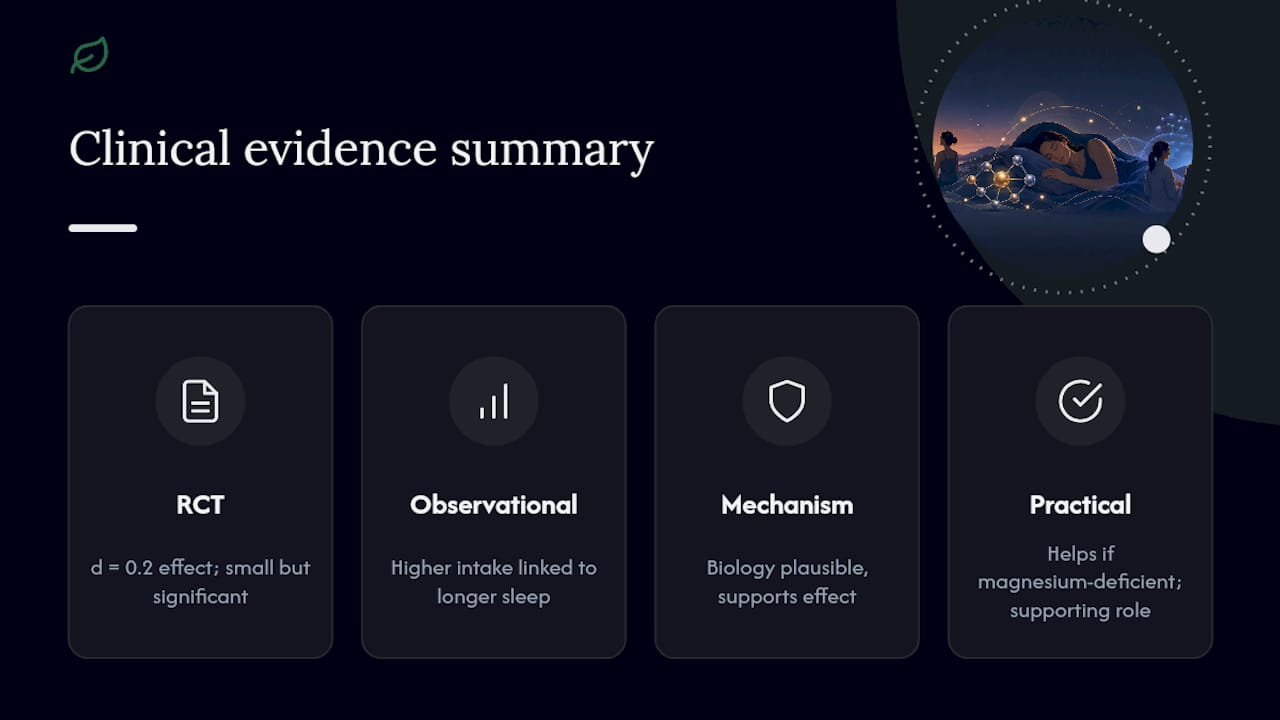
The most concrete data point comes from a randomized, double-blind, placebo-controlled trial testing magnesium bisglycinate at a moderate dose of elemental magnesium daily. Over several weeks, adults reporting poor sleep showed a small but statistically significant improvement in insomnia severity, measured by the Insomnia Severity Index, with an effect size of d = 0.2. That's a real, measurable signal, not a placebo-level null result, but it's also not a dramatic transformation. An effect size that small means most participants noticed a modest shift, not a night-and-day difference.
Observational research adds a complementary layer. Cohort studies tracking dietary magnesium intake have found associations between higher magnesium consumption and both longer sleep duration and better subjective sleep quality, based on findings referenced in PMC's observational research. Association isn't causation, though. People who eat more magnesium rich foods, like leafy greens, nuts, and whole grains, may also have healthier overall diets and lifestyles that independently support better sleep.
"Mechanistic plausibility is strong, but interventional results remain mixed, underscoring the need for larger, well-controlled trials before magnesium can be positioned as a primary sleep intervention." This is the core tension running through the PMC/NIH review on magnesium and sleep disorders: the biology checks out, but the clinical trial base is still thin.
Here's how the major evidence stacks up:
Translating this into something you can act on: magnesium supplementation carries the most confidence for people who are actually deficient or borderline low, less so for people with already-adequate magnesium status and unrelated sleep issues. If you sleep poorly because of stress, screen exposure, or an irregular schedule, magnesium is a supporting player at best, not the headline fix. If your sleep struggles come with muscle cramps, restless legs, or a diet low in magnesium-rich foods, the odds of noticing a real benefit go up.
Which Magnesium Form Is Best for Sleep?
Not all magnesium supplements behave the same way once they hit your gut, and the form you choose matters as much as the dose.
Magnesium glycinate is the form most frequently recommended for sleep specifically, and for good reason. It's bound to glycine, an amino acid that has its own calming properties, and this pairing may deliver benefits beyond magnesium alone. Some research on magnesium glycinate vs citrate points to early evidence favoring glycinate specifically for reducing insomnia symptoms. It also tends to be gentle on the stomach, with a lower risk of the laxative effect that plagues other forms.
Magnesium citrate absorbs well and is widely available, but it has a well-earned reputation for loosening stools. If you already deal with constipation, that side effect might actually work in your favor. If you don't, citrate can turn a bedtime supplement into an unwelcome middle-of-the-night bathroom trip. This is the heart of the magnesium citrate vs glycinate decision most people land on: citrate for digestive support, glycinate for a gentler nightly routine.
Magnesium threonate is newer to the market and marketed heavily around brain penetration, since some early animal research suggests it crosses the blood brain barrier more effectively than other forms. Human sleep-specific trials are still limited, so treat the brain-boosting claims with some healthy skepticism until more evidence accumulates.
Magnesium oxide, found in many cheap multivitamins and drugstore supplements, has notably poor bioavailability. Your body absorbs a relatively small fraction of it compared to glycinate or citrate, which makes it a weaker pick if sleep support is your specific goal.
Topical magnesium sprays and lotions are popular, but the evidence for meaningful transdermal absorption is thin. Guidance from Mayo Clinic Press on magnesium for sleep notes that topical application likely delivers very little systemic magnesium. If a nightly spray helps you unwind, that's probably the ritual and the massage doing the work, not a meaningful magnesium boost.
Pro Tip: Check the label for "elemental magnesium," not just the total compound weight. A capsule listing "magnesium glycinate 500 mg" isn't giving you 500 mg of actual magnesium; it's giving you the combined weight of magnesium plus the glycine molecules attached to it. The elemental amount, usually listed separately, is the number that actually matters for dosing.
Quick summary of where each form fits:
- Glycinate: best all-around pick for sleep, gentle on digestion
- Citrate: good absorption, useful if constipation is also a concern
- Threonate: promising but under-studied for sleep specifically
- Oxide: cheap but poorly absorbed, not ideal for this purpose
- Topical: relaxing ritual, unreliable as a systemic magnesium source
How Much Magnesium Should You Take and When?
Most of the useful trial data points to a fairly narrow, practical dosing window. According to Sleep Foundation guidance, medical experts generally recommend a moderate dose of elemental magnesium taken about half an hour to an hour before bedtime. Pushing past 350 mg doesn't necessarily buy you a better night. It mostly raises your odds of diarrhea and stomach upset.
Here's a simple way to work through it:
- Check the elemental amount on the label, not just the compound name. A bottle of magnesium glycinate might say "500 mg" on the front, but the elemental magnesium content is usually a smaller number printed in the supplement facts panel, often somewhere around 100 to 200 mg per 500 mg of compound, depending on the manufacturer.
- Do the math before you take a second capsule. If one capsule provides 100 mg elemental magnesium and your goal is 200 mg, that's two capsules, not a guess.
- Start at the lower end of the range, especially with citrate, and increase gradually if your gut tolerates it well.
- Take it about half an hour to an hour before bed, ideally with a small amount of food to reduce the chance of stomach discomfort.
- Stay consistent for four to twelve weeks before deciding whether it's actually helping. This isn't a same-night fix, and single-dose comparisons will mislead you.
The Food and Nutrition Board's supplemental guidance treats a practical ceiling for supplemental (not dietary) magnesium in most healthy adults, distinct from the magnesium you get through food. That distinction matters because your total daily magnesium, food plus supplement, is what your body is actually working with.
The trial that anchors most of the current dosing guidance used a moderate dose of elemental magnesium daily for several weeks and found a small, statistically significant improvement in insomnia severity, based on the randomized controlled trial published via Dovepress. That's a useful benchmark if you're wondering where to start rather than guessing blindly.
Is Magnesium Safe? Side Effects and Drug Interactions
Magnesium is generally well tolerated, but "generally" isn't "universally," and a few groups need to be more careful than others.
Kidney function is the biggest gatekeeper here. Your kidneys are responsible for clearing excess magnesium from your bloodstream. If kidney function is impaired, magnesium can accumulate to dangerous levels even at doses that would be perfectly safe for someone with healthy kidneys. Anyone with diagnosed kidney disease should talk to a physician before adding supplemental magnesium, full stop.
The most common side effects are digestive: diarrhea and abdominal discomfort, both of which tend to be dose-dependent and form-dependent. Citrate and oxide are more likely to cause this than glycinate.
A few drug interactions are worth knowing about:
- Proton pump inhibitors (PPIs), commonly used for acid reflux, can lower magnesium absorption over long-term use, according to NIH's Office of Dietary Supplements.
- Diuretics can either increase magnesium loss or, in some cases, cause retention, depending on the specific type.
- Certain antibiotics, including some tetracyclines and quinolones, can bind with magnesium and reduce their own absorption if taken too close together.
- People on multiple medications for chronic conditions should run any new supplement by their prescriber, since magnesium's interaction profile isn't limited to just these categories.
Stop taking magnesium and contact a clinician if you notice severe or persistent GI symptoms, unusual muscle weakness, an irregular heartbeat, or other signs that might suggest hypermagnesemia, a rare but serious buildup of magnesium in the blood. This is uncommon in people with normal kidney function, but it's worth knowing the warning signs rather than pushing through them.
If you're already taking other supplements, our guide to safe herbal supplement use walks through how to think about combining products without stacking unnecessary risk.
Who Is Most Likely to Benefit From Magnesium?
Magnesium isn't a universal sleep fix, but certain people tend to see a real, noticeable response.
You're more likely to be a responder if you fall into one of these categories:
- You eat a lot of processed food and relatively little magnesium-rich produce, nuts, or whole grains.
- You're an older adult, since magnesium absorption tends to decline with age while excretion often increases.
- You drink alcohol regularly, which depletes magnesium stores over time.
- You take medications like PPIs or certain diuretics that interfere with magnesium levels, based on NIH's health professional fact sheet.
- You deal with restless legs or nighttime muscle cramps, where magnesium's role in muscle relaxation is most directly relevant.
If two or more of these apply to you, magnesium is worth a genuine trial rather than a skeptical shrug.
Here's how to structure that trial so you get a real answer instead of a vague impression:
- Pick one form (glycinate is the reasonable default) and one consistent dose within the 200 to 350 mg elemental range.
- Take it at the same time each night, 30 to 60 minutes before bed.
- Track your sleep with a simple diary or the Insomnia Severity Index, noting sleep onset time, nighttime awakenings, and how rested you feel.
- Set checkpoints at 2, 4, and 12 weeks to review your notes rather than judging night by night.
Pro Tip: Resist the urge to change your dose, form, or timing mid-trial. Switching variables halfway through makes it impossible to know what actually worked, and you'll end up back at square one.
Building Magnesium Into Your Nightly Routine
Timing and habit-stacking make a real difference in how much benefit you get from a magnesium routine.
Take your dose 30 to 60 minutes before you actually plan to be in bed, ideally alongside a light snack rather than on an empty stomach, which reduces GI irritation for most people. Pair it with the basics of good sleep hygiene: a dark, cool room, a consistent bedtime, and cutting back on caffeine and screens in the evening. Magnesium supports your body's ability to wind down, but it can't override bright light and a 10pm espresso. If you want a broader framework for how sleep fits into overall wellness, our guide to sleep's role in holistic health is a useful next read.
If you notice GI discomfort, a few adjustments usually solve it:
- Split your dose, taking half in the afternoon and half before bed, rather than one large dose at once.
- Switch from citrate or oxide to glycinate, which tends to be gentler.
- Take it with food instead of on an empty stomach.
- Avoid stacking multiple mineral supplements at once without professional guidance, since overlapping doses of calcium, zinc, and magnesium can compete for absorption and complicate side effects.
Why Trust This Guide
This guide was written by Andrew for Goholistic, drawing on peer-reviewed clinical trials, mechanistic reviews from PMC and NIH, and consumer-facing guidance from the Sleep Foundation and NIH's Office of Dietary Supplements.
A few notes on how this was put together:
- Priority was given to randomized controlled trials and NIH-affiliated review articles over marketing claims or anecdotal reports.
- Limitations in the evidence, including small sample sizes and mixed interventional results, are called out rather than glossed over.
- Goholistic maintains a directory of holistic wellness treatments and verified practitioners for readers who want a more personalized plan than a general guide can offer.
If your sleep issues are complex or tied to other health conditions, a conversation with a licensed practitioner beats guessing your way through supplement aisles.
What Actually Matters Once You Cut Through the Noise
The evidence supports a specific, bounded claim: magnesium modestly improves sleep for people who are low in it or dealing with muscle-related restlessness, and it does so through plausible, well-documented biological pathways. It is not a sedative, and treating it like one sets you up for disappointment.
Where conventional advice falls short is in the vague, one-size-fits-all dosing you see slapped on supplement bottles. "Take one capsule nightly" ignores elemental magnesium math entirely, and it ignores that a person eating a magnesium-rich diet has a very different starting point than someone who barely touches leafy greens.
If you take one thing from this guide, prioritize the elemental magnesium calculation over brand loyalty to any particular form. Glycinate is a smart default, but the number that matters is the milligram count of actual magnesium you're getting, not the compound weight on the front label. Get that right first, then give it a real four to twelve week trial before deciding it doesn't work for you.
Get Personalized Guidance From a Verified Practitioner
Reading about elemental magnesium math and trial protocols only gets you so far. If you want someone to actually review your specific situation, medications, and sleep patterns, Goholistic connects you directly with verified holistic practitioners who specialize in sleep and nutritional support.

Unlike guessing your way through a drugstore supplement aisle, Goholistic's platform uses AI-driven analysis to match your specific concerns, whether that's restless legs, stress-related insomnia, or general fatigue, with practitioners who have relevant experience and verified credentials. Every provider listed goes through a verification process, and each treatment recommendation is backed by research summaries you can actually review before booking. You also get to compare approaches (nutritional counseling, acupuncture, or integrative sleep coaching) rather than settling for the first magnesium brand that shows up in a search.
If you're ready for a plan built around your actual health picture instead of a generic label recommendation, browse holistic health treatments and book a consultation with a practitioner who can help you get it right.
Frequently Asked Questions
Which magnesium is best for sleep? Magnesium glycinate is generally the top pick for sleep specifically, thanks to gentle absorption and a lower risk of the GI upset that comes with forms like citrate.
What's the difference between magnesium glycinate vs citrate for sleep? Glycinate tends to be gentler on digestion and may offer added calming benefits from its glycine component, while citrate absorbs well but carries a higher risk of a laxative effect.
Is melatonin or magnesium better for sleep? They work differently. Melatonin helps regulate your circadian timing, while magnesium supports relaxation and neurotransmitter balance. Some people find combining melatonin and magnesium works better than either alone, though you should introduce one at a time to see what actually helps.
How much magnesium should I take for sleep? Most evidence points to a moderate dose of elemental magnesium, taken about half an hour to an hour before bed. Going above 350 mg raises your risk of diarrhea without clear added benefit.
How long does it take for magnesium to help with sleep? Give it a consistent four to twelve week trial rather than judging after one or two nights. Single-dose effects are unreliable and don't reflect how magnesium builds up in your system over time.
Can I take magnesium every night long term? For most healthy adults, staying within the recommended range is considered safe for ongoing use, but check in with a clinician periodically, especially if you're on medications that affect magnesium levels or have any kidney concerns.
This article is general information, not a substitute for advice from a qualified doctor. Consult a qualified healthcare professional about your own circumstances before acting on anything here.
Sources
- Magnesium for Sleep: Benefits, Types, Dosage, and Side Effects — Sleep Foundation
- The Mechanisms of Magnesium in Sleep Disorders — PMC/NIH
- Magnesium bisglycinate supplementation in healthy adults reporting poor sleep: randomized, placebo-controlled trial — Dovepress (NSS)