

Prioritize a structured first 90 days, recurring value reviews, and tiered account segmentation — those three moves consistently move retention metrics faster than any other combination. If you start nothing else this week, start those.
Here is where to focus right now:
- Audit your onboarding sequence. Define checkpoints at days 7, 30, 60, and 90 with a named owner for each milestone.
- Schedule one value review call with your top five clients before the month ends. Ask what outcomes they are seeing and where gaps exist.
- Segment your client list into tiers (high-value, growth, at-risk) so you can allocate attention where it produces the most return.
Two numbers worth holding onto: reducing annual churn from 25% to 15% increases client lifetime value by roughly 67%, and 73% of chief sales officers are already prioritizing growth from existing customers over new acquisition for 2025. The math strongly favors keeping the clients you already have.
The sections below walk through the formulas, the root causes of churn, a full tactical playbook, and a 30/60/90 implementation plan you can hand to your team today.
Key Takeaways
Structured onboarding, recurring value reviews, and tiered segmentation are the three moves that most reliably increase client retention and reduce churn across service businesses of every size.
| Point | Details |
|---|---|
| Start with the first 90 days | Checkpoints at days 7, 30, 60, and 90 cut early churn — where most losses concentrate. |
| Track CRR and NRR monthly | These two metrics reveal both relationship health and revenue growth from your existing base. |
| QBRs prevent value drift | Recurring structured conversations are the highest-leverage retention ritual for service businesses. |
| Segment before you scale | Tiering clients by value lets you protect top accounts and allocate resources where they matter most. |
| Goholistic supports retention | Verified matching, AI recommendations, and repeat-booking workflows reduce churn for holistic practitioners. |
Table of Contents
- Why client retention matters more than you think
- Key retention metrics and the exact formulas to calculate them
- Common reasons clients churn and where to diagnose first
- Proven strategies that reliably increase client loyalty
- How to measure retention impact, set KPIs, and iterate
- Your 30/60/90-day implementation playbook
- How holistic practitioners and wellness marketplaces can apply these tactics
- How customer feedback loops strengthen retention
- Training and empowering your team for better client interactions
- Using CRM and automation tools to support retention
- The retention truth most businesses learn too late
- Goholistic makes client retention easier for wellness practitioners
- Sources
Why client retention matters more than you think
Client retention is the percentage of clients who stay with you over a defined period. Its inverse, churn rate, tells you how many leave. Together, they shape two of the most important financial metrics in any service business: customer lifetime value (CLV) and net revenue retention (NRR).
The business case is straightforward. Acquiring a new client costs significantly more than keeping an existing one, and existing clients tend to spend more over time, refer others, and require less support per dollar of revenue. Gartner's research confirms that 73% of CSOs now treat existing-customer growth as their primary revenue strategy — a signal that the market has already shifted its center of gravity toward retention.
Retention rates also vary sharply by industry. Statista's industry benchmarks show that media and professional services firms typically retain clients at higher rates than retail or hospitality, which means your baseline target should reflect your sector, not a generic average. Knowing where you stand relative to your industry peers is the first diagnostic step.
When retention improves by even a few percentage points, the compounding effect on predictable revenue is real. Lower churn reduces customer acquisition cost (CAC) pressure, stabilizes monthly recurring revenue (MRR), and gives your team more time to deepen relationships rather than constantly replace lost accounts.
Key retention metrics and the exact formulas to calculate them
You cannot improve what you do not measure. These six metrics form the core of any retention dashboard.
1. Customer Retention Rate (CRR) CRR = ((Clients at end of period − New clients acquired) ÷ Clients at start of period) × 100
Worked example: You start the quarter with 200 clients, acquire 30 new ones, and end with 210. CRR = ((210 − 30) ÷ 200) × 100 = 90%.
2. Churn Rate Churn Rate = (Clients lost during period ÷ Clients at start of period) × 100
3. Customer Lifetime Value (CLV) CLV = Average monthly revenue per client ÷ Monthly churn rate
Worked example: A client pays $500/month and your monthly churn rate is 5%. CLV = $500 ÷ 0.05 = $10,000.
4. Net Revenue Retention (NRR) NRR = ((MRR at start + Expansion MRR − Churned MRR − Contraction MRR) ÷ MRR at start) × 100. An NRR above 100% means existing clients are growing faster than others are leaving.
5. Logo Retention Rate The percentage of client accounts (logos) retained, regardless of revenue. Useful for tracking relationship breadth.
6. MRR/ARR Retention Tracks the dollar value of recurring revenue retained month-over-month or year-over-year, capturing both churn and expansion.
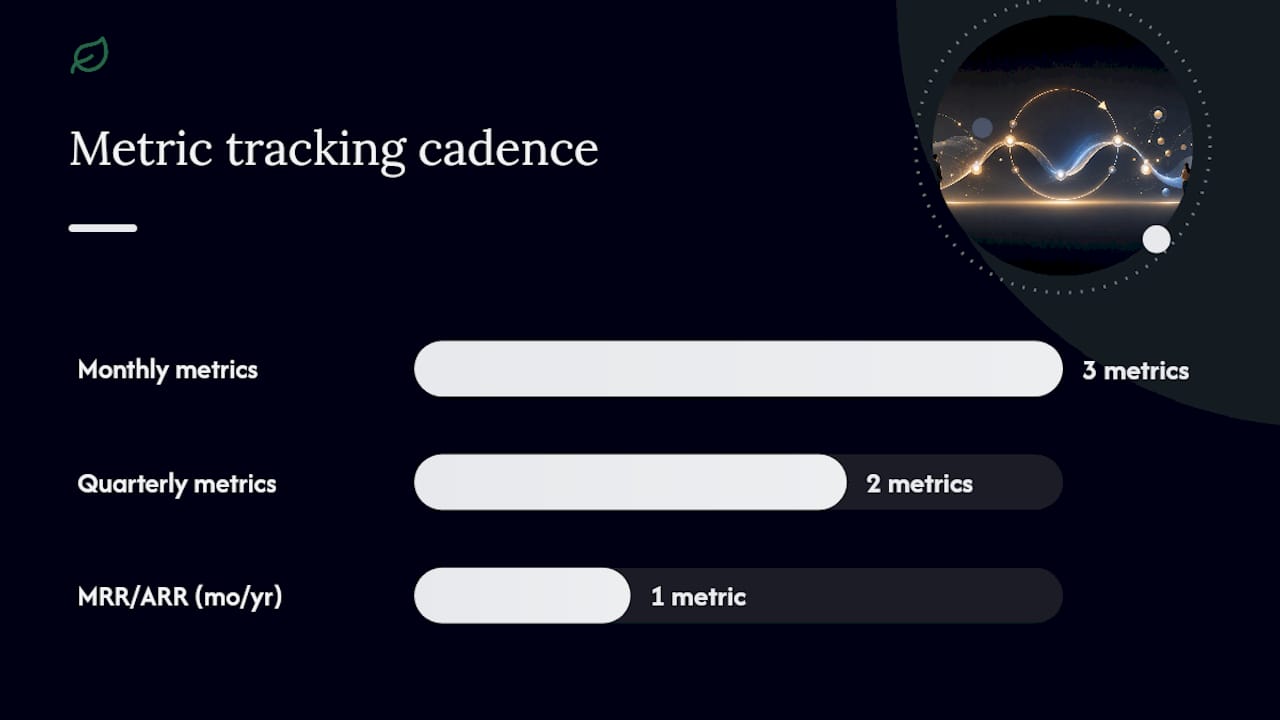
| Metric | Formula | What it reveals | Tracking cadence |
|---|---|---|---|
| CRR | ((End − New) ÷ Start) × 100 | Overall relationship health | Monthly |
| Churn Rate | (Lost ÷ Start) × 100 | Rate of client departure | Monthly |
| CLV | Avg. revenue ÷ Churn rate | Long-term client value | Quarterly |
| NRR | (Start + Expansion − Churn − Contraction) ÷ Start × 100 | Revenue growth from existing base | Monthly |
| Logo Retention | Retained logos ÷ Starting logos × 100 | Account-level breadth | Quarterly |
Compare your CRR against Statista's industry benchmarks to know whether you are above or below your sector's norm before setting improvement targets.
Common reasons clients churn and where to diagnose first
Most churn is not random. It clusters around five structural causes, and spotting the right one early saves you from applying the wrong fix.
Onboarding mismatch. Clients who do not reach a clear "first win" within the first 30 days are far more likely to disengage quietly before month three. A structured onboarding sequence with checkpoints at days 7, 30, 60, and 90 substantially reduces early churn — because it forces both sides to define what success looks like before assumptions diverge.
Value invisibility. Your work may be excellent, but if clients cannot see the outcomes, they feel like they are paying for effort rather than results. This is the most common invisible cause of churn in service businesses.

Reactive communication. When clients only hear from you when something goes wrong, or when they have to chase you for updates, trust erodes steadily. Gartner identifies warning signs of purchase regret — reduced engagement, slower response times, and fewer internal champions — as early churn signals that proactive outreach can interrupt.
Single-point relationships. If your only contact at a client account leaves, and you have no relationship with anyone else on their team, you are one personnel change away from losing the account entirely.
Poor segmentation. Treating a $50,000-per-year client the same way you treat a $5,000 one wastes your best resources on low-risk accounts and under-serves the ones that matter most.
Pro Tip: Run a quick diagnostic sweep monthly: flag any client whose usage, login frequency, or communication response time has dropped by more than 30% in the past 30 days. That single signal catches value drift before it becomes a cancellation notice.
Proven strategies that reliably increase client loyalty
Structured onboarding and the first-90-day play
The first 90 days set the tone for the entire relationship. Half of client churn in the first year happens within that window, so a deliberate onboarding sequence is not optional — it is your highest-ROI retention investment.
Mini-checklist:
- Assign a named onboarding owner before day one
- Define three "early wins" the client will experience by day 30
- Send a structured check-in at days 7, 30, 60, and 90
- Document the client's success criteria in writing and share them back
- Confirm internal stakeholder alignment on both sides by day 14
Pro Tip: At the day-30 check-in, ask one question: "On a scale of 1–10, how confident are you that we are on track to hit your goals?" Any answer below 8 is a flag that needs a follow-up call, not an email.
Recurring value conversations: QBRs and monthly reviews
Structured, recurring conversations — quarterly business reviews (QBRs), monthly value reviews, and executive alignment calls — are the highest-leverage retention rituals for service businesses. They prevent value drift by keeping outcomes visible and stakeholders aligned.
Mini-checklist:
- Monthly: send a one-page value report showing progress against agreed KPIs
- Quarterly: hold a 45-minute QBR with the client's decision-maker
- Annually: schedule an executive alignment session to reset goals
- Always end each call with a written summary of agreed next steps
- Track who attends — declining attendance is an early churn signal
Segment and protect your top clients
Not all clients deserve the same attention, and pretending otherwise is a resource drain. Tier your accounts by revenue, growth potential, and strategic fit, then design service levels accordingly.
Mini-checklist:
- Assign a dedicated account manager to your top 20% of clients
- Create a white-glove tier with faster response SLAs and proactive outreach
- Review pricing and contract terms annually for top-tier accounts
- Flag any top-tier client whose NPS drops below your threshold for immediate escalation
Product adoption and engagement levers
For SaaS products, feature adoption directly predicts retention. For service businesses, the equivalent is scheduled touchpoints that keep clients actively engaged with your work rather than passively receiving it.
Mini-checklist:
- Map the features or service components most correlated with renewal
- Build in-product prompts or scheduled calls to drive adoption of those components
- Share a "what's new" update monthly so clients feel the relationship is growing
- Celebrate client milestones (anniversaries, goal completions) with a personal note
Community, emotional banking, and surprise-and-delight
Harvard Business School Online highlights community building, personalization, and story-making as durable engagement strategies that outlast any discount or loyalty gimmick. Clients who feel part of something larger than a transaction stay longer and refer more.
Mini-checklist:
- Create a private client community (Slack channel, LinkedIn group, or in-person event series)
- Send one unexpected, personalized gesture per quarter to top-tier clients
- Share client success stories (with permission) to reinforce their identity as part of your community
- Invite key clients to co-create a product feature or service offering
Proactive churn prevention: health scores and early-warning systems
A health score aggregates signals — usage, support ticket volume, NPS, payment history, engagement frequency — into a single number that tells you which clients need attention before they ask to cancel. Gartner recommends designing preventive programs around health scores and targeted interventions rather than waiting for explicit churn signals.
Mini-checklist:
- Define 5–8 signals that correlate with churn in your business
- Assign a weight to each and build a simple health score (spreadsheet is fine to start)
- Set an alert threshold that triggers a human outreach call
- Review health scores weekly in your account management standup
Win-back and exit protocols
Not every churned client is gone forever. A structured exit interview often reveals fixable problems, and a targeted reengagement offer 60–90 days after departure can recover a meaningful share of lost accounts.
Mini-checklist:
- Conduct a 15-minute exit interview with every departing client
- Document the stated reason and the underlying reason (they often differ)
- Build a 90-day reengagement sequence for clients who left due to fixable issues
- Track win-back rate as a separate metric from new acquisition
How to measure retention impact, set KPIs, and iterate
Dashboard blueprint
Your retention dashboard needs four layers: a real-time health score view, a monthly CRR and churn trend, a cohort retention chart, and an NRR tracker. Review health scores weekly, CRR and churn monthly, and cohort data quarterly.
Set alert thresholds: a health score drop of 20+ points in 30 days triggers an immediate outreach call. A CRR decline of more than 2 percentage points month-over-month triggers a team review.
Cohort analysis
Group clients by the month they started, then track what percentage of each cohort is still active at months 3, 6, and 12. This isolates whether a retention initiative actually changed behavior for the cohort it targeted, rather than being masked by a good acquisition month.
A/B testing retention tactics
Pick one variable — subject line of a check-in email, timing of a QBR, format of a value report — and split your client base into two groups for 60 days. Measure CRR and health score movement for each group. Small, controlled tests produce cleaner signals than broad program rollouts.
| Timeline | What to expect | Effort level |
|---|---|---|
| Days 1–30 | Baseline metrics established; onboarding gaps identified | Low to medium |
| Days 31–60 | First QBRs completed; health scores operational | Medium |
| Days 61–90 | Early cohort data visible; first A/B test results | Medium to high |
| Month 4–6 | CRR trend lines emerge; NRR impact measurable | Ongoing |
Gartner's retention frameworks suggest that organizations with structured health-score programs and defined escalation paths see measurable churn reduction within two to three quarters of implementation.
Your 30/60/90-day implementation playbook
Days 1–30: Diagnose and stabilize
- Pull your current CRR, churn rate, and CLV. Set them as your baseline.
- Segment your client list into three tiers: high-value, growth-stage, and at-risk.
- Identify your five highest-risk clients and assign a named owner to each.
- Audit your onboarding sequence and add the 7/30/60/90 checkpoint structure if it is missing.
- Send a value check-in to all active clients — a simple one-pager showing progress against their stated goals.
Days 31–60: Build the rhythm
- Hold your first round of QBRs with top-tier clients.
- Launch a health score tracker (start in a spreadsheet if needed).
- Define your alert thresholds and assign escalation owners.
- Run your first exit interview with any client who churned in the past 90 days.
- Share a "what's new" update with your full client base.
Days 61–90: Measure and iterate
- Review cohort data for your earliest client groups.
- Run one A/B test on a retention touchpoint (email timing, call format, report design).
- Present retention metrics to leadership with a recommended resource allocation.
- Formalize your win-back sequence for churned clients.
- Set quarterly OKRs for CRR and NRR improvement.
| Role | Key tasks | Weekly time commitment |
|---|---|---|
| Account Manager | Health score reviews, QBRs, check-in calls | 4–6 hours |
| Sales / CS Lead | Tier segmentation, escalation calls, win-back | 2–3 hours |
| Marketing | Value reports, community content, reengagement emails | 2–4 hours |
| Leadership | Dashboard review, resource allocation, executive alignment | 1–2 hours |
Quick wins that typically require low investment and deliver measurable impact in month one: a one-page monthly value report, a day-30 check-in call for all new clients, and a health score alert for your bottom 10% of accounts (10%).
How holistic practitioners and wellness marketplaces can apply these tactics
The retention playbook above applies directly to wellness practices and platforms, with a few sector-specific adjustments worth noting.
Structured intake as onboarding. A thorough intake process — covering health history, treatment goals, and communication preferences — functions as the wellness equivalent of a day-one onboarding call. Practitioners who document client goals in writing and revisit them at each session create a visible record of progress that makes value tangible. Personalized treatment selection is one of the clearest drivers of long-term client satisfaction in holistic care.
Treatment plans as value reviews. Sharing a written treatment plan at the start of a care relationship, then reviewing it at weeks four and twelve, mirrors the QBR structure. Clients who can see their progress against a plan are less likely to disengage when results feel slow. Personalized wellness approaches consistently show better outcomes and stronger repeat-booking rates.
Marketplace-specific levers. For platforms like Goholistic, practitioner verification, detailed profiles, and AI-powered matching reduce the mismatch that causes early churn. When a client is matched to the right practitioner on the first booking, the probability of a second booking rises substantially. Repeat-booking workflows — automated reminders, follow-up prompts, and progress check-ins — extend the relationship without requiring manual effort from the practitioner.
Ethical guardrails. Retention tactics in healthcare-adjacent services carry additional responsibility. Informed consent should be documented at intake and revisited when treatment plans change. Pricing should be transparent before the first session, not revealed at checkout. Reengagement campaigns should respect client autonomy — a gentle check-in is appropriate; pressure tactics are not. Patient-centered wellness principles provide a useful framework for keeping retention efforts aligned with client wellbeing rather than just business metrics.
Pro Tip: For practitioners, the single highest-retention habit is ending every session with a brief verbal summary of progress and a confirmed next appointment. Clients who leave with a scheduled follow-up return at significantly higher rates than those who are told to "call when you're ready."
How customer feedback loops strengthen retention
A feedback loop is only useful if it closes. Collecting NPS scores or post-session surveys and then filing them away produces no retention benefit. The loop closes when feedback triggers a visible change — and when the client knows it did.
The most effective feedback cadence for service businesses combines three layers. A short pulse survey (two to three questions) after each major milestone captures immediate sentiment. A quarterly NPS survey tracks relationship health over time. An annual open-ended interview with top-tier clients surfaces strategic insights that surveys miss.
Tools like Qualtrics make it straightforward to automate survey delivery, aggregate responses, and flag scores that fall below a defined threshold for human follow-up. The key is connecting the survey platform to your CRM so that a low score automatically creates a task for the account owner rather than sitting in a reporting dashboard no one checks.
One often-overlooked step: close the loop publicly. When a client's feedback leads to a change in your process or product, tell them. A brief message saying "You mentioned X in your last survey — here is what we changed" builds more trust than any loyalty program.
Training and empowering your team for better client interactions
Retention is a team sport, and the weakest link in your client-facing team sets the ceiling for your retention rate. Training programs that focus only on product knowledge miss the higher-leverage skill: knowing how to have a difficult conversation about unmet expectations before a client decides to leave.
The most effective training combines role-play scenarios (handling a client who says "we're not seeing results"), clear escalation paths (who to call when a health score drops), and decision-making authority (can an account manager offer a service credit without approval?). Outreach and similar sales engagement platforms provide call recording and coaching features that let managers review real client conversations and give specific, behavioral feedback rather than generic advice.
Empowerment matters as much as training. An account manager who has to seek approval for every client accommodation will always respond too slowly to prevent churn. Define a clear "empowerment budget" — a dollar amount or service adjustment that any client-facing team member can offer without escalation — and you will see faster, more confident responses to at-risk signals.
Pair formal training with a monthly retention retrospective where the team reviews one churned client together, identifies the earliest signal that was missed, and agrees on one process change. That habit builds institutional memory faster than any training module.
Using CRM and automation tools to support retention
Technology does not replace relationship-building, but it removes the friction that causes good intentions to fall through the cracks. The right CRM and automation stack ensures that no check-in gets missed, no health score drop goes unnoticed, and no client anniversary passes without acknowledgment.
At the foundation, your CRM (Salesforce, HubSpot, or a wellness-specific platform like those covered in wellness client management software guides) should store every client interaction, flag upcoming renewal dates, and surface health score alerts in a single view. Without that foundation, even the best retention strategy becomes dependent on individual memory.
Automation layers on top: a sequence that sends a value report on the first of each month, a reminder that triggers a QBR scheduling email 30 days before a contract anniversary, and a re-engagement email that fires 45 days after a client's last activity. Outreach is particularly well-suited for automating multi-touch outreach sequences while keeping the communication feel personal rather than templated.
The integration that most teams overlook is connecting their feedback tool (Qualtrics, Typeform, or similar) to their CRM so that a low survey score automatically creates a high-priority task. That single connection closes the feedback loop mechanically, removing the human bottleneck that lets at-risk clients slip through.
The retention truth most businesses learn too late
The conventional wisdom says retention is a customer success problem. Build a CS team, hand them the accounts, and measure NPS. That framing is why so many retention programs underperform.
Retention is a systems problem. The CS team cannot fix a broken onboarding sequence they did not design. They cannot compensate for a product that does not deliver the value the sales team promised. They cannot rebuild a relationship that was never properly started because the handoff from sales was a forwarded email.
The businesses that consistently retain clients at above-industry rates share one trait: they treat the first 90 days as a shared responsibility across sales, delivery, and leadership — not as a CS handoff. The account manager who closed the deal stays involved through day 30. Leadership reviews the onboarding checklist for every new client above a revenue threshold. The delivery team documents early wins and shares them back to the client in writing.
That cross-functional ownership is harder to build than a QBR template, but it is what actually moves the number. Start there, not with a loyalty program.
Goholistic makes client retention easier for wellness practitioners
Practitioners who use Goholistic's verified provider directory start with a structural retention advantage: clients arrive already matched to the right discipline, treatment style, and availability, which means the first session is more likely to meet expectations and generate a second booking.
Beyond the first match, Goholistic's AI-powered treatment recommendations and curated treatment library give practitioners a ready-made tool for showing clients their progress and next steps — the equivalent of a monthly value report, built into the platform. Automated follow-up prompts and repeat-booking workflows reduce the manual effort of staying in touch between sessions. For practitioners who want to grow their client base while keeping the ones they have, Goholistic's freemium model means you can start building your profile and booking flow today without a long-term commitment. Visit Goholistic to get started.
Sources
- Client Retention: Strategies for Agencies and B2B Services in 2026 | Blog | Perspective AI
- How to Reduce Client Churn in a Service Business - Pharallax AI
- Gartner survey finds 73 percent of CSOs are prioritizing growth from existing customers for 2025
- Customer retention rates by industry worldwide | Statista
- 3 Engagement Strategies You Can Use to Retain Customers