

TL;DR:
- A wellness lead generation workflow is an automated system that captures, scores, and nurtures leads until they book an appointment. Implementing instant response, AI scoring, and behavioral sequences improves client engagement and reduces no-shows, ensuring sustainable growth. It is vital to build a data foundation first and continuously optimize based on performance metrics.
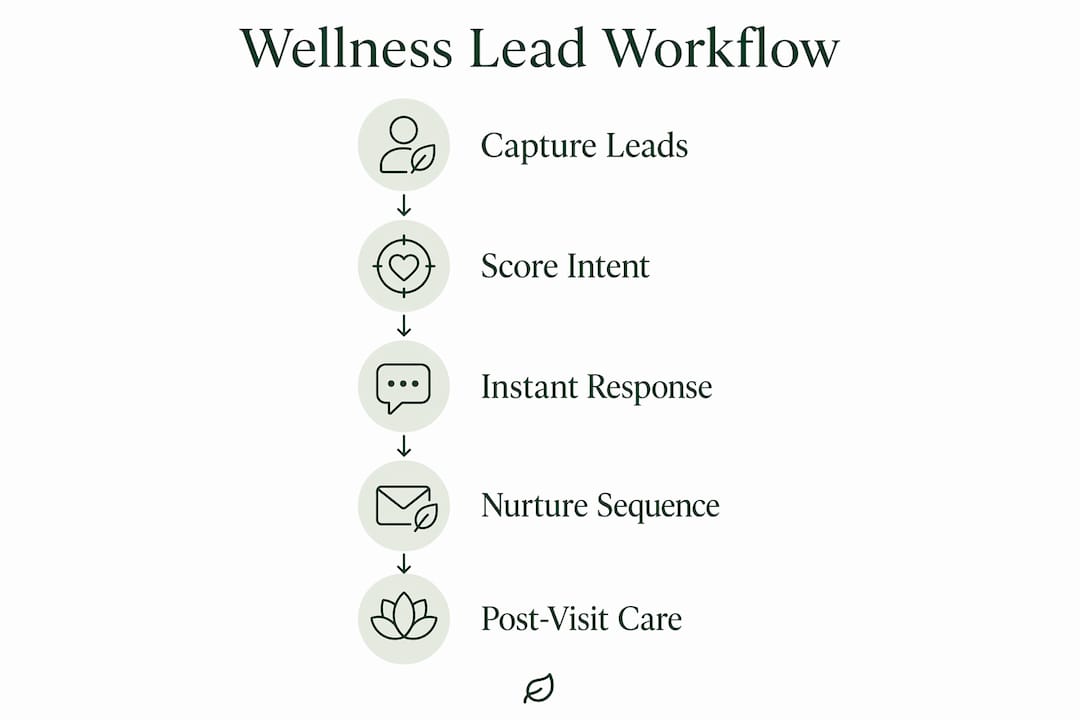
A wellness lead generation workflow is a structured, automated process that captures prospective clients, scores their intent, and moves them through personalized nurture sequences until they book. The industry term for this end-to-end system is a lead pipeline, and building one correctly is the single biggest lever wellness marketers have for improving client acquisition. Platforms like GoHighLevel, Klaviyo, and Mindbody now make this accessible without a large technical team. Email nurture sequences lasting 30–90 days increase sales by 47% compared to one-off promotional campaigns. That number reflects a fundamental truth: wellness buyers research extensively before committing, and your workflow must match that pace.
What tools does a wellness lead generation workflow require?
The right stack is the foundation of any effective lead generation system. Before you automate a single message, you need the right platforms talking to each other.
Here is a comparison of the core tool categories and their leading options:
| Category | Top Platforms | Primary Function |
|---|---|---|
| CRM | GoHighLevel, HubSpot | Contact management and pipeline tracking |
| Email and SMS Automation | Klaviyo, ActiveCampaign | Nurture sequences and broadcast campaigns |
| AI Lead Scoring | GoHighLevel AI, Salesforce Einstein | Behavioral scoring and priority routing |
| Practice Management | Mindbody, Zen Planner | Booking, attendance, and client records |
| Analytics | Google Analytics 4, Databox | Conversion tracking and ROI measurement |
A measurement-first strategy connects bookings, website data, and CRM records before you scale any automation. Without that data foundation, you are optimizing blind. Integrations between AI lead qualification systems and wellness-specific software like Mindbody and Zen Planner allow data to flow automatically from lead capture to booking without manual double entry.
Before launching your workflow, confirm these prerequisites are in place:
- A documented ideal client profile covering demographics, health goals, and preferred modalities
- Consistent data collection across all channels, including your website forms, social ads, and referral sources
- Integration readiness, meaning your CRM can receive data from your booking software and ad platforms
- A defined conversion goal for each workflow stage, such as a booked consultation or a downloaded guide
Pro Tip: Set up your tracking and integrations first, then build your automation sequences. Reversing that order means you will rebuild everything once you realize your data is incomplete.
Automated lead scoring in platforms like Klaviyo or ConvertKit uses weighted criteria including demographic fit and behavioral signals, and configuration typically takes 30 minutes. That is a small investment for a system that works around the clock qualifying your leads.
How do you set up instant lead response and qualification?
Speed is the most underrated variable in wellness client acquisition. Responding to a new lead within 60 seconds dramatically increases connection rates, and automated SMS or email makes that response consistent regardless of your team's availability.
Here is how to build this part of your workflow step by step:
- Connect your lead sources to your CRM. Every form submission, ad click, and social inquiry should trigger an immediate entry into GoHighLevel or HubSpot. No manual imports.
- Write a personalized 60-second response template. Reference the specific service or concern the lead expressed interest in. "Hi Sarah, thanks for asking about acupuncture for stress relief" outperforms "Thanks for reaching out" every time.
- Configure AI lead scoring rules. Assign point values to behaviors like visiting your pricing page, opening two or more emails, or booking a free consultation call. Demographic fit factors such as location and health goal alignment add additional weight.
- Route leads into priority streams. AI lead qualification sorts contacts into hot (A), warm (B), and cold (C) categories. Your team focuses personal outreach on the top 20–30% while automation handles the rest.
- Assign follow-up tasks automatically. Hot leads should trigger a same-day personal call task for your intake coordinator. Warm leads enter a structured email sequence. Cold leads receive educational content over 60–90 days.
The most common mistake at this stage is sending a generic enrollment email to a cold lead who just downloaded a free guide. That contact is not ready to buy. Pushing them toward a purchase decision too early increases unsubscribe rates and wastes your ad spend.
Pro Tip: Review your lead scoring rules every 30 days. Behavioral patterns shift with seasons and campaigns, and a scoring model built in January may misroute leads by April.

For a deeper look at how to structure your intake process, the wellness consultation workflow guide from Goholistic covers the full intake-to-booking sequence in practical detail.
What makes a nurture sequence work for wellness leads?
Seventy percent of wellness consumers research extensively before purchasing. That statistic defines the entire purpose of lead nurturing for wellness: your job is to be the most credible, most helpful voice during that research period.
A strong nurture sequence for wellness leads includes these elements:
- A 4–6 message welcome sequence that introduces your brand values, your practitioners' credentials, and the specific modalities you offer. This sequence builds authority before you ever mention pricing.
- Behavioral segmentation triggers that shift a lead into a different track based on their actions. A lead who clicks your Ayurveda content three times should receive Ayurveda-specific follow-ups, not a generic wellness newsletter.
- Evidence-based content that addresses the questions wellness buyers ask most: Is this treatment safe? How long before I see results? What does the research say? Goholistic's resource on evidence-based wellness practices is a strong model for this type of trust-building content.
- Predictive segmentation powered by AI, which can lift revenue by 30–60% by identifying which leads are most likely to convert and accelerating their path to booking.
"Nurture sequences function to bridge from initial interest to sustained lifestyle change. Wellness marketing requires emotional intelligence to tap into intrinsic motivation and must combat churn by clarifying usage and progress." — CSG Wellness Marketing Strategy Guide
Behavioral segmentation and AI-powered sequences reduce unsubscribe rates and build deeper trust by personalizing both the timing and content of your messages. Sending the right message at the right moment is not a luxury feature. It is the difference between a lead who books and one who forgets you exist.
Wellness buyers also respond strongly to personalized wellness content that speaks directly to their health goals. Incorporating that level of specificity into your sequences shortens the decision cycle considerably.
How do post-visit workflows improve retention and reviews?
Acquiring a client is only half the work. The post-visit phase of your lead pipeline determines whether that client returns, refers others, and leaves a review that attracts new leads organically.
Here is a proven post-visit automation sequence:
- Send a thank-you message within two hours of the appointment. Acknowledge the specific treatment received and express genuine care for their experience. This message sets the tone for the ongoing relationship.
- Request a Google review 24 hours post-visit. Post-visit review request workflows can triple the rate of Google reviews within 60 days. Reviews are the most cost-effective lead generation asset a wellness business can build.
- Deliver a follow-up booking prompt at day 7. Suggest the next logical appointment based on the treatment they received. A massage client might receive a prompt about a follow-up session or a complementary service like reflexology.
- Send appointment reminders at 24 hours and 2 hours before the next booking. Reminder sequences timed at these intervals reduce no-shows by up to 38%. Fewer no-shows means more revenue from the same number of bookings.
- Trigger a win-back sequence at day 45 for lapsed clients. Offer a returning-client incentive, such as a discounted add-on or a package renewal bonus, to re-engage contacts who have gone quiet.
Here is how the post-visit workflow impacts key business metrics:
| Automation Trigger | Timing | Expected Outcome |
|---|---|---|
| Thank-you message | Within 2 hours post-visit | Increases client satisfaction and trust |
| Review request | 24 hours post-visit | Triples Google review velocity in 60 days |
| Rebooking prompt | Day 7 post-visit | Increases repeat booking rate |
| Appointment reminder | 24 hours and 2 hours before | Reduces no-shows by up to 38% |
| Win-back sequence | Day 45 for lapsed clients | Recovers dormant revenue |
Most wellness businesses focus their automation budget entirely on acquisition. The post-visit workflow is where the real return on investment lives, and it is consistently underbuilt.
Key takeaways
A fully integrated wellness lead generation workflow, combining instant response, AI scoring, behavioral nurture sequences, and post-visit automation, is the most reliable system for sustainable wellness client acquisition.
| Point | Details |
|---|---|
| Build the data foundation first | Connect your CRM, booking software, and ad platforms before launching any automation. |
| Respond within 60 seconds | Automated SMS or email responses within 60 seconds dramatically increase lead connection rates. |
| Segment by behavior, not just demographics | Route leads into A/B/C priority streams based on actions, not just who they are. |
| Nurture over 30–90 days | Email sequences lasting 30–90 days increase sales by 47% compared to one-off campaigns. |
| Automate post-visit touchpoints | Timed review requests and reminders reduce no-shows by 38% and triple Google review velocity. |
What i have learned about wellness lead workflows after years in the field
The biggest mistake I see wellness marketers make is treating their lead workflow as a set-it-and-forget-it system. They build a solid sequence in January, hit publish, and check back in December wondering why conversions dropped in the summer. Wellness is seasonal. Stress-related inquiries spike in fall. Detox and weight-related interest peaks in January. Your workflow needs to reflect those rhythms.
The second thing I would push back on is the obsession with volume. More leads do not fix a broken nurture sequence. I have seen practices with 500 monthly leads converting worse than practices with 150, simply because the larger operation was sending generic campaigns to everyone. Separating high-, mid-, and low-intent leads into distinct automation paths is not optional if you want your staff's time to matter.
Credibility is also non-negotiable in this space. Marketing experts increasingly recommend shifting from aggressive tactics to transparency and evidence-based messaging. Wellness consumers want to know who is treating them, what the treatment involves, and how long results take. Workflows that answer those questions directly convert better than any discount offer. Goholistic's commitment to transparency in wellness reflects exactly this principle, and it is the right standard for any wellness marketing operation.
Finally, measure everything from day one. Track open rates, click rates, booking conversions, and no-show rates by sequence. The data will tell you what to fix before you waste months on a workflow that quietly underperforms.
— Andrew
Grow your wellness practice with Goholistic
If you are ready to put these strategies into practice, Goholistic gives you a head start. The platform connects wellness marketers and practitioners with a verified provider directory, a treatment library covering over 200 therapy types, and AI-powered tools that match clients to the right care.
Whether you are refining your intake process or building your first automated nurture sequence, Goholistic's ecosystem supports every stage of the client acquisition pipeline. Explore the full range of holistic health treatments available on the platform, or browse the provider directory to see how verified practitioners are already attracting and retaining clients through the platform. Get started today and put your lead workflow to work.
FAQ
What is a wellness lead generation workflow?
A wellness lead generation workflow is a structured, automated system that captures leads, scores their intent, and moves them through personalized sequences until they book a service. It typically includes CRM tools, email and SMS automation, and AI-powered lead scoring.
How quickly should you respond to a new wellness lead?
Responding within 60 seconds dramatically increases connection rates. Automated SMS or email tools like GoHighLevel or Klaviyo make that response speed consistent without requiring staff availability around the clock.
How long should a wellness nurture sequence run?
Nurture sequences lasting 30–90 days increase sales by 47% compared to single promotional campaigns. Wellness buyers research extensively before deciding, so longer sequences match their natural decision timeline.
What is the best way to reduce appointment no-shows?
Automated appointment reminders sent 24 hours and 2 hours before a booking reduce no-shows by up to 38%. Platforms like GoHighLevel and Mindbody support this reminder sequence natively.
How do you generate more google reviews for a wellness business?
Post-visit review request workflows sent 24 hours after an appointment can triple Google review velocity within 60 days. Timing the request when the client's experience is still fresh produces significantly higher response rates than delayed or generic outreach.