

TL;DR:
- A wellness directory helps users efficiently find verified holistic practitioners tailored to their health goals. It is essential to define specific needs and constraints, then filter systematically by location, modality, and schedule to create a manageable shortlist. Verifying practitioner credentials externally and preparing an intake prompt ensure informed choices and successful consultations.
A wellness directory is a searchable database of verified holistic practitioners, organized by modality, location, and specialty, designed to connect you with the right provider for your specific health goals. Knowing how to navigate a wellness directory separates a frustrating two-hour scroll from a focused 20-minute search that ends with a booked consultation. Platforms like Goholistic and TherapyDen have made exploring wellness options more accessible than ever, but the tools only work when you know how to use them. This guide walks you through every step, from setting your goals to verifying credentials, so you leave with a shortlist you can trust.
How to navigate a wellness directory: start with your goals
The single biggest mistake people make when using a wellness directory is opening the search bar before they know what they are looking for. Defining your wellness goal and key logistical constraints first is the step that separates a productive search from an overwhelming one. Think of it as triage: gather your needs, then filter.

Identify your primary health concern
Your primary concern is the anchor for everything else. Are you managing chronic back pain, anxiety, digestive issues, or burnout? Each concern maps to specific modalities. Chronic pain often leads to acupuncture, chiropractic care, or massage therapy. Anxiety responds well to breathwork, somatic therapy, or Ayurveda. Digestive concerns frequently align with functional nutrition or naturopathy. Naming your concern precisely gives the directory's filters something concrete to work with.
Define your logistical constraints
Before you touch a single filter, write down your non-negotiables. These typically fall into four categories:
- Location radius: How far are you willing to travel? In-person sessions within 10 miles, or are you open to telehealth?
- Insurance or budget: Do you need a provider who accepts your plan, or are you looking for sliding-scale fees?
- Schedule: Evenings only? Weekends? Certain days of the week?
- Modality preference: Do you already know you want acupuncture, or are you open to recommendations?
Writing these down before searching keeps you grounded when you encounter 200 profiles that all look appealing. It also makes the filtering process faster because you are not making decisions on the fly.
Pro Tip: Draft a one-paragraph summary of your health concern and constraints before opening any directory. This becomes your personal intake prompt, and it will save you time both during the search and during your first consultation.
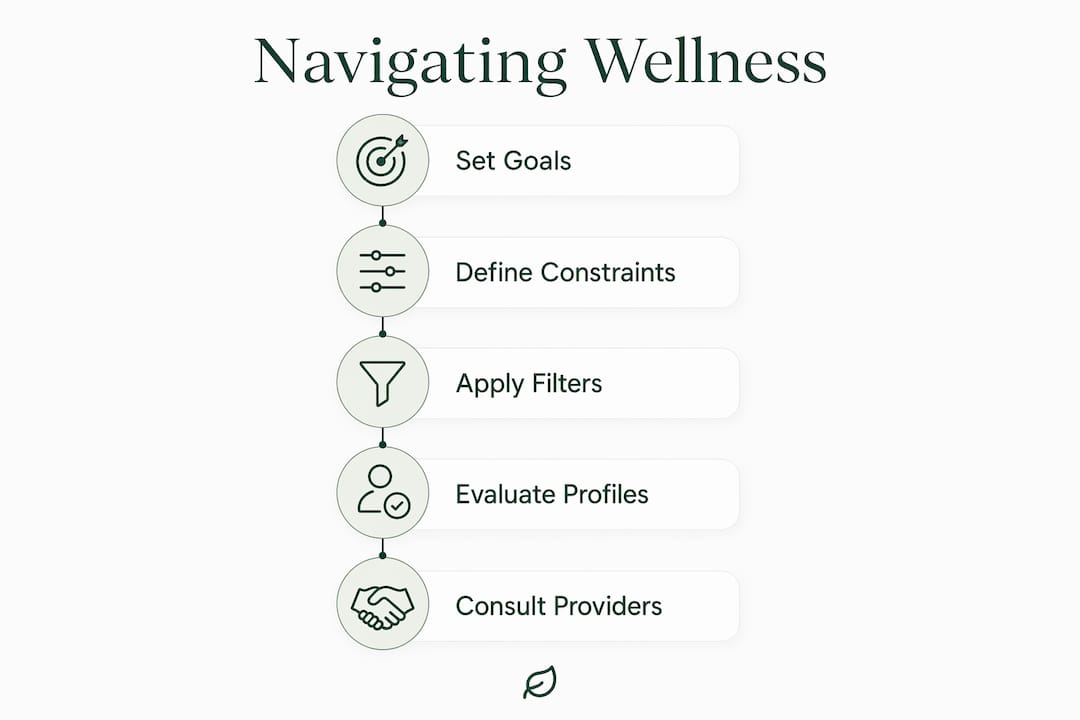
How do you use advanced filters to narrow your search?
Most users begin with broad searches but benefit greatly by applying filters in layers to narrow down options efficiently. Running every filter at once can produce zero results. Running none produces hundreds. The solution is a sequential approach.
Here is the order that works best:
- Start with location or format. Set your geographic radius or select telehealth. This immediately cuts the list to providers who are actually accessible to you.
- Filter by modality or specialty. Choose your primary discipline, whether that is acupuncture, Ayurveda, massage therapy, naturopathy, or another practice. If you are open to multiple modalities, select two or three to keep options alive.
- Add insurance or cost filters. If budget is a constraint, filter for providers who accept your insurance carrier or offer sliding-scale fees. This step alone can eliminate a large portion of otherwise appealing profiles.
- Layer in schedule availability. Many directories, including Goholistic, allow you to filter by appointment availability. Apply this filter after the others so you are not eliminating qualified providers simply because their calendar display is incomplete.
- Use keyword search for specialization. Terms like "trauma-informed care," "prenatal massage," "PCOS support," or "chronic fatigue" surface providers whose profiles specifically mention your concern. Specificity in search terms avoids analysis paralysis and leads to quicker connections with suitable providers.
The goal of this sequence is a shortlist of 5 to 10 profiles. Fewer than five means your filters may be too restrictive. More than 15 means you have not filtered enough, and the comparison phase will become exhausting.
Pro Tip: If your filtered search returns zero results, remove the schedule filter first. Availability data is often incomplete in directories, and removing it frequently reveals qualified providers who simply have not updated their calendar.
What should you look for in a provider profile?
Once you have a shortlist, the evaluation phase begins. Comparing providers by credentials, specialties, treatment approach, accessibility, and verified contact details is the standard recommended by practitioner-finding guides. A strong profile tells you most of what you need before you ever send a message.
Here is a quick comparison of what a strong profile includes versus what a weak one looks like:
| Profile element | Strong profile | Weak profile |
|---|---|---|
| Credentials | Lists specific certifications, licensing board, and years of practice | Vague title with no certifications listed |
| Specialty alignment | Explicitly names conditions or populations served | Generic "wellness" language only |
| Treatment approach | Describes methods, session structure, and expected outcomes | No description of how sessions work |
| Accessibility | Lists telehealth options, languages spoken, and mobility access | No accessibility information |
| Contact and booking | Direct booking link or clear contact method | No contact details or broken links |
Beyond the profile itself, look for these signals:
- Client testimonials or reviews: Real feedback from past clients reveals the practitioner's communication style and whether they deliver on their stated approach.
- Modality alignment: A practitioner who lists 12 different modalities may lack depth in any single one. Look for focused expertise that matches your specific concern.
- Profile completeness: Transparency markers such as licensing verification and human vetting are critical signals of a trustworthy directory listing. An incomplete profile is a yellow flag.
A good rule of thumb is to shortlist three to five providers and reach out to each for an initial consultation. Most holistic practitioners offer a brief introductory call at no charge. Use that call to assess communication style, not just credentials.
Common mistakes to avoid when searching for wellness providers
Even with the right tools, certain patterns consistently derail a good search. Recognizing them early saves real time.
- Searching too broadly. Opening a directory with no filters and scrolling through results is the fastest path to overwhelm. Deliberate filtering shortens the path to relevant providers and reduces frustration significantly.
- Trusting directory listings without verification. A directory is a starting point, not a final authority. Credential verification should be done outside the directory via authoritative boards to confirm license status. State licensing boards and national certification bodies are the right sources for this check.
- Skipping the intake prompt. Arriving at a consultation without a clear summary of your symptoms, preferences, and constraints wastes the first 10 minutes of every call. A concise intake prompt reduces back-and-forth during first consults and clarifies your goals for both parties.
- Not bookmarking or noting favorites. If you close a browser tab without saving a profile, you will spend 20 minutes finding it again. Use your browser's bookmark feature or a simple notes app to track providers you want to revisit.
- Contacting only one provider. Reaching out to a single practitioner and waiting for a response puts your search on hold. Contact three to five simultaneously so you can compare responses, availability, and communication style in parallel.
"Treat your wellness directory search the way a good doctor treats a diagnosis: gather information first, filter by relevance, then evaluate fit. Skipping any step creates gaps that cost you time and energy."
This structured approach, recommended by wellness search experts, is the difference between finding a practitioner in a week and spending a month going in circles.
Key takeaways
The most effective way to use a wellness directory is to define your goals and constraints before searching, apply filters in sequence, and verify credentials outside the platform before booking.
| Point | Details |
|---|---|
| Set goals before searching | Write down your health concern and logistical constraints before opening any directory filter. |
| Filter in sequence | Apply location, then modality, then cost, then schedule for the most targeted shortlist. |
| Evaluate profiles critically | Look for specific credentials, treatment descriptions, and transparency markers in every listing. |
| Verify credentials externally | Confirm license status through state boards or national certification bodies, not just directory descriptions. |
| Prepare an intake prompt | Summarize your symptoms and preferences before consultations to reduce back-and-forth and clarify fit. |
Why I think most people approach wellness directories backwards
I have spent years watching people open a wellness directory the same way they open a restaurant delivery app: browse first, decide later. That approach works fine when you are choosing dinner. It does not work when you are trying to find a practitioner who can help you manage chronic pain or address a health concern you have been carrying for months.
The directories themselves are not the problem. Platforms like Goholistic have done the hard work of verifying practitioners, building filter systems, and organizing over 200 therapy types into searchable categories. The gap is almost always on the user side. People arrive without a clear picture of what they need, and the abundance of options becomes a wall instead of a door.
What actually works is treating the directory as a triage tool, not a catalog. You are not browsing. You are filtering down to the three to five people most likely to help you, then evaluating those people specifically. The personalized wellness approach that produces real outcomes starts before you type a single search term. It starts with knowing yourself well enough to tell a practitioner exactly what you need. That clarity is what turns a directory from an overwhelming list into a genuinely useful resource.
— Andrew
Find your ideal holistic practitioner on Goholistic
Goholistic is built specifically for the kind of search this article describes. The platform's provider directory lets you filter by modality, location, insurance, and availability, then connects you directly with verified practitioners across disciplines including acupuncture, Ayurveda, massage therapy, and functional nutrition.
Every listing on Goholistic goes through a verification process, so the credentials you see in a profile reflect real qualifications. You can also explore the holistic health treatments library, which covers more than 200 therapy types with evidence-based research summaries to help you understand your options before you book. When you are ready to search, the provider directory is the fastest way to find a practitioner who fits your goals, your schedule, and your budget. Get started today and take the first step toward a health approach that works for you.
FAQ
What is a wellness directory?
A wellness directory is a searchable database of holistic health practitioners organized by modality, location, specialty, and other filters. Platforms like Goholistic verify practitioner credentials and allow users to compare profiles and book consultations directly.
How do I find the right holistic practitioner for my needs?
Define your primary health concern and logistical constraints first, then apply filters sequentially by location, modality, cost, and schedule. Shortlist three to five providers and contact each for an introductory consultation to assess fit.
Should I verify a practitioner's credentials outside the directory?
Yes. Credential verification through official sources like state licensing boards confirms license status beyond what any directory profile can guarantee. This step protects you and confirms the practitioner's qualifications are current.
What filters matter most when searching a wellness directory?
Location or telehealth format, modality or specialty, and cost or insurance acceptance are the three filters that most efficiently narrow a broad search. Apply them in that order before adding schedule or keyword filters.
How many providers should I contact before choosing one?
Reaching out to three to five providers simultaneously is the recommended approach. This lets you compare communication style, availability, and approach in parallel rather than waiting on a single response before moving forward.