
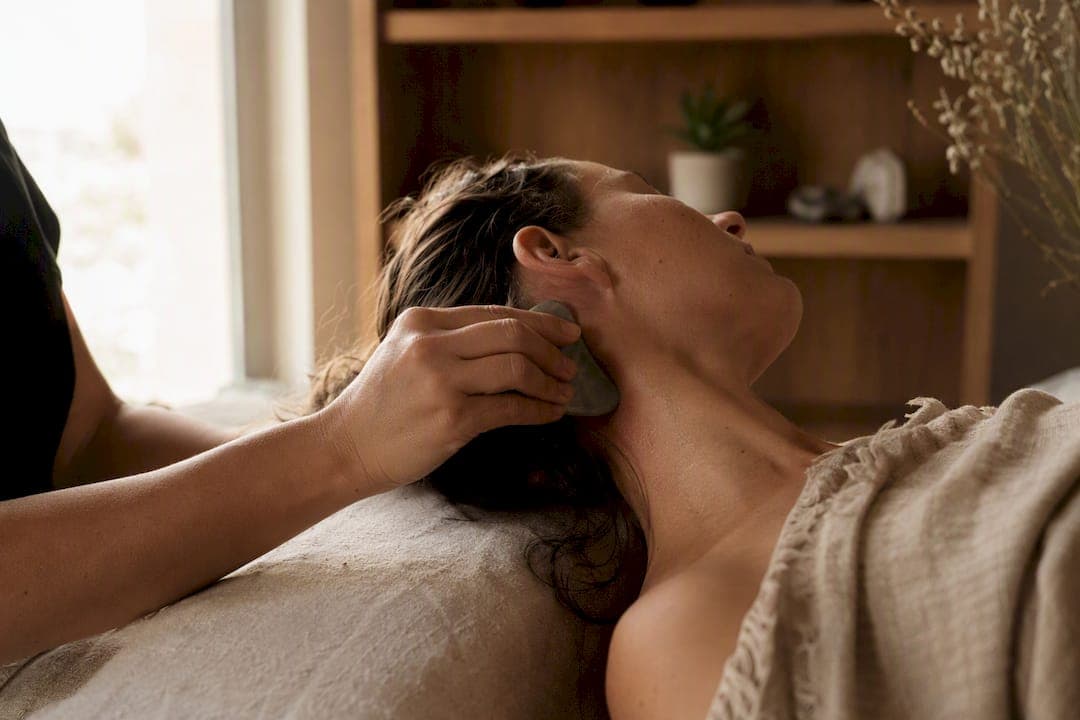
Gua sha can ease short-term muscle and tension-related neck pain for many people, with clinical studies showing measurable drops in pain intensity and better range of motion after a single session. It works best on everyday stiffness from desk posture or overuse, not on nerve-related or systemic issues. If you notice numbness, weakness, fever, or pain following a recent injury, stop and see a clinician before trying it.
TL;DR:
- Gua sha can produce immediate pain reduction of over one point on a 10-point scale during a 16-minute session, mainly relieving everyday neck tension.
- Longer-term improvements, such as a nearly seven-point decrease in disability scores over weeks, are possible especially for elderly patients with cervical spondylosis.
- Proper technique involves gentle stroke angles, avoiding the midline, and stopping if skin irritation or tenderness occurs to prevent bruising or injury.
- Gua sha is most suitable for stress-related neck stiffness and not recommended if systemic symptoms, recent injury, or nerve issues are present.
- Consistent sessions combined with movement and careful aftercare can build lasting relief, but larger controlled studies are needed to confirm its full effectiveness.
Table of Contents
- Is Gua Sha for Neck Pain Backed by Research?
- How to Use Gua Sha on the Neck Safely
- Who Should Try Gua Sha, and Who Should Skip It
- What to Expect After a Gua Sha Session
- Aftercare and Precautions After Gua Sha
- Finding a Verified Practitioner for Gua Sha
- Selected Studies and Explainers Worth Reading
- An Editorial Take on Gua Sha for Neck Pain
- Try Gua Sha With Confidence Through Goholistic
- Sources
Is Gua Sha for Neck Pain Backed by Research?
Gua sha has moved well beyond folk remedy status, and the clinical literature backs that shift. One study on office workers found that a single 16-minute gua sha session produced a 1.19 cm reduction in pain intensity on the Visual Analogue Scale, alongside a measurable improvement in cervical range of motion. That is a meaningful shift for anyone who has spent a workday with their neck locked at a 15-degree tilt toward a monitor.
Longer-term data tells a similar story with more nuance. A cohort of elderly patients with cervical spondylosis using copper gua sha with the Qi Channel Discharge technique showed greater Neck Disability Index improvement than those receiving conventional copper gua sha, with NDI scores dropping more in the treatment group than the control group over several weeks. The overall clinical effective rate was higher for the treatment group compared to standard technique.
Researchers point to a few likely mechanisms:
- Increased local microcirculation, which may help flush inflammatory byproducts from tight tissue
- A possible nitric oxide and HSP70 response tied to short-term tissue recovery
- Reduced myofascial stiffness from the mechanical pressure and stretch of the stroke itself
Quick data snapshot: a single session can shift pain scores by over a full point on a standard 10-point scale, and a month of targeted sessions can move disability scores by nearly 7 points in older adults with spondylosis.
Here is the honest caveat: most trials involve modest sample sizes, inconsistent technique protocols, and short follow-up windows. Reputable overviews describe gua sha as a reasonable complementary option rather than a proven standalone cure, and that framing holds up against the evidence. Some research suggests gua sha may outlast heat therapy or sham treatment in small trials, but larger, better-controlled studies are still needed before anyone can call the effect definitive.
How to Use Gua Sha on the Neck Safely
Good technique separates real relief from unnecessary bruising. Here is how a clinician would approach it, and how you can adapt it for careful self-care.
- Choose a smooth-edged tool. Jade, ceramic, stainless steel, and copper tools all work, but the edge matters more than the material. A rounded, beveled edge distributes pressure evenly; a sharp or thin edge concentrates it and increases the risk of breaking skin.
- Prep the skin and clean your tool. Apply an unscented, non-comedogenic oil to reduce friction. Wipe your tool with 70% isopropyl alcohol before and after every use.
- Palpate before you stroke. Feel for the trapezius muscle belly and note where the bony spinous processes sit. Clinicians palpate first specifically to avoid scraping directly over bone.
- Angle the tool between 30 and 45 degrees. This angle lets the edge glide across muscle without digging into it.
- Stroke in one direction, proximal to distal. For the neck, that typically means occiput toward C7, or collarbone toward the earlobe. Reversing direction mid-stroke increases irritation without added benefit.
- Stay off the midline. Instead of scraping directly over the cervical spinous processes, angle strokes roughly 1.5 cm lateral to the spine to work the paraspinal and rhomboid tissue safely.
- Limit strokes per zone. Ten to fifteen strokes per area is a reasonable starting point; stop sooner if the skin reddens heavily or feels tender rather than simply warm.
- Avoid open skin, varicose veins, or visibly diseased skin entirely.
If you're self-treating, use lighter pressure than a practitioner would, focus on the upper trapezius rather than the deeper paraspinal muscles, and pair the session with brief active range-of-motion movement afterward; for more guidance, see gentle neck pain relief techniques. Basic massage therapy fundamentals like palpation-first assessment translate directly here, even for beginners working solo.
Pro Tip: Keep a small mirror nearby during self-application on the neck. It's easy to misjudge stroke angle when you can't see the area directly, and a mirror helps you stay off the spine and within safe zones.

Who Should Try Gua Sha, and Who Should Skip It
Gua sha fits best for people dealing with office-related neck tension, non-radicular stiffness, or general myofascial tightness from stress or repetitive posture. If your pain feels like a tight band across the shoulders rather than a shooting sensation down your arm, you're likely a reasonable candidate.
Some situations call for medical evaluation first, not a gua sha tool:
- Numbness, tingling, or weakness in the arms or hands
- Pain that is severe, worsening, or unresponsive to rest
- Fever or other systemic symptoms alongside neck pain
- Recent trauma, whiplash, or a fall involving the neck or head
Certain conditions make gua sha inappropriate regardless of pain type, including bleeding disorders, anticoagulant medication, active skin infections, fragile or thinning skin, and recent surgery near the treatment area. When any of this applies to you, or you're simply unsure, a licensed acupuncturist, physical therapist, or massage therapist can assess whether gua sha, a different technique, or a referral makes more sense.
What to Expect After a Gua Sha Session
Relief often starts fast. Many people notice looser muscles and reduced pain within minutes to a few hours of a session, consistent with the VAS reductions seen in single-session research.
A realistic course looks like this:
- Single session: relief typically lasts hours to a few days for acute tension
- Short flare-up plan: daily sessions for two to three days, then taper to every other day
- Maintenance: one to two sessions per week for chronic tension
- Cumulative benefit: studies on longer courses, like the four to six week cervical spondylosis trial, show gains building over multiple weeks rather than one session alone
If pain hasn't improved at all after a short course, or it's getting worse, that's your signal to stop and get evaluated rather than pushing through with more sessions.
Aftercare and Precautions After Gua Sha
What you do in the hours after a session matters almost as much as the technique itself.
Normal responses include petechiae, the small red or purple dots that look like bruising but actually represent tiny broken capillaries responding to the stroke. These typically fade within a few days and are considered an expected part of the process, not a sign of injury. Mild soreness for a day is also common.
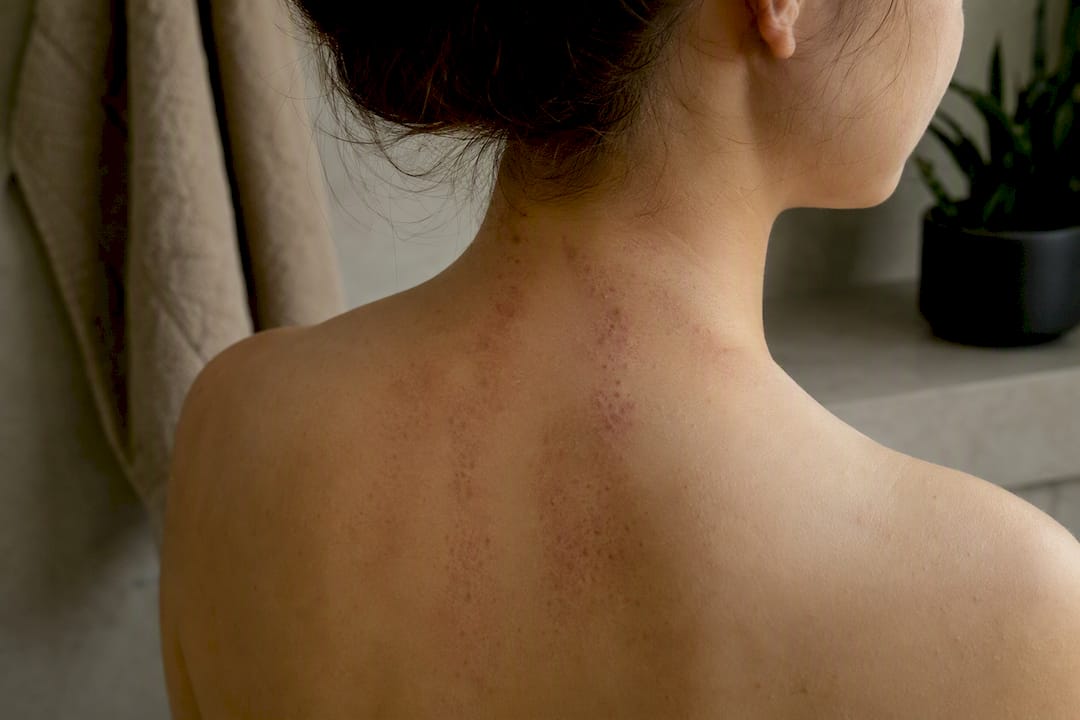
Concerning signs are different: spreading redness, warmth, fever, or pain that keeps escalating instead of settling. Those warrant a call to your clinician.
For aftercare:
- Drink water to support circulation and tissue recovery
- Move gently. Light range-of-motion work helps lock in the loosening effect
- Skip NSAIDs and ice for the first 24 hours if you're following an inflammatory-adaptation approach, since some clinicians believe this blunts the tissue response gua sha is meant to trigger
- Clean your tool with 70% isopropyl alcohol before storing it
Pro Tip: Photograph any petechiae right after your session. Comparing it to how it looks in 48 hours makes it much easier to tell normal fading from something that needs attention.
Finding a Verified Practitioner for Gua Sha
If your neck pain is persistent, complicated by other conditions, or you'd rather have a trained hand doing the work, a licensed practitioner is the safer route. Goholistic's directory verifies practitioner credentials before they're listed, so you're not gambling on someone's self-reported experience with acupuncture, massage therapy, or gua sha technique specifically.
When booking, ask whether the practitioner uses gua sha as a standalone treatment or pairs it with other modalities, how many sessions they'd recommend for your specific pain pattern, and what aftercare they suggest. Goholistic's treatment library and AI-generated research summaries can help you walk into that conversation already informed, rather than starting from scratch. The platform's booking flow lets you compare verified providers and schedule directly, which beats piecing together reviews from scattered sources.
Selected Studies and Explainers Worth Reading
For readers who want the primary sources: the office-worker gua sha trial documents single-session pain and ROM changes, the copper gua sha cervical spondylosis study covers multi-week outcomes, and Cleveland Clinic's overview offers a balanced mainstream medical summary of benefits and limits.
An Editorial Take on Gua Sha for Neck Pain
The research on gua sha is more encouraging than most wellness trends get, and that's precisely why it deserves careful handling instead of either dismissal or hype. A 1.19 cm VAS reduction from one 16-minute session is a real, measurable effect, not a placebo footnote. But conventional wellness content tends to either oversell gua sha as a cure or bury the actual evidence under vague claims about "energy flow." Neither does readers any favors.
What the evidence actually supports is narrower and more useful: gua sha works well as a short-term tool for tension-pattern neck pain, especially when paired with movement and reasonable expectations about how long each session's benefit lasts. The technique details, like stroke angle and staying off the spine, matter more than the specific tool material everyone debates online.
If you take one thing from this, prioritize screening yourself for red flags before technique. Getting the stroke angle right means nothing if the underlying issue needed medical attention instead of a scraping tool.
— Andrew
Try Gua Sha With Confidence Through Goholistic
Goholistic gives you a faster, more transparent path to safe gua sha care than searching review sites and hoping a provider's credentials check out. Every practitioner in the directory is verified before listing, so you can filter for acupuncturists, massage therapists, or physical therapists experienced specifically in gua sha and related manual techniques.
Beyond booking, Goholistic's treatment library breaks down over 200 therapy types with research summaries, so you can understand what you're signing up for before your first appointment. If you're dealing with chronic tension that self-care hasn't resolved, or you simply want a second pair of trained hands, browse verified practitioners near you and book a consultation that fits your schedule and your specific pain pattern.
This article is general information, not a substitute for advice from a qualified doctor. Consult a qualified healthcare professional about your own circumstances before acting on anything here.
Sources
- Immediate effects of gua sha therapy for neck and shoulder pain (office-worker study)
- Clinical efficacy of copper Gua Sha therapy based on the “Qi Channel Discharge” concept for cervical spondylosis
- Why gua sha might be good for you — Cleveland Clinic