

TL;DR:
- Effective chronic pain management combines natural remedies, regular physical activity, and psychological therapies within a biopsychosocial framework. Natural supplements like melatonin, curcumin, and boswellia reduce inflammation and pain with consistent use over several weeks. Engaging in enjoyable exercise and practicing cognitive behavioral therapy help lower disability, distress, and pain perception over time.
Chronic pain management is defined as the ongoing, multimodal process of reducing pain, restoring function, and improving quality of life through biological, psychological, and social interventions. Unlike acute pain, chronic pain persists beyond normal tissue healing and requires more than medication alone. Evidence from clinical guidelines and research bodies supports integrating natural remedies for pain relief, physical activity, and psychological therapies into a single, personalized plan. This chronic pain management guide walks you through the most effective strategies, from proven supplements like melatonin and curcumin to cognitive behavioral therapy (CBT) and exercise, so you can build a plan that actually fits your life.
What natural remedies effectively support chronic pain management?
Natural remedies for pain relief work best when you understand what each one does, how much to take, and how long to wait for results. The supplements below have the strongest evidence base for chronic pain.
- Melatonin: Research from the University of Sydney shows melatonin reduces chronic musculoskeletal pain by around 10 points on a 0–100 scale, comparable to common painkillers. The typical dose is 3–10 mg taken at bedtime, and it is considered safe for short-term use under three months at low doses. Melatonin works through two pathways: direct anti-inflammatory and antioxidant effects, and improved sleep quality that reduces anxiety and increases daytime activity. Better sleep alone meaningfully lowers pain sensitivity.
- Curcumin: At 1,000–1,500 mg per day combined with piperine (which boosts absorption), curcumin matches ibuprofen at 1,200 mg per day for knee osteoarthritis pain, with fewer gastrointestinal side effects. Expect full effect after 8–12 weeks of consistent use.
- Boswellia: Standardized extract at 300–500 mg targets inflammatory pathways that curcumin does not. Combining curcumin and boswellia produces broader anti-inflammatory effects than either supplement alone. This combination is especially useful for joint and connective tissue pain.
- Omega-3 fatty acids: Found in fish oil, omega-3s reduce the production of inflammatory prostaglandins. Standard research doses range from 2–4 g per day of combined EPA and DHA.
- Ginger: Gingerols and shogaols in ginger inhibit the same COX enzymes targeted by NSAIDs. Doses of 500–1,000 mg of standardized ginger extract per day show consistent results in clinical trials for musculoskeletal pain.
For a deeper look at how these supplements compare to conventional options, the pain therapy guide for 2026 offers a useful side-by-side review.
Pro Tip: Always consult a healthcare provider before starting any supplement, especially if you take blood thinners, immunosuppressants, or other medications. Curcumin and omega-3s both affect platelet function.
How does exercise help with managing chronic pain?
Exercise is the single most evidence-backed, non-pharmacologic treatment for chronic pain. Clinical guidelines confirm that physical activity is first-line care for chronic primary pain, with benefits in both the short and long term. The mechanism is straightforward: movement reduces central sensitization, builds muscle support around painful joints, and triggers endorphin release.

The most important finding from the research is that no single exercise type outperforms another. Enjoyment and consistency matter far more than the specific activity. A person who walks 30 minutes five days a week will see better results than someone who forces themselves through a gym program they hate and quit after two weeks.
Here is a practical way to start and progress safely:
- Choose an activity you genuinely enjoy. Swimming, cycling, yoga, walking, and tai chi all qualify. The goal is movement, not performance.
- Start at a low intensity. Begin with 10–15 minutes per session, three times per week. Pain during exercise is not automatically a warning sign, but sharp or worsening pain is.
- Progress gradually. Add five minutes per session every one to two weeks. Slow progression prevents flare-ups and builds confidence.
- Work with a physical therapist. A licensed physical therapist can design a program specific to your pain condition, correct movement patterns that worsen pain, and help you distinguish normal exercise discomfort from harmful pain.
- Add occupational therapy if daily tasks are affected. Occupational therapists address how pain interferes with work, self-care, and home activities, which is a dimension physical therapy alone does not cover.
Pro Tip: Track your activity and pain levels in a simple journal. Patterns often emerge within two to three weeks, showing which activities reduce pain and which trigger flare-ups.
What role does CBT play in chronic pain treatment?
Cognitive behavioral therapy is one of the most effective chronic pain treatment options available, and it works differently than most people expect. CBT's primary goal is not to eliminate pain intensity. It is to reduce functional disability and emotional distress caused by pain. Pain reduction follows as a secondary benefit, not the primary target.
CBT works by changing how the brain processes and responds to pain signals. Psychological therapies engage specific brain regions involved in descending pain modulation, the system that either amplifies or dampens incoming pain signals. Neuroplastic changes build gradually through consistent practice, which is why CBT requires active engagement rather than passive attendance.
What a typical CBT course looks like:
- Duration: Usually 8–12 weekly sessions with a trained psychologist or pain specialist.
- Core skills: Identifying and challenging unhelpful thoughts about pain ("this will never get better"), pacing activities to avoid boom-and-bust cycles, and building behavioral activation.
- Between-session practice: Homework is not optional. The skills only take hold through daily practice, similar to learning a musical instrument.
- Measurable outcomes: Reduced catastrophizing, improved sleep, higher activity levels, and better mood, all of which feed back into lower pain perception over time.
CBT is not a replacement for physical treatment. It works best as part of a multimodal plan that includes exercise, natural remedies, and medical support where needed. You can read more about non-invasive treatment paths that pair well with psychological therapies.
How do you build a personalized pain management plan?
Effective pain management requires a biopsychosocial approach that addresses biological, psychological, and social factors simultaneously. A plan that only treats the physical side of pain leaves two thirds of the problem unaddressed.
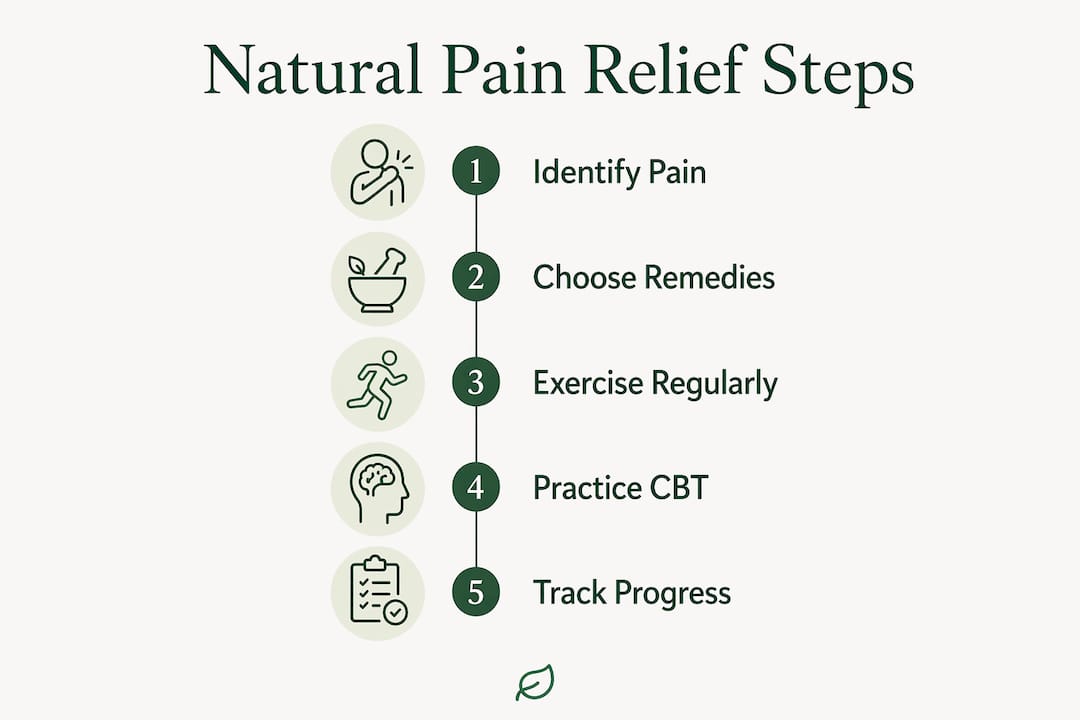
Follow these steps to build a plan that works for your specific situation:
- Map your pain contributors. Write down what makes your pain better and worse across three categories: physical (movement, posture, sleep), psychological (stress, mood, fear of movement), and social (work demands, relationships, isolation).
- Choose one intervention per category. Start with one supplement, one form of exercise, and one psychological strategy. Adding too much at once makes it impossible to know what is working.
- Set a review date. Commit to eight weeks before evaluating results. Most natural remedies and CBT require at least this long to show measurable change.
- Track progress with a simple tool. Rate your pain on a 0–10 scale each morning and evening. Note sleep quality, activity level, and mood. This data helps you and your healthcare provider make informed adjustments.
- Discuss medication adjuncts with your doctor. Medications like tricyclic antidepressants, gabapentinoids, and SNRIs have limited but evidence-supported use in neuropathic chronic pain. The principle is start low and go slow, and withdraw if ineffective after a defined trial period.
| Therapy type | Best for | Typical timeline |
|---|---|---|
| Melatonin (3–10 mg) | Sleep-disrupted musculoskeletal pain | 4–8 weeks |
| Curcumin + boswellia | Joint and inflammatory pain | 8–12 weeks |
| Aerobic exercise | Central sensitization, mood, function | Ongoing, benefits at 4 weeks |
| CBT | Disability, distress, catastrophizing | 8–12 sessions |
| Medication adjuncts | Neuropathic pain, severe cases | Time-limited, review at 8 weeks |
For a step-by-step walkthrough of building your plan, the step-by-step pain relief guide at Goholistic covers the process in practical detail.
Key Takeaways
Effective chronic pain management combines natural supplements, consistent physical activity, CBT, and medical support within a biopsychosocial framework for lasting relief.
| Point | Details |
|---|---|
| Natural supplements work | Melatonin, curcumin, and boswellia reduce pain through anti-inflammatory pathways with consistent use. |
| Exercise is first-line care | Any enjoyable physical activity practiced consistently outperforms sporadic high-intensity effort. |
| CBT targets disability, not just pain | Reducing distress and improving function leads to lower pain perception over time. |
| Biopsychosocial planning matters | Address physical, psychological, and social pain contributors together for the best outcomes. |
| Medication is a time-limited adjunct | Pharmacologic options support multimodal care but should be reviewed and withdrawn if ineffective. |
What I've learned after years of watching people manage chronic pain
Most people come to chronic pain management looking for the one thing that will fix it. A supplement, a therapy, a device. That search is understandable, but it is also the reason so many people stay stuck.
What I have seen work, consistently, is the shift from passive treatment to active self-management. The people who improve are not the ones who find the best practitioner. They are the ones who take ownership of their daily habits, track what changes, and stay consistent even when progress is slow. That is not motivational language. It is what the evidence actually shows.
The biopsychosocial model is not a soft, feel-good framework. It is the most accurate description of how chronic pain works. Ignoring the psychological and social layers while only treating the physical is like fixing one leg of a three-legged stool. The structure still falls.
I have also seen people underestimate melatonin. Most people think of it as a sleep aid. The research showing it reduces musculoskeletal pain by a clinically meaningful margin is genuinely surprising, and it is one of the safest starting points for people who are hesitant about supplements. Pair it with a consistent exercise habit and a few CBT skills, and you have a foundation that no single medication can match.
Start with one change. Track it honestly. Build from there.
— Andrew
Goholistic can help you find the right support
Living with chronic pain is hard enough without having to search through dozens of practitioners and treatment options on your own.

Goholistic connects you directly with certified practitioners across acupuncture, massage therapy, Ayurveda, and more than 200 other therapy types. The platform uses AI to match your specific health concerns with evidence-based holistic treatments, so you spend less time searching and more time healing. You can browse verified providers, read research summaries, and book consultations directly. Whether you are just starting out or looking to add a new layer to an existing plan, find a holistic practitioner who fits your needs and your schedule.
FAQ
What is chronic pain, and when does it become chronic?
Pain is classified as chronic when it persists for more than three months beyond the expected healing time for an injury or condition. It involves changes in the central nervous system that make pain signals persist even without ongoing tissue damage.
How long do natural supplements take to reduce chronic pain?
Curcumin and boswellia typically require 8–12 weeks of consistent use before delivering full anti-inflammatory benefit. Melatonin can show measurable pain reduction within 4–8 weeks when taken nightly at 3–10 mg.
Is CBT effective for all types of chronic pain?
CBT is effective across multiple chronic pain conditions, including fibromyalgia, back pain, and neuropathic pain. Its primary benefit is reducing disability and distress, which improves function regardless of the underlying pain diagnosis.
Can exercise make chronic pain worse?
Exercise can cause temporary discomfort, especially early in a new program, but consistent, appropriately paced activity reduces pain over time. Working with a physical therapist helps you distinguish normal exercise soreness from movements that genuinely worsen your condition.
Do I need a doctor to start a natural pain management plan?
You do not need a prescription to begin exercise, CBT, or most supplements, but consulting a healthcare provider is important before adding supplements if you take medications. A provider can also rule out underlying conditions that require specific medical treatment.