
TL;DR:
- Acupuncture restores body balance by stimulating specific points based on traditional and biomedical perspectives.
- It shows moderate evidence for pain relief in chronic conditions like back pain, osteoarthritis, and headaches.
- Proper preparation, licensed practitioners, and holistic treatment plans enhance safety and long-term results.
Acupuncture has a way of sparking curiosity and hesitation at the same time. The idea of tiny needles placed at precise points on your body sounds both fascinating and a little nerve-wracking, especially if you've never experienced it. But here's the thing: once you understand exactly what happens before, during, and after a session, most of that uncertainty melts away. This guide walks you through the entire acupuncture process using current evidence and real practitioner insights, so you can make a confident, informed decision about whether it fits your wellness path.
Table of Contents
- Understanding how acupuncture works
- What to know before your first session: Preparation and safety
- Step-by-step: What happens during an acupuncture session
- What to expect after: Results and side effects
- Why real results come from personalized, holistic plans, not single sessions
- Find the right holistic practitioner for your journey
- Frequently asked questions
Key Takeaways
| Point | Details |
|---|---|
| Safe and low-risk | Acupuncture is safe for most people when performed by a qualified practitioner using sterile, single-use needles. |
| Stepwise process | A typical acupuncture session includes assessment, point selection, hair-thin needle insertion, and brief recovery. |
| Results may take time | Chronic pain relief often builds across multiple sessions rather than instantly after one treatment. |
| Personalization matters | Optimal outcomes are achieved when acupuncture is part of a personalized, holistic wellness plan. |
| Minor side effects rare | Temporary bruising or soreness may occasionally occur but is generally short-lived and milder than medication risks. |
Understanding how acupuncture works
Acupuncture is one of the oldest healing practices in the world, rooted in Traditional Chinese Medicine (TCM) and increasingly studied through a Western biomedical lens. Both perspectives offer something valuable, and understanding each one helps you appreciate why this therapy has remained relevant for thousands of years.
From the TCM viewpoint, your body contains a network of channels called meridians, through which a vital energy known as qi (pronounced "chee") flows. When that flow becomes blocked or imbalanced, pain and illness follow. Acupuncture needles are inserted at specific points along these meridians to restore harmony and balance. It's a poetic framework, and for millions of people, it maps onto their lived experience of how stress, tension, and pain interconnect in the body.
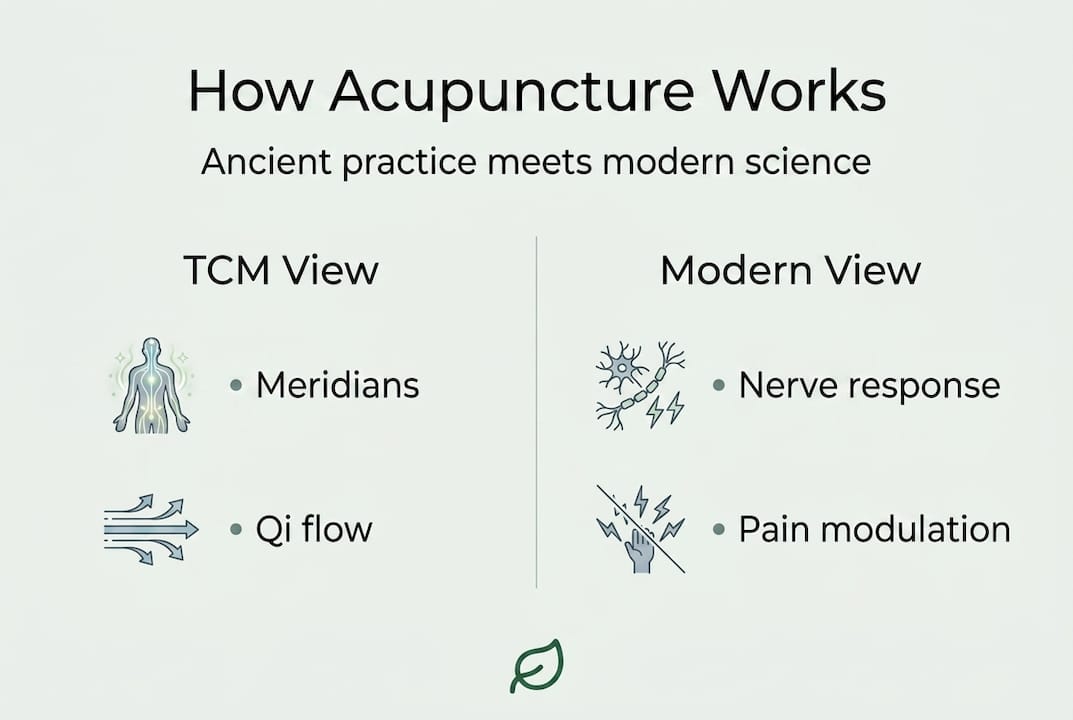
The Western view explains acupuncture differently, though not incompatibly. From this perspective, stimulating acupuncture points triggers the release of endorphins and modulates the central nervous system and immune response, providing real, measurable pain relief. These two frameworks don't need to compete. Many integrative practitioners hold both views simultaneously, using whichever framework resonates most with each patient.
When it comes to evidence, acupuncture shows moderate support for relieving chronic low back pain, knee osteoarthritis, neck pain, postoperative pain, and headaches. It tends to perform better than no treatment and often better than sham acupuncture in these conditions, particularly when used alongside standard care.
Here's a quick look at what conditions have the strongest research support:
- Chronic low back pain: One of the most studied areas, with consistent positive findings
- Knee osteoarthritis: Meaningful reductions in pain and improved function
- Neck pain: Both acute and chronic neck pain respond well
- Tension and migraine headaches: Frequency and intensity often decrease
- Postoperative pain: Used as an adjunct to reduce reliance on opioids
- Shoulder pain: Growing evidence for rotator cuff and frozen shoulder conditions
Statistic to know: Research finds that acupuncture outperforms sham treatment for chronic pain relief, with effects that tend to be modest but longer lasting than many expect, especially when integrated into a broader evidence-based holistic wellness plan.
One important nuance: acupuncture isn't a standalone miracle. It works best as part of a wider approach that might include movement, nutrition, stress management, and other therapies. Think of it as one well-placed instrument in a larger wellness orchestra rather than a solo act. Exploring science-backed pain relief methods alongside acupuncture often produces the most meaningful outcomes.
What to know before your first session: Preparation and safety
Understanding the basics helps, but knowing how to safely prepare for your visit is just as important. Your first acupuncture session starts long before you lie down on the table. It begins with choosing the right practitioner and knowing what your body needs going in.
Choosing your practitioner wisely
Look for a licensed acupuncturist (often designated L.Ac.) or a board-certified practitioner through the National Certification Commission for Acupuncture and Oriental Medicine (NCCAOM). Some medical doctors and physical therapists also practice acupuncture with additional training. Always verify credentials before booking.
What to do before your appointment
- Eat a light meal about one to two hours before your session. Arriving on an empty stomach can make you feel lightheaded.
- Wear loose, comfortable clothing that allows easy access to your arms, legs, and back.
- Avoid strenuous exercise immediately before or after your appointment.
- Bring a list of any medications or supplements you take, as some (like blood thinners) may affect your session.
- Stay well hydrated throughout the day of your appointment.
Safety profile
Here's one of the most reassuring facts about acupuncture: acupuncture needles are hair-thin, single-use, and sterile. They are nothing like the hypodermic needles used for injections or blood draws. The depth of insertion is typically just a few millimeters to about one inch, depending on the treatment area.
The safety record is excellent, with minor side effects such as light bruising or temporary soreness occurring in fewer than 10% of sessions. Serious adverse events are extremely rare when you work with a qualified practitioner using sterile equipment.
| Safety consideration | What to know |
|---|---|
| Needle type | Single-use, sterile, hair-thin |
| Bruising or soreness | Less than 10% of sessions |
| Infection risk | Extremely rare with sterile needles |
| Serious adverse events | Very rare in published reviews |
| Typical sensation | Mild tingling or dull ache, not sharp pain |
Who should consult a doctor first
Some situations call for extra care. Talk to your doctor before trying acupuncture if you:
- Have a pacemaker (electrical stimulation techniques may interfere)
- Are pregnant (certain acupuncture points are contraindicated)
- Have active infections or open wounds in treatment areas
- Take blood thinners or have a bleeding disorder
- Have a compromised immune system
This doesn't mean acupuncture is off the table for you. It just means your care team should coordinate together. Finding holistic methods for chronic health often involves collaboration between conventional and integrative providers.
"Acupuncture carries one of the most favorable safety profiles of any hands-on therapy. When performed by a trained, licensed practitioner using sterile equipment, the risk of harm is genuinely very low." — Integrative medicine consensus view
Pro Tip: Bring a written summary of your health history and current symptoms to your first appointment. The more context your acupuncturist has, the more targeted and effective your treatment plan will be.
Step-by-step: What happens during an acupuncture session
Being well-prepared, let's walk through what actually happens, step by step.
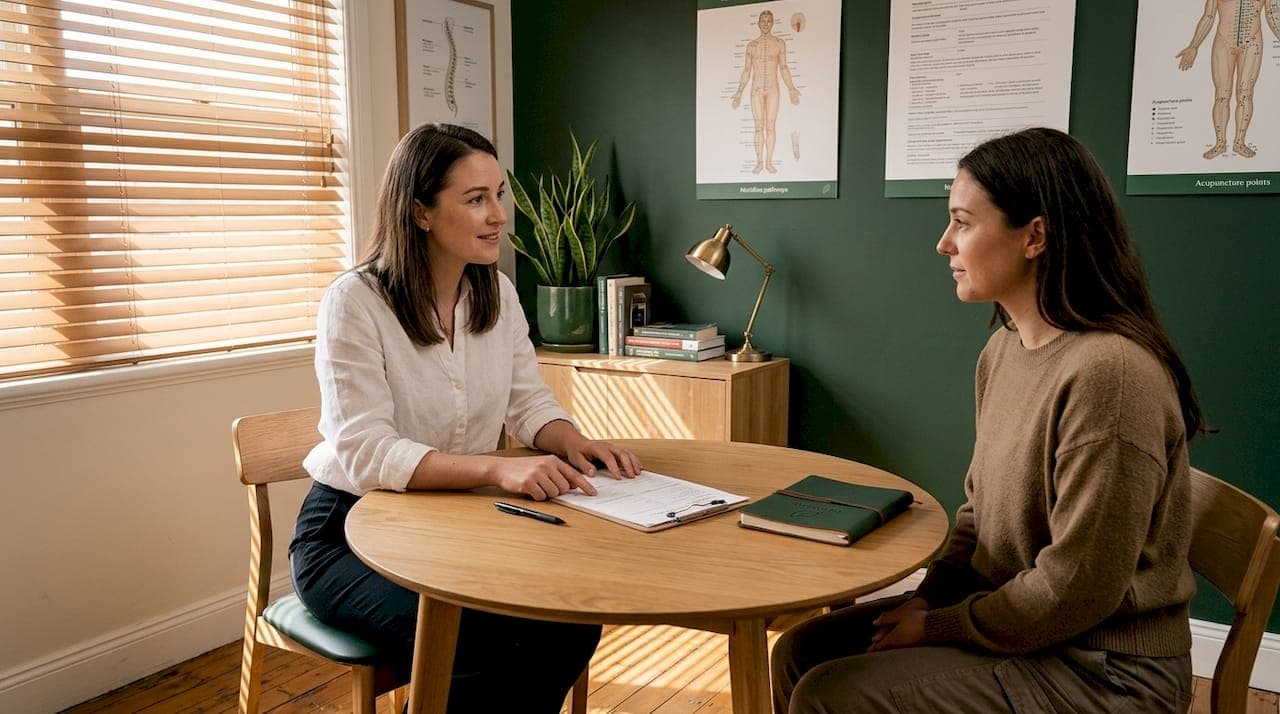
1. Intake and consultation Your first session always begins with a thorough intake. Your acupuncturist will ask about your main health concerns, sleep patterns, digestion, emotional state, and pain history. In TCM practice, they may also examine your tongue and feel your pulse at three positions on each wrist. This detailed picture helps them map out the precise points to treat.
2. Identifying treatment points Based on your intake, the practitioner identifies a personalized set of acupuncture points. These points might be located near your area of pain or in seemingly unrelated areas of the body. For example, a point on your hand is commonly used to relieve headaches. This interconnected approach is central to how acupuncture works.
3. Positioning and comfort You'll be asked to lie on a treatment table, typically face up, face down, or on your side, depending on the points being used. The room is usually calm, dimly lit, and quiet. Most practitioners put on soft, relaxing music. You should feel completely at ease before needles are inserted.
4. Skin cleaning and needle insertion The practitioner cleans each point with an alcohol swab, then gently inserts a needle using a guide tube for precision. Because needles are ultra-thin and sterile, most people feel little to nothing during insertion. You might notice a brief pinch on sensitive areas like the hands or feet.
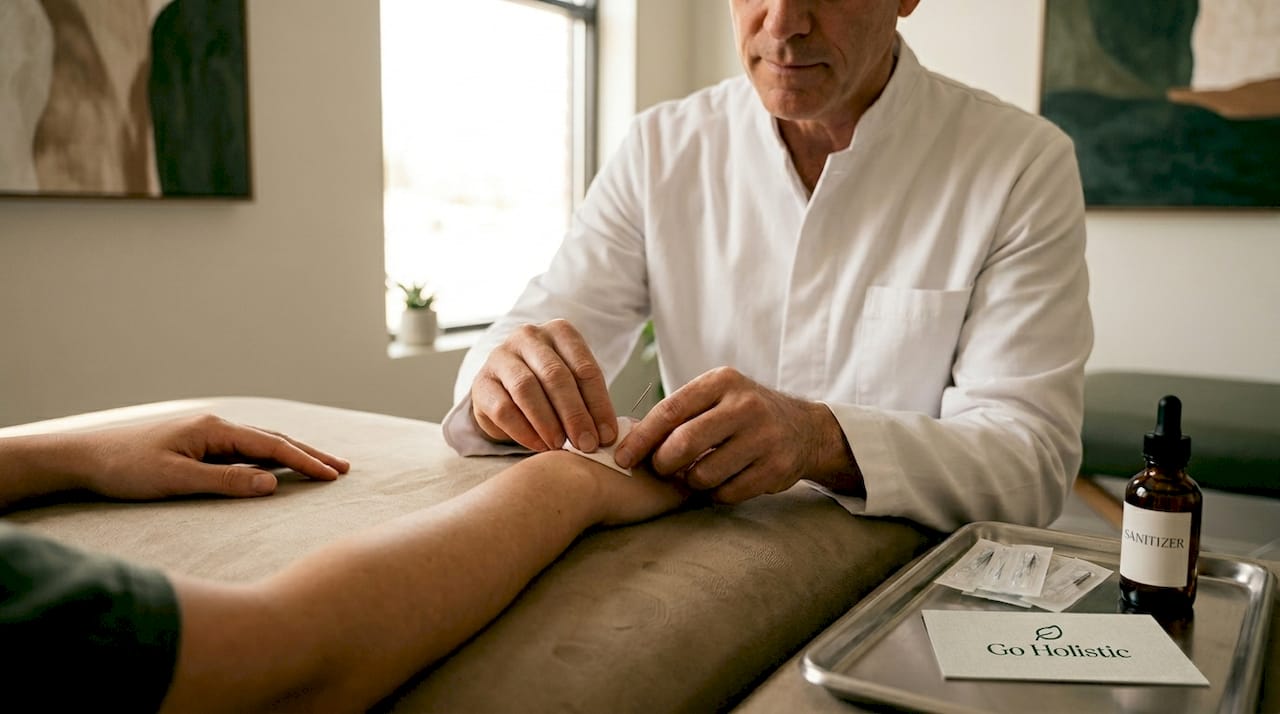
5. The de qi sensation After insertion, your practitioner may gently rotate or stimulate the needle to elicit what is called de qi (pronounced "duh chee"), described as a dull ache, heaviness, warmth, or mild tingling around the needle site. This sensation is considered a sign that the point has been activated. It's not pain. Most people find it surprisingly pleasant or neutral.
6. Rest period Once all needles are placed, you simply rest for 20 to 40 minutes. This is where the real work happens. Many people drift into a light meditative state, and some even fall asleep. Your body begins its healing response during this window, so staying still and relaxed is encouraged.
7. Needle removal and post-session advice Needle removal is quick and painless. There's minimal to no bleeding. Your practitioner will give you guidance on what to do after the session, such as drinking water, avoiding intense activity, and monitoring how you feel over the next 24 to 48 hours.
Comparing acupuncture styles
| Style | Needle depth | De qi intensity | Best suited for |
|---|---|---|---|
| Chinese TCM | Moderate to deeper | Stronger | General pain, systemic issues |
| Japanese style | Very shallow | Gentle or absent | Sensitive patients, children |
| Electroacupuncture | Varies | Enhanced via electrical pulse | Nerve pain, muscle rehab |
| Auricular (ear) | Very shallow | Mild | Addiction, anxiety, weight |
Pro Tip: If you're nervous about your first session, ask about Japanese-style acupuncture. It uses shallower insertions and gentler technique, which is a great starting point for first-timers. You can also ask about booking a holistic consultation before committing to a full treatment series.
What to expect after: Results and side effects
Once your session ends, here's what you can realistically expect.
Timing for results
Relief doesn't always arrive on a predictable schedule. Some people walk out of their first session with noticeably reduced tension headaches or looser neck muscles. Others, particularly those dealing with chronic conditions, need a series of sessions before seeing meaningful change. Most practitioners recommend starting with at least three to six sessions before evaluating whether acupuncture is working for your specific concern.
Chronic pain conditions, by their nature, develop over months or years. It's reasonable to expect that unwinding them takes some time too. Patience and consistency are genuinely part of the process.
Typical side effects
The good news is that post-session side effects are uncommon and minor when they do occur. Only about 3.75% of patients report any pain at needle sites, and that rate is even lower in children treated with pediatric-appropriate techniques.
Here's what might happen after a session, and what it usually means:
- Mild soreness: Normal, typically fades within 24 hours
- Light bruising: Occasionally appears at needle sites, harmless and short-lived
- Fatigue: Some people feel deeply relaxed or even sleepy, which is a healthy response
- Heightened awareness: Others feel energized and mentally clear
- Temporary symptom flare: Rare, but some chronic pain patients notice brief intensification before improvement
What should prompt a follow-up call to your practitioner is anything that feels unusual, worsens significantly, or persists beyond two days.
"Compared to long-term NSAID use or opioid-based pain management, acupuncture's complication rate is remarkably low, making it an attractive option for people who want to reduce reliance on medication."
Tracking your progress
Keep a simple journal noting your pain levels, sleep quality, mood, and energy between sessions. This gives both you and your practitioner a clear picture of how your body is responding and helps fine-tune your treatment plan.
Why real results come from personalized, holistic plans, not single sessions
Knowing what happens afterward, let's consider why the process matters more than a one-time experience.
We've noticed a pattern at Go Holistic: people who try acupuncture once and declare it "didn't work" are often expecting it to behave like a painkiller, fast, uniform, and predictable. But acupuncture isn't a pharmaceutical. It's a therapeutic process, and like physical therapy or meditation, it rewards consistency far more than intensity.
The evidence consistently shows that evidence-based holistic health approaches work best when they're layered. Acupuncture combined with targeted movement, improved sleep habits, anti-inflammatory nutrition, and stress reduction practices produces outcomes that feel genuinely transformative rather than temporarily helpful. Each element reinforces the others.
We'd also push back gently on the idea that finding the right practitioner is secondary to finding the right technique. A skilled acupuncturist who truly listens, adapts their approach based on your feedback, and educates you about your own patterns is worth infinitely more than the most technically correct needle placement from someone who doesn't engage with your full picture.
Single sessions have value. They can show you what's possible and give you real-time feedback about how your nervous system responds to treatment. But the sustainable relief that people describe after a successful course of acupuncture, where they sleep better, move more freely, and rely less on pain medication, almost always comes from a committed, personalized plan built over time. That's not a marketing message. That's what the research and clinical experience consistently reflect.
Find the right holistic practitioner for your journey
If you're inspired to take the next step toward holistic wellness, here's how to get connected.
You've just walked through everything from how acupuncture works to what to expect the morning after your first session. Now the most important move is finding a practitioner who genuinely fits your needs and health goals.
At Go Holistic, we make that search simpler and more trustworthy. You can explore holistic health treatments across more than 200 therapy types, read evidence-backed summaries, and then find a holistic practitioner who specializes in exactly what you're looking for. Our AI-powered platform analyzes your health concerns and matches you with verified, licensed practitioners near you. Ready to move from curious to confident? Browse holistic health providers and book your first consultation today.
Frequently asked questions
Does acupuncture hurt during the process?
Most people feel little to no pain, just a mild tingling or dull ache. Research shows only about 3.75% of patients report any pain at needle sites, and children experience even less discomfort with adapted techniques.
How soon will I see results from acupuncture?
Some people feel relief immediately, especially for tension or headaches, but chronic pain conditions typically need 3 to 6 sessions before clear, lasting effects emerge.
Are there risks or side effects to acupuncture?
Serious risks are extremely rare. Minor bruising or soreness occurs in under 10% of sessions and typically resolves within a day or two.
Can anyone get acupuncture?
Most healthy adults can receive acupuncture safely, but those with pacemakers, active infections, or who are pregnant should consult their doctor before starting treatment.
Is acupuncture proven to help with pain?
Yes, there is solid evidence for chronic back, neck, and knee pain relief, as well as headaches. Effects are modest rather than dramatic, but they're consistent and longer-lasting than placebo in well-designed studies.