

TL;DR:
- A healing environment is a space designed to reduce stress and promote recovery through evidence-based physical and organizational features. These spaces incorporate natural elements, sensory balancing, privacy, and easy movement to support health outcomes for patients and caregivers alike. Implementing simple strategies like maximizing natural light and managing sound can create effective healing environments at any scale.
A healing environment is defined as a physical and organizational space deliberately designed to reduce stress, support recovery, and promote well-being for patients, caregivers, and practitioners alike. The concept draws from three evidence-based pillars: biophilic design, Evidence-Based Design (EBD), and patient-centered care frameworks. Systematic reviews confirm that these environments cut hospitalization time, reduce caregiver stress, and improve overall wellness outcomes. Understanding what makes a healing environment work is the first step toward building one, whether you are designing a clinical ward or rearranging your living room.
What is a healing environment, and why does it matter?
A healing environment is more than a clean, quiet room. It is a space where every physical and organizational element works together to support the body's natural recovery processes. The term overlaps with what architects and clinicians call therapeutic design or Evidence-Based Design, and both phrases describe the same core idea: the built environment is a treatment tool, not just a backdrop.
Healthcare architecture functions as a primary intervention for reducing stress and medical errors. That framing shifts the conversation from aesthetics to outcomes. A poorly lit corridor, a noisy nurses' station, or a windowless waiting room are not just uncomfortable. They actively slow recovery and increase the risk of errors by adding cognitive load to already stressed minds.
The importance of healing spaces extends beyond hospitals. Wellness clinics, therapy offices, rehabilitation centers, and even home recovery spaces all benefit from the same principles. When you understand the healing space definition at its core, you can apply it anywhere people need to rest, recover, or simply feel safe.
What are the critical elements of healing environments?
Four foundational pillars define an effective healing environment. Each one addresses a different dimension of human experience, and integrated design produces far better results than any single feature applied in isolation.
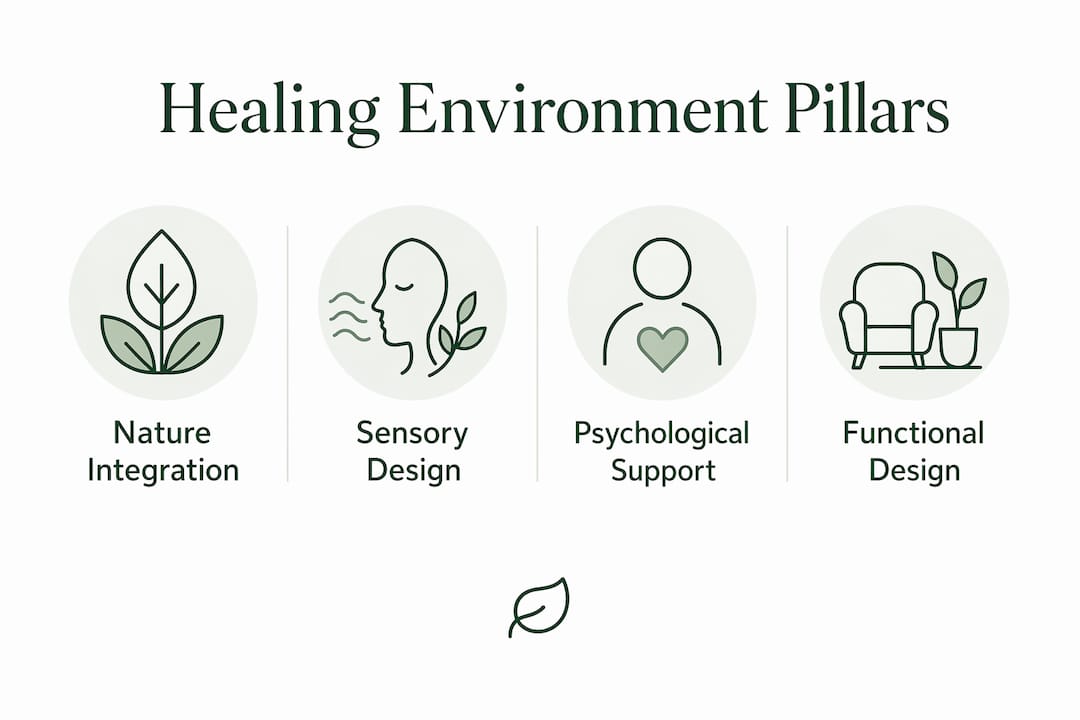
Nature integration
Natural elements are the most studied component of healing environment design. Plants, water features, views of greenery, and natural materials all reduce physiological stress markers. Natural daylight exposure remains the most cost-effective single intervention available in healing space architecture. Sunlight regulates circadian rhythms, lifts mood, and correlates directly with faster patient recovery and higher satisfaction scores.

Sensory design
Healing environments address all the senses, not just sight. Key sensory elements include:
- Ambient light: Warm, adjustable lighting reduces anxiety and supports sleep cycles.
- Sound management: Sound-dampening materials and soft reflective surfaces lower physiological stress as effectively as visual nature elements.
- Tactile comfort: Natural textures in fabrics, flooring, and furniture create a sense of warmth and safety that sterile surfaces cannot provide.
- Scent: Subtle, non-clinical aromas such as lavender or cedar reduce perceived stress without overwhelming sensitive patients.
Pro Tip: If you are designing or updating a clinical space, start with acoustics. Noise is the most frequently cited stressor in hospital patient surveys, and sound-absorbing panels are far less expensive than structural renovations.
Psychological support
Psychological safety is a healing environment characteristic that often gets overlooked in favor of visible design choices. Spaces that offer privacy, personal control over temperature and lighting, and clear wayfinding reduce the sense of helplessness that worsens recovery outcomes. Spaces supporting social interaction also facilitate psychological safety and better care outcomes by giving patients and families room to connect and communicate.
Functional and spatial design
Accessibility and ease of movement matter as much as beauty. Ergonomic layouts, wide corridors, and clearly marked exits reduce physical strain for both patients and staff. When people can move through a space without confusion or effort, their nervous systems stay calmer, and that calm supports healing.
What scientific evidence supports healing environments?
The research base for healing environments has grown substantially. Biophilic design elements produce measurable reductions in blood pressure and cortisol, two of the most reliable physiological markers of stress. Lower cortisol means faster tissue repair, better immune response, and reduced perception of pain.
The benefits extend to staff as well. When caregivers work in well-designed spaces, their concentration improves and their error rates drop. Environmental design reduces medical errors by alleviating the physical stress symptoms that impair cognitive performance. That finding alone makes healing environment investment a patient safety issue, not just a comfort upgrade.
Here is a summary of the evidence across key outcome categories:
| Outcome | Effect of healing environment design |
|---|---|
| Stress and anxiety | Reduced cortisol and blood pressure through nature and sensory design |
| Recovery time | Shorter hospitalization linked to biophilic and daylight interventions |
| Pain perception | Lower reported pain in spaces with natural views and calming acoustics |
| Medical errors | Fewer errors when staff work in low-stress, well-organized environments |
| Patient satisfaction | Higher scores in spaces that support privacy, control, and social connection |
Evidence-based wellness approaches confirm that these outcomes are not anecdotal. Peer-reviewed meta-analyses consistently show that the physical environment shapes health results in ways that rival many clinical interventions.
How do healing environments vary across patient populations?
A pediatric ward and a memory care unit serve completely different human needs. Healing environment design must adapt to those differences, because a one-size approach produces mediocre results for everyone.
Children respond strongly to color, playful shapes, and spaces where parents can stay close. Elderly patients prioritize safety, clear wayfinding, and reduced sensory overload. People recovering from addiction benefit from spaces that offer privacy and personal control, which rebuild the sense of agency that addiction erodes. Mental health settings require careful balance between stimulation and calm, with particular attention to privacy and social interaction zones that respect individual boundaries.
Cultural context shapes healing space design as well. Spatial arrangements that feel open and welcoming in one cultural context may feel exposed and unsafe in another. Patient-centered care frameworks address this by involving patients and families in design decisions from the start. Effective healing environments depend on collaboration between healthcare teams, architects, and patients to produce tailored, human-centered solutions.
The practical challenge is that most healthcare facilities serve mixed populations. The solution is modular flexibility: spaces that can be reconfigured, lighting that can be adjusted, and furnishings that can be rearranged to meet individual needs without full renovation.
How to create healing spaces: practical strategies for individuals and practitioners
You do not need an architecture degree or a large budget to apply healing environment principles. The core strategies scale from a hospital wing to a spare bedroom.
- Reduce visual clutter. Clutter signals disorder to the brain and keeps the nervous system alert. Clear surfaces, organized storage, and minimal decoration lower background stress without any other change.
- Maximize natural light. Move furniture toward windows. Use sheer curtains instead of blackout blinds during daytime hours. Natural light availability directly influences recovery speed and mood, making it one of the highest-return changes you can make.
- Choose calming colors. Soft blues, greens, and warm neutrals reduce arousal. Avoid high-contrast patterns in spaces meant for rest or recovery.
- Manage sound actively. Add soft furnishings, rugs, and acoustic panels to absorb noise. White noise machines or gentle sound therapy can mask disruptive background sounds in both clinical and home settings.
- Create social support zones. Include at least one comfortable seating area where two or more people can sit together without awkwardness. Connection accelerates recovery, and space design either invites or discourages it.
- Give people control. Adjustable lighting, accessible thermostats, and personal storage all restore a sense of agency. That sense of control is a direct psychological benefit of healing environments that reduces anxiety and improves cooperation with care plans.
Pro Tip: When working with a practitioner or designer, bring photos of spaces where you personally feel calm and safe. Your nervous system's response to specific environments is the most reliable guide you have.
Balancing technology with human-centered design is the final practical challenge. Screens, monitors, and medical equipment are necessary, but they should be positioned to minimize intrusion into the patient's visual field during rest. Conceal cables, dim indicator lights at night, and use equipment with quieter operation modes wherever possible.
Key takeaways
A healing environment is a designed space where nature, sensory balance, and psychological support work together to reduce stress and accelerate recovery for both patients and caregivers.
| Point | Details |
|---|---|
| Core definition | A healing environment integrates physical design and organizational culture to actively support recovery. |
| Nature is the anchor | Natural light and biophilic elements produce measurable reductions in cortisol and blood pressure. |
| Sensory design matters | Sound management and tactile comfort reduce stress as effectively as visual nature elements. |
| Customization is required | Children, elderly, and mental health patients each need tailored spatial and sensory approaches. |
| Anyone can apply it | Reducing clutter, maximizing light, and managing sound are accessible starting points for any space. |
The design shift healthcare still needs to make
Healing environments are not a trend. They are a correction. For decades, clinical spaces were designed around equipment and workflow, with human comfort treated as a secondary concern. The research now makes the cost of that approach visible: slower recoveries, higher error rates, and burned-out staff.
What I find most striking is how rarely the people who will use a space are consulted during its design. Architects meet with administrators. Administrators cite budgets. Patients and nurses, the people who actually live in these spaces, are brought in at the end, if at all. That sequence produces environments that are functional on paper and exhausting in practice.
The most effective healing spaces I have seen share one quality: they were designed through genuine collaboration among clinicians, patients, and designers from the very first meeting. That process is slower and more complicated. It also produces spaces that work. Transitioning from a tech-first model to a healing environment paradigm requires that early-stage collaboration, and skipping it is the single most common reason well-funded projects still fall short.
The emerging integration of augmented reality and biometric feedback into clinical spaces is genuinely exciting. But technology layered onto a poorly conceived environment does not fix the underlying problem. Get the light, the sound, the layout, and the culture right first. Then add the technology.
— Andrew
Goholistic and your path to a healing space
Finding the right support for your wellness space starts with understanding which therapies and practitioners align with your specific needs.
Goholistic connects you with verified practitioners across acupuncture, massage therapy, Ayurveda, and more than 200 other treatment types, all backed by evidence-based research. If you are building a healing environment at home or advising patients on complementary care, the holistic treatments library gives you a clear, research-supported starting point. You can also find practitioners near you who specialize in therapies that reinforce the sensory, psychological, and physical principles of healing space design.
FAQ
What is a healing environment in healthcare?
A healing environment in healthcare is a physical and organizational space designed to reduce patient stress, support recovery, and improve outcomes for patients, families, and staff through evidence-based design principles including biophilic elements, sensory management, and patient-centered layouts.
What are the main elements of a healing environment?
The four core elements are nature integration, sensory design (light, sound, and texture), psychological support (privacy and personal control), and functional spatial design that allows easy, stress-free movement.
Do healing environments actually improve patient outcomes?
Yes. Meta-analyses confirm that biophilic design and healing environment strategies reduce blood pressure, cortisol, and hospitalization time while improving patient and caregiver satisfaction.
Can I create a healing environment at home?
Absolutely. Reducing clutter, maximizing natural light, using calming colors, and managing ambient sound are all practical steps that apply the same principles used in clinical healing space design.
How does sound affect a healing environment?
Sound is a critical sensory factor. Noise increases physiological stress, while sound-dampening materials and calming auditory elements such as stress management techniques and soft background sound reduce anxiety and support recovery.