
TL;DR:
- Sound therapy uses specific tones, frequencies, and vibrations to promote relaxation and influence physiological states. It differs from music therapy, focusing on physics and body-based effects rather than emotional storytelling. While evidence shows promising physiological changes, individual responses vary, making it a valuable complement in personalized wellness routines.
Sound therapy is not just pressing play on a relaxing playlist. It is a distinct healing practice that uses specific tones, frequencies, and vibrations to shift your body's physiological state, and it has been part of human healing traditions for thousands of years. If you have heard the term but wondered exactly what is sound therapy and how it differs from simply listening to music, you are in the right place. This guide walks you through the science, the modalities, the honest evidence, and what to realistically expect so you can decide whether it belongs in your wellness routine.
Table of Contents
- Key takeaways
- What sound therapy is and how it works
- Types of sound therapy worth knowing
- Is sound therapy effective? What the research says
- Getting started safely with sound therapy
- My take on sound therapy's real place in wellness
- Explore sound therapy with Goholistic
- FAQ
Key takeaways
| Point | Details |
|---|---|
| Sound therapy is not music therapy | It uses tones and frequencies without lyrics to influence the nervous system and promote relaxation. |
| Multiple modalities exist | Sound baths, binaural beats, and vibroacoustic therapy each work through different mechanisms and suit different goals. |
| Evidence is promising but mixed | Some studies show measurable physiological changes; others are limited by small sample sizes and varied methodology. |
| Safety first | Consult a healthcare provider before starting, especially if you have cardiac arrhythmia, epilepsy, or implanted devices. |
| It complements, not replaces, medical care | Sound therapy works best as part of a broader, personalized wellness plan rather than a standalone treatment. |
What sound therapy is and how it works
At its core, sound therapy is the intentional use of specific tones, frequencies, and vibrations to promote relaxation and symptom relief. That definition matters because it separates sound therapy from the broader category of music therapy, which typically involves lyrics, emotional storytelling, and guided therapeutic dialogue. Sound therapy is more about the physics of sound meeting the biology of your body.
The way sound enters your system happens through two channels simultaneously. Your ears process auditory signals in the conventional sense, but your skin, bones, and soft tissue also pick up vibrations. This is why certain sounds feel like they resonate inside you rather than just around you. Those vibrations travel through your nervous system and can influence your physiological state in measurable ways.
Here is what researchers have observed sound therapy doing to the body:
- Increasing parasympathetic nervous system activity, which is the "rest and digest" mode that counters the stress response
- Reducing cortisol levels and lowering heart rate
- Producing measurable EEG and ECG shifts indicating improved relaxation and concentration after a single session
- Slowing brainwave activity from alert beta states toward calmer alpha and theta states
"Sound therapy is grounded in the idea that frequency and vibration can create physiological changes, making it a genuinely body-based practice rather than a purely psychological one."
Understanding how does sound therapy work also requires acknowledging that the effects vary by person. Your nervous system's baseline state, your sensitivity to sound, and even your cultural relationship with certain tones all influence outcomes. This is not a weakness of the practice. It is simply the reality of working with something as personal as perception.
Types of sound therapy worth knowing
The term "sound therapy" is an umbrella that covers several distinct modalities. Knowing the difference helps you choose what actually fits your goals rather than booking something generic and hoping for the best.
Sound baths
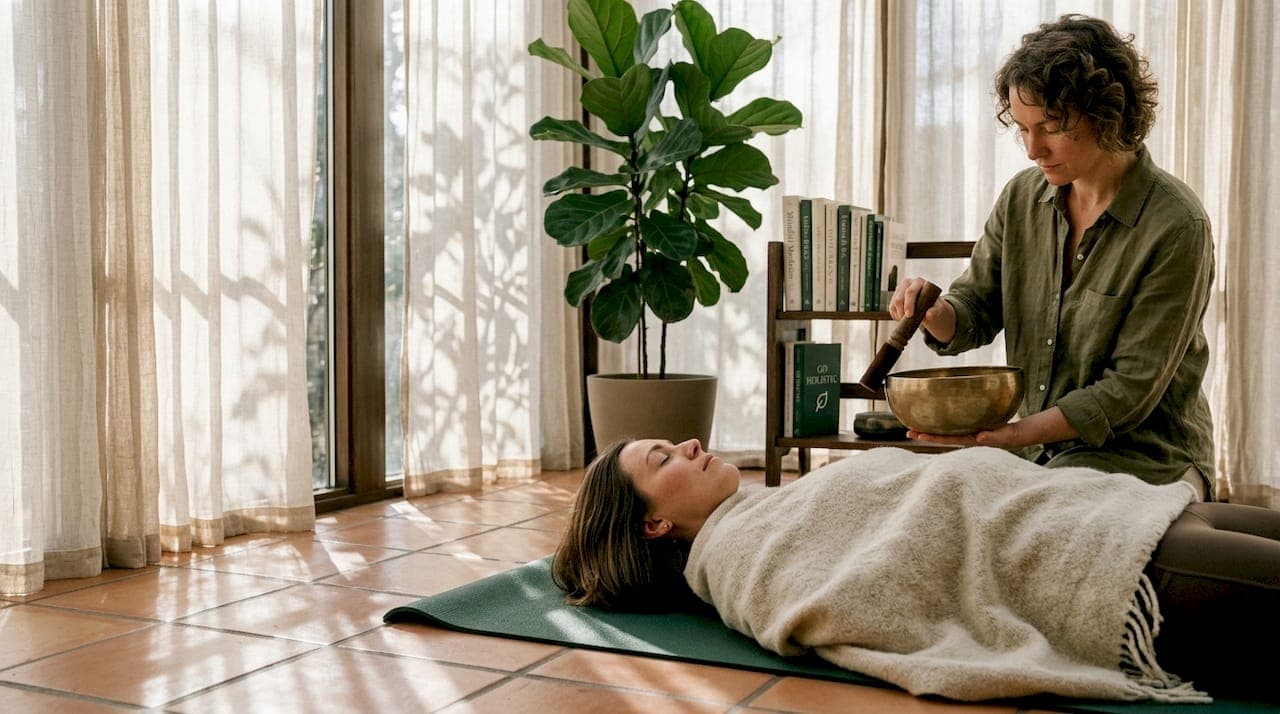
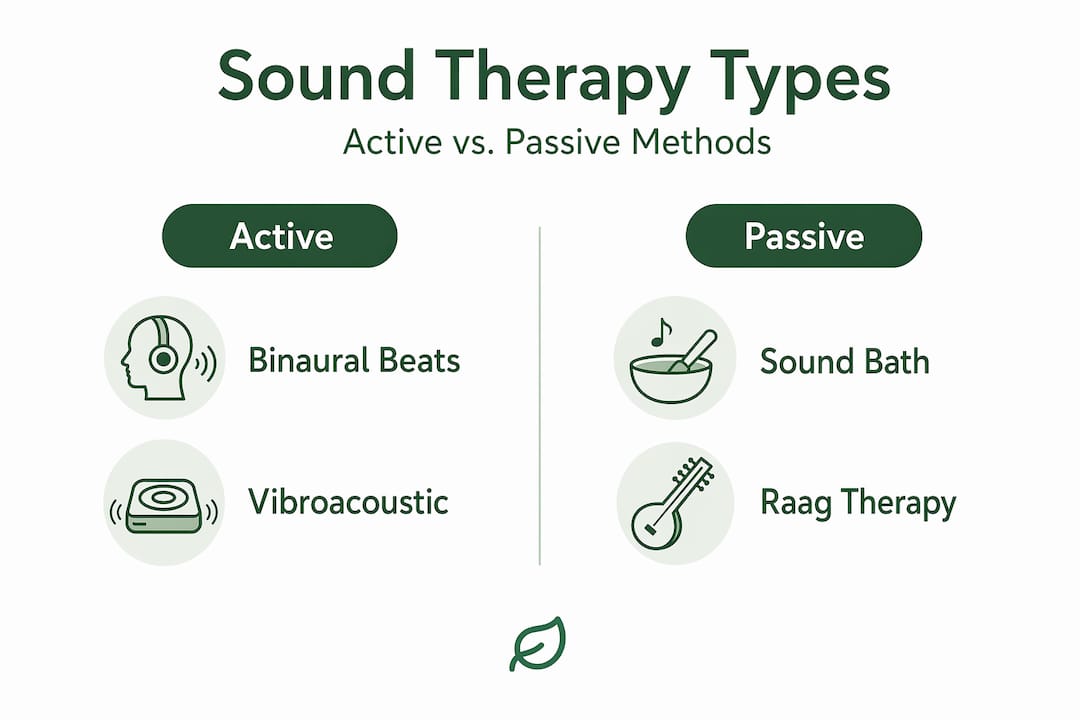
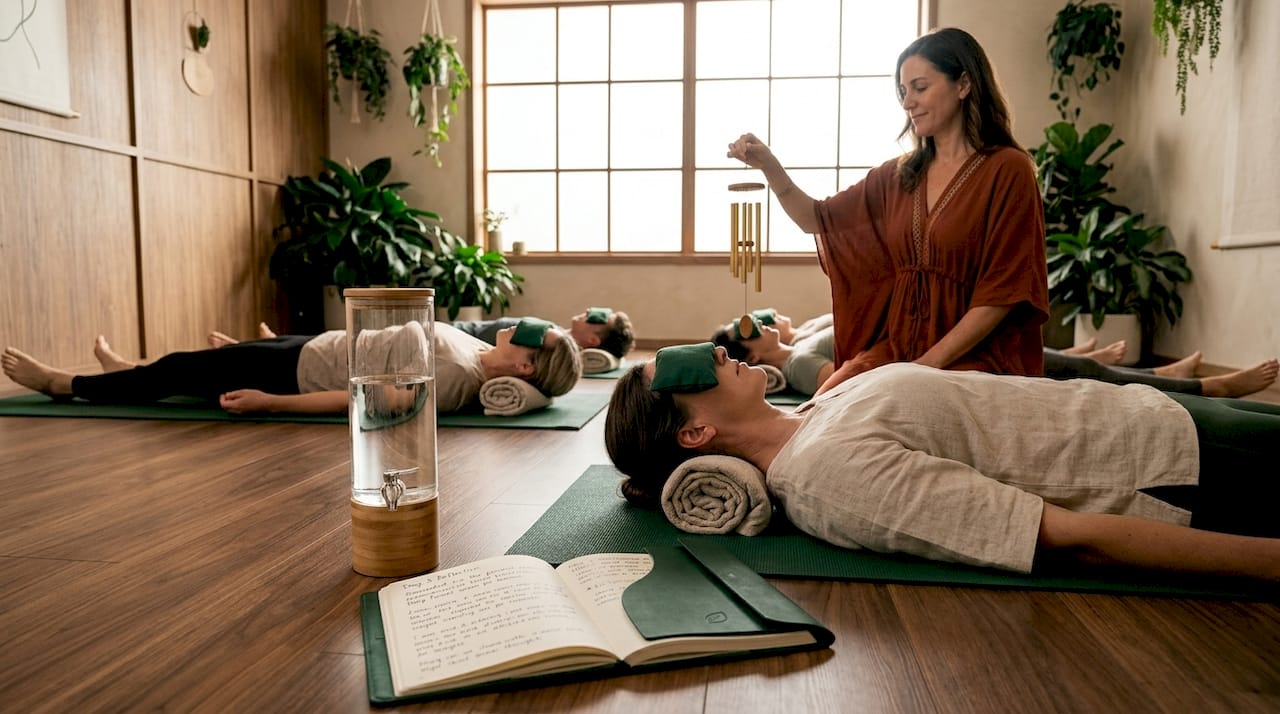
A sound bath is exactly what it sounds like, minus the water. You lie down, usually on a mat with a blanket, while a practitioner plays instruments like Tibetan singing bowls, crystal bowls, gongs, or chimes. The sounds wash over you in waves, creating an immersive auditory environment designed to slow your mental activity and relax your muscles. Sound baths and vibroacoustic therapy are fundamentally different in their delivery, though both aim for deep relaxation. Sound baths are purely auditory; you are not physically vibrated by a machine.
Binaural beats
Binaural beats involve playing two slightly different frequencies in each ear through headphones. Your brain perceives a third "beat" at the difference between those two frequencies, which is an auditory illusion that can nudge your brainwaves toward a target state. Theta frequencies around 4 to 8 Hz are associated with deep relaxation and creativity. Alpha frequencies around 8 to 13 Hz support calm focus. This is one of the most accessible sound therapy techniques because you can practice it at home with a decent pair of headphones.
Vibroacoustic therapy
Vibroacoustic therapy takes a more physical approach. Low-frequency sound and vibration are delivered directly through a specialized chair, mat, or bed, so your whole body vibrates at controlled frequencies. Practitioners use this approach for muscle relaxation, pain reduction, and circulation support. It is common in clinical settings for people dealing with chronic pain or movement disorders.
Here is a quick comparison to help you orient:
| Modality | Delivery method | Primary goal | Best for |
|---|---|---|---|
| Sound bath | Ambient instruments (bowls, gongs) | Deep relaxation, stress relief | Stress, anxiety, sleep issues |
| Binaural beats | Headphones with frequency pairs | Brainwave entrainment, focus | Focus, meditation, mild anxiety |
| Vibroacoustic therapy | Vibrating mat or chair | Physical relaxation, pain relief | Chronic pain, muscle tension |
Other traditions also use sound as medicine. Indian classical Raag therapy, for example, uses specific melodic structures believed to affect different organs and emotional states. These ancient sound healing practices remind us that the connection between sound and wellness is not a modern trend. It has been explored across cultures for centuries.
Pro Tip: If you are new to sound therapy, start with a community sound bath before investing in equipment or private sessions. It is a low-barrier way to test how your body responds to therapeutic sound.
Is sound therapy effective? What the research says
The honest answer is that the evidence is promising in some areas and underdeveloped in others. Sound therapy is more rooted in personal experience than strong scientific proof at this stage, and that is largely a function of the research landscape rather than a verdict on the practice itself. Many studies are small, use inconsistent protocols, or focus on a single modality, making broad conclusions difficult.
That said, specific findings are worth noting:
- A 2026 PubMed study found that theta binaural beats at 6 Hz significantly increased calmness and focus in self-administered sessions, with robust statistical effect sizes.
- A 2024 study measuring ECG and EEG during vibroacoustic therapy showed increased parasympathetic activity and reduced arousal markers after a single session.
- Research on sound baths consistently shows participants reporting reduced tension and anxiety, though self-reported outcomes are subject to placebo effects.
One important nuance: individual preferences and cultural context significantly shape how sound interventions land. A soundscape that triggers deep calm in one person may feel agitating to another. This variability is why researchers call for personalized approaches rather than one-size-fits-all protocols.
Sound therapy for anxiety has attracted the most consistent interest among wellness practitioners and researchers alike. The parasympathetic nervous system activation that sound baths and certain sound frequencies appear to trigger directly counters the physiological hallmarks of anxiety, such as elevated heart rate and cortisol. That mechanism is biologically credible, even if large-scale trials are still catching up.
"Sound therapy works best when you treat it as one supportive tool within a broader wellness plan, not as a substitute for medical or mental health care."
You can explore how non-invasive treatments like sound therapy fit into a broader evidence-based approach to holistic care on the Goholistic blog.
Getting started safely with sound therapy
Before you book a session or download a binaural beats app, a few practical considerations will set you up for a genuinely useful experience rather than a random one.
Check with your healthcare provider first. This matters most if you have any of the following:
- Cardiac arrhythmia or a pacemaker
- Epilepsy or a history of seizures
- Cochlear implants or other implanted devices
- Severe anxiety or trauma history that may be triggered by altered states
For most healthy adults, consulting a primary care physician before starting is a low-barrier step that simply makes good sense. Sound therapy is generally low-risk, but vibroacoustic therapy in particular involves physical vibration, which is worth discussing if you have underlying conditions.
Once you have cleared that step, match your modality to your goal:
- Stress and anxiety relief: Start with a group sound bath or try a 20-minute binaural beats session before bed.
- Sleep improvement: Theta frequency binaural beats in the 4 to 7 Hz range are well-suited to pre-sleep routines.
- Chronic pain or muscle tension: Vibroacoustic therapy sessions with a certified practitioner are more appropriate than self-guided audio.
- Focus and meditation deepening: Alpha binaural beats or low-volume singing bowl recordings work well as background during seated meditation.
For self-guided use, consistency matters more than session length. Twenty minutes three times a week will produce more noticeable effects than a single 90-minute session once a month. You can also look into alternative therapies in 2026 to see how sound therapy fits alongside other complementary approaches.
Pro Tip: When trying binaural beats, use quality over-ear headphones rather than earbuds. The frequency separation between ears is key to the effect, and poor audio separation diminishes the experience significantly.
My take on sound therapy's real place in wellness
I have spent years watching wellness trends arrive with enormous promises and quietly fade when they fail to deliver miracles. Sound therapy has not done that. What I have observed is something quieter and more sustainable: people using it consistently and finding it genuinely supportive, not transformative in a dramatic sense, but meaningfully calming in ways that compound over time.
The most common misconception I encounter is that sound therapy needs to produce an immediate, obvious effect to be working. It usually does not operate that way. The shifts are often subtle. A nervous system that is slightly less reactive. Sleep that comes a little more easily. A meditation session that goes a little deeper. These are not headline-worthy outcomes, but they matter.
What I find genuinely interesting about the current research is the physiological specificity. We are not just talking about people feeling relaxed because they sat quietly for an hour. EEG and ECG data from sound therapy sessions show measurable changes in how the nervous system is operating. That is meaningful, even if the field still needs larger, more rigorous trials.
My honest recommendation is to approach sound therapy the way you would any complementary practice: with curiosity, realistic expectations, and a willingness to track what actually changes for you personally. Keep it part of a broader wellness plan rather than a solo solution. And if a modality does not resonate within a few honest attempts, try a different one. The variety of sound healing practices available means there is likely a format that fits your nervous system's specific preferences.
— Andrew
Explore sound therapy with Goholistic
Ready to take the next step beyond reading about it?
Goholistic connects you with certified holistic health practitioners across disciplines, including specialists in sound therapy, vibroacoustic therapy, and other holistic health treatments that support your overall well-being. The platform uses AI to match your specific health concerns with evidence-backed treatment options and verified providers, so you are not guessing who to trust. Whether you want to browse the treatment library, filter practitioners by specialty, or book a consultation at your own pace, Goholistic makes it straightforward. Visit the practitioner directory to find a sound therapy specialist near you and start your personalized wellness plan today.
FAQ
What is sound therapy in simple terms?
Sound therapy is the use of specific tones, frequencies, and vibrations, such as singing bowls, binaural beats, or vibroacoustic equipment, to promote relaxation and support physical and emotional well-being. It differs from music therapy because it does not rely on lyrics or narrative.
How does sound therapy work on the body?
Sound therapy works through both auditory processing and physical vibration, influencing the nervous system to increase parasympathetic activity, reduce stress hormones, and shift brainwave states toward calmer frequencies. Measurable EEG and ECG changes have been recorded after single sessions.
Is sound therapy effective for anxiety?
Research shows sound therapy can reduce anxiety symptoms by activating the parasympathetic nervous system and lowering physiological stress markers, though evidence varies by modality and individual. It is best used as a complement to other anxiety management strategies rather than a standalone treatment.
What should I expect in my first sound therapy session?
You will typically lie down in a comfortable position while a practitioner uses instruments or equipment to create therapeutic sound around or through you. Most people feel deeply relaxed during and after the session, though effects vary and may become more noticeable with regular practice.
Is there a difference between music therapy and sound therapy?
Yes. Music therapy generally involves lyrics, emotional engagement with musical narratives, and a licensed therapist guiding sessions. Sound therapy focuses on pure frequencies, tones, and vibrations without lyrical content, targeting physiological states rather than emotional processing through storytelling.