
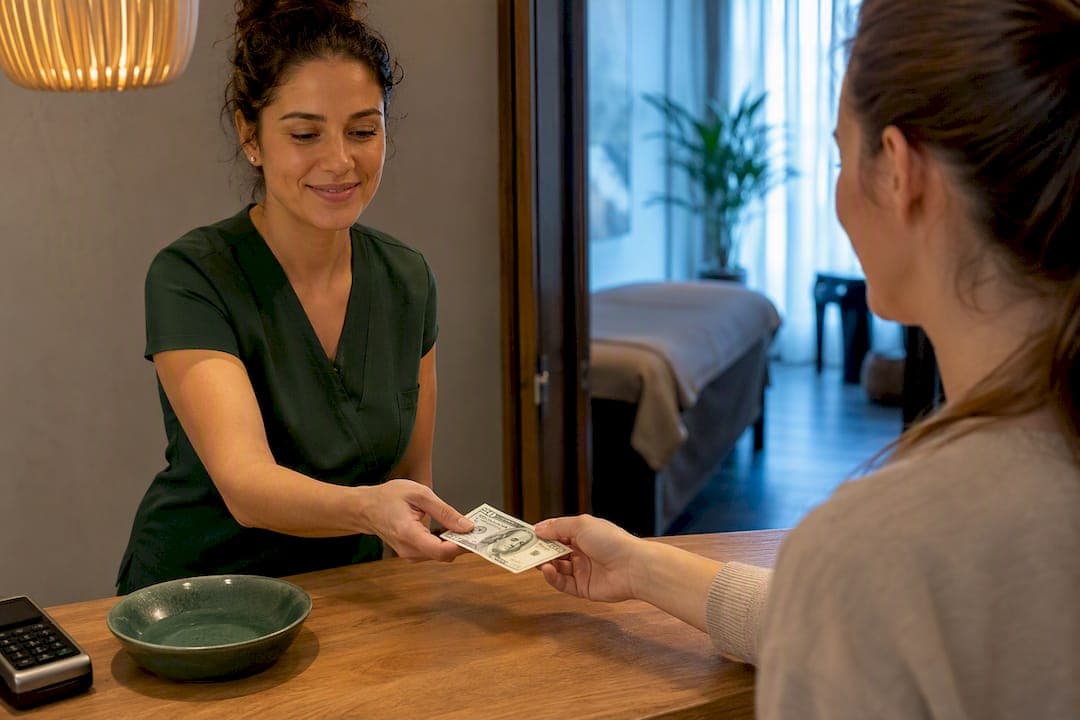
Tipping is customary for relaxation and wellness massages in the United States, and 15 to 20% is the range to work with, with 18% serving as a solid, no-fuss baseline. Push to 20% or more when the therapist genuinely went above and beyond. The one major exception: massage billed through insurance or performed in a medical clinic is treated like healthcare, where gratuity generally isn't expected at all.
TL;DR:
- Tipping for wellness massages in the US typically ranges from 15% to 20%, with 18% as a standard baseline, but no tip is expected for medical or insurance-billed massages.
- Tip on the full, regular price regardless of discounts, coupons, or gift cards, and round to the nearest dollar when paying in cash; pay directly to the therapist if possible.
- For in-home or mobile massages, tip 20% to 25%, and be aware that hotels often include an 18% to 20% service charge already in the bill.
- When booking through a platform like Goholistic, check whether the practice is clinical or wellness to confirm if tipping is expected beforehand.
- Reduce or skip tips only if service was genuinely poor or if there was unprofessional conduct; otherwise, tip generously for accommodating last-minute requests or difficult knots.
Table of Contents
- How Much Should You Tip for a Massage?
- When Is Tipping Not Expected for Massage?
- Tipping for Couples Massages, Hotels, and Gift Cards
- Cash or Card: How to Actually Hand Over the Tip
- Quick Math Tricks for Tipping Without a Calculator
- Should You Ever Skip or Reduce the Tip?
- How Goholistic Helps You Confirm Tipping Policy Before You Book
- A Straightforward Take on Massage Tipping
- Book a Licensed Massage Therapist With Clear Pricing Up Front
- Sources
How Much Should You Tip for a Massage?
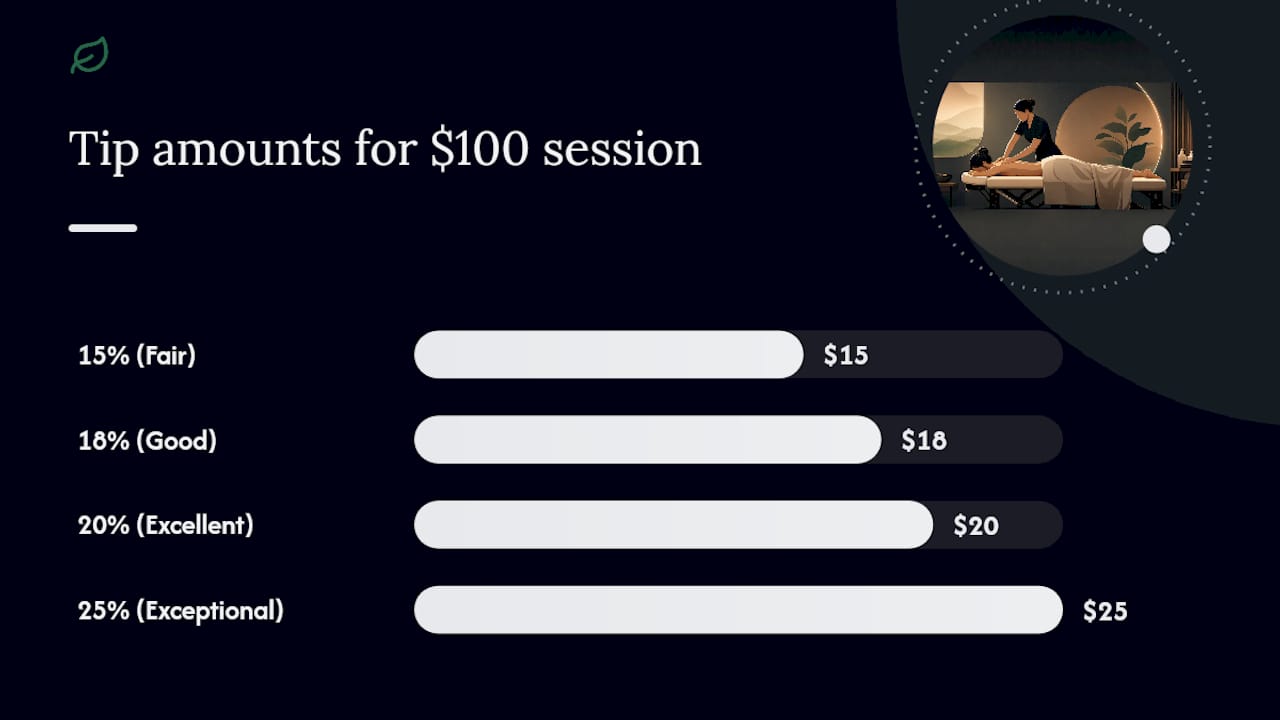
Think of massage tipping in four tiers, the same way you'd think about tipping a hairstylist or a server. 15% covers a session that was fine but unremarkable. 20% tells your therapist the session was excellent, real pressure where you needed it, attentive check-ins, no rushing.
The math gets easier once you anchor it to real prices. A $60–$150 range covers most spa and studio sessions in the U.S., and here's how that breaks down at each tier:
| Session Price | 15% (Fair) | 18% (Good) | 20% (Excellent) | 25% (Exceptional) |
|---|---|---|---|---|
| $60 | $9 | $11 | $12 | $15 |
| $80 | $12 | $14 | $16 | $20 |
| $90 | $12 | $16 | $18 | $23 |
| $100 | $15 | $18 | $20 | $25 |
| $130 | Moderate | Higher Moderate | High | Very High |
| $150 | Moderate | Higher Moderate | High | Very High |
Round to the nearest dollar. Nobody's handing over exact change, and therapists won't blink if you round $19.50 up to $20.
One rule trips people up more than any other: tip on the full, regular price of the service, not the discounted rate you actually paid. If you used a coupon, a membership rate, or a gift card, the therapist still did the same work at full value, so tipping guidance across the industry consistently points to tipping against the sticker price, not your discounted total.
When Is Tipping Not Expected for Massage?
The clinical versus spa distinction is the single biggest factor in whether you should tip at all, and it has nothing to do with how fancy the room looks. A massage performed under a doctor's referral, inside a chiropractic office, or as part of physical therapy is treated as healthcare, and gratuity generally isn't expected in that setting. You wouldn't tip your physical therapist for a session of manual therapy, and medical massage sits in that same category.
The logic makes sense once you see it laid out. Spa and wellness massage is a personal-service business built around discretionary spending, closer to a haircut than a hospital visit. Medical massage runs through insurance codes, treatment plans, and licensed clinical billing, where tipping would actually be unusual and sometimes against clinic policy.
If you're not sure which category you're in, a few quick checks settle it:
- Ask the front desk directly: "Does this session get billed through insurance, or is this a wellness visit?"
- Look at your paperwork. Insurance forms, CPT billing codes, or a doctor's referral all point to a medical setting.
- Check whether the practice calls itself a clinic, a physical therapy office, or a chiropractic center, versus a spa or wellness studio.
- When in doubt, asking whether gratuity is included is a completely normal question, not an awkward one.
Some independent practitioners and boutique studios also build all-inclusive pricing into their rates specifically so tipping isn't part of the transaction. That's worth confirming before your appointment, not after.
Tipping for Couples Massages, Hotels, and Gift Cards
A handful of situations complicate the simple percentage math, and each one has a clean answer once you know the rule.
- Couples or four-hands massage: tip each therapist separately at 15 to 20%, or split your total tip evenly so each person receives a fair 15 to 20% of their portion of the service.
- Mobile or in-home massage: tip 20 to 25% on the service itself, since the therapist is hauling a table and gear to your door; if a separate travel fee appears on your bill, that fee usually doesn't need its own tip on top.
- Hotel and resort spas: check your itemized receipt before adding cash. Many resorts already build in an 18 to 20% service charge, and guests who miss that line item frequently end up double-tipping without meaning to.
- Franchise memberships and gift cards: tip on the full retail value of the session, not the discounted member rate you actually paid or the amount printed on the gift card.
That last point deserves a second look, because gift card confusion is common. If a $100 massage was gifted to you at no cost, your therapist still performed a $100 service, so an $18 to $20 tip is appropriate even though you personally spent nothing.
Cash or Card: How to Actually Hand Over the Tip
Cash gets to your therapist the same day, in full. Card tips sometimes get pooled among staff, delayed in processing, or trimmed slightly by transaction fees, so cash is often the preferred method when you want your money to land directly with the person who worked on you.
Here's a simple sequence to follow at checkout:
- Decide your percentage before you reach the front desk, so you're not doing math under pressure.
- If you're tipping in cash, hand it directly to your therapist rather than leaving it with the receptionist, unless the studio has a tip jar or envelope system.
- If you're tipping on a card, ask the front desk to confirm the charge splits correctly, especially for couples sessions with two therapists.
- If your receipt lists a "service charge," ask what portion, if any, actually reaches the therapist before you add an extra tip.
- If you're still unsure of the policy, just ask: "Is gratuity included, or is that something I add separately?"
Pro Tip: Carry a few small bills before your appointment. Studios don't always have change on hand, and showing up with a $20 and a $5 gives you flexibility no matter how the math shakes out.
Quick Math Tricks for Tipping Without a Calculator
You don't need your phone to figure out a tip. On a $90 massage, that's $9 doubled, or $18.
Then round up slightly toward $18 if the service was solid.
Real numbers make this stick faster than formulas:
- $60 session: $11 at 18%, $12 at 20%
- $80 session: $14 at 18%, $16 at 20%
- $90 session: $16 at 18%, $18 at 20%
- $100 session: $18 at 18%, $20 at 20%
- $130 session: $23 at 18%, $26 at 20%
- $150 session: $27 at 18%, $30 at 20%
- $200 session: $36 at 18%, $40 at 20%
For discounted or membership sessions, run the same math against the full retail price, then round up to the nearest dollar for simplicity.
Should You Ever Skip or Reduce the Tip?
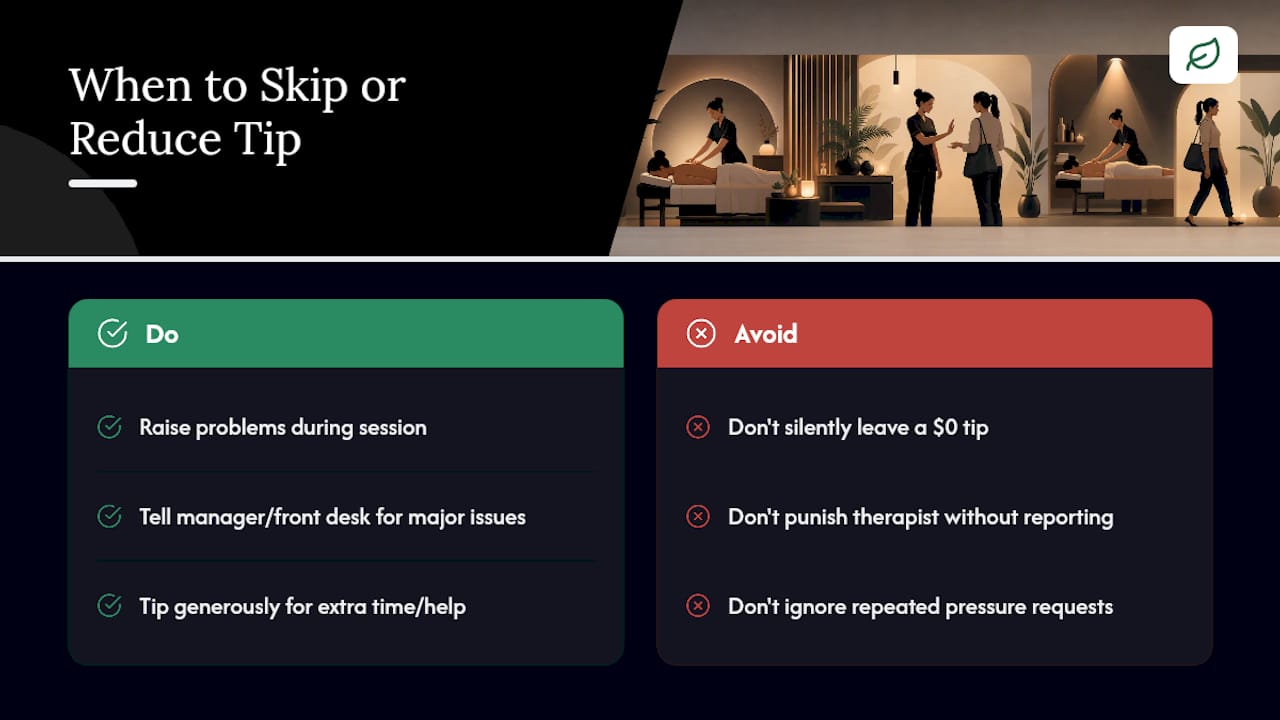
A reduced tip is reasonable when service was genuinely poor and you already raised the concern during the session, not silently after the fact. Unprofessional behavior, ignoring your pressure requests repeatedly, or ending the session early without explanation are fair reasons to tip on the lower end or skip it.
But a bad massage usually calls for a conversation with the manager first, not a punishing $0 tip left for the therapist. Front desk staff can often address the issue directly or offer a partial refund, which handles the real problem more effectively than silence.
On the flip side, tip generously when a therapist accommodates a last-minute request, works through an especially tough knot, or stays a few extra minutes to finish properly.
How Goholistic Helps You Confirm Tipping Policy Before You Book
Not knowing whether a session counts as medical or wellness care is the root of most tipping confusion, and it's exactly the gap Goholistic's directory is built to close.
- Every practitioner profile notes whether the practice is clinical or spa/wellness, so you know your tipping expectations before you ever book.
- Verified provider listings include treatment summaries, letting you confirm what type of massage you're getting and whether insurance billing applies.
- Filters let you search specifically for licensed massage therapists by discipline, location, and practice type, cutting out the guesswork.
- Resources on insurance coverage for massage therapy and FSA eligibility rules help you understand exactly which sessions fall into the "no tip expected" category.
Checking this ahead of time means you show up with cash in hand or peace of mind that none is needed, instead of fumbling at the front desk.
A Straightforward Take on Massage Tipping
Most of the confusion around massage tipping isn't really about percentages. It's about context. Get that part right, and the math practically takes care of itself.
If you're ever unsure which category you're in, ask before your session starts, not while you're standing at the register with cash in hand feeling awkward. A quick look at your practitioner's profile through a resource like Goholistic's checklist for holistic wellness sessions can settle that question before you even arrive.
— Andrew
Book a Licensed Massage Therapist With Clear Pricing Up Front
Guesswork about tipping usually comes from booking blind, calling around, checking review sites, hoping the practice you land on is actually licensed and upfront about its pricing. Some wellness marketplaces aim to reduce that uncertainty by providing practice type, credentials, and pricing details before you pick up the phone.
Every listing in the directory of holistic health practitioners shows whether a provider operates as a clinical practice or a wellness studio, which tells you immediately whether tipping applies. You can filter by massage discipline, read verified credentials, and see practice details side by side instead of piecing that information together from five different websites. When studio policies on gratuity are listed, you'll see them right on the profile.
If you're ready to book, browse massage and holistic treatments near you and check each provider's practice type before your first appointment. It takes the uncertainty out of tipping and puts you in front of a licensed therapist who's already been verified.
Sources
- Tipping Etiquette: How Much to Tip Massage Therapist- Beyond Borders
- How Much to Tip for a Massage: Simple Rules and a Table | RelaxTouch
- How Much to Tip a Massage Therapist: Exact Amounts for Every Setting (2026)