

Massage therapy is FSA eligible only when it treats a diagnosed medical condition, not general relaxation. Most plans require a Letter of Medical Necessity from a clinician for massage therapy to be FSA eligible, although the FSAFEDS program allows massage therapy with a detailed receipt alone. Two FSA types, the Limited Purpose FSA and Dependent Care FSA, never cover massage under any circumstances.
TL;DR:
- FSA reimbursement for massage therapy requires a documented medical condition, with most claims needing a Letter of Medical Necessity from a clinician.
- The claim must be supported by an itemized superbill including provider details, treatment description, and service dates to avoid rejection.
- Only licensed clinicians can issue valid LMNs, which should specify diagnosis, treatment reasoning, and session frequency, preferably covering a 12-month period.
- Booking with verified practitioners through a directory like Goholistic simplifies the process, as they provide compliant paperwork and treatment descriptions upfront.
- Massage booked purely for relaxation or subscription memberships is never eligible, and proper documentation is critical for avoiding delays or denials.
Table of Contents
- What Makes Massage a Qualified Medical Expense?
- What Documents Do FSA Administrators Actually Require?
- How Do You Get an LMN and Submit a Claim?
- How Do You Avoid Denials and Stay Audit Ready?
- How Goholistic Helps You Document Massage for FSA Claims
- What This Guide Gets Right That Most Advice Misses
- Ready to Book a Massage Therapist Who Documents It Right?
- Sources
What Makes Massage a Qualified Medical Expense?
The IRS defines medical care broadly: expenses for the diagnosis, cure, mitigation, treatment, or prevention of disease qualify, while anything aimed at general health or well-being does not. That distinction is the whole ballgame for massage therapy. A rubdown after a long week at the office is a comfort expense. A series of sessions ordered by your doctor to manage a diagnosed spinal condition is medical care.
In practice, administrators tend to approve massage claims tied to specific, documented conditions. Chronic back pain, fibromyalgia, post-surgical rehabilitation, sciatica, and injury recovery from something like a car accident or sports injury are the conditions that show up most often in approved claims. What connects them is that each has a diagnosis attached to it, and a clinician can point to massage as part of the treatment plan.
Here's where people get tripped up:
- A massage booked purely for stress relief or as a pampering treat does not qualify, even if stress technically affects your health.
- Spa memberships, wellness club dues, and recurring subscription packages are treated as non-eligible regardless of how you use them, a rule FSAFEDS states outright.
- A single receipt that just says "massage" with no clinical context rarely survives a substantiation request.
The pattern administrators look for is consistency between your stated condition, your provider's notes, and the treatment billed. Massage therapy typically qualifies for reimbursement only when a licensed clinician issues a Letter of Medical Necessity that ties the sessions to that diagnosis. Without that link, even a legitimate massage therapist's invoice can get rejected.
What Documents Do FSA Administrators Actually Require?
Two documents carry almost all the weight in a massage therapy claim: the detailed receipt (sometimes called a superbill) and the Letter of Medical Necessity. Knowing exactly what belongs in each one saves you from a denied claim and a frustrating back and forth with your plan administrator.
A compliant detailed receipt or superbill should include:
- The provider's full name and business address.
- The provider's license number or professional credential.
- The date of each service performed.
- A description of the treatment (not just "session," but the modality, such as deep tissue or myofascial release).
- The amount charged for that specific service, separate from any tip, product, or membership fee.
Itemized superbills that clearly list the therapist's license and a specific treatment description tend to clear review far more smoothly than a generic card receipt.
The Letter of Medical Necessity is the second pillar, and most private-sector FSA plans require one before they will reimburse massage at all. An LMN typically comes from an MD, DO, nurse practitioner, or physician assistant, and in some cases a chiropractor, and it needs to state the diagnosis, explain why massage is part of the treatment, and specify a frequency and duration. Most administrators accept an LMN that covers a course of treatment for up to 12 months before requiring renewal.
Pro Tip: Ask your provider to keep language on the LMN specific to your diagnosis code and treatment plan. Vague wording like "for general wellness" is the single most common reason administrators bounce a claim back for more information.
One caution worth repeating: massage devices, chairs, and equipment need their own LMN and receipt, separate from your therapist's invoice, and membership dues are excluded no matter what documentation you attach.
How Do You Get an LMN and Submit a Claim?
Getting from "I want this covered" to "my claim is approved" follows a fairly predictable sequence, and skipping a step is usually what causes delays.
- Check your specific plan's rules with your FSA administrator first. Some private plans require pre-authorization or a specific LMN template, and confirming this before you book saves you a rejected claim later.
- Talk to the clinician managing your diagnosed condition, whether that's your primary care doctor, an orthopedist, or a physical therapist, about whether massage fits your treatment plan.
- Request the LMN using specific, diagnosis-linked language rather than generic wording about stress or wellness.
- Book your sessions with a licensed massage therapist and get an itemized superbill after each visit, or a summary superbill covering a course of treatment.
- Submit both documents, the LMN and the superbill, together with your reimbursement request.
Some readers use telehealth options for the LMN step, where a clinician reviews your history in a short virtual visit and issues the letter, often valid for a similar 12-month window. This can be faster than waiting for your next in-person appointment, though the letter still needs to reflect a real evaluation and a genuine diagnosis.
If your administrator asks for more information, don't panic. This is common with dual-purpose expenses like massage. Respond with a supplemental note from your clinician clarifying the treatment goal, and resubmit with both documents attached rather than piecemeal. Most denials at this stage get reversed once the paperwork lines up.
How Do You Avoid Denials and Stay Audit Ready?
A credit card slip that shows a dollar amount and a business name will not survive a substantiation request. Administrators need to see the treatment type, the date, and the provider's credential, so ask for a proper itemized superbill at checkout every time, not just when you remember.
A few habits keep your paperwork clean:
- Pay for any retail items, tip, or membership add-on as a separate transaction from the therapeutic service itself.
- Request itemization at the time of payment rather than trying to reconstruct it later from memory.
- Keep copies of every LMN and superbill for at least three years, since that's the general window administrators and the IRS can look back for verification.
- If you get audited or a claim is denied, appeal with your original documentation plus a brief cover note explaining the diagnosis and treatment link.
Pro Tip: Snap a photo of every superbill the day you receive it and store it in a dedicated folder. A missing receipt six months later is the most common reason a legitimate claim gets denied on appeal.
How Goholistic Helps You Document Massage for FSA Claims
Finding a massage therapist is easy. Finding one who can hand you a compliant superbill without three follow-up emails is the actual challenge, and it's one Goholistic was built to solve. Every practitioner in the verified provider directory has their license and credentials confirmed before they're listed, which means the paperwork you need for an FSA claim is already part of how they operate.
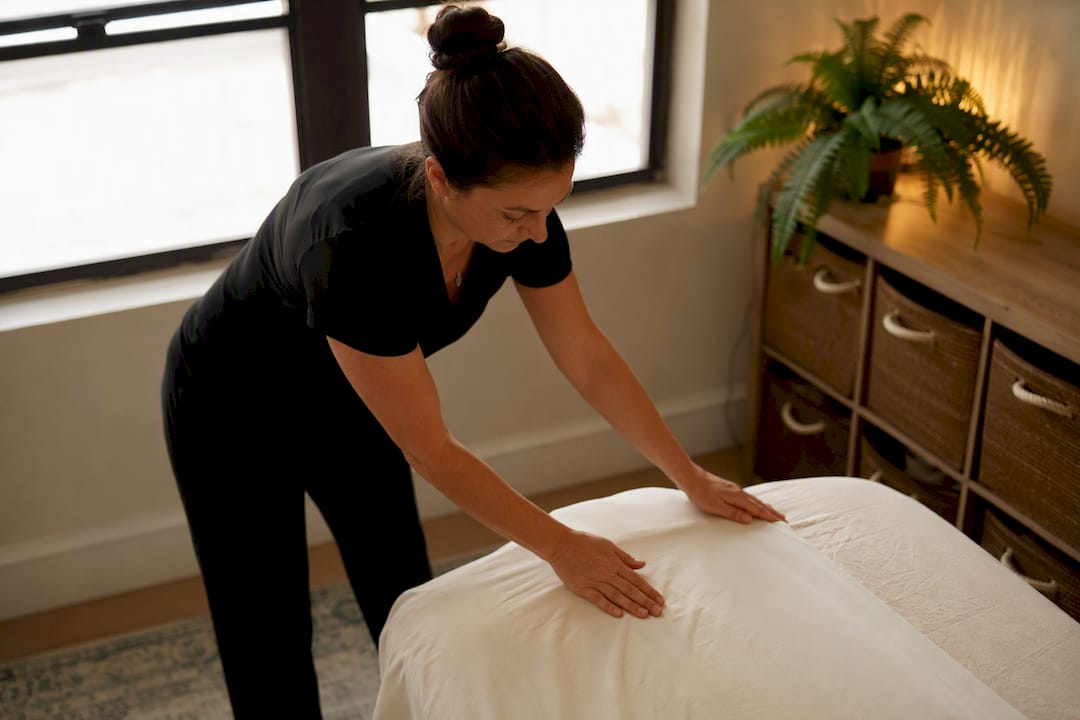
The treatment library also helps you walk into your doctor's office with the right language already in hand, since it explains which massage modalities pair with which conditions in plain terms. That makes the LMN conversation with your clinician faster, because you're not starting from scratch trying to describe what deep tissue or myofascial work actually does.
Booking through a directory that already screens for licensing removes one of the biggest friction points in this whole process: chasing down a provider after the fact to ask for a properly itemized receipt.
What This Guide Gets Right That Most Advice Misses
Most articles on this topic treat the Letter of Medical Necessity as a formality, a box to check. That undersells how much it actually determines. The real decision point isn't whether massage "counts" as medical care in the abstract. It's whether your specific provider will write a letter that ties your specific diagnosis to a specific treatment frequency. Vague advice to "ask your doctor for a note" sets people up for denials.
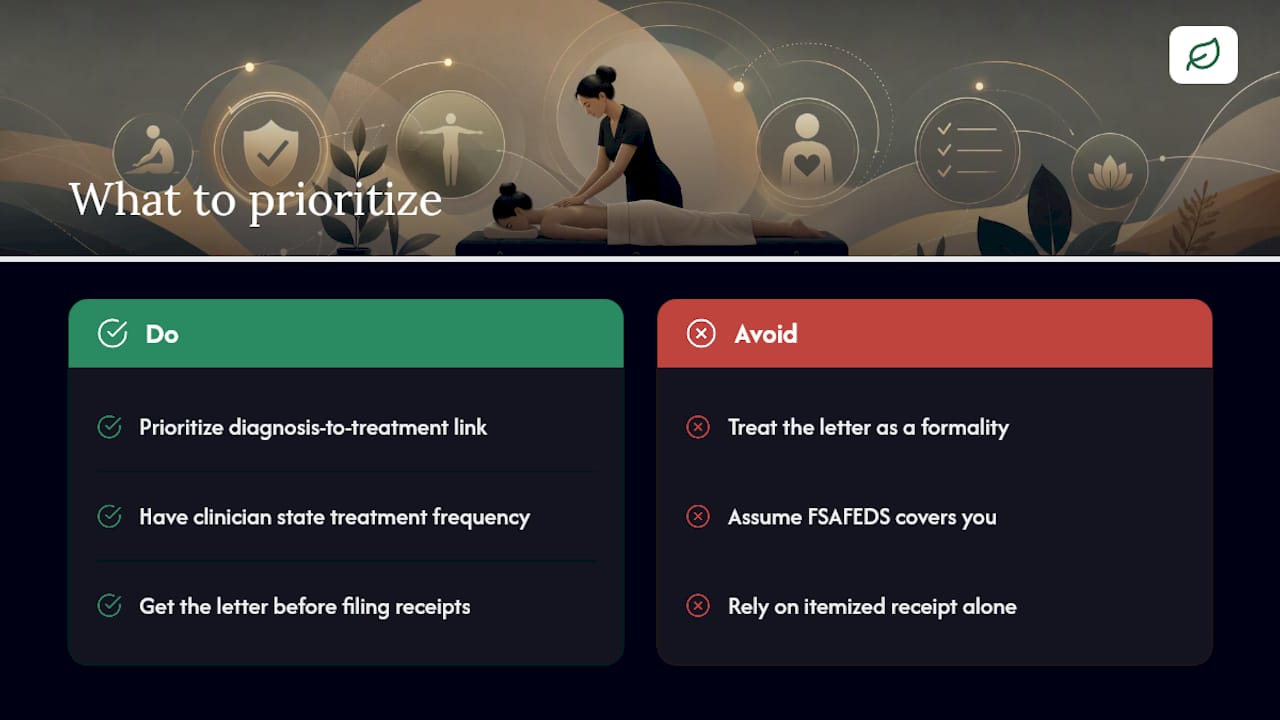
The other place conventional advice falls short is treating FSAFEDS as the universal rule. It isn't. It's a federal-employee exception, and if you're not on that plan, assuming a detailed receipt alone will cut it is a mistake that costs people reimbursement months later.
If you take one thing from this guide, prioritize the diagnosis-to-treatment link over the paperwork format. Get that connection right with your clinician first, and the receipts and letters fall into place. Get it backward, and no amount of itemization will save the claim.
— Andrew
Ready to Book a Massage Therapist Who Documents It Right?
Once you understand the eligibility rules, the real bottleneck is finding a massage therapist who actually hands you compliant paperwork without a fight. Goholistic solves that by connecting you directly to verified holistic practitioners whose licensing is confirmed before they ever appear in the directory, so the superbill you need for your FSA claim is part of the booking, not an afterthought.
Browse treatment options built around medical conditions rather than vague wellness categories, book a session with a licensed therapist, and request your itemized receipt at checkout. If your plan requires a Letter of Medical Necessity, you'll already have a clear treatment description in hand to bring to your clinician. Start by exploring providers near you and get your first appointment on the books.
Sources
- Eligible Health Care FSA (HC FSA) Expenses — FSAFEDS
- Is Massage Therapy HSA/FSA Eligible? Yes, Here's How - Crates Health
- Massage receipt requirements for HSA, FSA, and insurance - LegalClarity