
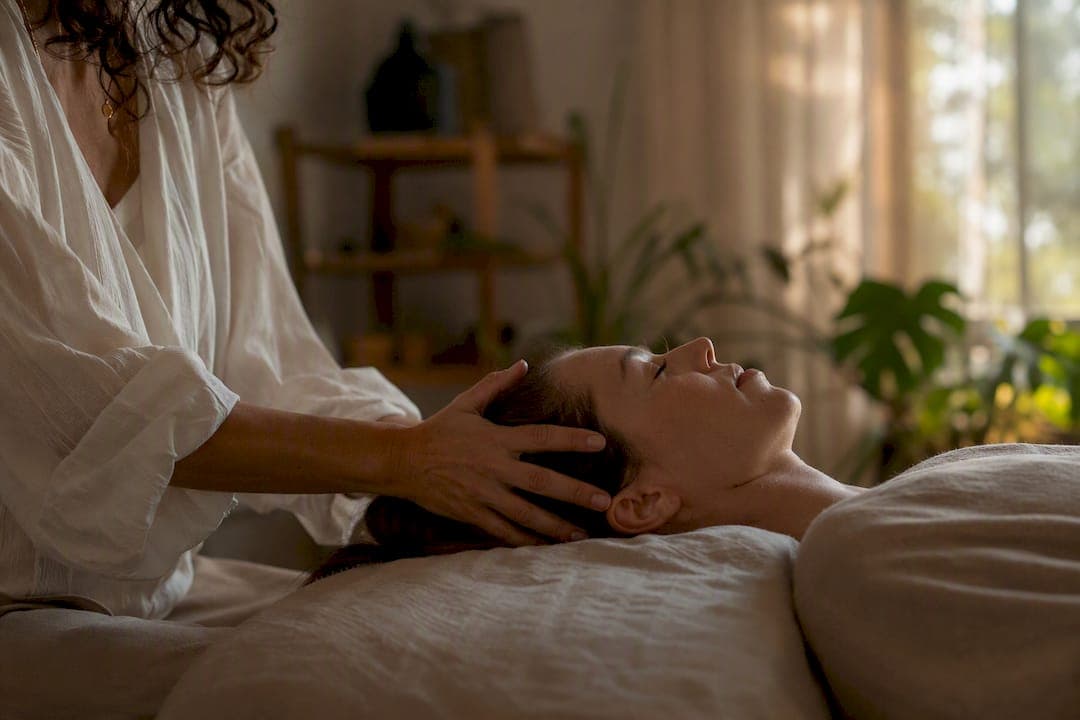
Craniosacral therapy benefits many people who try it, but mostly in ways that are gentle rather than dramatic: relaxation, a temporary drop in pain intensity, and a calmer nervous system. The honest answer is that CST works best as a complementary option, not a cure, and the science backing it is mixed at best.
Here's the balance you're weighing:
- What's strongest: patient-reported relief from pain, tension, and stress, plus a 2019 meta-analysis of 10 randomized trials showing small-to-medium improvements in pain and disability.
- What's weaker: a 2024 systematic review concluding CST shows no statistically significant benefit across most conditions studied, with evidence certainty rated very low.
- What's reassuring: serious side effects are rare. CST is low risk when used alongside your medical care, not instead of it.
If you're managing chronic pain or stress and looking for a low-risk addition to your care plan, CST is reasonable to try. Just keep your expectations realistic and your doctor in the loop.
Key Takeaways
Craniosacral therapy tends to offer real but modest relief for pain and stress, and it works best as a supplement to, not a substitute for, evidence-based medical care.
| Point | Details |
|---|---|
| Evidence is mixed | One 2019 meta-analysis found small-to-medium pain benefits; a 2024 review found none, with very low certainty. |
| Sessions build gradually | Expect 30 to 60 minutes per visit and 3 to 10 sessions before judging results. |
| Side effects are usually mild | Dizziness and lightheadedness are common; serious adverse events are rare in published trials. |
| Skip it for red flags | Avoid CST for recent skull fracture, active bleeding disorders, or unstable spine conditions without medical clearance. |
| Verify before you book | Goholistic's provider directory helps you confirm licensing and training before scheduling a consult. |
Table of Contents
- What Craniosacral Therapy Involves and How It's Performed
- Who Benefits From Craniosacral Therapy, and What Does the Research Say?
- What Happens During and After a Craniosacral Session?
- Is Craniosacral Therapy Safe, and Who Should Avoid It?
- How Do You Choose a Qualified Craniosacral Therapist?
- Should CST Replace or Complement Your Current Treatment Plan?
- Where I Land on Craniosacral Therapy's Real Value
- Ready to Try Craniosacral Therapy Safely?
- Frequently Asked Questions
- Sources
What Craniosacral Therapy Involves and How It's Performed
Craniosacral therapy is a gentle, hands-on technique. Practitioners use light touch, often under 5 grams of pressure, to work with the fascia and the craniosacral system rather than manipulating bones or muscle. That pressure is lighter than most massage or chiropractic techniques, which is part of why people describe sessions as calming rather than intense.
During a typical session, your practitioner places their hands lightly on your head, neck, or sacrum and holds them there, feeling for subtle shifts in tissue tension. You might notice:
- A sense of deep relaxation or warmth
- Small releases of tension in the neck or lower back
- Little to no discomfort during the actual touch
Sessions generally follow this pattern:
- A brief intake discussing your symptoms and health history
- 30 to 60 minutes of hands-on work in a quiet, comfortable setting
- A short debrief on what you felt and what to expect next
Practitioners often recommend multiple sessions over time, as fascial changes accumulate gradually.
Who Benefits From Craniosacral Therapy, and What Does the Research Say?
People report real relief from CST, particularly for pain and stress. The catch is that "reported relief" and "proven benefit" are not the same thing, and the evidence for craniosacral therapy sits somewhere between those two claims depending on the condition.
Here's how the evidence breaks down by what people commonly seek CST for:
- Headaches and migraines: Limited evidence, though patients often report short-term relief.
- Neck and back pain: The strongest evidence category, tied to the 2019 meta-analysis findings below.
- Fibromyalgia: Some positive signals in small trials, but not consistent across reviews.
- Anxiety and stress: Widely reported by patients, rarely measured with rigorous trials.
- TMJ discomfort: Anecdotally common, with insufficient dedicated research.
- Sleep issues and infant colic: Insufficient evidence either way.
The clearest positive data point comes from a 2019 meta-analysis of 10 randomized controlled trials covering 681 patients. It found small-to-medium reductions in pain intensity and disability compared to standard care, with some effects persisting up to six months. That's a genuine signal, not nothing.
But a more recent 2024 systematic review and meta-analysis, which pooled 15 studies in its qualitative synthesis and seven in its quantitative analysis, reached a much cooler conclusion: no statistically significant or clinically relevant benefit across the musculoskeletal and non-musculoskeletal conditions it assessed, with evidence certainty rated very low.
Older narrative reviews go further, questioning whether the "craniosacral rhythm" practitioners describe feeling can even be reliably detected between examiners — a foundational question that has never been fully resolved.
Study quality is the recurring problem across this research: small sample sizes, difficulty blinding participants to a hands-on treatment, and inconsistent outcome measures. Clinical summaries tend to frame CST honestly as something that helps some people relax and feel better, without claiming it's proven medicine. That framing is probably the fairest one available right now.
What Happens During and After a Craniosacral Session?
A session usually runs 30 to 60 minutes, and most practitioners suggest a course of three to ten visits before you and your practitioner judge whether it's helping. Think of it less like a single fix and more like physical therapy: cumulative, not instant.
What to expect as sessions progress:
- First session: mostly relaxation, some mild tenderness where tension releases.
- Sessions two through four: you may notice easier movement or reduced pain flares between visits.
- Ongoing sessions: your practitioner should reassess whether continuing makes sense based on your actual symptom changes.
Short-term reactions like lightheadedness, mild dizziness, or unusual tiredness are common right after treatment. Rising slowly and drinking water afterward helps most people feel steady again within a few minutes. One partner overview of body-centered therapy sessions describes a similar post-session adjustment period that's worth reading if you want a fuller picture of what "settling" feels like.
Pro Tip: Keep a simple symptom log after each session, rating pain and stress on a 1 to 10 scale. If nothing shifts after four or five visits, that's useful information, not a failure.

Is Craniosacral Therapy Safe, and Who Should Avoid It?
Craniosacral therapy carries a low risk of serious harm. In the RCTs that tracked safety data, none reported serious adverse events, and its risk profile looks similar to other gentle manual therapies.
That said, minor reactions happen:
- Temporary dizziness or lightheadedness
- Mild fatigue after a session
- Occasional emotional release, which some patients describe as unexpected
Precautions worth taking: stay seated for a few minutes after treatment, hydrate, and tell your practitioner about any recent head or spine injuries before you start.
CST isn't right for everyone. People with a recent skull fracture, active bleeding disorders, unstable spinal conditions, or acute intracranial issues should check with a doctor before booking, since forceful or inappropriate hands-on work near these areas carries real risk.
No matter how relaxing a session feels, craniosacral therapy should never replace evidence-based treatment for a serious or worsening medical condition.
How Do You Choose a Qualified Craniosacral Therapist?
Prioritize a licensed clinician, someone with a background in massage therapy, physical therapy, osteopathy, or nursing, who has completed formal CST training on top of that license. A practitioner who coordinates openly with your other providers is a good sign.
Before booking, verify:
- Their license type and current standing
- Documented CST training hours or certification
- Malpractice insurance coverage
- Genuine patient reviews, not just testimonials on their own site
- Whether they can explain the technique and its evidence honestly, limitations included
Good questions to ask during a consultation:
- What's your training background in CST specifically?
- How many sessions do you typically recommend, and how will we track progress?
- How do you screen for contraindications like recent injury or spinal instability?
Pro Tip: Be wary of anyone who guarantees a cure, discourages your other medical care, or pressures you into buying a large package of sessions before your first visit even ends.
Goholistic's treatment library and provider directory is built around exactly this kind of verification, so you're not left guessing about a stranger's credentials.
Should CST Replace or Complement Your Current Treatment Plan?
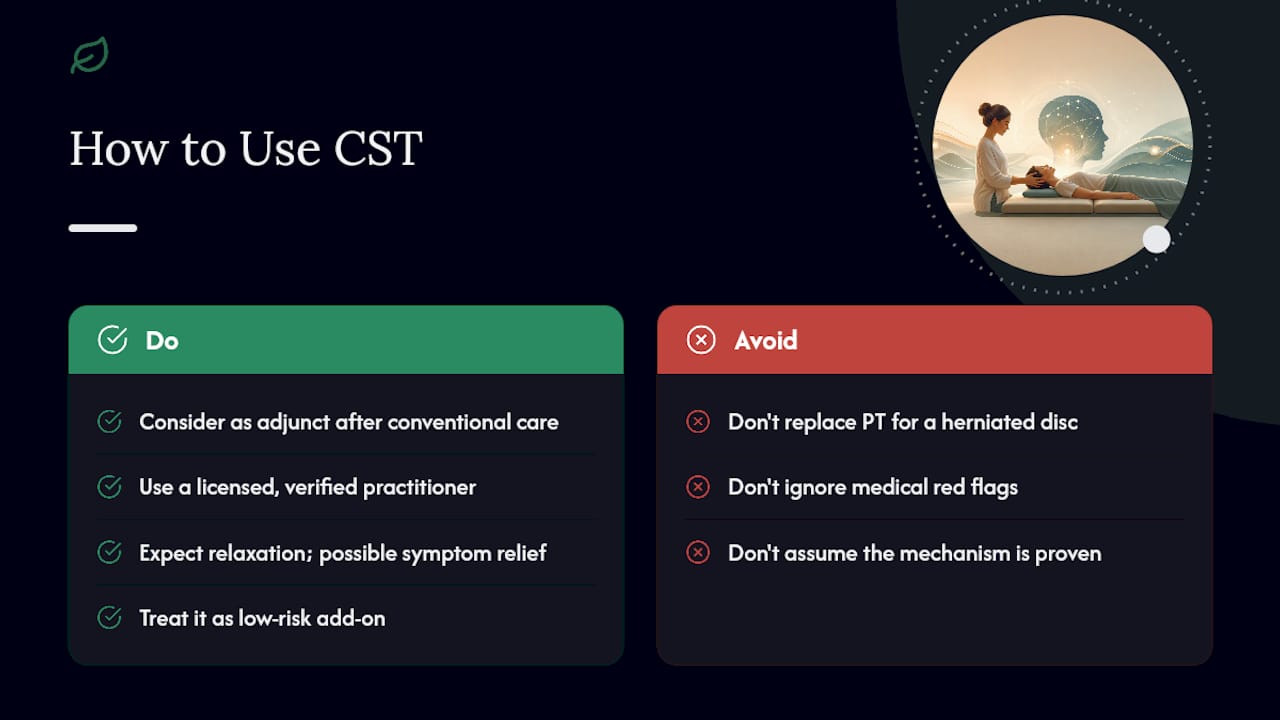
Craniosacral therapy works best as an add-on, not a replacement, for evidence-based pain and stress management. Think of it as one tool in a broader kit that might include physical therapy, guided exercise, cognitive behavioral therapy for chronic pain, or medication when it's genuinely needed.
A simple way to decide if CST makes sense for you:
- You've tried standard care and still have persistent pain or stress.
- You want a low-risk, nonpharmacologic option to add alongside what you're already doing.
- You don't have any of the contraindications covered above.
- Your primary condition isn't a red-flag symptom (sudden severe headache, unexplained weight loss, progressive weakness) that needs urgent evaluation first.
If those boxes check out, trying CST as a complement to proven treatments is a reasonable, low-stakes decision.
Where I Land on Craniosacral Therapy's Real Value
The honest position on craniosacral therapy sits in an uncomfortable middle ground, and Goholistic doesn't think that's a reason to dismiss it. Patients consistently report relief, and one solid meta-analysis backs that up with real numbers. A newer, larger review pours cold water on the same claim. Both can be true at once: something is happening for a meaningful share of patients, even if science hasn't pinned down exactly what or why.
What matters more than the debate is how you use it. CST is not where you go instead of physical therapy for a herniated disc, and it's not a substitute for treating a real medical red flag. It's a low-risk, relaxing addition for people who've already tried the conventional route and still want something more. Approached that way, with a licensed and verified practitioner, the downside is small and the upside is plausible.
Ready to Try Craniosacral Therapy Safely?
If you're considering CST, the safest next step is booking with someone whose credentials you can actually verify, not just someone with a nice website. Goholistic's treatment library covers craniosacral therapy alongside more than 200 other therapy types, each with research summaries so you know what you're walking into before you book.
Start by reviewing a practitioner's license and training on their profile, then schedule a short initial consult to ask your screening questions in person. Track your symptoms for the first few sessions, and keep your regular doctor informed about what you're adding to your care plan. When you're ready to browse verified providers near you, Goholistic's practitioner directory makes that search a lot less overwhelming than starting from a search engine and hoping for the best.
Frequently Asked Questions
Is craniosacral therapy effective for chronic pain? Evidence is mixed. A 2019 meta-analysis found small-to-medium improvements in pain and disability, while a more recent 2024 review found no significant benefit. Many patients report relief, but the research hasn't settled the question.
What are the main benefits of craniosacral treatment? Patients most often report relaxation, reduced tension, and short-term relief from headaches, neck and back pain, and stress. These benefits are patient-reported and not consistently confirmed in rigorous trials.
How many craniosacral therapy sessions do I need to see results? Most practitioners recommend three to ten sessions before evaluating effectiveness, with each session lasting 30 to 60 minutes.
Are there risks to craniosacral therapy? Serious risks are rare. Minor effects like dizziness or lightheadedness are common right after a session. People with recent skull fractures, active bleeding disorders, or spinal instability should check with a doctor first.
Can craniosacral therapy replace medical treatment? No. It's best used as a complementary therapy alongside evidence-based care like physical therapy, medication, or cognitive behavioral therapy, not as a replacement for them.
Sources
These are the core sources behind this article's claims, useful if you want to dig into the primary research yourself.
- Craniosacral Therapy Technique: What Is It, Benefits & Risks
- Craniosacral therapy for chronic pain: a systematic review and meta-analysis of randomized controlled trials | BMC Musculoskeletal Disorders
- Is Craniosacral Therapy Effective? A Systematic Review and Meta-Analysis
- A systematic review of craniosacral therapy: Biological plausibility, assessment reliability and clinical effectiveness