
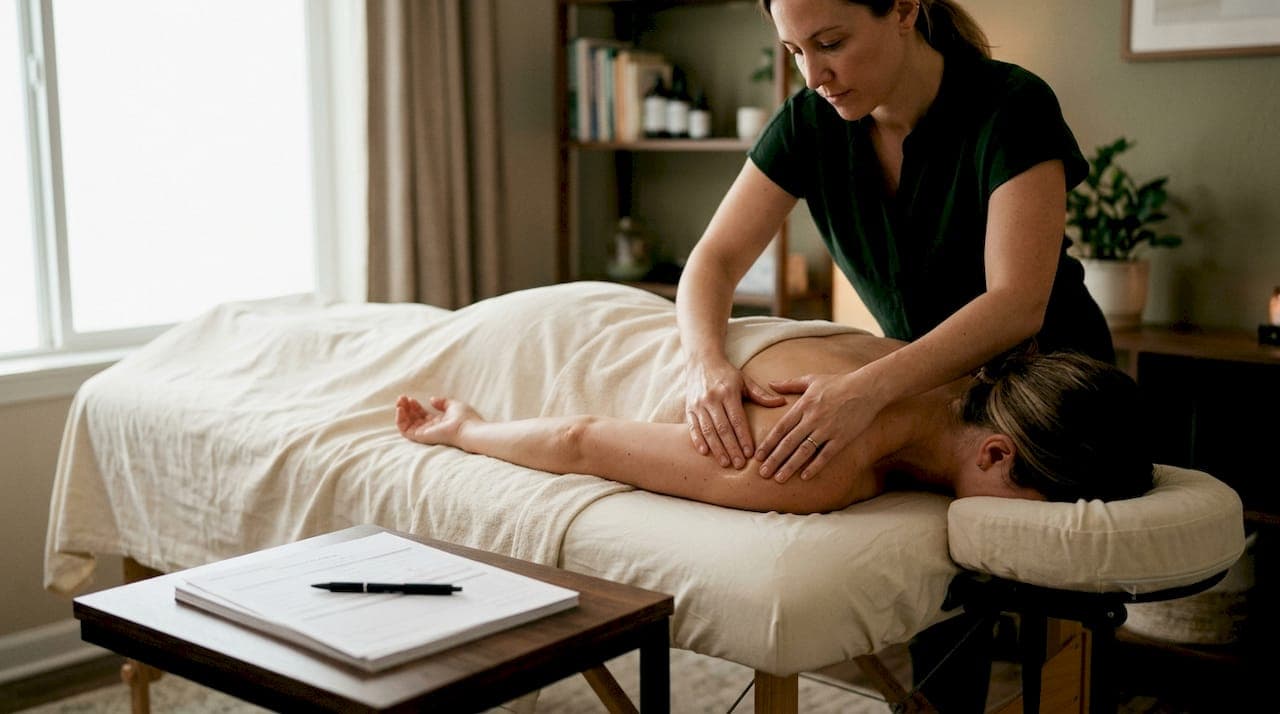
Insurance rarely pays for a relaxation massage, but therapeutic massage tied to a diagnosed condition can be covered when it's medically necessary. Your most reliable paths to reimbursement are workers' compensation, auto PIP, certain Medicare Advantage plans, and private insurance with a physician's order. Before booking, run through this checklist:
- Get a physician order or Letter of Medical Necessity with an ICD-10 diagnosis code attached.
- Confirm your provider's NPI and credentialing status with your specific plan.
- Ask your insurer directly about pre-authorization requirements before your first visit.
Key Takeaways
Massage insurance coverage in the U.S. depends far more on documentation, correct billing codes, and provider credentials than on the therapy itself.
| Point | Details |
|---|---|
| Medicare rarely pays | Original Medicare excludes standalone massage; some Medicare Advantage plans cover it with a doctor's order. |
| Medicaid varies by state | Coverage usually requires an HCBS waiver or billing through a PT/OT benefit, not standalone massage. |
| Credentialing decides claims | Plans often reimburse PT/OT-billed manual therapy but exclude the same service billed by a standalone LMT. |
| Workers' comp and PIP are strongest | These pay reliably when massage ties to an accepted injury and pre-authorization rules are followed. |
| Documentation drives approval | An LMN with ICD-10, correct CPT codes (97124, 97140), and in-network billing determine most outcomes. |
Table of Contents
- Does Medicare or Medicaid Cover Massage Therapy?
- What Do Private Insurers Require Before They'll Pay?
- Are Workers' Comp and Auto Insurance Better Coverage Routes?
- How Do You Actually Get Massage Therapy Reimbursed?
- What If Insurance Won't Cover Your Massage Therapy?
- Why "It Depends" Isn't Good Enough Anymore
- Ready to Find a Credentialed Massage Provider?
- Sources
Does Medicare or Medicaid Cover Massage Therapy?
Original Medicare does not cover standalone massage therapy, full stop. CMS contractor guidance makes clear that massage is only reimbursable when it's folded into a covered physical or occupational therapy service and billed under the correct codes. If your therapist calls it "massage" on the claim form, it's getting denied.
Medicare Advantage plans tell a different story. Because these plans are run by private insurers under CMS oversight, some offer massage as a supplemental benefit. Reporting from Medical News Today confirms this usually requires a doctor's order and an in-network, credentialed therapist. Coverage varies enormously plan by plan, so you'll need to read your Evidence of Coverage document rather than assume anything.
Medicaid is even more of a patchwork. Standard Medicaid programs generally don't cover massage therapy, though a small number of states extend coverage through Home and Community-Based Services waivers, typically for people with qualifying disabilities or chronic conditions who meet strict eligibility rules. When Medicaid does pay, it's almost always billed as a PT or OT service rather than "massage" on its own.
Before you get your hopes up on any of these routes, check three things:
- Your specific plan's Evidence of Coverage or benefits summary.
- Your local Medicare Administrative Contractor's Local Coverage Determination for therapy services.
- Your state Medicaid agency's current policy on HCBS waivers and therapy benefits.
What Do Private Insurers Require Before They'll Pay?
"Medically necessary" is the phrase that decides everything with private insurance, and it means something specific: your massage has to treat a diagnosed condition, not general stress or tension. A Letter of Medical Necessity should spell out the diagnosis, the recommended frequency of treatment, and measurable functional goals, like restoring range of motion after a shoulder injury.

Credentialing trips up more claims than anything else. Geisinger's medical policy is a useful real-world example: it considers massage medically necessary only when prescribed as part of a physical or occupational therapy plan and delivered by a participating licensed professional. Standalone massage, even with a doctor's note, is excluded outright. This is common. Many plans will pay when a PT or OT bills for manual therapy but won't reimburse the identical service billed by a standalone licensed massage therapist.
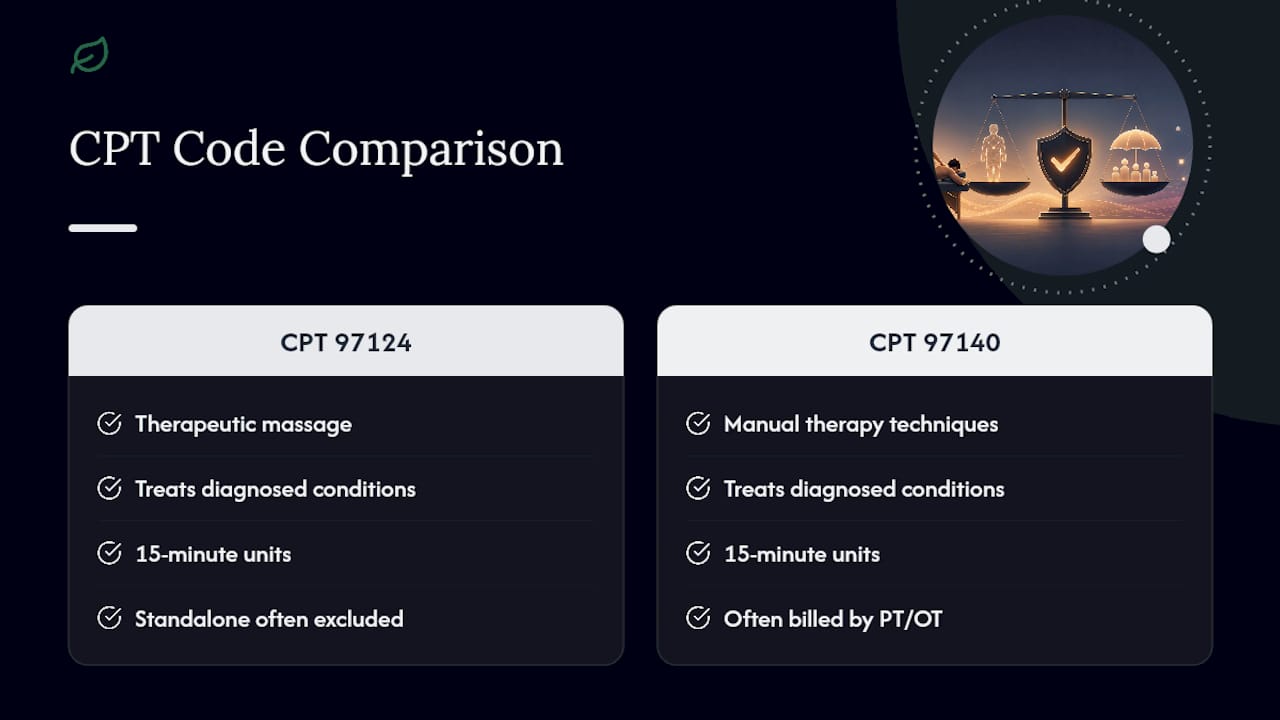
Billing codes matter just as much as the credential behind them. The two you'll see most often are CPT 97124 (therapeutic massage) and CPT 97140 (manual therapy techniques), both billed in 15-minute units. Get the code wrong, or let your provider bill under the wrong credential, and the claim bounces before anyone reviews the medical rationale.
Expect limits even when coverage exists: session caps per year, annual dollar maximums, and blanket exclusions for anything labeled "wellness" or "relaxation."
Pro Tip: Call your insurer's member services line before your first appointment and ask specifically, "Does my plan reimburse licensed massage therapists, or only PT/OT-billed manual therapy?" That one question saves weeks of denied claims.
Are Workers' Comp and Auto Insurance Better Coverage Routes?
If your need for massage traces back to a workplace injury or a car accident, you're in better shape than most. These systems were built to pay for recovery care, and massage often qualifies without the runaround typical of health insurance.
- Workers' compensation covers massage when it's clearly connected to an accepted workplace injury. Most states require pre-authorization and follow a fee schedule, so treatment needs to start within a defined window after the injury is reported.
- Auto PIP (Personal Injury Protection) is mandatory in some states and optional in others, but where it applies, it frequently pays for therapeutic massage tied to accident-related injuries. Timing matters. Most policies expect care to begin within days or weeks of the accident, and they cap total benefits.
- Employer wellness programs and EAPs sometimes offer stipends or reimbursement for massage as a general wellness perk, separate from your medical insurance entirely.
Coverage under workers' comp and auto PIP generally holds up well as long as documentation and timelines are followed closely.
How Do You Actually Get Massage Therapy Reimbursed?
Getting paid isn't about finding the right insurance loophole. It's about paperwork done in the right order.
- Get the order. Ask your physician for a written order or Letter of Medical Necessity that includes an ICD-10 diagnosis code and specific functional goals, like reducing pain or improving mobility.
- Verify the provider. Confirm your massage therapist's NPI is active and check whether your plan requires PT/OT credentials rather than a standalone LMT license. A credential verification step here prevents a denial before it happens.
- Request pre-authorization. Call your insurer, confirm which CPT codes and modifiers are allowed, and keep dated records of every call and confirmation number.
- Appeal if denied. Gather your provider's progress notes, write an appeal that ties your treatment directly to the plan's own medical necessity language, and reference the specific CPT and ICD-10 codes used on the original claim.
- Keep copies of every order, note, and authorization in one folder from day one.
- Ask your provider to document functional improvement at every session, not just "patient felt better."
- Note the exact plan policy language when you appeal. Vague appeals get vague denials.
Pro Tip: AMTA's guidance is blunt about this: a doctor's referral alone rarely gets you paid. Confirm session limits and pre-authorization rules with the insurer directly before you assume anything is covered.
What If Insurance Won't Cover Your Massage Therapy?
Plenty of massage that genuinely helps you still won't clear an insurer's bar for medical necessity, and that's fine. You have real options that don't involve a claim form at all.
- HSA and FSA funds often cover massage when it's tied to a diagnosed condition. Most administrators want an LMN on file, similar to documentation guidance for HSA-eligible telehealth services.
- Massage schools run supervised student clinics at a fraction of standard rates.
- Community health centers and clinics that bundle massage with PT or OT sometimes offer sliding-scale pricing.
- Ask any clinic about multi-session packages. Many providers discount 5 or 10-session bundles by 10 to 15%.
Comparing local costs before booking helps you budget realistically, whether insurance is paying or you are.
Why "It Depends" Isn't Good Enough Anymore
The standard advice on this topic, "check with your insurance," is technically true and practically useless. It tells you nothing about which document to request, which code to confirm, or which credential gap is about to sink your claim. That's the gap this guide is built to close.
Here's what the research actually supports: coverage decisions come down to paperwork and credentials far more than they come down to whether massage "works" for your condition. An insurer doesn't evaluate whether massage helped your shoulder. It evaluates whether the ICD-10 code, the CPT code, and the provider's credential all line up with its own policy language. Get those three things right and your odds improve dramatically. Get any one wrong and it doesn't matter how medically necessary your treatment actually was.
If you're starting from scratch, prioritize the credential check first. A verified, credentialed provider can bill in ways that a great therapist without the right enrollment simply cannot, no matter how good their hands are.
— Andrew
Ready to Find a Credentialed Massage Provider?
Working with a properly credentialed practitioner is the single biggest factor in whether your massage therapy claim gets paid, and it's also the hardest thing to verify on your own. Goholistic's directory of holistic health practitioners lets you filter by credentials and specialty before you ever book a session, so you're not left guessing whether your provider can actually bill your plan. Browse verified therapists, check their licensing, and book directly through the platform when you're ready to start treatment that your insurance has a real shot at covering.
Sources
- Medicaid
- American Massage Therapy Association (AMTA) — Insurance reimbursement resources
- Geisinger medical policy: Massage therapy