
A standard 60-minute massage in the United States typically runs $70 to $150, with a national average hovering near $95 to $99. Where you land in that range depends on session length, the type of massage, your city, and whether you book with an independent therapist or a resort spa.
TL;DR:
- Longer sessions, especially 90-minute bookings, generally offer better value than shorter or split appointments due to lower per-minute costs.
- Prices vary significantly by modality, with deep tissue, sports, prenatal, and lymphatic drainage massages costing $80 to $180 for 60 minutes.
- The setting influences cost, with independent clinics charging $60 to $110 and luxury spas reaching $300 or more for the same type of massage.
- Geographical location and therapist credentials are primary factors driving price differences, with urban areas and specialized certifications commanding higher rates.
- Using memberships, packages, or insurance benefits can substantially lower costs if you plan regular treatments or have a documented medical need.
Table of Contents
- How Much Does Massage Therapy Cost by Session Length?
- Why Does Massage Type Change the Price So Much?
- Does the Setting You Choose Affect Massage Prices?
- What Actually Drives the Price of a Massage Session?
- How Can You Pay Less for Massage Therapy?
- Should You Prioritize Price or Continuity of Care?
- Finding Verified, Cost-Appropriate Care
- Andrew's Take: Stop Choosing Based on Price Alone
- Book Verified Massage Therapists Through Go Holistic
- Sources
How Much Does Massage Therapy Cost by Session Length?
Session length is the first lever that moves your price, and it doesn't scale in a straight line. A 30-minute massage isn't half the price of an hour, because therapists still spend time on setup, consultation, and transition between clients regardless of how long you're actually on the table.
Industry pricing data shows a 30-minute session commonly lands around 60% of the hourly rate rather than 50%, which is why quick sessions can feel like a smaller bargain than expected.
| Session Length | Typical U.S. Price Range | Notes |
|---|---|---|
| 30 minutes | $45 to $90 | Priced above half the 60-minute rate due to fixed setup time |
| 60 minutes | $70 to $150 | The most commonly booked length; used as the pricing benchmark |
| 90 minutes | $100 to $200 | Popular for combining modalities or deeper therapeutic work |
| 90 minutes | $150 to $300 | Often reserved for full-body sports recovery or luxury spa packages |
A few things worth budgeting around:
- The per-minute cost drops as sessions get longer, so a 90-minute booking is usually a better value than two separate 45-minute visits.
- Add-ons like aromatherapy, hot stones, or CBD oil typically add $10 to $40 regardless of session length.
- Tip 15% to 20% of the pre-discount price, even if you used a package or membership rate.
- Many therapists round pricing to clean numbers ($75, $100, $125), so asking about exact rates before booking avoids surprises at checkout.
If you're deciding between a longer single session or splitting your budget across two shorter ones, longer wins almost every time for pure value. The exception is if your body genuinely can't tolerate 90 minutes of pressure work, in which case a shorter, more frequent cadence makes more sense anyway.
Why Does Massage Type Change the Price So Much?
Modality matters almost as much as time on the table. A Swedish massage and a lymphatic drainage session might both run 60 minutes, but the training, technique, and physical demand behind them are worlds apart, and pricing reflects that gap.
Here's what to expect for a 60-minute session across common types, based on national pricing benchmarks:
- Swedish massage: $70 to $130. The baseline relaxation modality most spas price as their entry point.
- Deep tissue massage: $80 to $150. The price of deep tissue massage runs higher because it demands more physical exertion and often more therapist training in trigger-point work.
- Sports massage: $85 to $160. Frequently billed by therapists with athletic training certifications, which pushes the rate up.
- Prenatal massage: $80 to $140. Requires specialized positioning knowledge and certification most general therapists don't carry.
- Hot stone massage: $90 to $170. Equipment costs (heated stone sets, sanitation) get baked into the price.
- Lymphatic drainage: $90 to $180. One of the more specialized techniques, often used post-surgery and taught in advanced continuing education courses.
- Chair massage: $1 to $2 per minute. Common at events and offices, priced separately from full-table sessions.
- Couples massage: Roughly double a single 60-minute rate, sometimes with a small package discount.
Deep tissue, sports, prenatal, and lymphatic drainage are the modalities most likely to show up on a doctor's referral or a physical therapy plan. If a provider recommends one of these for an actual injury or diagnosed condition, that's your cue to ask about documentation for insurance or FSA reimbursement before you pay out of pocket.
Does the Setting You Choose Affect Massage Prices?
Where you book matters just as much as what you book. The same 60-minute Swedish massage can cost $70 at an independent clinic and $180 at a resort spa, and the difference isn't really about skill. It's about overhead, ambiance, and convenience.
- Independent therapists and small clinics: Usually the most affordable route, often $60 to $110 per hour, since there's no franchise fee or luxury real estate to cover.
- Franchise wellness centers: Priced in the $60 to $100 range for members, but $90 to $130 for walk-ins. Membership economics work by locking in a lower rate for a recurring monthly fee, which only pays off if you book consistently.
- Day spas: Typically $90 to $160, with pricing that includes the spa amenities (locker rooms, robes, lounges) whether or not you use them.
- Luxury resort spas: $150 to $300 and up. You're paying for the setting as much as the massage itself.
- Mobile or in-home therapists: $100 to $200, reflecting a travel fee on top of the base session rate. You skip the commute, but you pay for theirs.
- Teaching clinics: Often $40 to $70 for supervised sessions from massage school students. Quality varies, but the savings are real for anyone on a tight budget who doesn't need clinical-grade expertise yet.
Memberships and multi-session packages consistently lower the effective per-session cost, sometimes by 20% or more compared to walk-in pricing. The tradeoff is a monthly commitment or an upfront bundle payment, which only makes financial sense if you'll actually use it. A single splurge at a resort spa on vacation is a treat. A monthly membership you use twice a year is just an expensive habit.
What Actually Drives the Price of a Massage Session?
Five factors explain almost every dollar of variation you'll see between two massages of the same length and type: location, credentials, add-ons, overhead, and simple market timing.
Geography moves the needle the most. A 60-minute massage in San Francisco or Manhattan can run $40 to $60 more than the same session in a smaller Midwestern city, purely because rent and therapist wages track local cost of living. Urban studios also tend to carry higher liability insurance and licensing fees, which get folded into the rate.
Credentials and experience justify a premium. A therapist with 10 years of experience and advanced certifications in orthopedic or oncology massage can reasonably charge more than a newly licensed graduate, the same way a senior specialist commands more than a general practitioner. Specialization isn't padding. It's the years of continuing education behind the technique.
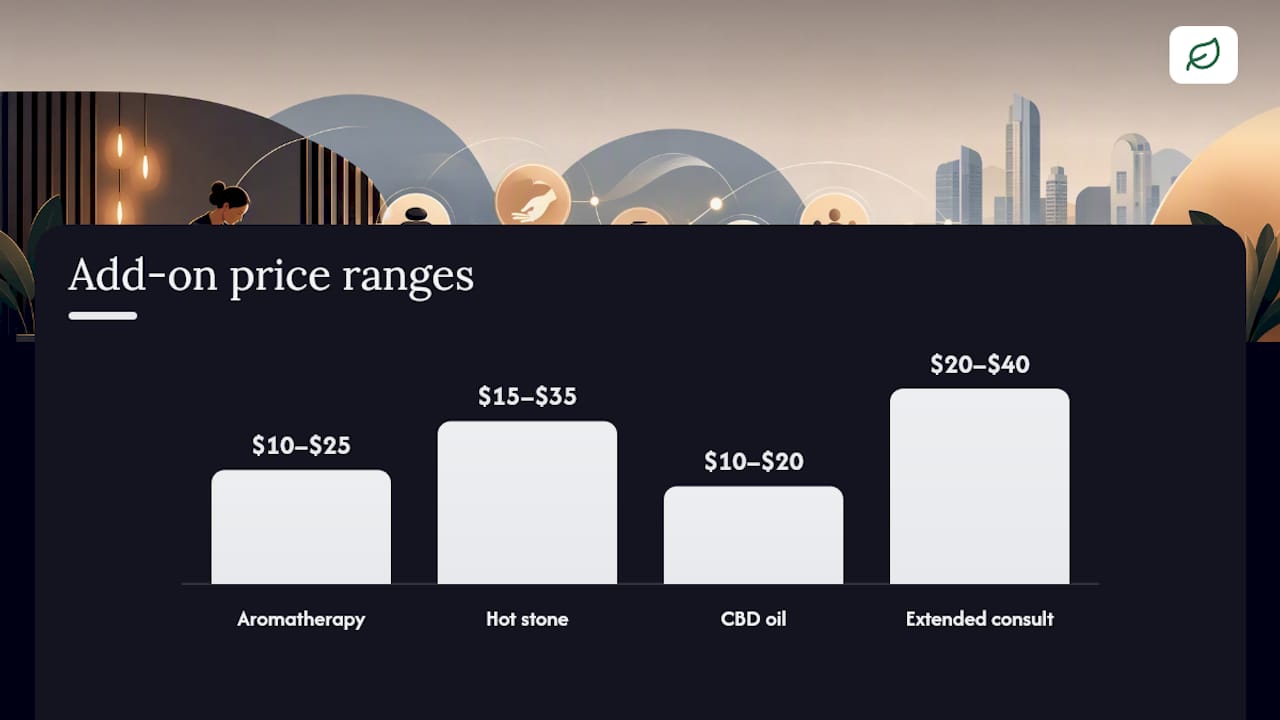
Add-ons are where costs quietly climb. Expect to pay:
- $10 to $25 for aromatherapy or essential oil upgrades
- $15 to $35 for hot stone or heat therapy additions
- $10 to $20 for CBD-infused oils where legally offered
- $20 to $40 for extended consultation or assessment time on a first visit
Overhead and inflation are squeezing margins industry-wide. Rising rent, insurance, and product costs have pushed many independent therapists to raise rates in the past two years just to maintain the same take-home pay, which is part of why national averages have crept toward the $95 to $99 range instead of sitting where they did a few years back.
Thinking about these factors as a checklist, rather than a mystery, makes it much easier to tell when a higher price is buying you something real versus when you're simply paying for a nicer waiting room.
How Can You Pay Less for Massage Therapy?
Reducing your effective cost per session usually comes down to structure, not luck. A few approaches consistently work:
- Buy a package or membership if you'll go monthly. Multi-session bundles and franchise memberships routinely undercut walk-in pricing, sometimes significantly, for anyone booking more than once a month.
- Check whether your session qualifies for insurance. Massage prescribed for a documented medical condition, like chronic back pain or post-surgical recovery, may be covered when medically necessary, particularly when billed through a chiropractor or physical therapist's office.
- Use HSA or FSA funds where eligible. Pre-tax dollars can cover massage therapy tied to a diagnosed condition, but you'll typically need a letter of medical necessity from a physician. Go Holistic's guide on FSA eligibility for massage walks through the paperwork.
- Ask about CareCredit if you're facing a larger clinical treatment plan. CareCredit is accepted by many massage and wellness providers and offers promotional financing plans, which can make an ongoing therapeutic plan more manageable than paying session by session.
- Book off-peak. Weekday mornings and early afternoons are often discounted 10% to 20% compared to evening and weekend slots, since that's when studios have the hardest time filling chairs.
- Consider a teaching clinic for maintenance visits. Massage schools frequently offer supervised student sessions at a fraction of standard clinic pricing.
Pro Tip: Ask your therapist directly whether they offer a loyalty discount after your third or fourth visit. It never hurts to ask.
Workers' comp and auto insurance claims sometimes cover massage therapy tied to a documented injury as well, so if your need stems from an accident, check your claim's benefits before assuming you're paying full price out of pocket.
Should You Prioritize Price or Continuity of Care?
The right budget isn't always the lowest one. It depends on whether you're chasing occasional relaxation or working toward a real therapeutic outcome, and those two goals call for different spending strategies.
If you're booking massage purely to unwind once in a while, price-shopping makes total sense. A $70 Swedish massage from a solid independent therapist does the job just as well as a $180 resort version for stress relief. Save the splurge for a special occasion rather than a habit.
If you're managing chronic pain, recovering from an injury, or working through a physical therapy plan, continuity matters more than the sticker price. Bouncing between different therapists every visit means re-explaining your history and losing the cumulative benefit of a therapist who actually knows your body's patterns.
Before booking anywhere, ask a few direct questions:
- What license and certifications do you hold, and do they match my specific need?
- Will you document this session for insurance or FSA purposes if it's medically relevant?
- What's a realistic treatment plan, in sessions per month, to see results?
- Do you offer package pricing for recurring visits?
If the answers point toward ongoing clinical work, an integrated medical clinic pairing massage with chiropractic or physical therapy is often worth the higher price, since it usually comes with better documentation and a coordinated plan. A pre-visit checklist can help you compare providers on more than just price before you commit.
Finding Verified, Cost-Appropriate Care
Price alone won't tell you whether a therapist is actually right for your situation, which is exactly the gap Go Holistic was built to close. Every practitioner listed on the platform is verified for licensing and credentials before their profile goes live, so you're comparing real qualifications alongside the rate, not just a number on a booking page.
The provider directory lets you filter by specialty, price range, and location, which matters when you're trying to match a $90 deep tissue session against a therapist who actually treats your specific issue rather than a generalist charging the same rate. You can compare package options and see which practitioners offer bundled pricing before committing to a monthly spend.
Say you're working with a $100 per session budget and dealing with lower back tension from desk work. Instead of calling five clinics individually, you'd filter the directory for deep tissue or sports massage specialists in your price range, review credentials, and book directly. That's the entire workflow: filter, verify, book, all in one place, without the guesswork of walking into a spa and hoping the therapist on duty happens to fit your needs.

Andrew's Take: Stop Choosing Based on Price Alone
Here's what most pricing guides miss: the cheapest option and the best value are rarely the same massage. If you're managing a real condition, chronic pain, an old injury, a repetitive strain, pay for the mid-market or clinical tier and stick with one therapist. Continuity beats bargain-hunting for actual outcomes. If you just need to unwind, memberships and packages make sense once you're booking monthly, not before.
Pro Tip: Book your first visit at full price with no package commitment. Use it to evaluate the therapist honestly before locking into a membership you can't easily undo.
I write about wellness marketplaces for Goholistic, and this framework is the one I'd want a friend to use before their first booking.
— Andrew
Book Verified Massage Therapists Through Go Holistic
Go Holistic gives you something a Google search for "massage near me" can't: verified credentials sitting right next to the price, so you're never guessing whether a $70 rate means a corner-cutting studio or a genuinely great deal.

Instead of calling around to compare rates and hoping a front-desk quote matches what you'll actually pay, you can browse the treatment library to understand what a modality involves before you book it, then use the wellness directory to filter practitioners by price, specialty, and proximity. Every listed provider has been checked for licensing, so the comparison you're making is apples to apples, not just address to address.
If you're ready to stop guesswork-booking and start comparing verified therapists against your actual budget, search the directory and book your next session directly through Go Holistic.
Sources
- Massage therapy costs and financing | CareCredit
- How much does massage therapy cost? | TakingCharge (UMN)
- Massage Therapy Cost Calculator — 2026 Per-Session Price Estimator | UseCalcPro
- How much does a massage cost? Prices by location & type | Blys