

Cupping therapy's main proven benefit is short-term relief from musculoskeletal pain, especially low back pain, with effects showing up strongest between two and eight weeks after treatment. The evidence gets thinner beyond that window. Dry cupping carries a much lower infection risk than wet cupping (hijama), which is why groups like StatPearls note it's the preferred approach in most Western clinics.
TL;DR:
- Cupping therapy shows strong short-term pain relief for low back pain, with effects peaking between two and eight weeks and diminishing afterward.
- Wet cupping has a larger effect size than dry cupping but carries higher infection and bleeding risks, making sterilization essential.
- Most practitioners recommend multiple sessions over several weeks rather than a single treatment to evaluate effectiveness.
- Cupping is safest when performed by licensed, credentialed providers using sterile equipment, especially for wet cupping.
- Long-term benefits are unproven, so cupping should complement, not replace, conventional medical care.
Table of Contents
- What Is Cupping Therapy and How Does It Work?
- Does Cupping Actually Relieve Pain? What the Research Shows
- What Happens During and After a Cupping Session?
- Is Cupping Therapy Safe? Risks and Who Should Avoid It
- How Do You Choose a Qualified Cupping Provider?
- How Go Holistic Verifies Cupping Providers
- Cupping vs. Other Pain Relief Therapies: How Does It Compare?
- Where Cupping Fits in Your Pain Management Plan
- Ready to Book a Vetted Cupping Provider?
- Sources
- FAQ
What Is Cupping Therapy and How Does It Work?
Cupping falls into two main categories, and the distinction matters more than most people realize when they're weighing cupping therapy benefits against the risks.
Dry cupping uses glass, silicone, or plastic cups with a pump or heat source to create suction on the skin. Wet cupping, also called hijama, adds a step: after light suction raises the skin, a practitioner makes small superficial cuts and reapplies the cup to draw a small amount of blood. Both methods leave the telltale circular marks people associate with cupping, and both rely on the same basic physics.
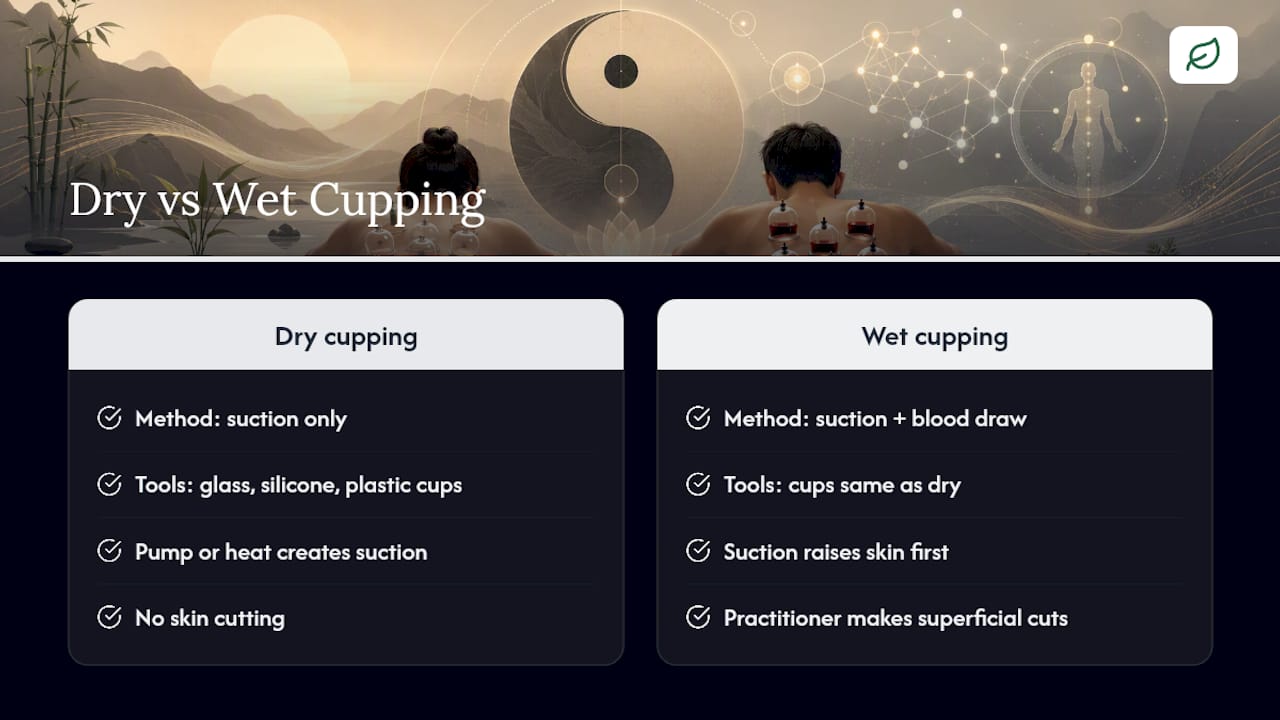
That suction pulls skin and superficial tissue upward, which increases local blood flow and ruptures tiny capillaries near the surface. The resulting marks are a form of capillary extravasation, essentially small, contained bruises, according to StatPearls. It's a mechanical effect, not a mystical one.
Traditional practice frames cupping as a way to draw out "toxins" or restore energy balance. Modern clinical sources don't back that framing. What they do support is a more modest, biologically plausible idea: cupping may increase local circulation, trigger a mild inflammatory response that promotes healing, and possibly stimulate nerve fibers in a way that dampens pain signals, similar to how acupuncture is thought to work. Harvard Health is candid that the exact mechanism behind any systemic benefit remains unclear even where symptom relief is reported.
Does Cupping Actually Relieve Pain? What the Research Shows
The strongest evidence for cupping therapy benefits centers on low back pain, and it's worth understanding exactly what that evidence says before you book a session.
A systematic review and meta-analysis pooling 11 randomized controlled trials and 921 participants found cupping produced a significant reduction in low back pain at the two to eight week mark, with a large effect size (d=1.09). That's a meaningful result by clinical trial standards.
The catch: benefits measured at one month or three to six months later were far less consistent. The researchers flagged notable heterogeneity across studies, different protocols, cup types, and session frequencies, and called for standardized methods and longer follow-up before anyone treats cupping as a durable fix rather than a short-term tool.
A few other patterns are worth knowing:
- Wet cupping showed a larger effect than dry cupping in several low back pain comparisons within that same review (d=1.5 versus d=1.06), though wet cupping's infection risk is the tradeoff.
- Neck pain and tension-type headaches have some supporting trials, but the evidence base is smaller and less consistent than for low back pain.
- Migraine studies exist but remain preliminary, with mixed results across small trials.
- Cleveland Clinic lists reduced pain, decreased muscle tightness, and improved circulation as the benefits patients most commonly report, while noting the overall evidence is mixed.
Statistic Callout: In the pooled low back pain data, cupping's effect size of 1.09 at the 2 to 8 week mark is considered large by clinical research standards, but that benefit did not reliably hold at the 3 to 6 month follow-up.
The practical takeaway: cupping is a reasonable short-term symptom management tool, not a standalone cure. NCCIH frames it as a complementary therapy meant to sit alongside conventional care, physical therapy, medication management, or structured exercise, rather than replace it. If you're dealing with a chronic condition, pairing cupping with ongoing care tends to produce better sustained outcomes than cupping alone.
What Happens During and After a Cupping Session?
A typical cupping visit follows a fairly predictable rhythm, whether you're seeing an acupuncturist, a massage therapist, or a physical therapist trained in the technique.
- Assessment. The practitioner reviews your pain pattern, health history, and any contraindications before choosing cup placement.
- Cup placement and suction. Cups are applied to target areas (often the back, shoulders, or neck) using a hand pump or brief heat source, then left in place for roughly 5 to 15 minutes.
- Combined modalities. Many practitioners pair cupping with massage, gentle cup movement across the skin, or acupuncture in the same session.
- Aftercare discussion. You'll typically get guidance on what to expect over the following days.
You may feel a tight pulling sensation during suction, which is normal and rarely described as sharp pain. The circular marks that follow usually fade within 3 to 10 days. It's worth repeating what StatPearls makes clear: mark darkness is not a reliable measure of how effective the treatment was. A light mark doesn't mean the session failed, and a dark one doesn't mean it worked better.
Trials on low back pain generally used multiple sessions over several weeks rather than a single visit. Most providers charge somewhere in the $50 to $100 per session range, and trying a short course of three to six sessions is a reasonable way to judge whether it's helping before committing further.
Is Cupping Therapy Safe? Risks and Who Should Avoid It
Cupping carries a generally low risk profile when performed correctly, but the risk isn't zero, and it isn't the same for every technique.
Common, mild effects include the circular skin marks, temporary tenderness at the cup sites, and mild dizziness in some people right after treatment. These typically resolve on their own within a week or so.
Rarer but serious risks, mostly tied to wet cupping, include:
- Skin infection at the incision sites if instruments aren't properly sterilized
- Burns, when heat is used improperly to create suction
- Excessive bleeding or bruising, particularly in people on blood thinners
- Scarring in rare cases with repeated wet cupping at the same site
You should avoid cupping, or get medical clearance first, if you have a bleeding disorder, take anticoagulant medication, have active skin infections or certain dermatologic conditions, or have had recent surgery near the treatment area. Pregnant patients should check with their obstetrician before cupping, particularly for abdominal or lower back placement. StatPearls notes that wet cupping's blood exposure is precisely why sterile, single-use technique matters so much, and why dry cupping remains the more commonly recommended option in Western clinical settings.
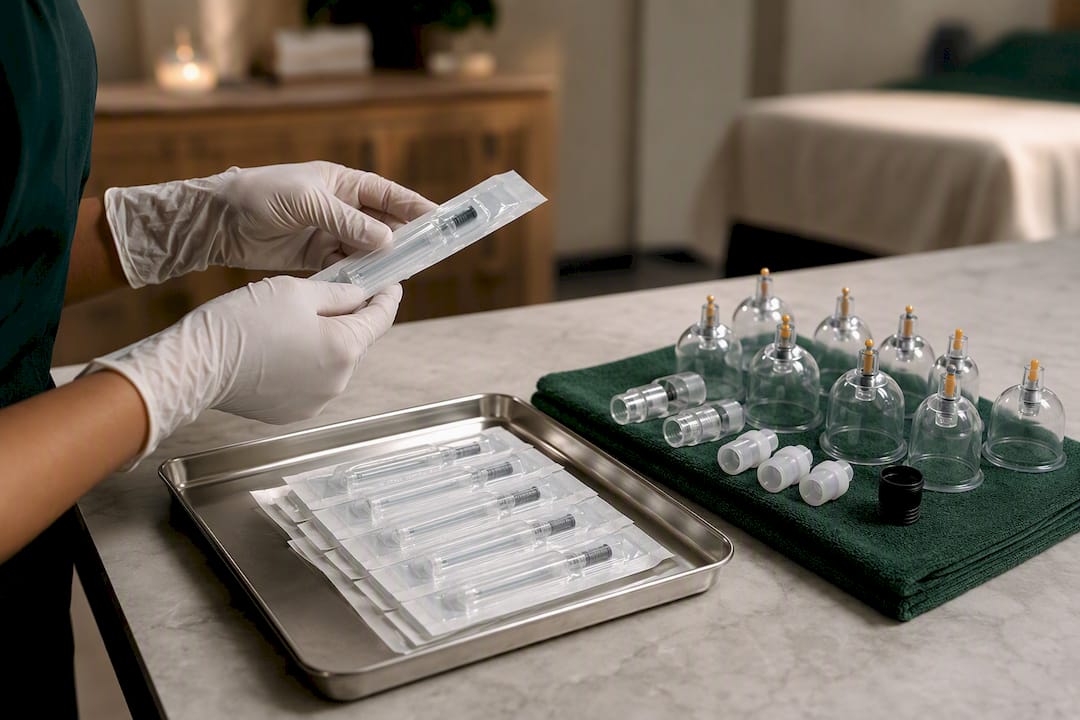
Pro Tip: Before your first wet cupping session, ask directly whether the practitioner uses single-use lancets and disposable cup components. A confident, specific answer is a good sign; hesitation is not.
How Do You Choose a Qualified Cupping Provider?
Picking the right provider matters as much as picking the right technique, since practitioner skill and accurate point placement appear linked to better pain outcomes in trials.
- Check credentials. Look for a licensed massage therapist, a licensed acupuncturist, or a physical therapist with documented cupping training.
- Ask about sterilization. For wet cupping specifically, confirm single-use lancets and proper disposal of blood-exposed materials.
- Ask about technique and experience. A provider should be able to explain why they're placing cups where they are, whether that's based on acupressure points or musculoskeletal assessment.
- Get a follow-up plan. A good provider will suggest a realistic number of sessions and check in on your progress rather than pushing an open-ended course.
Afterward, skip hot tubs, saunas, and direct sun exposure on treated skin for at least 24 hours. Keep the area clean and dry, and watch for spreading redness, warmth, or discharge, which are signs to contact a clinician promptly. Most cupping sessions are paid out-of-pocket, since insurance coverage for cupping remains uncommon in the United States.
How Go Holistic Verifies Cupping Providers
Finding a provider who takes sterile technique seriously shouldn't require guesswork. Goholistic's treatment pages lay out how cupping works, what the evidence supports, and what questions to ask, so you walk into a session informed rather than hopeful.
The provider directory lets you filter by credential and read verification details before booking, and it shows how cupping pairs with complementary services like acupuncture, massage therapy, or physical therapy. Pricing and treatment specifics are listed upfront on each provider profile, so there's no mystery between your first search and your first appointment.
Cupping vs. Other Pain Relief Therapies: How Does It Compare?
Cupping isn't the only option for musculoskeletal pain, and it rarely works best in isolation.
Acupuncture targets similar nerve pathways and has a broader evidence base for chronic pain conditions; some practitioners combine the two in a single session. Massage therapy offers more consistent, well-studied relief for muscle tightness without any skin marking or infection risk. Low-level laser therapy is a newer, needle-free option some patients try for localized joint or muscle pain, with a different mechanism entirely, using light rather than suction or pressure. Physical therapy remains the gold standard for addressing the underlying biomechanical causes of chronic back and neck pain rather than just the symptoms.
For recovery-focused readers, compression therapy is another evidence-backed modality worth knowing about, particularly for circulation-related discomfort and post-exercise soreness, with a different set of use cases than cupping.
None of these therapies cancels out the others. The pattern across the evidence is consistent: combining a hands-on modality like cupping with active treatment, whether that's physical therapy, targeted exercise, or medical management, tends to outperform any single approach used alone.
Where Cupping Fits in Your Pain Management Plan
Cupping earns its place as a low-risk, short-term tool for muscle and joint discomfort, not a cure. Track your symptoms honestly, lean on collaborative care for anything chronic, and never mistake a dark mark for proof it worked.
— Andrew
Ready to Book a Vetted Cupping Provider?
Reading about cupping therapy benefits is one thing; finding someone qualified to actually perform it safely is another. Goholistic's biggest advantage over searching blindly online is verification: every practitioner listed has been checked for credentials, so you're not gambling on sterilization practices or training with a stranger's calendar link.
Browse the full range of holistic health treatments to see how cupping compares with acupuncture, massage, and other pain relief options side by side, or head straight to the provider directory to filter by credential, read verification details, and book a consultation with someone trained specifically in cupping technique. If chronic pain is the bigger issue behind the occasional sore back, a holistic health coaching session can help you build a plan that goes beyond any single treatment.
This article is general information, not a substitute for advice from a qualified doctor. Consult a qualified healthcare professional about your own circumstances before acting on anything here.
Sources
- Cupping Therapy - StatPearls - NCBI Bookshelf
- Effectiveness of self-management of dry and wet cupping therapy for low back pain: A systematic review and meta-analysis
- What exactly is cupping? - Harvard Health
- Cupping - National Center for Complementary and Integrative Health
FAQ
What are the benefits of having cupping done?
Cupping's best-supported benefit is short-term relief from musculoskeletal pain, particularly low back pain, with noticeable effects between two and eight weeks of treatment. Many people also report reduced muscle tightness and improved local circulation, though long-term benefits are less well proven.
What should you avoid doing after cupping?
Skip hot tubs, saunas, and direct sun exposure on treated skin for at least 24 hours, and avoid scrubbing or scratching the marked areas. Keep the sites clean and dry, and watch for redness, warmth, or discharge that could signal infection.
What comes out during cupping?
In wet cupping (hijama), a small amount of blood is drawn to the surface after light suction and superficial cuts. In dry cupping, nothing is released; the marks that appear are from capillary extravasation under the skin, not fluid leaving the body.
What are the side effects of cupping?
Common side effects include temporary circular skin marks, mild tenderness, and occasional dizziness, which usually resolve within a week. Rarer risks, mostly linked to wet cupping, include infection, burns, and excessive bruising if sterile technique isn't followed.