
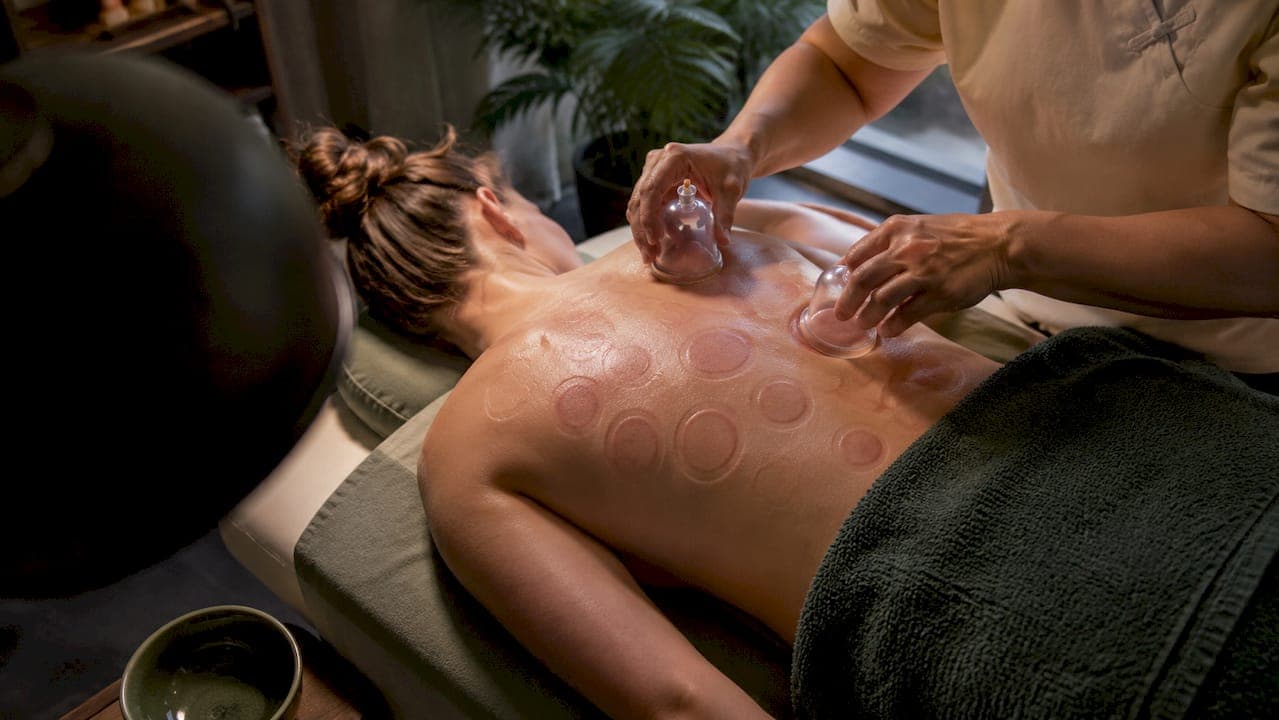
A single cupping session in the United States typically runs $30 to $150, with most people paying somewhere between $50 and $100. Rates depend heavily on your provider and where you live. Booking a package usually brings that per-session number down, and since insurance rarely steps in, this is one wellness expense you'll likely cover yourself.
TL;DR:
- Cupping sessions typically cost $30 to $150, with urban areas and wet cupping procedures tending to be at the higher end of the range.
- The price varies significantly depending on provider type, session length, credentials, and whether additional treatments are bundled together.
- Most insurance plans do not cover cupping therapy, but you can often seek reimbursement through HSA or FSA accounts with proper documentation.
- Evidence supporting cupping’s effectiveness is limited and inconsistent, making provider qualifications and safety protocols more important than price alone.
- Verified providers with proper licensing and sterile technique reduce risks and ensure better value compared to cheaper, unvetted options.
Table of Contents
- Cupping Therapy Cost by Provider Type
- What Actually Drives the Price of a Cupping Session
- How Long Sessions Last and What a Full Treatment Plan Costs
- Does Insurance Cover Cupping Therapy?
- Is Cupping Worth the Cost? What the Research Actually Shows
- How to Choose a Cupping Provider Without Overpaying
- Budgeting for Cupping: The Bottom Line
- Why Verified Providers Change the Cost Conversation
- Find a Verified Cupping Provider Through Goholistic
- Sources
Cupping Therapy Cost by Provider Type
Where you book your session matters just as much as what kind of cupping you're getting. A massage therapist offering cupping as an add-on charges differently than an acupuncturist running a full session built around it, and both differ from a spa treating cupping as a premium upgrade.
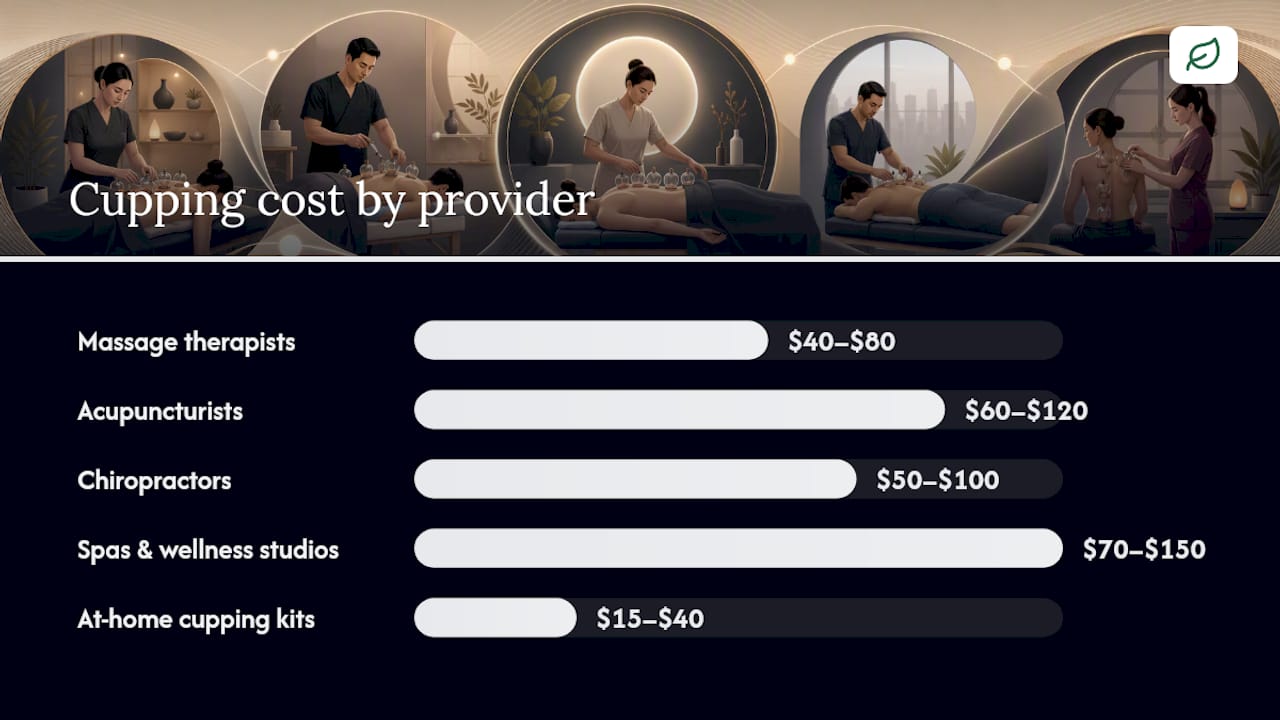
Here's what you can generally expect to pay, based on provider type:
- Massage therapists: $40 to $80 per session, often bundled with a broader massage
- Acupuncturists: $60 to $120, since cupping is frequently paired with acupuncture in the same visit
- Chiropractors: $50 to $100, sometimes included as part of a larger treatment plan
- Spas and wellness studios: $70 to $150, reflecting a more boutique, amenity-driven experience
- At-home cupping kits: $15 to $40 for basic silicone or plastic sets, a one-time cost instead of a recurring one
Cupping session costs average $30 to $100 according to WebMD, with sessions running anywhere from 15 minutes to a full hour. That range holds up well across most of the country, though it shifts based on your zip code.
If you live in a major metro area, expect to land at the top of these brackets or slightly above. Rent, licensing fees, and local demand all push urban prices higher. Rural and suburban providers, by contrast, tend to sit closer to the lower end simply because their overhead is lighter. Demand spikes matter too. Cupping's visibility jumped after Olympic athletes were photographed with cupping marks, and that kind of attention tends to nudge prices upward in cities where clinics can charge a premium for a trendy treatment.
What Actually Drives the Price of a Cupping Session
Two cupping sessions that look identical on a menu can cost very different amounts once you understand what's baked into that number.
Wet cupping costs more than dry cupping, and the gap is rarely small. Wet cupping involves light skin incisions to draw a small amount of blood after suction, which means the practitioner needs sterile single-use tools, a controlled disposal protocol for biohazard materials, and extra time for aftercare instructions. Dry cupping just uses suction, so it moves faster and requires less specialized equipment. WebMD notes that wet cupping typically costs more than dry cupping for exactly these reasons.
Several other factors shape the number you'll see on an invoice:
- Session length: A 15-minute add-on costs far less than a dedicated 45 to 60-minute appointment
- Practitioner credentials: A licensed acupuncturist with advanced training generally charges more than a technician offering cupping as a side service
- Geography: Coastal cities and dense metro areas run higher than smaller towns
- Add-ons: Cupping paired with acupuncture, essential oils, or heat therapy bundles the price upward
Certification matters more than people assume. A practitioner who has completed formal training in sterile technique and contraindications isn't padding the price. They're accounting for the liability and precision that wet cupping in particular demands.
Pro Tip: If a bundled package seems unusually cheap, ask exactly what's included in each session. Some providers pad "value packages" with filler services rather than more cupping time, so you end up paying for volume instead of quality.
How Long Sessions Last and What a Full Treatment Plan Costs
A single cupping appointment typically lasts between 15 and 60 minutes, depending on whether it's a stand-alone treatment or an add-on to acupuncture or massage. Shorter sessions focus on one or two problem areas; longer ones treat the back, shoulders, or legs more thoroughly.
Most practitioners recommend a course of care rather than a single visit, structured around how long you've had the issue:
- Acute issues (a recent muscle strain or stiffness): 1 to 3 sessions, spaced a few days apart
- Chronic conditions (long-term back pain, recurring tension): 4 to 8 sessions, often weekly
- Maintenance care: Occasional sessions every few weeks or once a month once symptoms improve
Here's how that translates into real budgeting math. A 3-session acute plan at $75 per session runs about several hundred dollars total. A 6-session chronic plan at the same rate comes to $450, though many clinics offer a package discount of 10% to 25% for booking multiple sessions upfront, according to consumer pricing surveys. That discount can bring the chronic plan closer to $340 to $400 depending on the provider.
If you're weighing whether a longer course of care is worth the investment, it helps to understand what outcomes are realistic in the first place, something we cover in more detail when discussing alternative therapy outcomes.
Does Insurance Cover Cupping Therapy?
Most U.S. health insurance plans do not cover cupping therapy directly. It's typically classified as a complementary or elective treatment, which puts it outside standard medical coverage. There are exceptions, though narrow ones: some plans will reimburse cupping when it's delivered by a licensed acupuncturist or chiropractor as part of a broader treatment plan for a diagnosed condition, particularly chronic pain.
Your practical options for managing the cost look like this:
- Request a superbill from your provider after the session. It's an itemized receipt with diagnosis and treatment codes that you submit to your insurer for possible partial reimbursement.
- Use HSA or FSA funds. Most administrators accept cupping when it's paired with a Letter of Medical Necessity from a licensed provider.
- Ask about sliding-scale pricing. Community wellness clinics and acupuncture schools often offer reduced rates based on income.
- Look for cash-pay discounts. Many practitioners knock 5% to 10% off if you pay for a package upfront instead of billing insurance.
Calling ahead and asking directly about superbills or FSA-eligible receipts saves you from an unpleasant surprise at checkout.
Is Cupping Worth the Cost? What the Research Actually Shows
The clinical evidence on cupping is genuinely mixed, and that matters when you're deciding whether to spend $450 on a 6-session plan or just $75 to try one visit.
The National Center for Complementary and Integrative Health describes cupping as a practice with limited but growing evidence, and it flags safety considerations that favor trained, licensed practitioners over unregulated ones. A widely cited review published through NCBI found small-to-moderate effects for pain outcomes in some individual trials, but the overall body of research suffers from inconsistent study design and small sample sizes.
Cupping shows promise for certain pain conditions in individual studies, but the overall evidence base remains inconsistent enough that no major medical organization currently recommends it as a first-line treatment. That gap between anecdotal enthusiasm and rigorous proof is exactly why choosing a well-trained provider matters more than chasing the lowest price.
Harvard Health takes a similarly measured stance, noting that while cupping is generally low-risk when done properly, the science doesn't yet support strong claims about detoxification or dramatic pain relief. Conditions like lower back pain and muscle tension tend to have somewhat more supportive evidence than others. If you're going in mostly for relaxation and muscle relief rather than a specific medical outcome, your expectations should be calibrated accordingly, a point we expand on in our breakdown of evidence-based healing methods.
How to Choose a Cupping Provider Without Overpaying
Price alone tells you very little about quality. Here's what actually separates a safe, fairly priced provider from a risky bargain:
- Verify state licensing. Acupuncturists, massage therapists, and chiropractors are all licensed at the state level. Confirm the credential before booking.
- Ask about sterile protocols, especially for wet cupping. A reputable provider uses single-use, disposable tools and can explain their disposal process without hesitation.
- Watch for red flags. Vague answers about hygiene, unusually low prices with no explanation, or reluctance to discuss training are all warning signs.
- Evaluate package pricing fairly. A fair discount for multi-session bundles sits in the 10% to 25% range. Anything steeper may mean corners are being cut elsewhere.
Cross-referencing credentials across multiple providers takes time most people don't have. A verified directory, like the one Goholistic maintains, does that legwork upfront so you're comparing vetted options instead of guessing from a search results page.
Pro Tip: Before your first appointment, ask whether the practitioner has specific training in wet cupping versus dry cupping. Many are certified in one but not the other, and that distinction affects both safety and price.
Budgeting for Cupping: The Bottom Line
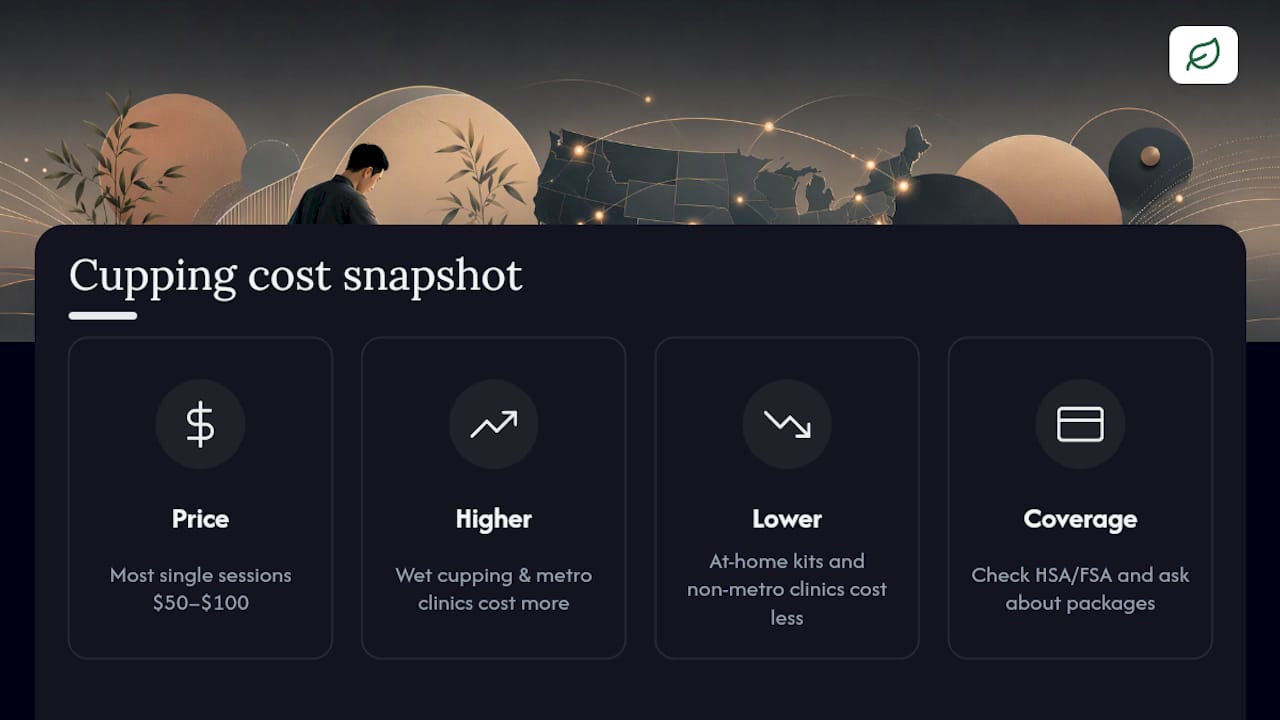
Expect $50 to $100 for most single sessions, more for wet cupping or metro-area clinics, less for at-home kits. Provider credentials and geography move the price more than anything else. Before booking, call around, ask about package pricing, and check whether your HSA or FSA covers the visit; for insight into pricing structures and fees in wellness treatments, see our overview of hydromassage costs and memberships. Choosing a properly trained practitioner is worth more than shaving a few dollars off the lowest quote you find.
Why Verified Providers Change the Cost Conversation
Cupping's price range is wide enough that cost alone tells you little about what you're actually getting. What matters more is whether the person holding the cups has the training to do it safely, particularly with wet cupping, where sterile technique isn't optional. Readers who weigh evidence summaries alongside price tend to make better decisions than those chasing the cheapest listing they find. That's exactly why a verified directory matters. It turns a guessing game into an informed choice.
— Andrew
Find a Verified Cupping Provider Through Goholistic
Goholistic gives you something most cupping searches don't: a directory built entirely around verification, so every practitioner you see has already had their license and credentials confirmed. No more calling five clinics to ask if someone's actually certified for wet cupping.
Beyond verification, Goholistic pairs each provider listing with evidence summaries so you can see what the research actually supports before you spend a dollar. Pricing transparency is built into the platform too, so you can compare rates across massage therapists, acupuncturists, and chiropractors in your area without cold-calling every clinic in town. For a treatment where credentials matter as much as cost, that combination saves both time and risk. Browse verified holistic treatments near you and book a session with a practitioner who's already been checked out, not just found on a map.
Sources
- What Is Cupping Therapy? Uses, Benefits, Side Effects ... — WebMD
- Cupping - NCCIH
- A review of cupping therapy (PMC article)
Always talk with your own clinician about whether cupping fits your specific health situation before starting treatment.
This article is general information, not a substitute for advice from a qualified doctor. Consult a qualified healthcare professional about your own circumstances before acting on anything here.