

TL;DR:
- Practitioner verification confirms that a health provider’s credentials and licenses are legitimate and current through direct contact with issuing authorities. It is essential in holistic health, where regulation varies and unverified claims pose risks of harm, financial loss, or ineffective care. Using official sources like state licensing portals and certification bodies ensures a comprehensive and trustworthy assessment before engaging with a practitioner.
When you start exploring acupuncture, Ayurveda, or massage therapy, the question of who is actually qualified to help you rarely gets answered upfront. What is practitioner verification? It is the process of confirming that a practitioner's credentials, licenses, and training are real, current, and in good standing through direct checks with issuing authorities. In holistic health especially, where regulation varies widely across disciplines, skipping this step can expose you to real risk. This guide walks you through exactly what verification means, how the process works, why it matters, and where to look.
Table of Contents
- Key takeaways
- What practitioner verification actually means
- How the practitioner verification process works
- Why verification matters in holistic health
- Comparing verification sources: what to use and what to skip
- My take on how people actually approach this
- Find verified practitioners with Goholistic
- FAQ
Key takeaways
| Point | Details |
|---|---|
| Verification is not the same as certification | Certification assesses skills against standards; verification confirms those credentials actually exist and are current. |
| Primary source checks are the gold standard | Contact the issuing board or institution directly rather than relying on directories or self-reported information. |
| Holistic health requires extra scrutiny | Regulation varies by discipline and state, so cross-checking multiple sources is especially important for alternative practitioners. |
| State licensing portals are your best starting point | State medical board websites reflect real-time status and disciplinary history, unlike many insurer directories. |
| Platforms like Goholistic do much of this work for you | Using a verified practitioner directory removes guesswork and supports safer, more informed wellness decisions. |
What practitioner verification actually means
Practitioner verification is the formal process of confirming that a healthcare or wellness provider holds the credentials they claim. It does not just mean glancing at a framed certificate on the wall. True verification involves contacting the original issuing source, whether that is a licensing board, a university, or a certification agency, and confirming the credential's authenticity directly.
Primary source verification means going straight to the institution that issued the credential, not accepting a copy from the practitioner themselves. This is the standard required by accrediting bodies including The Joint Commission, NCQA, and URAC. The process typically covers education, licensure, board certifications, work history, and professional memberships.
It is worth distinguishing this from certification, because people mix these up constantly. Verification confirms authenticity of credentials that already exist, while certification is an assessment process that tests a practitioner against defined competency standards. A practitioner can be certified by one body and still have a license under review or lapsed with another. You need both pieces of the picture.
Here is what a thorough practitioner credentials check typically covers:
- Active license status and expiration date in the relevant state
- Educational background including degrees and the institutions that issued them
- Board certifications and whether they are current or merely "board eligible"
- Work history and any gaps or inconsistencies across reported positions
- Disciplinary actions or complaints filed with licensing boards
- Professional memberships in recognized associations relevant to the discipline
Pro Tip: Look specifically for disciplinary history, not just license status. A license can be active while a formal complaint is still being investigated.
What is practitioner validation versus verification? Validation typically refers to confirming that a credential meets a defined standard or requirement for a specific role. Verification confirms the credential exists at all. In holistic health, both steps matter.
How the practitioner verification process works
Understanding the practitioner verification process from start to finish gives you the confidence to actually do it rather than just intend to. Here is how it works in practice.
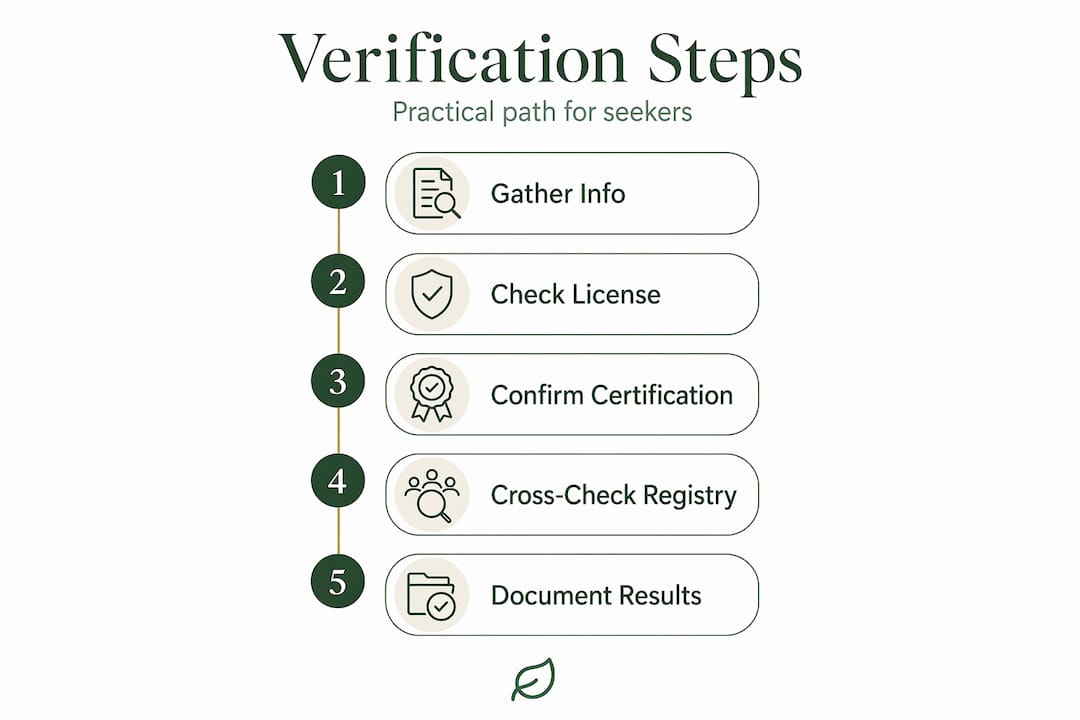
Step 1: Gather the practitioner's full information. This means their full legal name, license number, state of practice, and any certifications they advertise. Many practitioners list these on their website or intake forms.
Step 2: Check the relevant state licensing board. You can verify license status directly through your state's medical or professional board website. These portals update within days and show current status, expiration, and any disciplinary history. For holistic practitioners, the relevant board may vary. Acupuncturists, massage therapists, and naturopathic doctors each fall under different licensing authorities depending on the state.
Step 3: Verify specialty certifications with the issuing body. For holistic disciplines, this might include checking the Accreditation Commission for Acupuncture and Oriental Medicine (ACAOM), the Council on Naturopathic Medical Education (CNME), or the National Certification Board for Therapeutic Massage and Bodywork (NCBTMB).
Step 4: Cross-check with the NPI Registry. The NPPES NPI Registry assigns unique identifiers to providers and lists their specialty taxonomy. However, NPI records omit disciplinary actions and board certification status entirely, which means it is a starting point, not a finish line.
Step 5: Document what you find. NCQA standards require that verification be recorded with the date, the source consulted, the reviewer's identity, and the outcome. Even as a consumer, keeping a simple written record of what you checked and when protects you if questions arise later.
The table below shows how long formal verification typically takes and what gets checked.
| Credential type | Verification source | Typical timeline |
|---|---|---|
| State license | State licensing board portal | Real-time to 2 days |
| Board certification | Certification body database | 1 to 5 business days |
| Educational degree | Issuing university directly | 3 to 10 business days |
| Work history | Former employers or agencies | 5 to 14 business days |
| Disciplinary history | State board or federal databases | Real-time to 3 days |
Initial credentialing through formal healthcare organizations can take 90 to 150 days when all credentials are being reviewed comprehensively. For you as a patient, a basic check of license and certification status takes under 30 minutes once you know where to look.
Pro Tip: If a holistic practitioner's license does not appear in their state's portal, ask them directly for their license number and the issuing body. A legitimate practitioner will never hesitate to provide this.
Why verification matters in holistic health
The importance of practitioner verification becomes especially clear in holistic health, where regulatory frameworks are far less uniform than in conventional medicine. A medical doctor is licensed, monitored, and subject to standardized disciplinary processes across every state. A "holistic healer" can mean almost anything, and that ambiguity is exactly where risk enters.
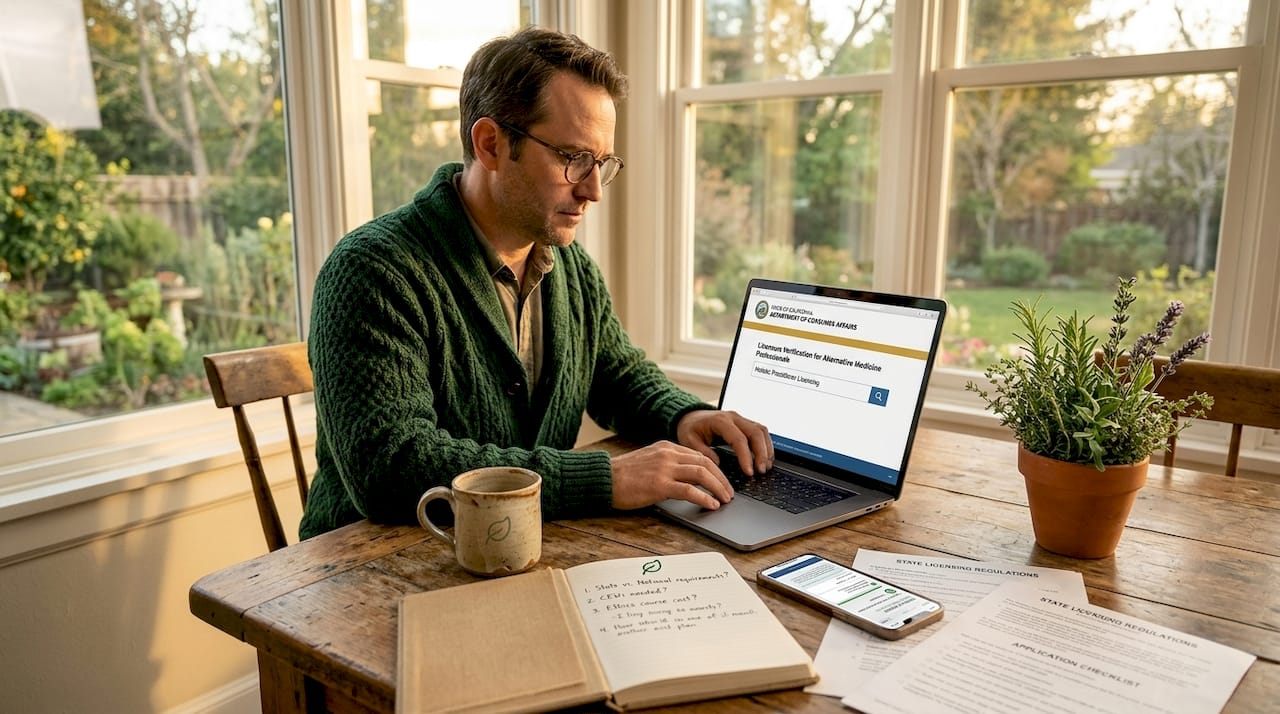
Up to 15% of credential applications contain errors that can affect patient care. In holistic contexts, where formal credentialing is not always required to practice, the gap between what is advertised and what is real can be even wider.
Here are the real risks you take when you skip a practitioner credentials check:
- Physical harm from treatments delivered without proper training, including nerve damage from improper acupuncture or adverse reactions from unlicensed supplement protocols
- Financial loss from paying for services that will not be covered by insurance because the provider is not properly credentialed
- Legal exposure when you pursue a complaint and discover the practitioner had no formal standing to begin with
- Ineffective care from practitioners who have completed a weekend workshop rather than an accredited multi-year program
"Practitioner verification is much more than a checkbox. It is a key safeguard protecting patients from liability and poor care outcomes." — Cisive Healthcare Compliance Blog
The holistic health space is full of passionate, genuinely skilled practitioners. Verification does not mean distrust. It means you are treating your wellbeing with the same care and discernment that you would apply to any important decision. Understanding the importance of practitioner verification is ultimately about respecting yourself enough to ask good questions before you begin.
Comparing verification sources: what to use and what to skip
Not all verification sources are equal. Knowing where to look and what each source actually tells you is the difference between a real check and a false sense of security.
| Source | What it tells you | What it misses | Reliability |
|---|---|---|---|
| State licensing board portal | License status, expiration, disciplinary history | Specialty certifications from private bodies | Very high |
| NPPES NPI Registry | Provider identity, specialty taxonomy | Disciplinary actions, board certification status | Moderate |
| Insurer provider directories | In-network status | Current license standing, recent changes | Low to moderate |
| Certification board databases | Certification status and expiration | State license status | High for specialty creds |
| Practitioner's own website | Self-reported credentials | Accuracy, current standing | Not independently reliable |
Insurer directories are notoriously slow to update, sometimes lagging by several months. A practitioner can lose their license and still appear as active in a health plan's directory. This is a well-documented problem, not a rare exception.
One term to watch for carefully is "board eligible." This sounds credentialed, but board eligible practitioners have completed residency without passing their board exams. That is a meaningful distinction. For holistic practitioners, equivalent language like "training completed" or "program graduate" does not always mean a formal credential was awarded or is currently active.
Cross-referencing multiple sources is the only way to build a complete and accurate picture. Check the state board portal. Verify the specialty certification with the issuing body. Consult the NPI Registry for basic identity confirmation. Your certified practitioner checklist should cover all three before you commit to a first appointment.
Pro Tip: When in doubt, call the issuing board directly. Most licensing boards have a consumer inquiry line specifically designed to confirm practitioner standing over the phone.
My take on how people actually approach this
I have spent years watching people research a practitioner's reviews on social media for twenty minutes and then book a session without ever checking whether that person holds a valid license. The review is real. The warmth is genuine. And the credentials? Nobody looked.
What I find genuinely troubling is not that people skip verification out of laziness. It is that most people do not know it is something they can do themselves in minutes. They assume someone else has checked. The insurance company must have. The wellness studio must have. Often, nobody has.
Holistic health seekers are, by nature, thoughtful people. They read ingredient labels. They research treatments before they try them. But the practitioner credentials check somehow gets left out of that process, maybe because it feels bureaucratic or skeptical in a space that values trust and openness.
Here is the thing I have learned: verification is not an act of suspicion. It is an act of care, for yourself and actually for the practitioner too. A legitimately credentialed practitioner wants you to know their qualifications are real. The ones who push back or deflect when you ask are telling you something important.
The nuance most people miss is this: a lapsed license or an unverified certification does not always mean the practitioner is unqualified in a practical sense. But it does mean something has slipped through the cracks in their professional life, and you deserve to know that before you lie down on their table.
— Andrew
Find verified practitioners with Goholistic
Goholistic was built specifically to take the guesswork out of finding safe, qualified holistic practitioners. Every provider listed on the platform goes through a verification process before appearing in the directory, so you are not starting from zero every time you want to try a new therapy. Whether you are exploring acupuncture, Ayurveda, massage therapy, or any of the 200+ treatments available in the treatment library, you can browse with confidence. Ready to find someone right for you? Explore verified providers by specialty and location, and take your next step knowing the groundwork has already been done.
FAQ
What is practitioner verification in simple terms?
Practitioner verification is the process of confirming that a health or wellness provider's credentials, licenses, and certifications are real and currently in good standing, using checks with the original issuing authorities rather than self-reported information.
How do I verify a holistic health practitioner's credentials?
Start with your state's licensing board portal to check license status and disciplinary history, then verify any specialty certifications directly with the issuing body such as ACAOM or NCBTMB, and cross-reference with the NPPES NPI Registry for identity confirmation.
Why is practitioner verification important in holistic health?
Holistic health regulation varies widely by discipline and state, which means credentials are not always standardized or automatically monitored, making independent verification especially important to protect your safety and ensure you receive qualified care.
What is the difference between practitioner verification and certification?
Certification is an assessment process that tests a practitioner against defined competency standards, while verification confirms that a credential actually exists, was legitimately issued, and remains active.
Can I trust insurer provider directories for verification?
No. Insurer directories often lag months behind real-time license changes and may still list practitioners whose credentials have lapsed or been revoked, making state licensing board portals a far more reliable source.