

TL;DR:
- Credentials in holistic health vary, with licensure offering legal oversight and safety assurances.
- Verify licenses through state boards and check for accreditation before booking providers.
- For chronic health issues, choosing licensed practitioners who collaborate with medical professionals is essential.
When you seek out a holistic health practitioner, you probably assume they've met some standard of training and oversight. Most people do. But the truth is that credentials in the holistic health space vary enormously, and not every provider calling themselves a practitioner has been vetted for safety or competence. Certified or licensed holistic practitioners have met standardized education, training, and competency benchmarks from recognized bodies. This article will walk you through what those credentials actually mean, why they matter especially for chronic health concerns, and how to verify a provider before you book.
Table of Contents
- Understanding holistic health credentials: Certification vs. licensure
- Why certification and licensure reduce risk and improve outcomes
- Real-world scenarios: Certified vs. self-proclaimed holistic practitioners
- How to verify practitioners and make confident bookings
- Why credential checking is non-negotiable for chronic health and wellness
- Find and book certified holistic practitioners
- Frequently asked questions
Key Takeaways
| Point | Details |
|---|---|
| Credential differences matter | Certification and licensure are distinct, and both critically affect client safety and treatment quality. |
| Risk reduction via oversight | Certified and licensed practitioners are legally monitored for competence, reducing chances of harm. |
| Real-world verification tips | Always check credentials, watch for red flags, and prefer platforms that transparently display practitioner qualifications. |
| Collaboration ensures safety | Top certified practitioners coordinate with medical providers to avoid risky interactions and maximize outcomes. |
Understanding holistic health credentials: Certification vs. licensure
Credentials in holistic health fall into two broad categories: certification and licensure. They sound similar, but they work very differently and protect you in different ways.
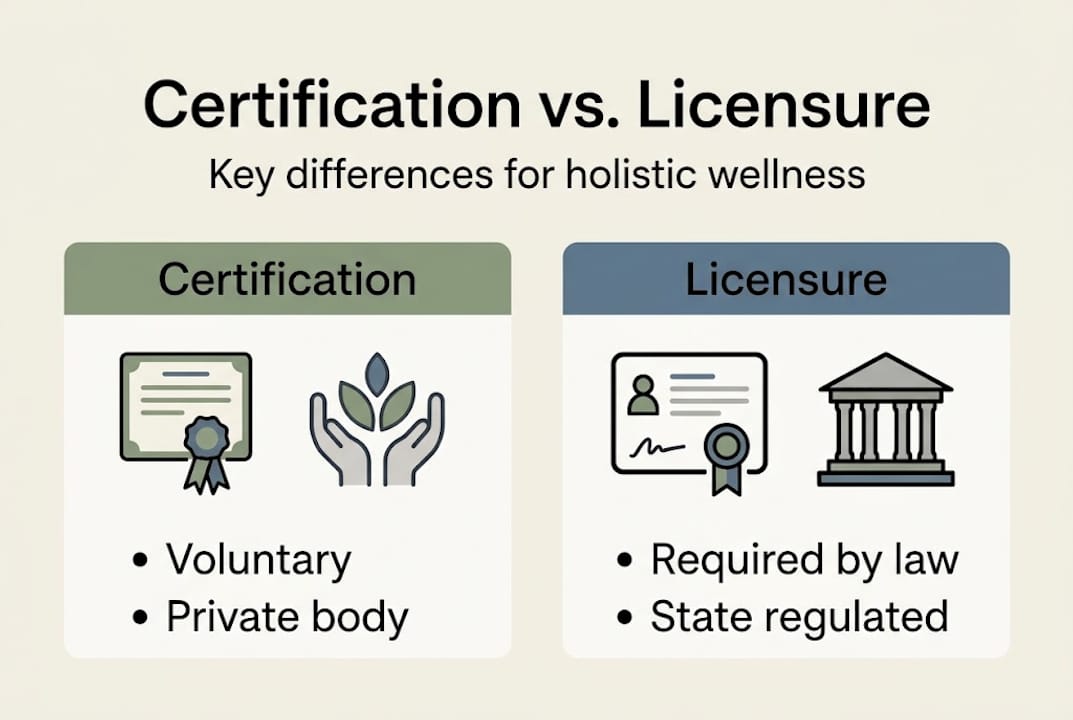
Certification is typically a voluntary process. A practitioner completes a training program, passes an exam, and receives a credential from a professional organization. It signals that they've met a defined level of education and competency. However, certification is not always required by law, and there is no government body standing behind it.
Licensure is a different story. It's state-regulated, meaning the government sets the rules, defines the legal scope of practice, and enforces compliance. Licensure provides state-enforced oversight, public complaint mechanisms, and a legal scope of practice that reduces risks like operating outside a practitioner's competence. If something goes wrong with a licensed provider, you have legal recourse.
Here's a quick comparison to clarify the difference:
| Feature | Certification | Licensure |
|---|---|---|
| Required by law | No | Yes |
| Government oversight | No | Yes |
| Complaint mechanism | Limited | Formal state board |
| Legal scope of practice | Varies | Defined by law |
| Diagnosis authority | No | Sometimes |
For everyday wellness support like relaxation massage or general nutrition guidance, certification from a reputable body may be enough. But when you're dealing with chronic pain, a diagnosed condition, or anything that involves assessment and treatment planning, licensure becomes essential. You want a provider whose work is backed by legal accountability.
If you're exploring choosing natural remedies as part of your care plan, understanding this distinction helps you pair the right remedy with the right level of provider. The NCCIH guidance on selecting complementary health practitioners is one of the most reliable resources you can consult before booking.
Pro Tip: Always ask whether a practitioner holds a state license when your situation involves any form of diagnosis, treatment planning, or management of a chronic condition. Certification alone is not enough in those cases.
Why certification and licensure reduce risk and improve outcomes
Having an understanding of the credential types is just the first step. Knowing how they actually protect you is what turns that knowledge into better decisions.
Licensed and certified practitioners operate within defined boundaries, and those boundaries exist for good reason. State licensing boards monitor practitioners, receive complaints, and can suspend or revoke licenses. That oversight keeps practitioners accountable in ways that a voluntary certification program simply cannot match.
Here's what credentialed practitioners typically do to reduce risk:
- Operate within a legally defined scope of practice, avoiding treatments they aren't trained for.
- Maintain continuing education requirements to stay current with evidence-based practices.
- Carry professional liability insurance, protecting both themselves and their clients.
- Document client health histories and adjust treatments based on individual needs.
- Refer clients to medical doctors when a condition falls outside their scope.
That last point matters more than people realize. Credentialed providers actively coordinate with conventional medical care, especially for chronic issues. If you're managing a condition like fibromyalgia or an autoimmune disorder, your holistic practitioner should be communicating with your primary care physician, not working in isolation. This kind of integration is part of what makes evidence-based treatments genuinely effective rather than just appealing.
"NCCIH recommends verifying education, training, licensing, and certifications, checking for collaboration with conventional providers, and watching for red flags like guarantees of a cure."
This is the kind of standard you should hold every provider to. The research supports it too. Acupuncture delivered by licensed acupuncturists carries Tier A evidence for several chronic pain conditions, meaning the evidence base is strong enough to support clinical use. That quality of care only happens when practitioners are properly trained, monitored, and working within evidence-based frameworks.
When you're ready to look for providers, connecting with verified holistic providers who display their credentials openly is one of the simplest ways to protect yourself and get better results.
Real-world scenarios: Certified vs. self-proclaimed holistic practitioners
Let's make this concrete. The difference between a credentialed and an uncredentialed practitioner isn't just technical. It shows up in how they treat you, what they recommend, and how safe you are in their care.

Scenario one: You're dealing with chronic lower back pain and book an appointment with a licensed massage therapist who also holds a certification in myofascial release. Before your first session, they collect a full health history, ask about medications, and confirm that your physician has cleared you for manual therapy. During treatment, they stay within their defined scope and suggest you follow up with your doctor if symptoms change. That's how a credentialed practitioner operates.
Scenario two: You find a self-described "holistic healer" online who offers to diagnose your energy imbalances and prescribe herbal protocols. They make no mention of credentials, encourage you to stop your medication, and self-designated titles risk scope violations like diagnosing without a license. This isn't just ineffective. It can be dangerous.
Here's a side-by-side view of the behavioral difference:
| Behavior | Credentialed practitioner | Self-proclaimed practitioner |
|---|---|---|
| Reviews health history | Yes | Rarely |
| Operates within scope | Yes | Often does not |
| Coordinates with MDs | Yes | Typically discouraged |
| Carries liability insurance | Usually | Rarely |
| Verifiable credential | Yes | No |
The impact on a holistic consultation is significant. You deserve to feel safe, heard, and supported, not pressured into unproven treatments or urged to abandon conventional care.
Here are some warning signs to watch for:
- No verifiable credential or license displayed
- Claims to diagnose illness without a medical license
- Discourages collaboration with your physician
- Guarantees a cure or promises immediate results
- Avoids answering direct questions about training or background
Pro Tip: Ask every new practitioner directly: "Do you coordinate with conventional medical providers?" A confident, open answer is a green flag. Resistance or dismissal is a red flag worth taking seriously.
For a deeper look at the evidence base behind common holistic practices, that context helps you ask smarter questions before booking.
How to verify practitioners and make confident bookings
Knowing what to look for is one thing. Actually checking it before you book is where most people skip a step. Here's a clear process you can follow every time.
- Identify the credential type. Ask what certifications or licenses the practitioner holds and from which organization.
- Search the state licensing board. Most states have online license lookup tools. Search by name to confirm the license is active and in good standing.
- Check the certifying body. For certifications, visit the organization's website directly and search their practitioner directory.
- Look for accreditation. Certified practitioners from accredited programs ensure institutional quality control and verifiable credentials. Ask whether their training program was accredited.
- Confirm collaboration. Ask if they work alongside or communicate with your primary care team.
NCCIH tips also recommend avoiding practitioners who claim to treat a wide range of unrelated conditions or who guarantee specific outcomes. No credentialed provider should ever promise a cure.
When booking through a platform, look for one that displays practitioner credentials clearly and allows you to filter by license type and specialty. Our booking consultations guide walks you through what to look for in a trustworthy booking experience.
Red flags to avoid:
- No verifiable license or certification number
- Credentials from unrecognized or self-created organizations
- Inability to explain their training background clearly
- No mention of professional liability coverage
- Pressure to prepay for large treatment packages upfront
If you want to explore holistic treatments and compare what different modalities require in terms of practitioner credentials, building that knowledge helps you book with confidence every time.
Why credential checking is non-negotiable for chronic health and wellness
Here's an honest take: most people skip credential verification because they assume a professional-looking website or a confident personality means someone is qualified. That assumption can cost you.
Credential checking is not a formality. It's a legal and safety-critical step, particularly when you're managing a chronic condition. We've seen clients who were harmed not because they trusted holistic care, but because they trusted the wrong provider, someone who operated outside their scope and either delayed proper diagnosis or introduced harmful interventions.
What most people overlook when choosing a provider:
- Whether the credential comes from an accredited body
- Whether the license is currently active and in good standing
- Whether the practitioner can name a collaborative relationship with a physician
Credential standards are the strongest protection clients have. They're not red tape. They're the foundation of safe, effective, integrative health care. When you verify before you book, you're not being skeptical. You're being smart about your own wellness journey.
Find and book certified holistic practitioners
You now have the knowledge to make confident, informed choices about holistic care. The next step is putting it into practice.
GoHolistic connects you with certified holistic practitioners who have been verified for credentials, training, and professional standing. You can browse holistic health providers by specialty, filter by license type, and read practitioner profiles that include their credential details. Whether you're exploring acupuncture, Ayurveda, massage therapy, or any of over 200 therapy types available through our treatment library, you'll find providers who meet the standards you've just learned to look for. Get started today and book with confidence.
Frequently asked questions
How do I check if a holistic practitioner is certified or licensed?
Visit your state's licensing authority website and search the practitioner's name to confirm an active license. Reputable practitioners also display their certification and licensing details directly on their profiles. NCCIH recommends verifying education, training, licensing, and certifications before your first appointment.
Why can self-proclaimed practitioners be risky?
Self-proclaimed practitioners often lack oversight, may operate outside their legal scope, and can expose clients to risks like misdiagnosis or unproven treatments. Self-designated titles risk scope violations such as diagnosing without a license, which can delay or interfere with necessary medical care.
Is certification or licensure more important for chronic issues?
For chronic conditions that involve diagnosis or treatment planning, licensure is the more critical credential. Certification can support wellness goals but should be paired with medical coordination when managing ongoing health concerns. Always verify via state boards to confirm the level of credential a practitioner holds.
Does certification mean the practitioner is legally allowed to diagnose?
No. Certification signals a level of education and competency but does not grant diagnostic authority. Only licensed professionals hold a state-enforced legal scope of practice that may include diagnosis and treatment of medical conditions.