

Choosing the right path to wellness often means looking beyond a quick fix. Many people searching for relief from chronic pain feel limited by standard appointments that barely scratch the surface. A holistic consultation delivers more, focusing on your body, mind, spirit, and social environment to design care that truly suits you. This article explores what actually happens during holistic sessions, dispels common myths, and uncovers how personalized guidance can transform your health journey.
Table of Contents
- Defining Holistic Consultation and Common Myths
- What Actually Happens in a Holistic Consultation
- Busting Common Myths About Holistic Consultation
- Why Personalization Matters
- Types of Holistic Consultations and Modalities
- Mind-Body Medicine
- Manipulative and Body-Based Practices
- Natural Products and Herbal Medicine
- Integrated Holistic Consultations
- How the Holistic Consultation Process Works
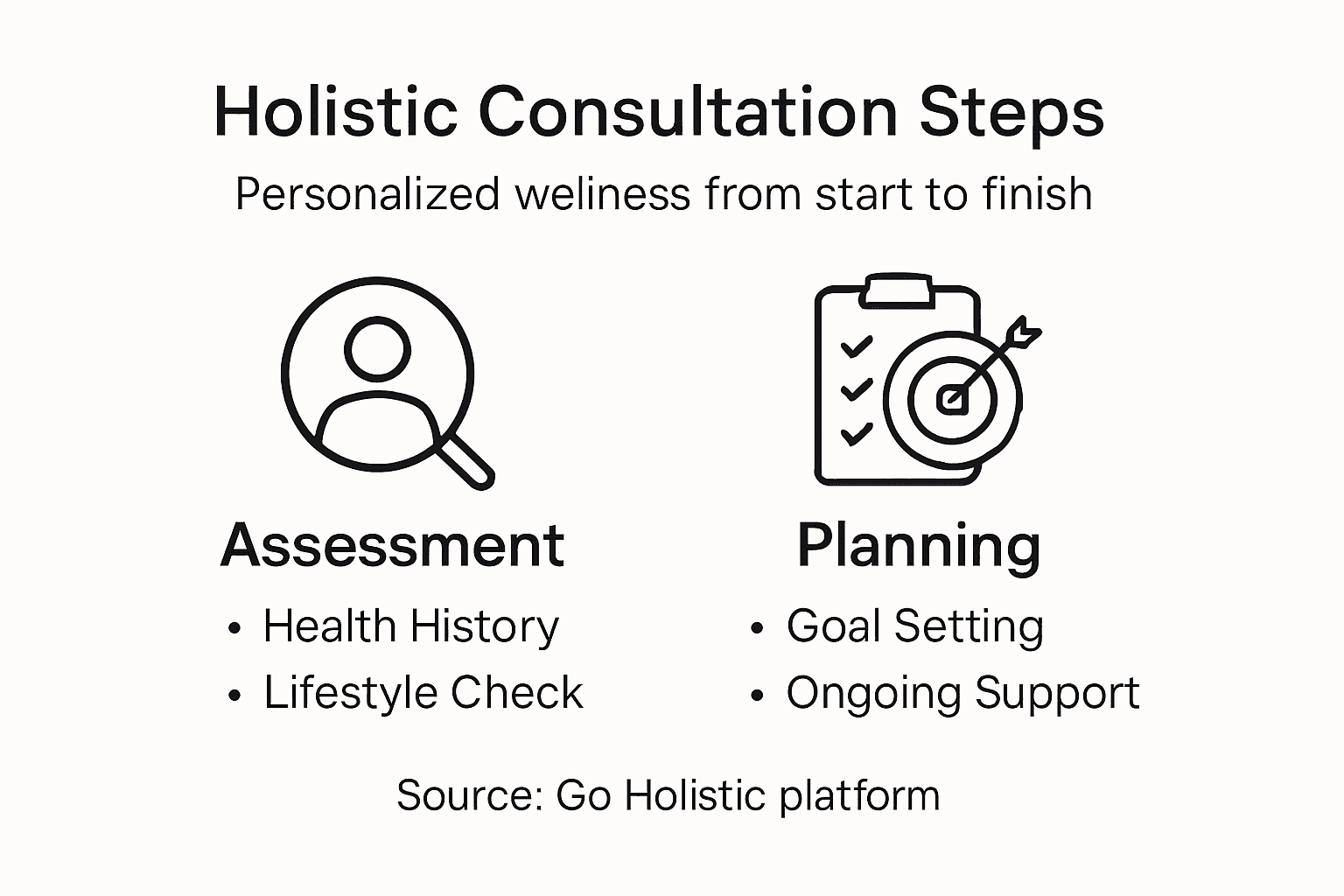
- The Initial Assessment Phase
- Exploration of All Health Dimensions
- Goal Setting and Planning
- Ongoing Support and Education
- Follow-Up and Adjustment
- Practitioner Verification and Client Safety Measures
- Credential Verification Standards
- Understanding Practitioner Qualifications
- Your Safety During Consultations
- Initial Consultation Best Practices
- Finding the Right Practitioner Match
- Benefits, Risks, and Comparing Health Approaches
- Real Benefits of Holistic Consultation
- Understanding the Risks and Limitations
- Integration Works Better Than Either Alone
- When to Prioritize Conventional Care
- Building Your Personal Health Strategy
Key Takeaways
| Point | Details |
|---|---|
| Holistic Consultations Are Comprehensive | They consider the whole person, integrating body, mind, spirit, and social aspects to address health. |
| Personalization Is Key | Treatment plans are tailored to individual health histories and goals, enhancing the chances of lasting improvement. |
| Myths About Holistic Practices | Common misconceptions include that holistic means abandoning conventional medicine, but integration is often more effective. |
| Collaboration in Goal Setting | Patients actively participate in defining their wellness goals, leading to higher engagement and better outcomes. |
Defining Holistic Consultation and Common Myths
A holistic consultation is fundamentally different from traditional medical appointments. It's a personalized conversation that views you as a complete person—not just a collection of symptoms.
Unlike conventional consultations that focus narrowly on physical signs, holistic medicine considers the whole person, examining your body, mind, spirit, and social circumstances. Your practitioner works to understand how these interconnected dimensions influence your overall health.
Here's how holistic and conventional consultations differ across key aspects:
| Aspect | Holistic Consultation | Conventional Consultation |
|---|---|---|
| Perspective | Whole-person approach | Symptom-focused care |
| Patient Role | Active participant | Generally passive recipient |
| Time per Session | Longer, in-depth discussions | Often brief, time-limited |
| Goal Setting | Personalized and collaborative | Typically practitioner-directed |
| Use of Modalities | Integrates multiple disciplines | Primarily biomedical interventions |
| Emphasis on Prevention | Strong focus | Often secondary |
What Actually Happens in a Holistic Consultation
During a holistic session, expect a deeper conversation than you might find elsewhere. The practitioner takes time to understand your complete health story, not just your immediate complaint.
Key components of this process include:
- Exploring your physical symptoms in context of your lifestyle and environment
- Understanding your emotional and mental health patterns
- Examining your spiritual beliefs and values
- Reviewing your social connections and support systems
- Identifying root causes rather than masking symptoms
A true holistic consultation treats you as an individual with unique circumstances, not a diagnosis to be managed.
Your role shifts from passive patient to active participant. The practitioner guides you toward your own wellness goals using motivational interviewing and goal setting techniques that empower you to make lasting changes.
Busting Common Myths About Holistic Consultation
Misunderstandings about holistic practice often prevent people from exploring this approach. Let's clear up the most persistent ones.
Myth 1: Holistic means abandoning conventional medicine.
False. Holistic practitioners integrate evidence-based approaches from multiple disciplines. You're not choosing between traditional and alternative—you're combining what works best for your situation.
Myth 2: Holistic consultation is just feel-good talk.
Not accurate. Genuine holistic practitioners use structured frameworks, listen carefully to your concerns, and develop specific, measurable wellness plans. The approach is rigorous and focused.
Myth 3: One session fixes everything.
Unrealistic expectations. Meaningful change takes time. Holistic consultation establishes patterns and builds momentum over multiple sessions, typically weeks or months depending on your health goals.
Myth 4: Holistic practitioners ignore scientific evidence.
Incorrect. Certified practitioners base recommendations on research. On Go Holistic, every recommendation connects to evidence-backed treatments from verified, licensed practitioners.
Myth 5: You need perfect health habits to start.
Completely untrue. Holistic consultation meets you exactly where you are. Your practitioner helps you build sustainable habits progressively, not judge your current choices.
Why Personalization Matters
Two people with identical chronic pain might need completely different approaches. One person's pain relief comes through acupuncture and lifestyle changes; another's requires massage therapy combined with stress management. That's why personalization transforms outcomes.
Your individual health history, values, and goals shape every recommendation. This tailored approach significantly increases your chances of actual, lasting improvement rather than temporary relief.
Pro tip: Before your first holistic consultation, write down your health history, current lifestyle patterns, and what wellness outcomes matter most to you—this helps your practitioner provide truly personalized guidance from day one.
Types of Holistic Consultations and Modalities
Holistic wellness encompasses far more than a single approach. Different modalities address different aspects of your health, and a skilled practitioner helps you find what resonates with your specific needs.
Mind-Body Medicine
These practices recognize the powerful connection between your mental state and physical health. They work by calming your nervous system and shifting how your body responds to stress.
Key mind-body modalities include:
- Meditation and mindfulness practices
- Yoga and tai chi
- Breathwork and pranayama
- Guided imagery and visualization
Many people with chronic pain discover that meditation and yoga reduce their symptoms more effectively than they expected. These practices build resilience over time rather than offering quick fixes.

Manipulative and Body-Based Practices
These modalities work directly with your physical structure to restore balance and reduce pain. Your practitioner uses hands-on techniques to release tension and improve function.
Common body-based approaches:
- Massage therapy
- Chiropractic care
- Osteopathic manipulation
- Acupuncture and acupressure
- Myofascial release
Your body holds tension from physical and emotional stress—skilled hands-on therapists can help release it.
These treatments often provide immediate relief while also addressing underlying structural imbalances that cause chronic discomfort.
Natural Products and Herbal Medicine
Natural products work with your body's chemistry to support healing. Unlike pharmaceuticals that isolate single compounds, herbal medicine and dietary supplements often contain multiple beneficial compounds that work together.
A qualified naturopath or herbalist considers your unique constitution and needs before recommending specific herbs or supplements. They understand dosage, interactions, and quality standards.
Integrated Holistic Consultations
Many practitioners combine multiple modalities for stronger outcomes. Your consultation might blend acupuncture with herbal recommendations and lifestyle guidance, or massage therapy with meditation instruction.
Holistic therapy integrates approaches like acupuncture, yoga, meditation, and naturopathy to treat you as a complete person. This integration means your treatment plan addresses physical symptoms, emotional patterns, and lifestyle factors simultaneously.
The right combination depends entirely on your health goals and preferences. Some people respond better to physical therapies; others need mind-body work; many benefit from all three approaches working together.
This table summarizes popular holistic modalities and what they target:
| Modality | Addresses | Typical Practitioner |
|---|---|---|
| Meditation | Stress, anxiety, mental clarity | Mind-body specialist |
| Massage Therapy | Muscle tension, pain, relaxation | Licensed massage therapist |
| Acupuncture | Chronic pain, energy flow | Licensed acupuncturist |
| Herbal Supplements | Nutrition, systemic balance | Naturopath or herbalist |
| Yoga | Flexibility, body-mind balance | Certified yoga instructor |
Pro tip: During your first consultation, mention which modalities interest you most—this helps your practitioner tailor recommendations to approaches you'll actually commit to practicing.
How the Holistic Consultation Process Works
A holistic consultation follows a structured yet personalized flow. Understanding each step helps you prepare and know what to expect during your first appointment.
The Initial Assessment Phase
Your practitioner begins by gathering comprehensive information about your health. This goes far deeper than a typical medical intake form.
You'll discuss:
- Your primary health concerns and symptoms
- Your medical history and past treatments
- Your lifestyle, diet, and exercise habits
- Your stress levels and emotional patterns
- Your sleep quality and daily routines
- Your spiritual beliefs and values
- Your support systems and relationships
This thorough exploration takes time. Your practitioner listens carefully to understand the complete picture of your health.
Exploration of All Health Dimensions
A key difference in holistic practice is that exploring the patient's physical, psychological, spiritual, and social perspectives happens together, not separately. Your practitioner recognizes how these dimensions interconnect.
For example, chronic back pain might relate to stress, poor posture at work, emotional holding patterns, or lack of spiritual grounding. Addressing only the physical pain misses the real causes.
True healing addresses the root causes hidden within your whole self, not just surface symptoms.
Goal Setting and Planning
Together, you and your practitioner create specific, achievable wellness goals. These aren't vague targets like "feel better"—they're concrete outcomes you can measure.
Your plan includes:
- Clear treatment recommendations
- Frequency and duration of sessions
- Lifestyle changes you'll work on
- How you'll track progress
- Timeline for reassessment
You become an active partner in your healing, not a passive recipient of treatment.
Ongoing Support and Education
Your practitioner teaches you why they're recommending specific approaches. Understanding the reasoning behind recommendations increases your commitment to following through.
They provide guidance on home practices, dietary adjustments, or stress management techniques you can use between sessions. This educational component accelerates your progress.
Follow-Up and Adjustment
Holistic consultations aren't one-time events. Your practitioner reassesses regularly, adjusting recommendations based on your progress and changing needs. What worked in month two might shift by month four as your body responds.
This adaptive approach ensures your care stays personalized to where you actually are.
Pro tip: Keep a simple journal between sessions noting symptoms, energy levels, mood, and any changes you notice—this gives your practitioner valuable feedback for refining your treatment plan.
Practitioner Verification and Client Safety Measures
Trusting a practitioner with your health requires confidence in their credentials and approach. Go Holistic prioritizes your safety through rigorous verification processes before any practitioner appears on the platform.
Credential Verification Standards
Every practitioner listed on Go Holistic undergoes thorough credential checks. This isn't optional—it's fundamental to the platform's commitment to your wellbeing.
Verification includes:
- Active, current licensure in their field
- Relevant professional certifications
- Educational background and training credentials
- Professional liability insurance
- Background screening where applicable
- Continuing education requirements
These standards ensure you're working with qualified professionals, not self-declared "wellness experts" without formal training.
Understanding Practitioner Qualifications
Different modalities require different training levels. An acupuncturist's credentials differ from a massage therapist's, which differ from a naturopath's. Go Holistic maintains discipline-specific standards.
Verified practitioners have demonstrated competency through formal training, testing, and ongoing professional development.
When booking a consultation, you'll see exactly what credentials each practitioner holds. This transparency lets you make informed decisions about who you work with.
Your Safety During Consultations
Go Holistic protects you during and after your appointments. The platform includes clear communication channels if any concern arises.
Key safety features:
- Direct booking through the platform (your information stays protected)
- Transparent practitioner profiles and reviews
- Clear cancellation and refund policies
- Direct support contact if issues occur
- Ability to report concerns about practitioner conduct
You maintain control over your health journey and can pause or change practitioners anytime.
Initial Consultation Best Practices
Before your first appointment, review the practitioner's profile thoroughly. Check their specializations, experience with your specific concern, and client reviews.
During your first session, pay attention to whether the practitioner:
- Listens carefully to your concerns
- Explains their recommendations clearly
- Respects your boundaries and preferences
- Answers your questions honestly
- Doesn't make unrealistic promises
A good fit is crucial. If something feels off, it's okay to try someone else.
Finding the Right Practitioner Match
Go Holistic's AI-powered matching system analyzes your health concerns and recommends qualified practitioners suited to your needs. This personalized approach increases the likelihood of finding someone truly compatible with your wellness goals.
When you're ready to explore options, you can browse verified practitioners across multiple disciplines and compare their approaches, experience, and availability.
Pro tip: Before booking, have a brief phone or chat conversation with your prospective practitioner to assess whether their communication style and approach feel right for you.
Benefits, Risks, and Comparing Health Approaches
Choosing between conventional medicine, holistic approaches, or a combination requires understanding the genuine strengths and limitations of each. The evidence increasingly supports integration rather than choosing sides.
Real Benefits of Holistic Consultation
Holistic approaches deliver measurable improvements that conventional medicine alone sometimes misses. These benefits extend beyond symptom relief to quality of life.
Key advantages include:
- Addressing root causes rather than just symptoms
- Reduced side effects compared to some medications
- Improved patient satisfaction and engagement
- Cost-effectiveness over time
- Better outcomes for chronic pain and stress-related conditions
- Personalized treatment matching your unique needs
When you feel genuinely heard and treated as a whole person, your body often responds better to treatment.
Understanding the Risks and Limitations
Holistic approaches aren't risk-free, and honest practitioners acknowledge this. Potential concerns include:
- Quality variation among practitioners
- Lack of scientific validation for some modalities
- Risk of delaying necessary conventional treatment
- Potential interactions between supplements and medications
- Higher out-of-pocket costs without insurance coverage
Effective wellness requires honesty about what works, what doesn't, and when each approach matters most.
The risk isn't holistic care itself—it's using it as a replacement for urgent medical care when conventional treatment is necessary.
Integration Works Better Than Either Alone
Integrating traditional, complementary, and integrative medicine with conventional biomedicine offers synergistic benefits that neither approach achieves independently. You're not choosing between two competing systems—you're leveraging the strengths of both.
For example, someone with chronic migraines might use conventional neurology care alongside acupuncture, massage, and stress management. This combination often produces better results than medication alone.
When to Prioritize Conventional Care
Certain situations require conventional medical intervention. Acute injuries, infections, emergency situations, and serious diseases need rapid, evidence-based biomedical care.
Holistic approaches complement this care but shouldn't delay it. A broken leg needs orthopedic surgery, not just massage therapy. Bacterial pneumonia needs antibiotics.
Building Your Personal Health Strategy
Your optimal approach likely combines multiple modalities. Start by identifying your primary health concerns, then explore which evidence-backed approaches address them.
Consider:
- Your specific health conditions and their severity
- Which approaches research supports for your situation
- Your budget and insurance coverage
- Your personal preferences and lifestyle
- Your practitioner's recommendations
Pro tip: Discuss your complete health plan—including supplements, therapies, and medications—with all your practitioners so they can identify potential interactions and ensure truly coordinated care.
Discover Personalized Holistic Care Tailored Just for You
Are you ready to move beyond symptom-focused treatments and embrace a truly whole-person approach to wellness? This article highlighted common challenges such as finding personalized, evidence-backed guidance and overcoming misconceptions about holistic consultations. At Go Holistic you can access a trusted platform that connects you with certified practitioners across diverse disciplines like acupuncture massage therapy and naturopathy. Our AI technology analyzes your unique health concerns to deliver customized recommendations that align with your personal goals and lifestyle.
Experience holistic healing that respects your individuality and empowers you to become an active participant in your wellness journey. Visit Go Holistic today to explore our verified provider directory book your first consultation and access over 200 naturally based therapies supported by research. Take the important step now toward lasting health improvement by engaging with holistic care designed with your whole self in mind.
Frequently Asked Questions
What is a holistic consultation?
A holistic consultation is a personalized health care appointment that views the patient as a whole person, considering their body, mind, spirit, and social circumstances rather than focusing solely on physical symptoms.
How does a holistic consultation differ from a traditional medical appointment?
Unlike traditional consultations, which often focus narrowly on symptoms and treatments, holistic consultations involve in-depth discussions about a patient's overall lifestyle, emotional health, and social connections, aiming for a more comprehensive understanding of their health.
What should I expect during my first holistic consultation?
During your first holistic consultation, you can expect an in-depth assessment of your health history, lifestyle, emotional patterns, and spiritual beliefs. The practitioner will work with you to set individual wellness goals and discuss personalized treatment options.
Are holistic consultations evidence-based?
Yes, certified holistic practitioners integrate evidence-based approaches from various disciplines. They base their recommendations on research and established practices, ensuring that treatment plans align with scientific evidence.