

TL;DR:
- A high-quality holistic practitioner has verified credentials, transparent communication, and works alongside conventional medicine. They prioritize patient understanding, coordinate care with doctors, and avoid making exaggerated health promises. Trustworthy practitioners explain treatments clearly and support your primary care relationships.
A high-quality holistic practitioner is defined by clear credentials, transparent communication, and a willingness to work alongside conventional medical care. These signs of holistic practitioner quality are not always obvious at first glance, but they are consistent and measurable. Knowing what to look for protects your health and helps you build a care relationship that actually works. Certifications from bodies like the NCCAOM (National Certification Commission for Acupuncture and Oriental Medicine), AANP (American Association of Naturopathic Physicians), and NBCE (National Board of Chiropractic Examiners) signal legitimate training. Goholistic verifies practitioners across disciplines so you can search with confidence rather than guesswork.
1. What credentials and training indicate a quality holistic practitioner?

Verified credentials are the clearest sign of practitioner legitimacy and safe practice. Accredited education and active licensure from recognized bodies like NCCAOM, AANP, or NBCE confirm that a practitioner has met defined educational and clinical standards. These are not honorary titles. They require coursework, supervised practice, and ongoing renewal.
A credible practitioner will share their qualifications without hesitation. Practitioners who cannot clearly explain their credentials, training, or scope of practice pose significant trust concerns. Transparency about professional background directly correlates with patient confidence and safety.
When evaluating a practitioner, look for these credential markers:
- Active licensure in their specific discipline (acupuncture, naturopathy, chiropractic, Ayurveda, massage therapy)
- Graduation from an accredited institution recognized by a national body
- Specialty certifications relevant to the treatments they offer
- Willingness to name their certifying organization and explain what it requires
- A clearly stated scope of practice that defines what they do and do not treat
Pro Tip: Search the NCCAOM, AANP, or NBCE public directories to verify a practitioner's license status before your first appointment. Most take less than two minutes to check.
Scope of practice matters as much as the credential itself. A licensed acupuncturist who stays within acupuncture is more trustworthy than one who claims expertise across ten unrelated disciplines without additional training.
2. How transparent communication reflects practitioner quality
Calm, clear communication is one of the most reliable attributes of good holistic healers. A quality practitioner explains what a treatment does, why they recommend it, and what the realistic outcomes look like. They do not need to alarm you to earn your trust.
Fear-based marketing and exaggerated claims are warning signs. Evidence-aware practitioners clarify uncertainty and avoid absolute health guarantees. If a practitioner tells you their method will "cure" a chronic condition or that conventional medicine is harming you, treat that as a red flag, not a selling point.
Strong communicators in holistic care do the following:
- Welcome your questions without defensiveness or dismissal
- Explain the reasoning behind each recommendation in plain language
- Acknowledge what is not yet known about a given therapy
- Give realistic timelines for expected progress
- Avoid pressure tactics or urgency-based upselling
Pro Tip: Bring two or three specific questions to your first consultation. How a practitioner responds to direct questions tells you more about their quality than any marketing material.
Charisma should not be confused with competence. High-quality providers demonstrate consistent communication, clear professional boundaries, and proper documentation. A practitioner who is engaging but vague about what they actually do is not a safe choice.
3. Why coordination with conventional medical care is a key sign of quality
Quality holistic practitioners do not position themselves against conventional medicine. They work alongside it. Reputable practitioners coordinate care with conventional medical teams and encourage patients to maintain their primary care relationships. This is a defining feature of integrative, responsible practice.
The following behaviors reflect this standard:
- Asking about your current medications and medical history before recommending any treatment
- Encouraging you to keep your primary care physician informed about the holistic therapies you are pursuing
- Referring you to a medical doctor or specialist when a concern falls outside their scope
- Never advising you to stop prescribed medications without direct consultation with the prescribing physician
- Documenting session notes that can be shared with other providers if needed
Discouraging conventional care or advising cessation of prescribed medications without medical consultation is a serious red flag. Proper practitioners respect medical treatment and actively support collaborative care.
The best holistic care does not replace your doctor. It adds a layer of support that addresses areas conventional medicine may not fully cover, such as stress, sleep, nutrition, and lifestyle. A practitioner who understands this balance is one worth trusting.
4. What patient-centered qualities should signal practitioner quality?
The quality of the therapeutic relationship is a measurable variable in health outcomes. Patients who feel dismissed or pressured experience poorer results, regardless of the practitioner's technical skill. Feeling heard and respected is not a soft preference. It is a clinical indicator.
Patient-centered care in holistic practice looks like this:
- The practitioner listens fully before offering recommendations
- Your preferences, values, and comfort level shape the treatment plan
- The practitioner adjusts their approach based on your feedback between sessions
- You never feel rushed, judged, or pressured into purchasing products or packages
- The practitioner supports your independence rather than creating reliance on their services
A practitioner who talks more than they listen is not practicing patient-centered care. The intake process should feel like a conversation, not a sales pitch. You should leave the first session with a clear sense of what was discussed and why.
Watch for warning signs like excessive supplement sales without explanation, dismissal of your concerns, or pressure to commit to long treatment packages upfront. These behaviors prioritize the practitioner's interests over yours. You can use Goholistic's provider directory to read verified patient reviews before booking.
5. How evidence awareness and balanced health claims affect practitioner quality
A trustworthy holistic practitioner understands the difference between emerging research and established clinical fact. They do not present every new study as proof of a cure, and they do not dismiss evidence that challenges their preferred methods. This intellectual honesty is a core quality of effective practitioners.
The table below contrasts the communication patterns of evidence-aware practitioners versus those using unbalanced claims:
| Quality indicator | Evidence-aware practitioner | Unbalanced claims practitioner |
|---|---|---|
| Treatment outcomes | Gives realistic ranges and timelines | Promises guaranteed results |
| Research references | Cites peer-reviewed sources or acknowledges limits | Uses testimonials as primary evidence |
| Mechanism explanation | Explains how a therapy works in plain terms | Uses vague or mystical language |
| Trend response | Evaluates new therapies critically | Adopts every trend without scrutiny |
| Uncertainty | Acknowledges what is not yet known | Presents all claims with equal certainty |
Balanced, calm communication that educates rather than alarms is the standard for quality holistic care. A practitioner who explains the mechanism behind acupuncture's effect on the nervous system is more credible than one who simply says "it works for everything."
Evaluating holistic therapy quality means asking whether the practitioner can explain why a treatment is appropriate for your specific situation. Generic answers that apply to everyone are a sign that the practitioner is not tailoring care to you. You can explore Goholistic's treatment library to understand what evidence-based explanations for over 200 therapy types look like before your appointment.
Key takeaways
The most reliable signs of holistic practitioner quality are verifiable credentials, transparent communication, collaborative care, patient-centered practice, and evidence-aware health claims.
| Point | Details |
|---|---|
| Verify credentials first | Check active licensure through NCCAOM, AANP, or NBCE before booking any session. |
| Transparent communication matters | Quality practitioners explain treatments calmly, welcome questions, and avoid fear-based claims. |
| Coordination with medicine is non-negotiable | Reputable practitioners support your primary care relationships and never advise stopping medications. |
| Feeling heard affects outcomes | The therapeutic relationship directly influences health results; dismissal is a clinical red flag. |
| Evidence awareness signals trust | Practitioners who distinguish research from fact and avoid cure guarantees are safer choices. |
What I've learned about spotting real quality in holistic care
After years of working in the wellness space, the single most consistent pattern I've noticed is this: the best practitioners are the least dramatic. They do not need to convince you that conventional medicine has failed you. They do not need to sell you on urgency. They simply explain what they do, why it may help, and what you should realistically expect.
The credential check matters, and you should always do it. But credentials alone do not tell the full story. I've seen licensed practitioners who were dismissive and rushed, and I've seen deeply knowledgeable providers who made every person feel genuinely cared for. The difference shows up in the first fifteen minutes of a consultation.
My honest advice: trust your instincts when something feels off, but also know the specific red flags to look for. A practitioner who cannot name their certifying body, who discourages you from seeing your doctor, or who promises results that sound too good to be true is not a safe choice. Use the certified practitioner checklist as a concrete tool, not just a general idea. And remember that a good practitioner will welcome your scrutiny. That openness is itself a sign of quality.
— Andrew
Goholistic makes finding verified practitioners straightforward
Choosing a holistic practitioner should not feel like a leap of faith. Goholistic connects you with verified, credentialed practitioners across disciplines including acupuncture, massage therapy, Ayurveda, and more. Every listing on the platform reflects a commitment to transparency and practitioner accountability.
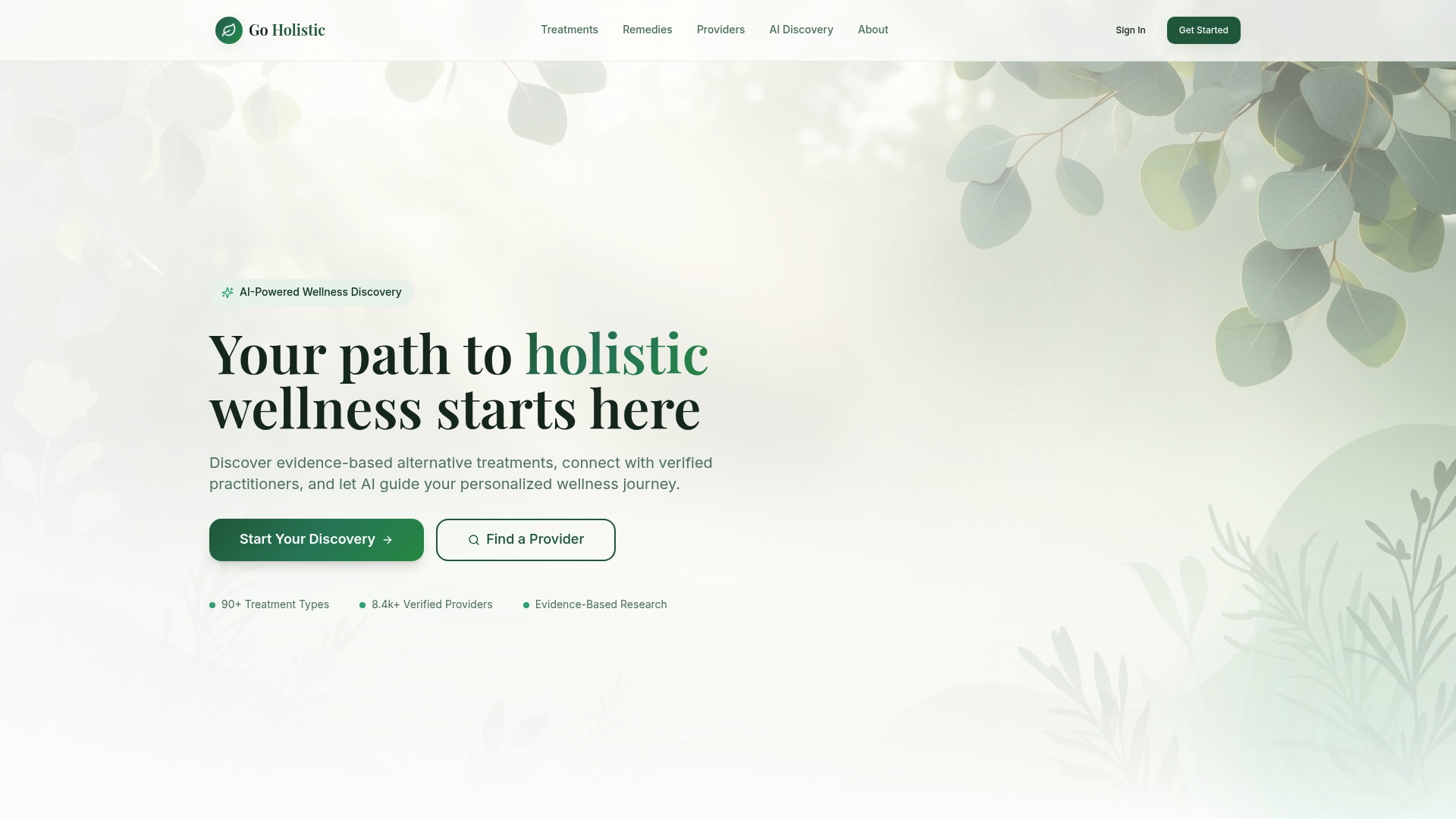
You can filter providers by specialty, read verified patient reviews, and access evidence-based treatment summaries before you ever book a session. Goholistic's AI technology also analyzes your health concerns and matches you with practitioners whose scope of practice fits your needs. Browse holistic health treatments or find practitioners near you to take the next step with confidence.
FAQ
What are the top signs of holistic practitioner quality?
The clearest signs are active licensure from a recognized body, transparent communication about treatment scope, willingness to coordinate with conventional medical care, and a patient-centered approach that respects your questions and preferences.
How do I verify a holistic practitioner's credentials?
Check the public directories of certifying organizations like NCCAOM, AANP, or NBCE. You can also use Goholistic's practitioner verification guide to confirm legitimacy before your first session.
Is it a red flag if a holistic practitioner discourages my doctor?
Yes. Advising you to stop prescribed medications or avoid conventional care without medical supervision is a serious warning sign. Quality practitioners actively support your relationship with your primary care physician.
Can charisma indicate a good holistic practitioner?
No. Charisma does not equal competence. High-quality providers demonstrate consistent, grounded communication, clear professional boundaries, and proper documentation rather than persuasive personality alone.
What should I ask a holistic practitioner at the first appointment?
Ask about their specific credentials and certifying body, their scope of practice, how they coordinate with conventional medical providers, and what realistic outcomes look like for your situation. How they answer tells you as much as what they say.