

Red light therapy has moderate-certainty evidence behind a handful of real outcomes: hair density in androgenetic alopecia, pain and disability in knee osteoarthritis, fatigue in fibromyalgia, and burning mouth syndrome pain, plus some cognitive gains in older adults. Most other popular claims (skin aging, athletic recovery, sleep) rest on lower-certainty or early research. Safety looks favorable overall, but dosing and device quality vary widely, so anyone using it for a medical condition should loop in a clinician first.
TL;DR:
- Most evidence supports red light therapy's effectiveness for hair density, knee osteoarthritis, fibromyalgia fatigue, burning mouth syndrome pain, and cognitive improvement in older adults.
- Device data like wavelength, irradiance, and session length are crucial; unverified devices lack these details and are unlikely to be effective.
- Safety concerns are minimal but include temporary skin redness, eye sensitivity, and warnings for photosensitive medications or active cancer sites.
- Clinical treatments deliver higher irradiance and follow tested protocols, while at-home devices often lack transparency on key parameters, reducing reliability.
- Red light therapy works best as part of a broader wellness plan and should be combined with other treatments, especially considering medication interactions and individual health conditions.
Table of Contents
- What Is Red Light Therapy and How Does It Work?
- Which Benefits of Red Light Therapy Have the Strongest Evidence?
- Is Red Light Therapy Safe? What Are the Side Effects?
- Clinic vs. At-Home Devices: What Should You Expect?
- How Do You Choose a Device or Practitioner Wisely?
- Can You Combine Red Light Therapy With Other Treatments?
- Where Red Light Therapy Fits Into a Real Wellness Plan
- Compare Vetted Practitioners Before You Book a Session
- Sources
What Is Red Light Therapy and How Does It Work?
Red light therapy, more precisely called photobiomodulation (PBM), uses specific wavelengths of red and near-infrared light to trigger biological changes in your cells rather than heating or damaging tissue the way lasers used to for hair removal or skin resurfacing. You will see it delivered through LED panels in clinics, handheld wands, light masks, or full-body beds, but the underlying mechanism stays consistent across device types.
The leading explanation involves your mitochondria, the energy factories inside your cells. Red and near-infrared light gets absorbed by an enzyme called cytochrome c oxidase, which appears to boost ATP production and support cellular repair processes, according to reporting from Scientific American. Wavelength determines how deep the light travels:
- Red light (roughly 630 to 660 nanometers) penetrates skin and shallow tissue, making it useful for surface concerns like fine lines and mild inflammation.
- Near-infrared light (roughly 830 to 850 nanometers) reaches deeper into muscle and joint tissue, which is why it shows up in pain-focused protocols.
- Many devices combine both wavelengths to address surface and deeper targets in a single session.
Naming gets murky in marketing copy. "Low-level laser therapy," "LLLT," and "photobiomodulation" all describe overlapping territory, and the wavelength listed on a product matters more than which brand name it's sold under.
Which Benefits of Red Light Therapy Have the Strongest Evidence?
Here's where most articles get vague, and where the actual research gets specific. A 2025 umbrella review of photobiomodulation trials pooled multiple meta-analyses covering many randomized controlled trials and several thousand participants. It found moderate-certainty evidence for five outcomes. Everything else fell into low or very low certainty territory, meaning the research exists but isn't strong enough yet to call it settled science.
Statistic Callout: Across those 15 meta-analyses, not a single outcome reached high-certainty evidence. Five outcomes reached moderate certainty, the highest level of evidence identified by this review.
Here's how the main outcomes stack up:
| Outcome | Evidence direction | Certainty level |
|---|---|---|
| Hair density (androgenetic alopecia) | Increased | Moderate |
| Knee osteoarthritis disability | Improved | Moderate |
| Fibromyalgia fatigue | Decreased | Moderate |
| Burning mouth syndrome pain | Reduced | Moderate |
| Cognitive function (older adults) | Improved | Moderate |
| Skin wrinkle depth / collagen | Improved | Low to moderate |
| Athletic performance | Inconsistent | Very low |
| Sleep quality | Inconsistent | Very low |
| Erectile dysfunction | Inconsistent | Very low |
Dermatologic outcomes deserve a closer look because they drive so much consumer interest. Controlled trials on red and near-infrared combinations have reported measurable gains in skin texture, collagen density, and wrinkle depth compared with control groups, according to research published in PMC. Acne and wound healing show promising signals too, though sample sizes in these trials tend to run small to moderate.
Hair regrowth comes with an important caveat. It works specifically for androgenetic alopecia (pattern hair loss), not for scarring alopecia or follicles that have already been permanently lost, a distinction dermatology experts consistently point out (per Northwell Health). Athletic performance, sleep, and erectile dysfunction remain speculative categories where enthusiasm has outpaced data.
Is Red Light Therapy Safe? What Are the Side Effects?
Red light therapy carries a favorable safety profile compared with more invasive skin and pain treatments, but "generally safe" doesn't mean "risk-free for everyone." Most reported side effects are mild and temporary.
- Temporary redness or warmth at the treatment site, usually resolving within hours.
- Mild eye strain or sensitivity if the device is used without proper eye protection.
- Rare skin irritation in people with photosensitivity or specific skin conditions.
Eye safety deserves its own mention: never shine a high-powered device directly into your eyes, even though red light feels less intense than a blue-light or laser source. If you take photosensitizing medications (certain antibiotics, acne medications like isotretinoin, or some antidepressants), or if you have an active cancer site, talk to a clinician before starting treatment. The American Medical Association also notes that dermatologists frame red light therapy as an adjunct to established care, not a replacement for it.
One point that trips people up: FDA clearance on a device typically confirms it's safe to use, not that it works for every claim on the packaging.
Pro Tip: Check the FDA clearance letter for the specific indication listed. A device cleared for "temporary relief of minor muscle pain" isn't the same as one cleared for hair regrowth, even if it's sold as an all-purpose panel.
Clinic vs. At-Home Devices: What Should You Expect?
Clinic systems and consumer devices are not the same tool wearing different price tags. Clinical setups deliver higher irradiance, follow published protocols, and get monitored by a practitioner who can adjust dosing based on your response. Consumer devices vary enormously, and many don't publish irradiance numbers at all, a gap Stanford Medicine has flagged directly.
Typical trial protocols give you a reasonable benchmark for what "working correctly" looks like:
- Wavelength range: roughly 630 to 660 nanometers for red, 830 to 850 nanometers for near-infrared, often combined for synergistic effect.
- Session length: commonly 10 to 12 minutes per area, based on dosing windows reported in clinical review literature.
- Frequency: typically two to five sessions per week, depending on the condition being treated.
- Timeline: measurable improvements often appear within 4 to 12 weeks of consistent use, not after a single session.
If a device you're considering has no listed irradiance, no session-length guidance, and no wavelength specification, you're essentially guessing at the dose. That gap is one reason evidence-based reviewers keep separating "what worked in trials" from "what's sold on store shelves."
How Do You Choose a Device or Practitioner Wisely?
Before spending money, run any product or provider through a short mental checklist. Look for published wavelengths and irradiance values, not just marketing terms like "clinical grade." Ask whether the device or clinic protocol matches what was actually used in trials for your specific concern, and check that any practitioner offering in-person treatment holds relevant licensing.
- Does the seller publish wavelength, irradiance, and session-time specs, or only vague marketing language?
- Is there an FDA clearance, and does it match the specific outcome you're hoping for?
- Does the practitioner explain a realistic timeline instead of promising overnight results?
Pro Tip: Treat sweeping claims like "cures all pain" or "reverses aging" as a red flag rather than a selling point. The strongest evidence supports specific, narrow outcomes, not universal fixes. For a broader framework on interpreting claims like these, research-backed wellness modalities are worth understanding before you commit to any device.
Can You Combine Red Light Therapy With Other Treatments?
Red light therapy tends to play well with other approaches rather than compete with them. Dermatology clinics frequently pair it with microneedling or topical retinoids, and that combination often produces more visible skin improvement than red light alone, according to clinical reporting from Stanford Medicine. For pain management, it's commonly layered alongside physical therapy or other natural pain relief methods rather than used as a standalone fix for chronic conditions.
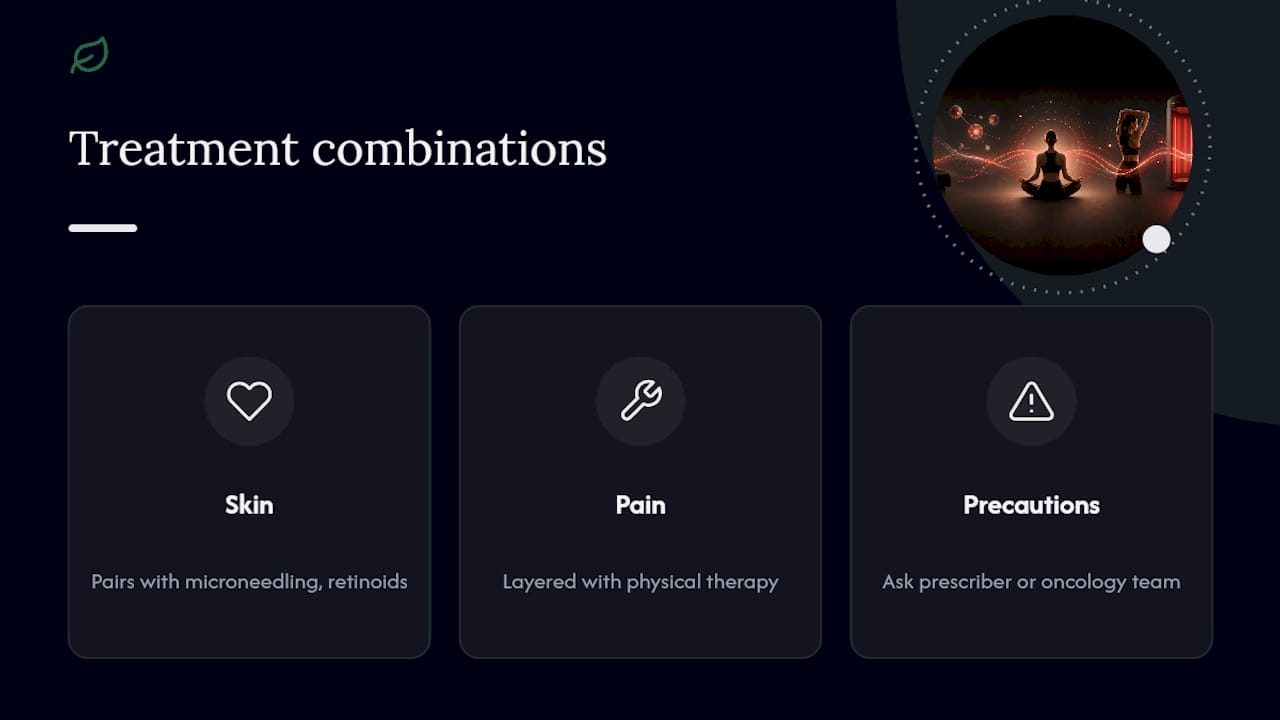
Medication interactions are the bigger consideration. Photosensitizing drugs, including certain antibiotics and some acne treatments, can make skin more reactive to light exposure of any kind. If you're on one of these medications, ask your prescriber before adding red light sessions to your routine. People undergoing active cancer treatment should also consult their oncology team first, since light-based therapies near treatment sites need individualized clearance.
The practical takeaway is that red light therapy fits best as one piece of a broader plan rather than a replacement for treatments already working for you. If you're weighing it against other non-invasive treatment options, think of it as an addition to discuss with whoever manages your care, not a swap.
Where Red Light Therapy Fits Into a Real Wellness Plan
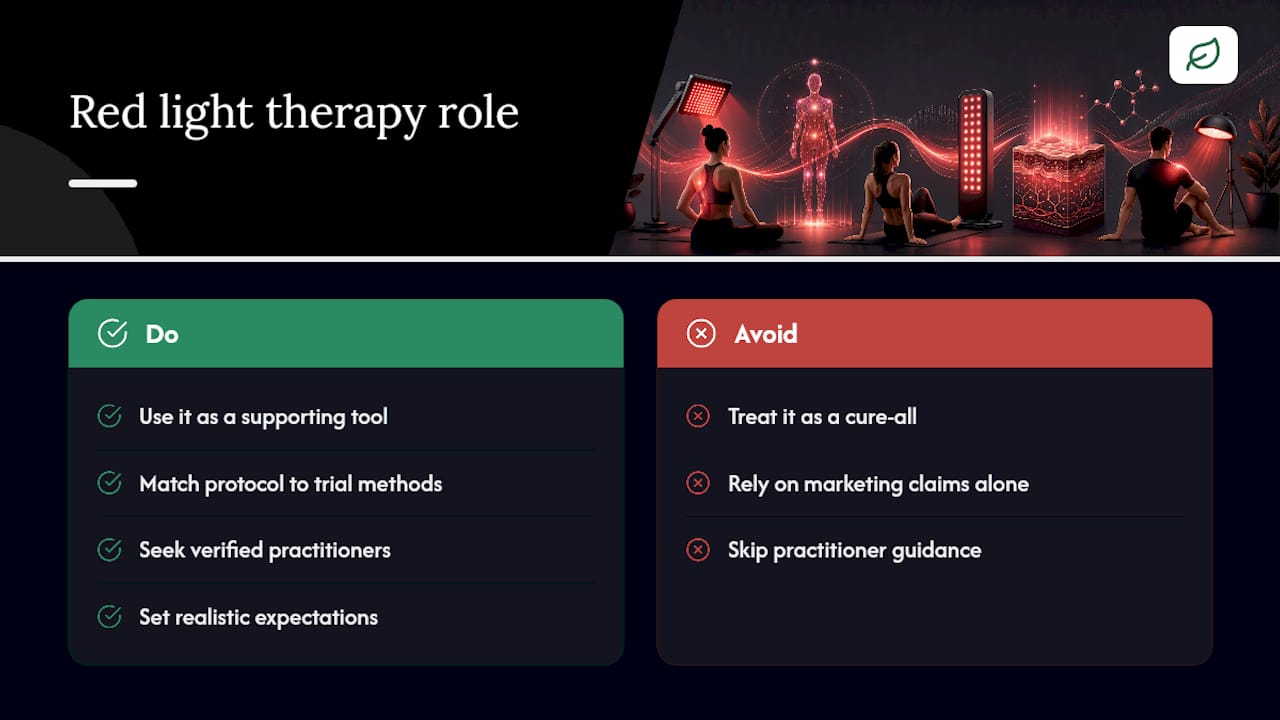
Red light therapy earns its place as a supporting tool, not a cure. It's genuinely useful for hair density, certain pain conditions, and some skin outcomes when paired with realistic expectations and a protocol that matches what actually got tested in trials. The gap between marketing and evidence is real, and treating it as one tool among several tends to serve people better than treating it as a fix for everything.
A directory exists to help find verified practitioners who understand these nuances and can build a plan around what the research actually supports.
— Andrew
Compare Vetted Practitioners Before You Book a Session
You don't have to sort through vague marketing claims alone. A curated directory of verified holistic practitioners, evidence summaries for treatments like photobiomodulation, and a booking system are available to assist users in finding a good match.

If you're weighing a clinic-based red light protocol against an at-home device, start by comparing practitioner credentials and treatment approaches side by side rather than guessing from a product page. Browse the treatment library to see how red light therapy compares with related options, or head straight to the practitioner directory to check credentials and book a consult that fits your specific goal, whether that's hair density, joint pain, or skin support.
Sources
- Effects of photobiomodulation on multiple health outcomes: an umbrella review of randomized clinical trials
- Red light therapy: What the science says - Stanford Medicine
- Does red-light therapy work? What the research says | Scientific American
This article is general information, not a substitute for advice from a qualified doctor. Consult a qualified healthcare professional about your own circumstances before acting on anything here.